Reviewed · PRIVATE
Architectural Dublin: Private Tour with a Local Expert
Dublin’s best stories are built into its walls. This private two-hour walk links brewing, religion, government, education, and modern business, giving you a clear look at how the city changed over time. I like the one-to-one format and the chance to shape the route around your interests. I also like that a local guide explains the details you would likely miss on your own.
The main thing to consider is the price: $756.32 for up to two people is a serious outlay for a two-hour walk. The route also covers several areas of Dublin and is not recommended for people with impaired mobility, so you should be comfortable walking at a steady pace.
In This Review
- Key points at a glance
- What This Dublin Architecture Walk Really Offers
- Starting at Guinness Storehouse and Dublin’s Brewing Past
- Christ Church Cathedral and Dublin’s Medieval Foundation
- Dublin Castle and the Marks of Political Power
- Leinster House and the Georgian Face of Ireland
- The Victorian College Building and Ornate Academic Design
- The Custom House and Eighteenth-Century Administration
- Dublin Landings and the Tilted Glass Future
- The Private Format and Its Real Value
- Practical Details Before You Book
- Who Should Book This Two-Hour Walk?
- Should You Book Architectural Dublin?
- FAQ
- How long does the Architectural Dublin tour last?
- How much does the private tour cost?
- Is the tour private?
- Can the itinerary be customized?
- Where does the tour begin?
- Where does the tour end?
- Are entrance tickets included?
- Are food and drinks included?
- Is the tour suitable for people with impaired mobility?
- Can I cancel for a full refund?
Key points at a glance
- Seven sharply different buildings: The route moves from a former fermentation plant and medieval cathedral to Georgian, Victorian, and contemporary architecture.
- A genuinely private format: Only your group participates, so you can ask questions freely and adjust the pace.
- A route across Dublin’s changing identity: Brewing, British rule, Irish government, university life, administration, and modern commerce all appear.
- A guide-led architectural reading: You learn why facades, materials, layout, and period styles matter, not just what a building is called.
- A short but concentrated outing: Two hours gives you a useful overview, though the number of stops may make the walk feel brisk.
- Bring cash or a card for refreshments: Drinks and snacks are not included.
What This Dublin Architecture Walk Really Offers
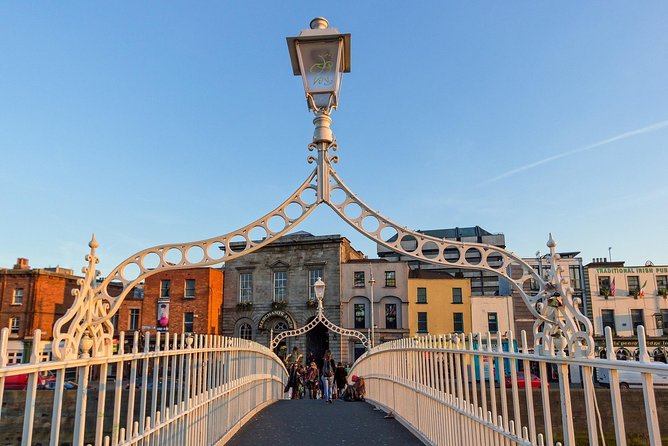
This is not a monument-entry tour. It is a guided walk that treats Dublin itself as the exhibit. You move between buildings while a local expert explains how each one reflects a different part of the city’s past and present.
I like this approach because Dublin’s architecture is not confined to one district or one period. The route brings together industrial heritage, medieval religion, Georgian government, Victorian education, and modern glass construction. That range gives you a better sense of Dublin than a walk focused only on one famous landmark.
The private setup matters. You are not sharing the guide’s attention with a large group, and the itinerary can adapt to your interests and walking pace. If you care most about Georgian design, the guide can give that period more attention. If modern architecture interests you, the later stop at Dublin Landings can take on more weight.
The tour is advertised at about two hours. That is enough time for a strong introduction, but not enough for long visits inside every building. Entry tickets for museums, monuments, and transportation are not included, and the experience is primarily about seeing and discussing the architecture from the route.
A few more ways to spend a day in Dublin
- Dublin to Cliffs of Moher, including Wild Atlantic Way and Galway
★ 5.0 · 23,331 reviews - From Dublin: Cliffs of Moher, Burren & Galway City Day Tour
★ 4.8 · 18,888 reviews - Dublin: Guinness Storehouse Entry Ticket
★ 4.6 · 16,863 reviews
Starting at Guinness Storehouse and Dublin’s Brewing Past
The walk begins at Guinness Storehouse at St. James’s Gate in The Liberties, Dublin 8. This is an easy place to recognize, but the tour does not simply repeat the standard brewery visit. Instead, it uses a former fermentation plant as a way to discuss Dublin’s industrial past.
That building now serves as a tourist attraction, yet its earlier purpose remains important. It connects the city’s famous brewing identity with the practical buildings, work, and production systems that supported it. You get a reminder that architecture is not only about grand civic facades. Working buildings can shape a city just as strongly.
This first stop also gives the walk a useful starting point. You begin with industry and commerce before moving toward churches, government offices, and academic buildings. I like that order because it makes Dublin’s development feel like a sequence rather than a collection of unrelated sights.
You should note that the provided information does not include entry to the Guinness attraction. The tour begins there, so confirm the exact meeting instructions when booking and do not assume admission is part of the experience.
Christ Church Cathedral and Dublin’s Medieval Foundation
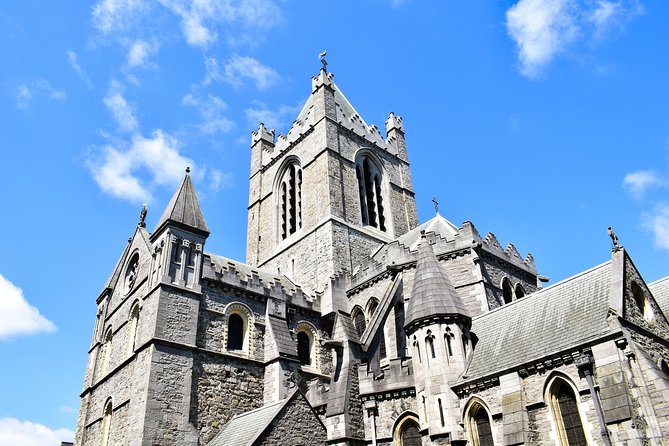
The next stop is one of Dublin’s oldest and best-known medieval cathedrals. Its architecture reflects the city’s religious importance and its long cultural life.
A guide adds value here because a cathedral can be easy to admire without understanding. You can look at stonework, towers, arches, and the overall shape, but a local expert can explain how the building fits into Dublin’s older city. The focus is not only on beauty. It is also on what a major religious building meant in a medieval capital.
The cathedral offers a clear contrast with the industrial beginning of the walk. The route shifts from production and trade to worship, ceremony, and long-term civic memory. That change helps you see that Dublin’s character was built by many institutions, not just by its famous brewery.
The available details do not confirm whether you enter the cathedral. Since monument entry is excluded, plan on this being an exterior architecture stop unless your guide confirms otherwise. If seeing the interior is important to you, ask before the tour begins.
Dublin Castle and the Marks of Political Power
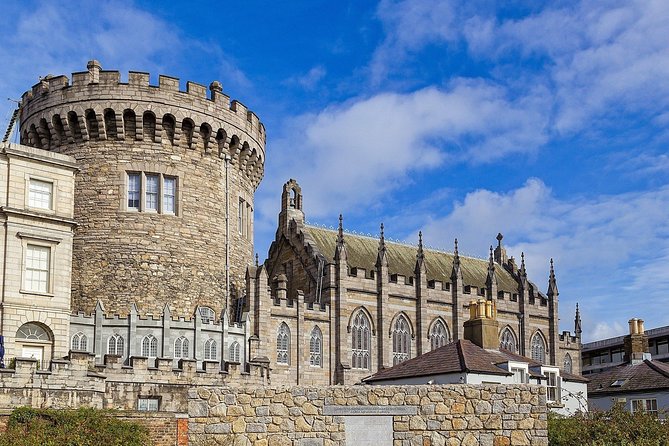
Dublin Castle brings the discussion into government and political control. The complex has architectural elements from medieval through Victorian periods, which makes it especially useful for a tour focused on change over time.
Its importance comes from more than age. It was historically the seat of British rule in Ireland, so its buildings reflect Dublin’s complicated political past. A guide can help you read the site as both architecture and evidence of power.
I find mixed-period complexes especially valuable on a short city walk. A single building can show how practical needs, politics, and fashion altered a place over centuries. Instead of seeing one clean architectural style, you get layers.
The stop may also help you understand why the route cannot be reduced to a simple Georgian architecture tour. Georgian buildings are a major theme, but Dublin’s story begins earlier and reaches far beyond that period. Dublin Castle provides the bridge between medieval Dublin and the later government buildings.
Again, no entry tickets are included. The tour may focus on the exterior, and stops can change with weather conditions. If the castle is a priority, ask the guide how much time the planned route allows for it.
Something completely different for another day:
- Dublin to Cliffs of Moher, Burren, Wild Atlantic Way, Galway Tour
★ 5.0 · 12,924 reviews - Dublin to Belfast Black Cab, Dunluce Castle and Giant’s Causeway
★ 5.0 · 7,954 reviews - Kilkenny, Wicklow Mountains & Glendalough Day Tour from Dublin
★ 5.0 · 7,897 reviews - From Dublin: Wicklow Mountains, Glendalough & Kilkenny Tour
★ 4.8 · 6,235 reviews
Leinster House and the Georgian Face of Ireland
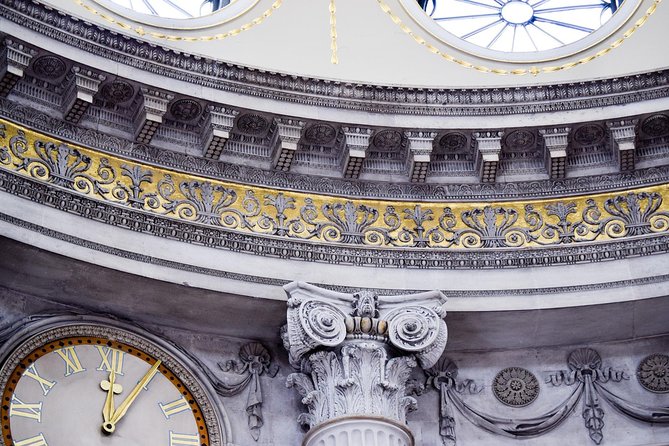
Leinster House, the seat of the Irish Parliament, is the clearest expression of the tour’s Georgian theme. Its design reflects the order, proportion, and formal appearance associated with Georgian architecture.
This is where the guide’s explanation can turn a polished facade into something more useful. You can learn how the style appears across Dublin and how the building connects architecture with Irish political development. It is not simply an attractive old house. It represents a shift in governance and national identity.
I like the inclusion of Leinster House because it gives Georgian architecture a civic purpose. The style is not presented only as a decorative period. You see it linked to institutions, authority, and the changing way Ireland was governed.
The route is particularly helpful if you are new to architectural terms. A private guide can pause when you need clarification and compare the building with other Georgian examples in Dublin. On a larger group tour, that kind of question can be harder to fit in.
The Victorian College Building and Ornate Academic Design

Another stop is an ornate Victorian building that houses the Geology, Geography, and Civil Engineering departments. Its academic use adds another layer to the walk.
This building is a good reminder that Victorian Dublin was not only about churches and public offices. Education and scientific study also shaped the city. The departments housed here connect the architecture to practical learning, research, and the growth of professional institutions.
The ornate design provides a strong contrast with the restrained look associated with Georgian buildings. You can compare the two periods directly, looking at how decoration, scale, and purpose changed. That side-by-side comparison is one of the best reasons to take this walk with a guide rather than simply photograph buildings from the street.
You should keep your expectations realistic. The tour description does not promise access to academic interiors. The value lies in seeing the building and understanding its design and use from the outside, unless the guide arranges something else.
The Custom House and Eighteenth-Century Administration
Overlooking the River Liffey, the Custom House is a major example of eighteenth-century neoclassical architecture. Its position by the water is part of its meaning. It connects administration with trade, movement, and the river that helped Dublin operate.
The building also represents the city’s administrative past. Its formal neoclassical design communicates authority and order, making it a useful comparison with the more decorative Victorian academic building and the Georgian parliamentary setting.
I would pay attention here to the relationship between the building and the river. The tour is about architecture, but buildings do not exist in isolation. A government structure placed beside the Liffey tells you something about how Dublin’s officials, commerce, and transport were organized.
This stop also gives the walk a change of pace. After several institutional buildings, the open river setting can help you take in the larger shape of the city. Bring a coat or rain layer if the forecast is uncertain, since the tour is outdoors and weather can affect the route.
Dublin Landings and the Tilted Glass Future
The walk ends at Dublin Landings on North Wall Quay, where you see a modern glass-fronted building with a distinctive tilted form. It represents contemporary Dublin and the city’s role in international business and events.
Ending here is a smart choice. The route begins with a former industrial plant and closes with a modern commercial building, creating a visual timeline across two hours. You see how Dublin moved from brewing and administration toward a newer economy shaped by offices, international firms, and large events.
The contemporary stop also prevents the tour from treating old Dublin as the whole story. Some architecture tours focus so heavily on medieval and Georgian buildings that the newer city gets ignored. This route gives modern design a place in the conversation.
At the same time, you may find the contrast less satisfying if you only want historic buildings. The glass structure is meant to show present-day Dublin, not reproduce the decorative detail of the older stops. Its value depends on your interest in how cities keep changing.
The end point is 3 Dublin Landings, North Wall Quay, Dublin 1. The tour does not include onward transportation, so plan your next move from the Docklands area.
The Private Format and Its Real Value
At $756.32 per group of up to two, this is expensive. The price makes the most sense for a couple or two-person party that places a high value on personal attention and a tailored route.
You are not paying for a long list of admissions. You are paying for a local expert, a private experience, and the ability to adjust the itinerary to your interests. If you enjoy asking detailed questions about building styles, political symbolism, or urban change, that private access may be worth more than a standard group walk.
I would not choose this tour for a quick bargain introduction to Dublin. A two-hour public walking tour would likely suit a tighter budget. I would consider this experience when the guide’s attention matters, your schedule is limited, or architecture is a major reason you are visiting.
One published account gives the tour a useful human detail. A couple nearly chose a day of Guinness drinking instead, but the reluctant partner ended up enjoying the walk greatly and praised the guide’s command of the buildings. That is a good sign for mixed-interest pairs. You do not need to arrive as an architecture specialist to enjoy the experience.
The overall rating is based on only one published review, so I would not treat it as a broad measure of consistency. Still, the praise focuses on the guide’s pleasant manner and ability to explain every building, which are exactly the qualities this private format needs.
Practical Details Before You Book
The tour lasts about two hours and is hosted by an independent local. Your itinerary can change with your interests, walking pace, and weather conditions, so the seven listed stops should be treated as the planned framework rather than an absolute guarantee.
Most people can participate, and service animals are allowed. The experience is not recommended for people with impaired mobility. Since it is a walking route across several parts of Dublin, ask about the expected distance and pace if that could affect your comfort.
You receive confirmation at booking, and a mobile ticket is provided. The tour is near public transportation, but transportation tickets are not included. Personal expenses, including drinks and snacks, are also your responsibility.
Free cancellation is available up to 24 hours before the local start time. Changes or cancellations made inside that period are not accepted for a refund.
Who Should Book This Two-Hour Walk?
I would recommend it to couples, friends, or families of up to two people who want a private conversation about Dublin’s buildings. It is also a good match if you prefer a flexible route over a fixed script.
You will get the most from it if you enjoy seeing connections between architecture and politics, religion, industry, education, and commerce. The range of stops gives you plenty to discuss, even though the tour itself is short.
I would hesitate if you have limited mobility, want extensive interior visits, or need a low-cost activity. The price is high, and entry tickets are not included. You should also leave room in your day for a quick drink or snack, since refreshments are not part of the package.
Should You Book Architectural Dublin?
Book this tour if you want focused, private guidance and a wide view of Dublin’s built character in a short time. The strongest reason to choose it is the local expert’s undivided attention, especially when you want to ask questions or shape the route around Georgian, medieval, Victorian, or modern design.
Skip it if you mainly want to tour the Guinness attraction, enter famous monuments, or keep costs low. For the right pair, though, this is a thoughtful way to connect Dublin’s brewing past, medieval faith, political history, academic life, river administration, and modern business in one compact walk.
FAQ
How long does the Architectural Dublin tour last?
The tour lasts approximately two hours.
How much does the private tour cost?
The listed price is $756.32 per group of up to two people.
Is the tour private?
Yes. Only your group participates, and the experience includes an exclusive private tour with a local expert.
Can the itinerary be customized?
Yes. The itinerary adapts to your interests and walking pace.
Where does the tour begin?
The meeting point is Guinness Storehouse, St. James’s Gate, The Liberties, Dublin 8, D08 VF8H, Ireland.
Where does the tour end?
The tour ends at 3 Dublin Landings, North Wall Quay, Dublin 1, D01 C4E0, Ireland.
Are entrance tickets included?
No. Entry tickets for transportation, museums, and monuments are excluded.
Are food and drinks included?
No. Personal expenses are not included, so bring money if you want to buy drinks or snacks.
Is the tour suitable for people with impaired mobility?
The tour is not recommended for people with impaired mobility.
Can I cancel for a full refund?
Yes. You can cancel at least 24 hours before the experience start time for a full refund. Cancellations or changes made less than 24 hours before the start time are not accepted for a refund.
Newest in Dublin
- Wicklow Mountains Private Day Tour including Glendalough★ 5.0 · 7 reviews
- Wicklow: Private Day Tour from Dublin★ 5.0 · 5 reviews
- From Dublin: Powerscourt House, Guinness Lake & Glendalough★ 5.0 · 2 reviews
- Ultimate Dublin Food Tour★ 4.5 · 2 reviews
- Women Of Ireland: Trailblazers & Pioneers★ 5.0 · 4 reviews
- Wicklow tour of Glendalough★ 4.5 · 8 reviews
- Wicklow Mountains & Glendalough Luxury Private Day Tour★ 5.0 · 23 reviews
- Whiskey Tasting Tour of Dublin★ 5.0 · 117 reviews
Private, compared.
Private (Nearly!) All of Dublin in 5 hours (Walking Tour)
Read our review →
Private Tour:Ring of Kerry,Kerry Cliffs, starting in (from) Killarney
Read our review →
Cliffs of Moher Private Award Winning Luxury Mercedes Car Tour
Read our review →
Dublin Private Custom Tour with a Local, Highlights & Hidden Gems
Read our review →