
Reviewed · CYCLING TOURS
Donegal Electric Bike Tour with Local Guide: Half-Day Adventure
Donegal rewards slow travel. This three-hour e-bike tour links Bunbeg Harbour, famine-era stone cottages, the Poisoned Glen, lakes, and the wreck of Bád Eddie without asking you to tackle every hill under your own power. I like the excellent mix of history and scenery, and I like that the fat-tire bikes handle paved roads, gravel tracks, and beach areas.
The guide also earns strong marks for safety, local information, and clear help with the electric bikes. The main thing to consider is the short running time: with many stops packed into three hours, this is a brisk outing rather than a long, leisurely cycle. A refreshment stop is not included, so bring water and anything you may want to eat.
In This Review
- Key points to know before you book
- Why an e-bike makes sense in Donegal
- Bunbeg Harbour and the first taste of local life
- The abandoned village and Donegal’s famine story
- The Poisoned Glen and the tale of Balor
- The memorial building and a Donegal love story
- Crossing the dam between two lakes
- Bád Eddie, the boat left by the storm
- What the three-hour schedule feels like
- The guide, equipment, and practical comfort
- Is $78.31 a fair price?
- Who should book this Donegal bike tour?
- Final verdict: book it for range and local stories
- FAQ
- Where does the Donegal electric bike tour start?
- Where does the tour finish?
- How long does the tour last?
- What language is the tour offered in?
- How many people can join the tour?
- What equipment is included?
- Is food or drink included?
- Can most people participate?
- Does the tour operate in poor weather?
- Can I cancel for a full refund?
Key points to know before you book
- Bunbeg Harbour is the starting point, giving you a quick introduction to the area’s fishing past before you ride inland and along the coast.
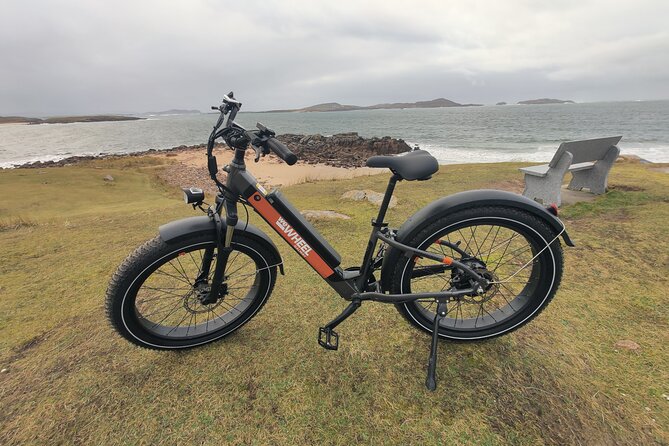
- Fat-tire electric bikes cover mixed surfaces, including paved roads, dirt and gravel trails, and beach areas.
- The Poisoned Glen adds local legend, with a stone linked to Balor’s poisoned eye at the entrance.
- The route reaches a famine-era abandoned village, where roofless stone cottages offer a moving look at 19th-century Donegal life.
- The group is limited to 10 people, which should make guide contact and safety instructions easier.
- Rain can be part of the deal, but poor weather may lead to a new date or a full refund.
Why an e-bike makes sense in Donegal
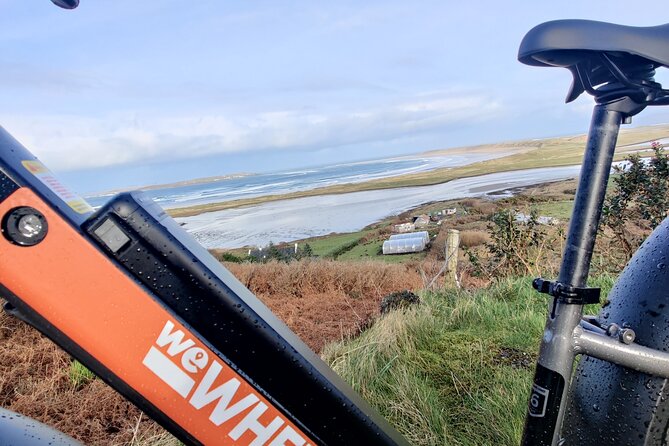
The best reason to choose this tour is simple: the motor lets you see more of Donegal without turning the outing into an athletic test. The route includes hills, roads, gravel, and sand. An ordinary bicycle can make that combination tiring, especially when the weather turns wet or windy.
The bikes are described as top-quality fat-tire e-bikes, and the electric assistance is especially useful on uphill sections. You still pedal, but the motor takes the sting out of the harder stretches. That leaves you with more energy for the viewpoints and historic stops.
The fat tires also matter. They provide a better fit for uneven ground than narrow road tires, and they make it possible to ride across dirt tracks and beach areas. You should still expect a real cycle, not a motorized sightseeing vehicle. The e-bike helps, but it does not remove the need for balance, attention, and sensible clothing.
The guide provides a safety briefing and shows you how to use the controls. That is important if you have never ridden an electric bike. The helmets include microphones, though the audio system may not always work well. If you cannot hear the guide clearly while riding, the practical solution is to regroup at each stop and listen there.
More Bike Tours in Donegal:
- Donegal Coast One Day Self-Guided E-Bike Tour
★ 5.0 · 66 reviews - Electric Bike Donegal: Must-Do Half-Day Adventure!
★ 5.0 · 20 reviews - eBiking Glenveagh National Park. Donegal. Self guided. 3 hours.
★ 5.0 · 2 reviews
Bunbeg Harbour and the first taste of local life
The ride begins at Teac Campbell Guesthouse in Magheraclogher, Bunbeg. The meeting point is near public transportation, and the activity returns to the same spot at the end. That makes it easy to leave your car parked for the half-day and avoid arranging a second pickup.
Bunbeg Harbour was created in the late 1830s to encourage fishing in the area. It is a useful first stop because it gives the tour a human setting. You are not simply starting beside a rental shop and heading straight into the countryside. You begin at a working piece of Donegal’s coastal story.
From here, the guide helps you get used to the bike and the route. Pay attention to the first instructions, especially how the motor assistance works and how the bike behaves on changing surfaces. Once you understand the controls, the ride becomes much more relaxed.
The harbour also sets the tone for the rest of the outing. Donegal is not presented only as scenery. Fishing, farming, old estates, famine, folklore, and shipwrecks all appear along the way. That combination gives the ride more substance than a simple photo stop circuit.
The abandoned village and Donegal’s famine story
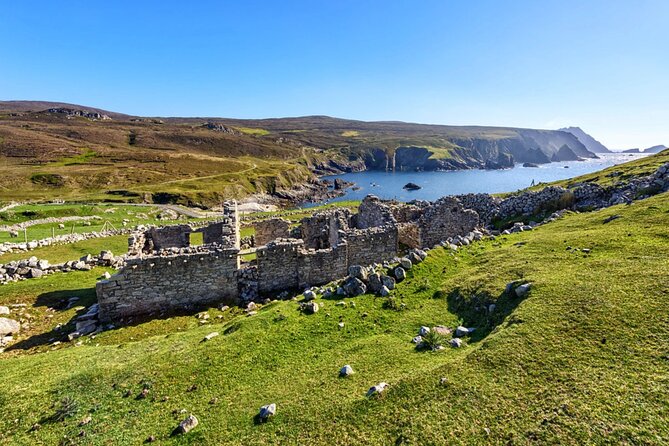
One of the most affecting stops is an abandoned village of stone cottages. These homes once sheltered families during the Great Famine in 19th-century Ireland. The remains are a reminder that the famine was not an abstract event from a schoolbook. It shaped actual households and emptied entire communities.
You can leave the bike and walk around the cottages, taking time to look at the stonework and the layout of the village. The ruins are simple, but that is part of their power. There is no polished museum display here. The weathered walls let the place speak for itself.
This stop also gives you a reason to slow down. The ride covers a fair amount of ground, and it would be easy to treat every location as a quick photograph. At the abandoned village, I would make a point of asking the guide about local life, migration, and how the famine changed the area. The guide’s local explanations are one of the tour’s stronger features.
The route does not provide food or drink, so this is not a catered heritage outing. If you need a snack after cycling, bring one with you. The lack of a refreshment stop is a small weakness, particularly for families or anyone unused to three hours of outdoor activity.
The Poisoned Glen and the tale of Balor
The viewpoint at the Poisoned Glen brings a different kind of history. At the entrance, a stone is linked by local legend to Balor’s poisoned eye. The story gives the place a memorable name and a sense of mystery without requiring a long visit.
This is a good example of what makes the ride work. You get natural views, but you also get the stories that help you remember them. The guide can connect the stone and the glen to Irish legend, giving you more to think about than the view alone.
The stop is also likely to be one of the most scenic portions of the outing. You will want time to take photographs, but keep your schedule in mind. The full route lasts about three hours, including the riding between attractions. If you linger at every viewpoint, the later stops may feel hurried.
The word poisoned can sound dramatic, but the attraction is really a mix of scenery, folklore, and a distinctive local story. I would treat it as a short, atmospheric pause rather than a large formal attraction with extensive facilities.
Something completely different for another day:
- Oakfield Park Day Pass and Train Ride
★ 4.5 · 104 reviews - Slieve League cliffs cruise. Donegal. Guided. 1 ¾ hours.
★ 4.5 · 61 reviews - Full-Day Shore Excursion for cruise ships to Killybegs, Donegal
★ 5.0 · 54 reviews - Inishowen Peninsula Tour
★ 5.0 · 31 reviews
The memorial building and a Donegal love story
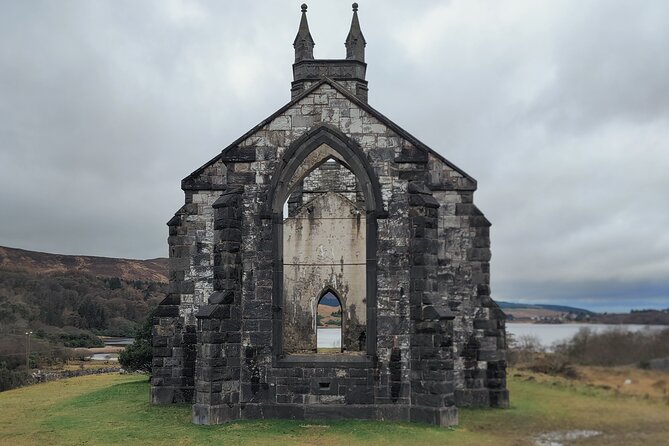
The tour also visits a beautiful building that serves as a lasting memorial to the love between James Russell, landlord of the Dunlewey estate, and his wife Jane. This stop adds a personal story to the tour’s wider account of land, families, and local life.
The building gives you a change of pace from the cottages and open viewpoints. Instead of seeing only ruins or natural scenery, you get an example of the area’s estate-era architecture and the way private lives became part of the local record.
The exact amount of time spent here depends on the group and the guide, but it is worth listening closely. The story of James and Jane is the sort of detail that can easily disappear if you rush from one landmark to the next. Ask questions if the schedule allows, since the personal connection is what makes this stop memorable.
The tour’s appeal is strongest when these layers are placed together: a harbour built to support fishing, cottages shaped by famine, an old estate, and folklore around the Poisoned Glen. You get a compact picture of Donegal rather than a string of unrelated sights.
Crossing the dam between two lakes
A particularly enjoyable riding section takes you over a dam separating Lough Nacung and Dunlewy Lough. This is where the e-bike format earns its keep. You are moving through open country, with water on either side, and the route provides a change from the tighter roads and historic sites.
The dam crossing is also a good moment to appreciate the advantage of a guided ride. A local guide can point out the two lakes and help you understand where you are within the wider route. Without that context, a quick crossing could become just another stretch of road.
The ride over the dam should appeal to anyone who enjoys being outdoors but does not want every minute planned around strenuous cycling. You can focus on the views and the setting instead of worrying about whether you have enough energy for the next hill.
Still, conditions matter. The experience requires good weather, and cycling surfaces can feel different in rain. Wear suitable outdoor clothing and arrive ready for changeable conditions. If the operator cancels because of poor weather, you will be offered another date or a full refund.
Bád Eddie, the boat left by the storm
Near the end of the route, you reach Bád Eddie, which means Eddie’s Boat. The shipwreck ran aground during a storm in 1977 and has remained part of the Donegal coast’s visual character.
A wreck is a fitting final image for this ride. After seeing the harbour and learning about local communities, you finish with a reminder of the coast’s power. Bád Eddie is not just an old boat for photographs. Its story connects the route to the working sea and the storms that have shaped life along the shore.
The beach area is one of the surfaces included in the ride, so the fat tires are useful here. You may ride on or near sandy ground and then stop to walk around. The ability to leave the bike and explore on foot makes the stop more worthwhile than a quick roadside glance.
If you enjoy dramatic coastal subjects, this will probably be one of your favorite photo stops. Just remember that a beach setting can be exposed to wind and rain. Dress for the conditions rather than assuming the day will stay dry.
What the three-hour schedule feels like
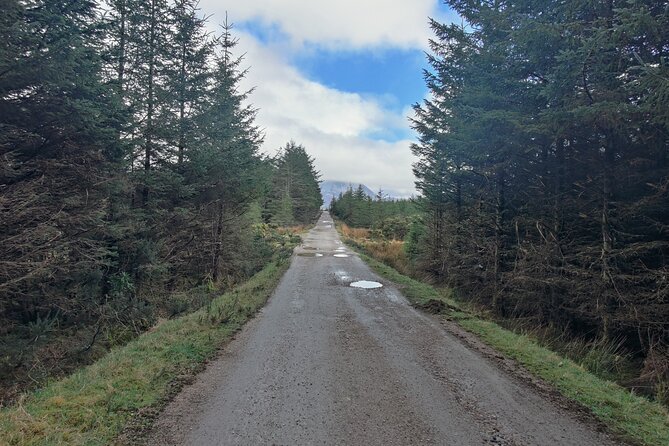
Three hours is long enough to see a surprising amount, but it is not enough for a slow, unstructured day. The time already includes the cycling between the attractions, so every stop must fit into the same compact window.
That pace works well if you want an efficient introduction to the Bunbeg and Dunlewey area. You can cover roads, trails, water, historic sites, and the coast in one outing. It is also useful if you have only part of a day available.
I would be realistic about the tradeoff. You may have enough time to take photographs and hear the key stories, but you should not expect extended walks, long meals, or private time at every location. The tour is designed to connect the sights, not to turn each one into a full afternoon visit.
The group limit of 10 is a welcome detail. A small group makes it easier to hear instructions, ask questions, and stay together. It should also help the guide manage the mixed surfaces and road sections more safely.
The guide, equipment, and practical comfort
The guide is an important part of the experience. The strongest feedback centers on friendly support, attention to safety, and useful local information. The guide also takes time to explain how to operate the electric bikes, which helps first-time riders settle in.
The bikes are supplied with safety gear, and mechanical and technical support is included. That matters on a route with several types of riding surface. You are not expected to solve every bike problem alone if something goes wrong.
The helmet microphones are a thoughtful idea, but the audio may not always be reliable. I would not book this tour expecting a continuous spoken commentary while you pedal. Instead, listen carefully during the briefing and at each stop, where communication is easier.
Rain does not automatically ruin the outing. The equipment and e-bike assistance can make a wet ride manageable, provided you arrive prepared. The tour can operate in light rain, but poor weather may cause cancellation. Since changes within 24 hours are not accepted, check the forecast before the final cancellation deadline.
Is $78.31 a fair price?
At $78.31 per person, this is not the cheapest way to spend three hours in Donegal. But the price includes a quality fat-tire e-bike, safety equipment, guide service, and technical support. You are also paying to connect several widely varied places without arranging your own route or bike hire.
The value is strongest if you are comfortable with an active outing and want to see more than one nearby attraction. Hiring a bike separately would not automatically give you local stories, route planning, or help on mixed terrain.
The value is weaker if you mainly want a quiet scenic drive or a long meal in the countryside. Food and drink are not included, and the tour moves at a steady pace. Add your own snack and water, especially if you are bringing older children or anyone who tires easily.
The tour is booked, on average, 47 days ahead. That suggests you should not leave it until the last minute if the date matters to your plans. Confirmation arrives at booking, and free cancellation is available up to 24 hours before the start time. If the minimum group size is not met, you will be offered another date or experience, or a full refund.
Who should book this Donegal bike tour?
I would recommend it to you if you want:
- A compact way to see several Donegal sights
- Electric assistance on hills and mixed surfaces
- A small group with a local guide
- A balance of scenery, folklore, history, and coastal sights
- An active half-day that does not require advanced cycling ability
Families can enjoy it, and an adult family group has already found it a good half-day activity. The main question is comfort on a bicycle. Most people can participate, but you should be ready to ride for about three hours and manage roads, gravel, dirt, and beach areas.
It may not suit you if you need a long food break, dislike changeable weather, or want to spend most of the day at one historic site. It is also not the best choice if you expect a quiet ride with constant commentary through the helmet microphones.
Final verdict: book it for range and local stories
I would book this tour if I had a free half-day in Donegal and wanted to cover real ground without exhausting myself. The best parts are the varied route, the easy-to-use e-bikes, the guide’s safety focus, and the way the stops connect natural scenery with local stories.
The drawbacks are manageable: no food or drink, a brisk schedule, and helmet audio that may not work perfectly. Bring water, rain gear, and a snack, and treat the outing as an active sightseeing ride rather than a leisurely picnic.
At $78.31, the tour offers fair value for the equipment, guidance, and number of places reached. If you want to see Bunbeg Harbour, the famine cottages, the Poisoned Glen, the lakes, and Bád Eddie in one well-organized outing, this is a practical and memorable choice.
FAQ
Where does the Donegal electric bike tour start?
It starts at Teac Campbell Guesthouse, Magheraclogher, Bunbeg, County Donegal, Ireland.
Where does the tour finish?
The activity ends back at the same meeting point.
How long does the tour last?
The tour lasts approximately three hours, including the cycling time between the listed attractions.
What language is the tour offered in?
The tour is offered in English.
How many people can join the tour?
The tour has a maximum of 10 travelers.
What equipment is included?
A top-quality fat-tire electric bike and safety gear are included. Technical and mechanical support is also provided.
Is food or drink included?
No. Food and drink are not included in the tour price.
Can most people participate?
Most travelers can participate, according to the tour information. The route includes paved roads, dirt and gravel trails, and beach areas.
Does the tour operate in poor weather?
The experience requires good weather. If poor weather causes cancellation, you will be offered a different date or a full refund.
Can I cancel for a full refund?
Yes. You can cancel up to 24 hours before the experience start time for a full refund. Cancellations or changes made less than 24 hours before the start time are not accepted for a refund.
Newest in Donegal
- eBiking Glenveagh National Park. Donegal. Self guided. 3 hours.★ 5.0 · 2 reviews
- 2 Hour Walking Tour in Slieve League Ireland★ 5.0 · 9 reviews
- Travel and Experience the Emerald Isle.★ 5.0 · 1 review
- Inishowen Peninsula Tour★ 5.0 · 31 reviews
- Buncrana County Donegal To Dublin City or Airport Private Chauffeur Transfer★ 5.0 · 1 review
- Mysteries of Inishowen private day tour★ 4.5 · 24 reviews
- DAY TOUR: Highlights Of South Donegal★ 5.0 · 18 reviews
- DAY TOUR: Highlights of Derry and Donegal★ 5.0 · 8 reviews
Cycling Tours, compared.
Dublin Panoramic e-Bike Tour with Howth Adventures
Read our review →
E-Bike & Bike Tour with a Local Guide in Dublin
Read our review →
Self-Guided Bike Tour of Killarney National Park, Muckross Gardens & Waterfall
Read our review →
Aran Islands Bike Tour with Tea & Scones – Day Trip to Inisheer from Doolin
Read our review →Browse the lists this tour appears in