
Reviewed · BOYNE VALLEY AND NEWGRANGE TOURS
Dublin: Boyne Valley with Newgrange and Bru Na Boinne Entry
Ancient Ireland begins before Stonehenge. This full-day trip from Dublin reaches the 5,000-year-old monuments of Newgrange and Bru Na Boinne, then adds the Battle of the Boyne Visitor Centre and Monasterboice. I especially like the excellent historical storytelling between stops and the included entry to Newgrange, which saves you from arranging separate transport and tickets. The main drawback is a fairly tight schedule, with limited time for food and only a short stop at Monasterboice.
I also like that you return to central Dublin at about 5:00 PM, leaving your evening free. Guides such as Matt, Kevin, and Richard have been praised for keeping the day relaxed, clear, and well timed. In winter, from November 1 to March 1, Knowth is not accessible, so the Bru Na Boinne visit is shorter.
In This Review
- Key points to know before booking
- Why the Boyne Valley makes a fine day out
- Starting at the Molly Malone statue
- Newgrange and Bru Na Boinne: the heart of the day
- Food and facilities around Newgrange
- The Battle of the Boyne Visitor Centre
- Monasterboice and the high crosses
- The minibus ride back to Dublin
- Is the $96 price good value?
- Who should book this day trip?
- Should you book it?
- FAQ
- Where does the tour start?
- Where does the tour finish?
- How long does the experience last?
- What language is the tour in?
- Is Newgrange entry included?
- Is Knowth available all year?
- Is food included?
- What should I bring?
- Can I cancel for a refund?
- Can I reserve the tour without paying immediately?
Key points to know before booking
- Newgrange is the main event: Enter a Neolithic passage tomb built more than 5,000 years ago, with a guided visit included.
- Knowth changes by season: It is part of the Bru Na Boinne visit outside the November 1 to March 1 period, but it is not accessible during those winter months.
- The day covers several layers of Ireland: You move from Neolithic ritual sites to a 17th-century battle and then to early Christian stonework.
- Guides make a real difference: Matt, Kevin, and Richard are praised for strong storytelling, safe driving, and clear instructions.
- Lunch is not included: Food options at the Newgrange visitor centre may be limited, so bring a snack or prepare for a simple meal.
- The meeting point is easy to find: Meet at the Molly Malone statue on Suffolk Street 10 minutes before departure and look for the small white HilltopTreks minibus.
Why the Boyne Valley makes a fine day out
The Boyne Valley follows the Boyne River through County Meath and County Louth before reaching the Irish Sea near Drogheda. It is one of Ireland’s most important historical areas, not because of one isolated sight, but because several very different chapters of the country’s past sit close together.
On this trip, you begin with the first farming communities and their burial monuments. You then move to the conflict between Catholic King James II and Protestant William of Orange in 1690. Finally, you reach Monasterboice, where early Christian Ireland is represented by a round tower and carved high crosses.
That range gives the day a useful shape. You are not simply looking at old stones without context. Your guide links the sites to changes in religion, power, settlement, and Irish identity. The drive between stops becomes part of the lesson, with guides including Matt and Kevin praised for filling the road time with stories rather than leaving you to guess what you are seeing.
The scenery helps, too. Expect rolling hills, open farmland, and the soft green views associated with County Meath. The trip is outside Dublin, but it is not an exhausting cross-country journey. The return is usually around late afternoon, so you can still have dinner, music, or another Dublin visit that evening.
More Boyne Valley and Newgrange trips:
- Celtic Boyne Valley & Ancient Sites Day Tour From Dublin
★ 4.5 · 865 reviews - From Dublin: Celtic Boyne Valley and Ancient Sites Tour
★ 4.5 · 618 reviews - Dublin to Newgrange, Monasterboice Small Group Guided Tours
★ 4.5 · 500 reviews
Starting at the Molly Malone statue
The day begins at the Molly Malone statue on Suffolk Street. You should arrive 10 minutes before departure and look for a small white minibus carrying the HilltopTreks sign.
That detail matters in central Dublin, where several tour companies gather near popular landmarks. The meeting point is central and familiar, but it can be busy, so do not arrive at the last second. The vehicle is a minibus rather than a large coach, which gives the outing a more personal feel, though space may be more limited than on a standard sightseeing bus.
The drive to the Boyne Valley takes about an hour. This is when a good guide earns the fare. Past guides have been praised for explaining what you will see before arrival, setting up the historical background, and keeping the mood friendly without turning the ride into nonstop chatter. Matt, in particular, is noted for detailed explanations and a good sense of when the group needs a quiet stretch.
Newgrange and Bru Na Boinne: the heart of the day
You spend about three hours at Newgrange and Bru Na Boinne, including the guided visit and sightseeing time. This is the part of the trip that justifies the journey from Dublin.
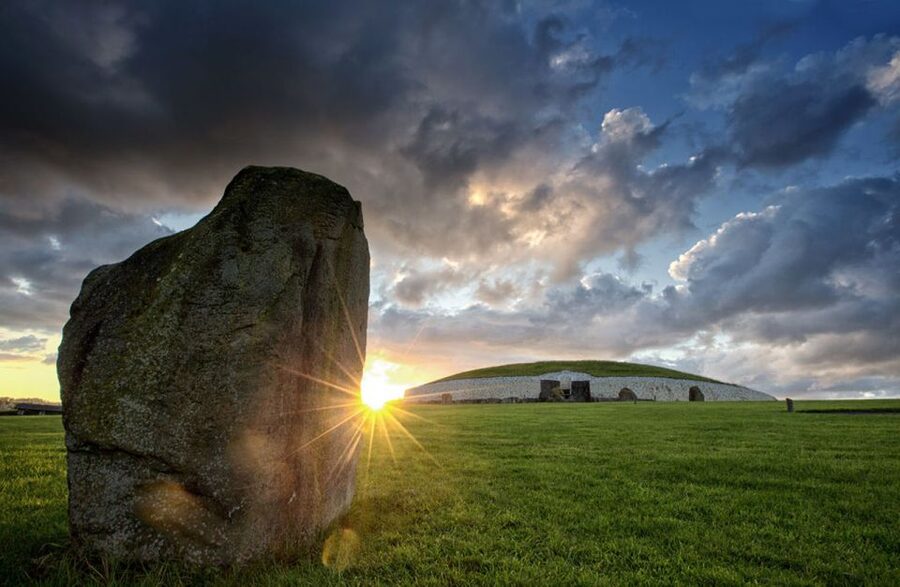
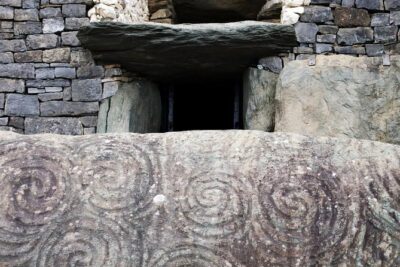
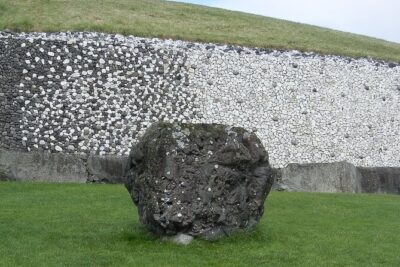
Newgrange is a Neolithic passage tomb more than 5,000 years old. It was built by people who had no written records, yet the monument shows careful planning, engineering skill, and an impressive understanding of the sun. The site had astrological, religious, and ceremonial importance, and it is older than both Stonehenge and the Egyptian pyramids.
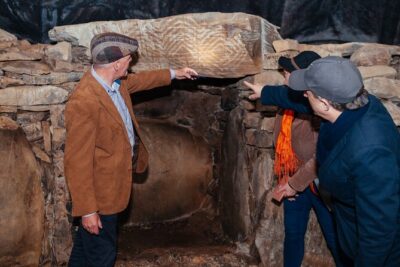
The entry visit takes you into the ancient passage tomb rather than leaving you outside with a distant view. That makes a major difference. The mound is impressive from the grass, but the real interest lies in the narrow passage, the great stone chamber, and the way the structure relates to the winter sun.
The famous light effect is linked to the winter solstice. At that time of year, sunlight reaches into the chamber through an opening above the entrance. A visit cannot promise the actual solstice event, but the guided presentation gives you an idea of how the light enters the tomb. One particularly useful detail from past experiences is the chance to see an example of this effect during the visit.
The Bru Na Boinne stop also includes Knowth when seasonal access permits. Knowth is another major passage tomb complex, with its own ceremonial importance and carved stones. It gives you a second way to understand the scale and purpose of the Boyne Valley monuments.
From November 1 through March 1, Knowth is not accessible. The tour still visits the area and Newgrange, but the Bru Na Boinne portion is shorter. Check the date carefully if Knowth is one of your main reasons for booking.
Entry fees and priority access are included. That is valuable because these monuments are not the kind of places you can casually add to a Dublin day. The transport, admission, and guided access are bundled together, saving you the trouble of matching public transport with timed entry.
There are some practical limits. Three hours sounds generous, but it includes movement through the visitor facilities, waiting for site transport or instructions, and the guided visit itself. You will not have unlimited wandering time. If you want a slow photographic study of every stone, a private visit would suit you better.
Still, this is the place to pay attention to the guide. The stones are remarkable, but their meaning is not obvious at first glance. Guides such as Matt and Kevin have been praised for making the Neolithic period understandable through stories and clear explanations. That is especially helpful if your knowledge of prehistoric Ireland begins and ends with the phrase ancient tomb.
Food and facilities around Newgrange
Food and drinks are not included in the price. The Newgrange visitor centre provides a place to stop, but the available food can be limited. One practical warning is that some meals may be simple, microwave-heated, or disappointing.
I would bring a small snack and a bottle of water, even though you can buy food during the day. An umbrella is also sensible. Irish weather can change quickly, and the outdoor parts of Newgrange and Monasterboice are exposed.
The visitor centre has clean facilities, and some past visits found the food choices better than expected. The safest approach is not to build your day around a long, leisurely lunch. Eat when the schedule allows, then use the remaining time for the monuments.
A few more ways to spend a day in Dublin
- Dublin to Cliffs of Moher, including Wild Atlantic Way and Galway
★ 5.0 · 23,331 reviews - From Dublin: Cliffs of Moher, Burren & Galway City Day Tour
★ 4.8 · 18,888 reviews - Dublin: Guinness Storehouse Entry Ticket
★ 4.6 · 16,863 reviews - Dublin to Cliffs of Moher, Burren, Wild Atlantic Way, Galway Tour
★ 5.0 · 12,924 reviews
The Battle of the Boyne Visitor Centre
The next drive takes about 15 minutes, followed by roughly an hour at the Battle of the Boyne Visitor Centre. This stop moves you forward several thousand years and into the political struggles of the 17th century.
The Battle of the Boyne took place in 1690. It was fought between the Catholic King James II and the Protestant William of Orange, who was also King of Holland. The outcome mattered in Ireland, Britain, and Europe, and it helped shape the political order that followed.
The battle also helps explain why July 12 remains an important date for the Loyalist community in Northern Ireland. The site is not only about troop movements and royal claims. It connects a single battle to long-running arguments about religion, government, identity, and control of Ireland.
You have about an hour here, enough for a focused visit but not an exhaustive study of every display. I like this inclusion because it prevents the day from becoming a parade of pretty ruins. The Boyne Valley is scenic, but it has also been a place where competing ideas about Ireland have collided.
The subject can be politically sensitive. Your guide’s explanation matters, and the strongest guides present the background in a calm, balanced way. Matt, Kevin, and Richard are all praised for giving useful context and answering questions without making the day feel like a classroom lecture.
Monasterboice and the high crosses
The final major stop is Monasterboice, about 20 minutes from the Battle of the Boyne Visitor Centre. You have roughly 45 minutes here, including sightseeing and a guided visit.
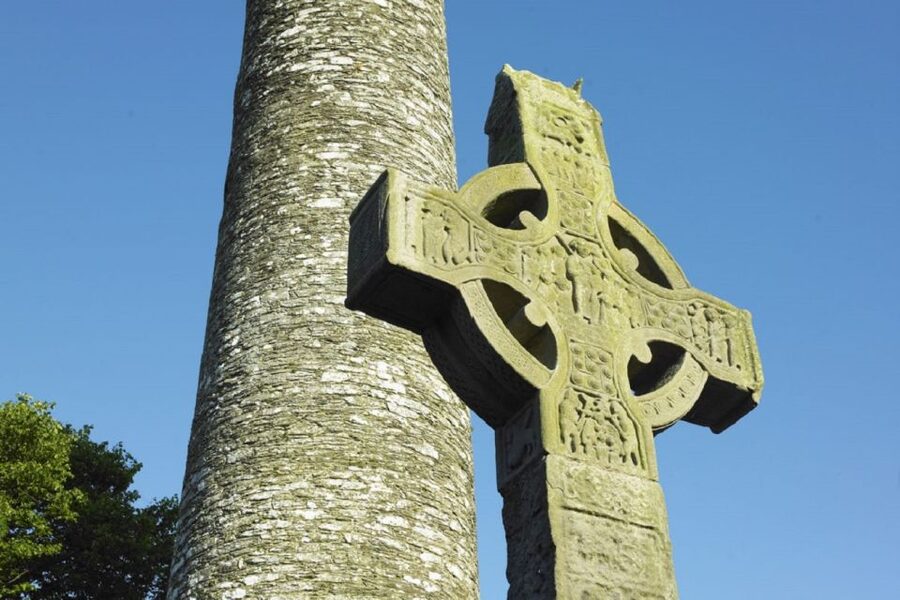
Monasterboice means the monastery of Buithe. St Buithe founded the site in the 5th century, and the ruins include two churches, a round tower, and three famous high crosses.
The round tower rises about 28 metres and remains in very good condition. It was likely built shortly after 968 and suffered fire damage in 1098. Like other Irish round towers, it gives you a strong sense of the size and design of medieval monastic sites, even though the surrounding buildings are now ruins.
The three high crosses date from the 10th century. Their carved biblical scenes made them useful for teaching people who could not read. The largest, Muiredach’s High Cross, measures about 5.5 metres and is often regarded as Ireland’s finest high cross. It is named after the abbot Muiredach mac Domhnaill, who died in 923.
Look closely at the carvings from the Old and New Testaments. You will see why these crosses are more than decorative monuments. They are stone picture books, combining religious teaching with the artistic skill of early medieval Ireland.
Forty-five minutes goes quickly here. Some people find Monasterboice the most atmospheric stop, while others see it as a pleasant final visit after the more dramatic Newgrange experience. If you love carved stone, church ruins, and early Irish Christianity, you may wish the schedule allowed more time.
One past experience specifically wished for a longer stop at Mellifont Abbey, but Mellifont Abbey is not part of the stated itinerary. Some versions of the day may vary, so check your confirmed schedule carefully if you have seen references to it elsewhere. For this advertised route, plan on Monasterboice as the final historic site.
The minibus ride back to Dublin
After Monasterboice, you return to Dublin by minibus, arriving at the Molly Malone statue around 5:00 PM. The schedule is one of the tour’s strong points. You get a full day outside the city without giving up the whole evening.
The ride is also a chance to review what you have seen. A good guide may continue with stories about Irish history, local customs, and the connections between the sites. Past guides have been praised for safe driving, clear timing, humor, and knowing when to let people rest.
The schedule can shift if departure runs late, but guides have managed to reach the planned stops by adjusting the timing. You should still allow a little flexibility after returning to Dublin if you have a restaurant booking or evening performance.
Is the $96 price good value?
At $96 per person, this is not the cheapest way to spend a day outside Dublin. It is a fair price if you want transport, a live English-speaking guide, and included entry to Newgrange and Bru Na Boinne without arranging the pieces yourself.
The value comes from the combination of sites. A simple Newgrange visit would give you the Neolithic story, but this trip adds the Battle of the Boyne and Monasterboice. You get prehistoric Ireland, 17th-century political conflict, and medieval religious art in one day.
The included admission is important. Newgrange access is timed and controlled, so having entry arranged reduces the risk of reaching the area and finding that you cannot join the monument visit. The small-group minibus format also gives the guide more room to speak directly with you than a large coach usually allows.
The price does not include food or drinks. Add a modest amount for lunch, or bring something with you. If you prefer independent exploration, want more time at each site, or dislike a fixed schedule, the value will feel weaker.
For a first visit to Ireland, I think the mix is strong. You see major places that are difficult to combine by public transport, and the guide supplies the connections that make the day meaningful.
Who should book this day trip?
I would recommend it to you if you have one free day in Dublin and want ancient monuments without renting a car. It suits anyone interested in archaeology, Irish religious history, political history, or simply a beautiful day in County Meath.
It is also a good choice if you usually avoid organized tours but still want expert explanations. The best feedback about this experience focuses on the relaxed pace, friendly guides, and lack of a rushed, herded feeling.
Families with older children may enjoy the variety. Newgrange provides a sense of mystery, the Battle of the Boyne gives a clear political story, and Monasterboice offers impressive carvings to inspect outdoors.
You should think twice if your priority is a long lunch, extensive free time, or a slow visit to every ruin. The day covers a lot of ground in eight hours. Comfortable shoes are essential, and an umbrella belongs in your bag.
Cancellation is free up to 24 hours before departure, and you can reserve now and pay later. Those terms are useful if your Dublin plans are still moving around, but the real decision is simpler: do you want a well-organized overview, or do you want to explore one site at your own pace?
Should you book it?
Book this trip if you want the Boyne Valley’s major stories in one efficient day. Newgrange is the clear highlight, and the combination of included entry, strong guides, and a return to Dublin around 5:00 PM gives the tour practical value.
I would choose a date outside November 1 to March 1 if seeing Knowth matters to you. I would also bring food, wear sturdy shoes, and leave room for changing weather. If those small compromises suit you, this is one of the more rewarding day trips for fitting Ireland’s oldest monuments and most important historical themes into a single outing.
FAQ
Where does the tour start?
The tour starts at the Molly Malone statue on Suffolk Street in Dublin. Meet there 10 minutes before departure and look for a small white minibus with the HilltopTreks sign.
Where does the tour finish?
The tour returns to the Molly Malone statue, the same place where it begins.
How long does the experience last?
The trip lasts about eight hours. The planned return to Dublin is around 5:00 PM.
What language is the tour in?
The tour is conducted in English with a live guide.
Is Newgrange entry included?
Yes. Transport, a guide, entrance fees, and priority access to Newgrange and Bru Na Boinne are included.
Is Knowth available all year?
No. Knowth is not accessible from November 1 through March 1. During that period, the Bru Na Boinne portion of the visit is shorter.
Is food included?
No. Food and drinks are not included. You may buy food during the day, but bringing a snack is sensible because choices may be limited.
What should I bring?
Bring comfortable shoes and an umbrella. Outdoor visits at Newgrange and Monasterboice can be affected by the weather.
Can I cancel for a refund?
Yes. You can cancel up to 24 hours before departure for a full refund.
Can I reserve the tour without paying immediately?
Yes. The reserve now and pay later option lets you book your place without paying at the time of reservation.
Newest in Dublin
- Wicklow Mountains Private Day Tour including Glendalough★ 5.0 · 7 reviews
- Wicklow: Private Day Tour from Dublin★ 5.0 · 5 reviews
- From Dublin: Powerscourt House, Guinness Lake & Glendalough★ 5.0 · 2 reviews
- Ultimate Dublin Food Tour★ 4.5 · 2 reviews
- Women Of Ireland: Trailblazers & Pioneers★ 5.0 · 4 reviews
- Wicklow tour of Glendalough★ 4.5 · 8 reviews
- Wicklow Mountains & Glendalough Luxury Private Day Tour★ 5.0 · 23 reviews
- Whiskey Tasting Tour of Dublin★ 5.0 · 117 reviews
Boyne Valley and Newgrange Tours, compared.
Celtic Boyne Valley & Ancient Sites Day Tour From Dublin
Read our review →
Dublin to Newgrange, Monasterboice Small Group Guided Tours
Read our review →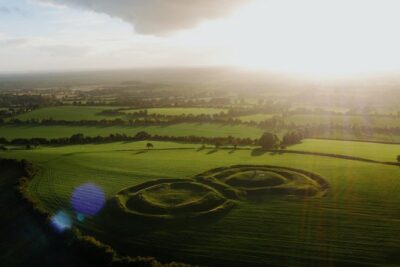
6 hour Half-Day Award Winning Private Tour of the Boyne Valley
Read our review →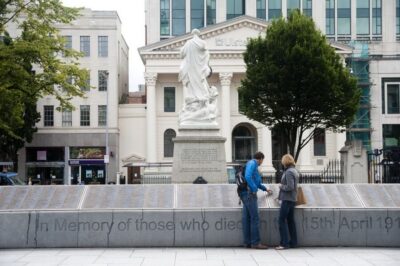
Full-Day Irelands Ancient Boyne Valley Private Guided Tour
Read our review →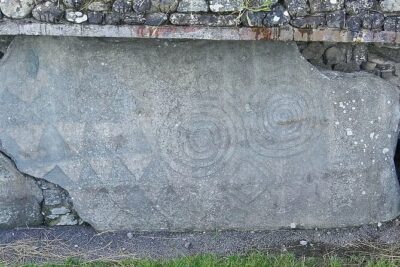
Private Luxury Tour of Newgrange and The Hill of Tara
Read our review →Browse the lists this tour appears in