
Reviewed · GALWAY TOURS
Galway: Medieval Galway Tour
Galway’s old stories are still underfoot. This 1.5-hour walking tour makes the city’s past easy to read, linking surviving walls, castles, churches, lanes, and the Spanish Arch with clear stories about the people who shaped Galway. I like the route’s compact design, and I especially like the way it mixes major sights with easily missed places such as the Hall of the Red Earl and Kirwan’s Lane. The main consideration is that St. Nicholas’ Collegiate Church costs extra, and Galway’s weather can be wet, windy, or both.
The tour is led in English by Marteen Lane, a Fáilte Ireland Regional Guide with more than 11 years of guiding experience and a BA (Hons) in Heritage Studies. I also appreciate the strong focus on legends, including the grim tale of a father hanging his own son in 1493. If you enjoy history best when it comes with a human story, this is a good way to get your bearings in central Galway.
In This Review
- Key points to know before you book
- Why this short Galway walk works well
- Starting under the Browne Doorway in Eyre Square
- Seeing the city walls inside a shopping center
- Lynch’s Castle and the power of the 14 Tribes
- St. Nicholas’ Church, Jane Eyre, and Cromwell’s soldiers
- The King’s Head and Galway’s political edge
- The Claddagh ring at Thomas Dillon’s
- Walking down into the Hall of the Red Earl
- Kirwan’s Lane and the surviving medieval street plan
- Blake’s Castle and the harsh side of city life
- Ending at the Spanish Arch and the Claddagh
- Timing, weather, and what to bring
- Who should book the Medieval Galway Tour?
- Should you book it?
- FAQ
- How long is the Medieval Galway Tour?
- How much does the tour cost?
- Where does the tour begin?
- How early should I arrive?
- Where does the tour end?
- Is entry to St. Nicholas’ Church included?
- What language is the tour conducted in?
- Is the tour wheelchair accessible?
- What happens if there is severe weather?
Key points to know before you book
- The tour begins at the Browne Doorway: Meet 15 minutes early beside the free-standing stone doorway in Eyre Square.
- Galway’s medieval walls appear in surprising places: You will see surviving sections inside Eyre Square Shopping Centre.
- The route connects the city’s famous families: Lynch, Kirwan, Blake, and other members of Galway’s 14 Tribes feature throughout.
- The stories are often dark and memorable: Expect tales of executions, rebellion, royal politics, prison life, and a church used as a stable.
- The Hall of the Red Earl allows a close look at archaeology: You can walk down into the remains of walls, columns, and buttresses.
- The tour ends at the Spanish Arch: You will hear about the Claddagh, the River Corrib, and the tsunami that destroyed two arches.
Why this short Galway walk works well
At $23 per person, this is a reasonable price for a guided introduction to central Galway. The route lasts 90 minutes, so you are paying for a focused orientation rather than a full-day historical program. That makes it useful early in a Galway visit, especially if you want local context before exploring the city on your own.
I like that the tour does not rely only on famous facades. Galway’s medieval past is scattered through modern streets and commercial buildings. The remains in Eyre Square Shopping Centre, the bank occupying Lynch’s Castle, and the archaeological site at the Hall of the Red Earl all show how old Galway and modern Galway sit side by side.
The strongest feature is the storytelling. Marteen’s care with legends and stories received particular praise, and the tour clearly gives him room to explain why each site matters. The route is not just a parade of dates. It connects buildings to families, crimes, religion, trade, politics, and daily life.
You should keep your expectations in check. This is a walking tour of exterior sites and historical remains, not a series of long indoor visits. Entry to St. Nicholas’ Church is not included, and the church may add €5 for adults or €4 at the concession rate. Still, the route gives you plenty to see without requiring several separate admissions.
A few more ways to spend a day in Galway
- Galway to Cliffs of Moher, Aillwee Cave & Dunguaire Castle Tour
★ 5.0 · 3,058 reviews - From Galway: Full-Day Cliffs of Moher & Burren Guided Tour
★ 4.8 · 2,815 reviews - Galway to Inisheer Aran Islands, Cliffs of Moher and Boat Trip
★ 5.0 · 2,517 reviews
Starting under the Browne Doorway in Eyre Square
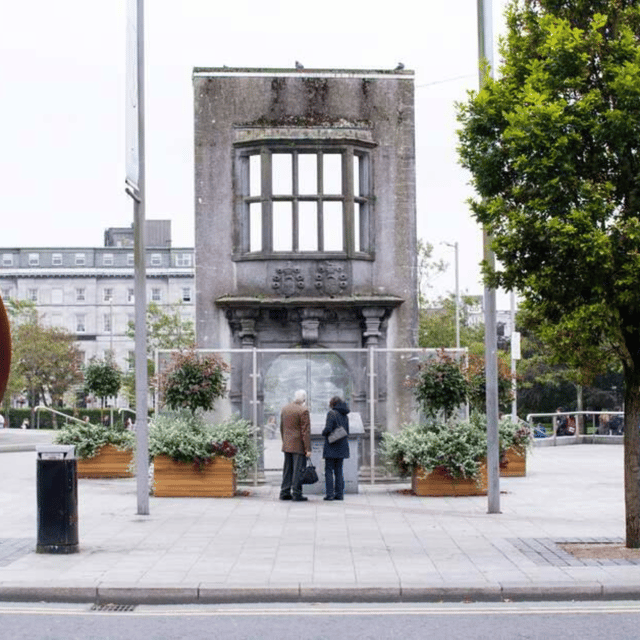
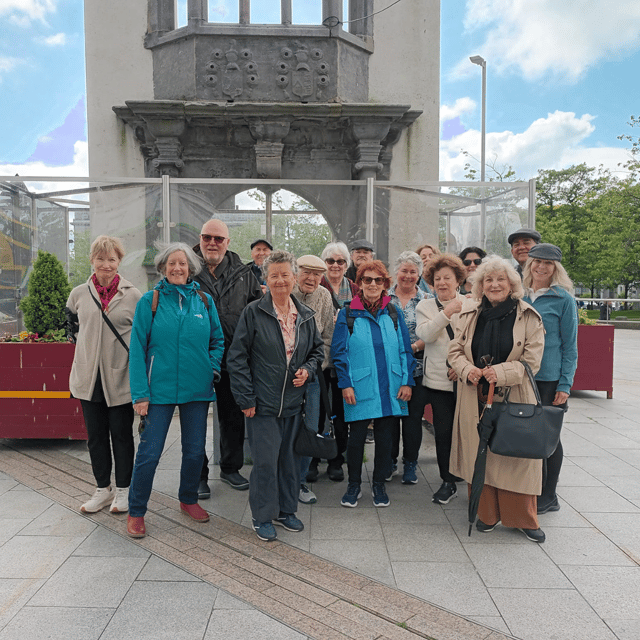
Your meeting point is the Browne Doorway on the north side of Eyre Square. It is a free-standing stone doorway enclosed by perspex glass, so look for the structure rather than a conventional building entrance. Arrive 15 minutes before the start time. That matters on a short tour because a late arrival can mean missing the opening explanation or forcing the group to wait.
Eyre Square is a useful place to begin because it sits at the center of modern Galway while preserving a clue from the city’s older story. The Browne family was one of Galway’s important merchant families, and the doorway gives the tour a physical link to that world from the first few minutes.
The activity ends back at the meeting point, which makes planning simple. You can arrange lunch, shopping, or another central activity afterward without needing transport back across town.
Seeing the city walls inside a shopping center
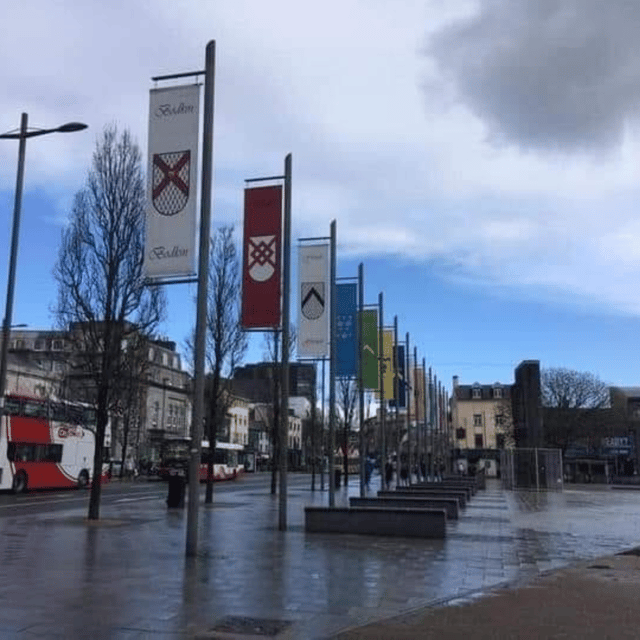
One of the tour’s best early surprises comes in Eyre Square Shopping Centre. Here, remnants of Galway’s medieval city walls are preserved inside a modern retail setting.
This stop helps you understand the importance of the walls to medieval Galway. They were not decorative ruins. They defined the protected city, shaped movement, and marked the boundary between the settled town and the land beyond it. Seeing them inside a shopping center also makes the city’s long change easier to grasp. Galway was not frozen in the Middle Ages. It kept building over, around, and alongside its earlier structures.
I find this kind of stop more useful than a single grand ruin because it teaches you how to spot fragments elsewhere. After seeing the wall here, you are better prepared to notice small pieces of medieval Galway that might otherwise look like ordinary masonry.
Lynch’s Castle and the power of the 14 Tribes
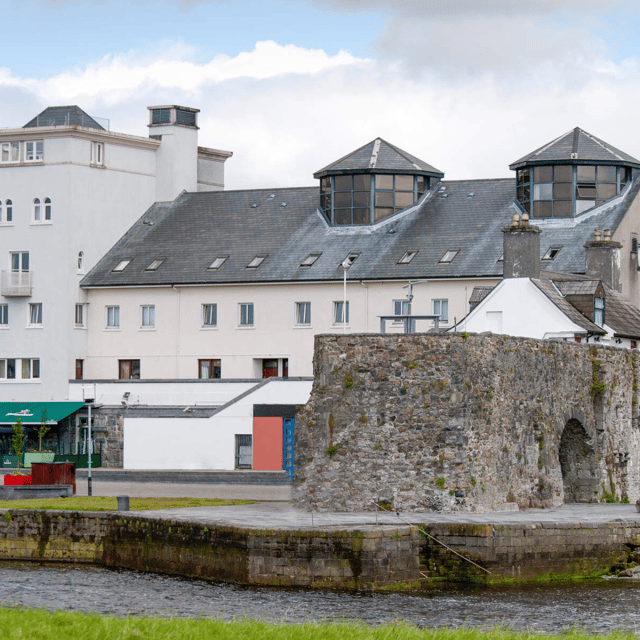
The route continues to Lynch’s Castle, now occupied by an AIB bank. The building is described as Ireland’s oldest commercial building, giving the stop an unusual modern connection. You are not simply looking at a castle separated from daily life. You are seeing a historic building still tied to commerce, as it was in Galway’s merchant past.
Marteen explains the Lynch family and the 14 Tribes of Galway, a group of powerful merchant families who shaped the city. The Lynch family was one of the most influential, and its story gives you a clearer picture of how authority worked in medieval Galway. Wealthy families controlled trade, property, and civic life, creating a city where business and politics were tightly linked.
The tour then takes you to Lynch’s Memorial Window, where you hear the legend of James Lynch Fitzstephen and his son Walter. In 1493, the father is said to have hanged his own son. It is a grim story, but it gives the tour one of its most memorable human moments. You may want to ask Marteen which parts belong to documented history and which belong to later legend. That distinction is often part of the fun with old city stories.
Something completely different for another day:
- From Galway: Aran Islands and Cliffs of Moher Tour & Cruise
★ 4.8 · 2,283 reviews - Cliffs of Moher & the Burren Tour from Galway
★ 5.0 · 1,913 reviews - From Galway: Cliffs of Moher and The Burren Guided Day Trip
★ 4.7 · 1,770 reviews - From Galway: Connemara and Cong Full-Day Tour
★ 4.7 · 1,737 reviews
St. Nicholas’ Church, Jane Eyre, and Cromwell’s soldiers
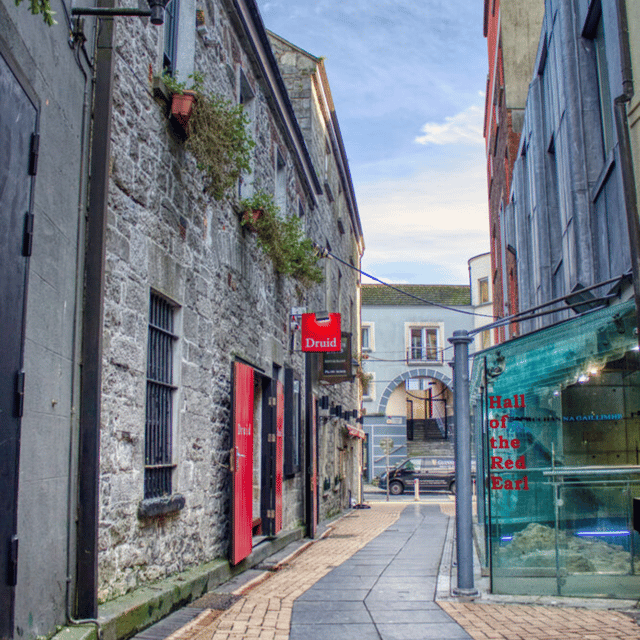
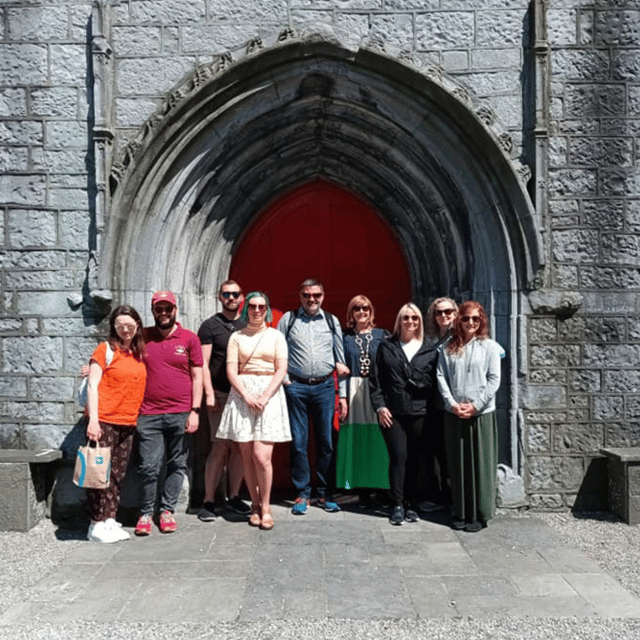
St. Nicholas’ Collegiate Church has been at the heart of Galway for more than 700 years. Its long life makes it an important stop, since religious buildings often preserve a city’s memory better than private homes or commercial properties.
The tour includes the church as part of the route, but entry costs extra: €5 for adults and €4 at the concession rate. If you want to go inside, carry a payment card or cash and allow for the additional cost. If you prefer to keep the tour strictly within the $23 price, you can still hear about the church from outside.
The stories connected with the church are varied. You will hear about Jane Eyre and James Kearney, as well as the period when Cromwell’s soldiers used the church as a stable. That last detail shows how buildings can change meaning during political upheaval. A place built for worship can become a military shelter, and the physical structure carries traces of those shifts.
This is also one of the points where the tour’s short length becomes useful. You get a focused explanation without spending too long inside one building. The drawback is that anyone hoping for a full church visit will need to pay separately.
The King’s Head and Galway’s political edge
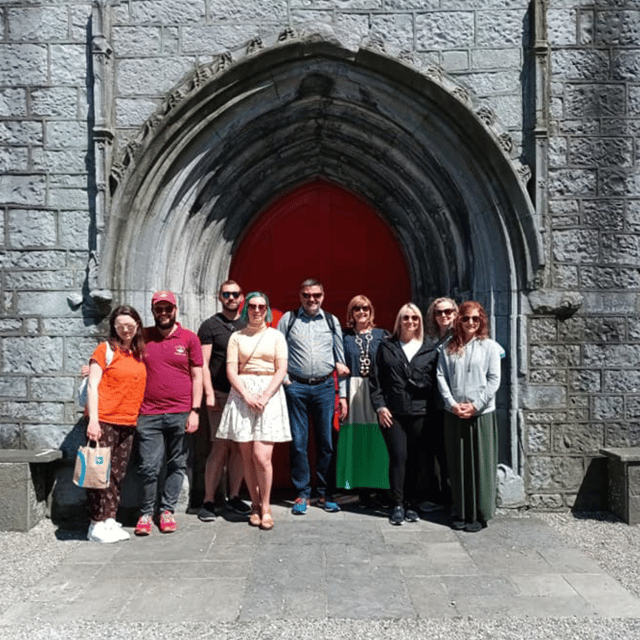
The route next connects the building that now houses the King’s Head Pub with the beheading of King Charles I of England. The stop adds political drama to the tour and shows that Galway’s story was tied to events far beyond its streets.
You can expect the guide to explain the connection rather than simply point out the pub. That distinction matters. A building with a busy modern use can look ordinary until you know the event associated with it. Galway’s medieval and early modern stories often survive in exactly this way, through a name, a doorway, or a local tradition attached to a building.
This is a good place to remember that the tour is not limited to the strict medieval period. It begins with medieval Galway but uses later events to explain how the city developed and how its buildings continued to function.
The Claddagh ring at Thomas Dillon’s
On Quay Street, the route stops at Thomas Dillon’s Jewellers, the original makers of the famous Claddagh ring since 1750. This gives you a direct connection to one of Galway’s best-known cultural symbols.
The Claddagh ring is often treated as a simple souvenir, but its local connection makes the story more meaningful. The tour explains the tale surrounding the ring and places it within Galway’s wider history of craftsmanship and trade. If you are considering buying one, this stop also gives you useful background before you decide.
Thomas Dillon’s is a working jeweller, not a museum site, so the focus here is the story and the tradition. You will not want to linger as if this were a major archaeological stop, but it adds variety to the route and gives the tour a personal, everyday connection to Galway.
Walking down into the Hall of the Red Earl
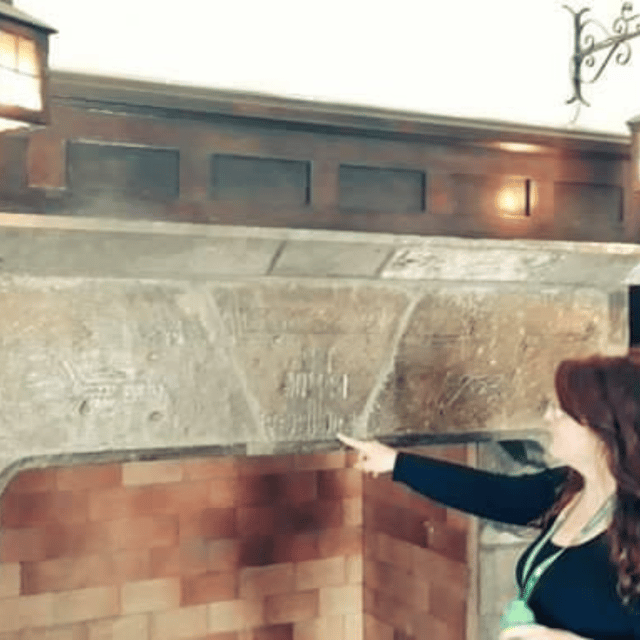
The Hall of the Red Earl is one of the most rewarding sites on the tour. It is a significant archaeological location operated by Galway Civic Trust, with remains that include walls, columns, and buttresses.
Here, you can walk down into the site for a closer look. That physical change in level helps you see how much of old Galway sits below or behind the modern street. Instead of viewing ruins from a distance, you get a more direct sense of the structure and its construction.
The Hall of the Red Earl is valuable because it fills in the gaps between Galway’s better-known monuments. The city walls and castles tell you about defense and powerful families. This site gives you another piece of the medieval city, showing how buildings and civic spaces were arranged.
If you have limited time in Galway, this is one of the places where a guide adds real value. Without context, archaeological remains can look like a pile of old stone. With an explanation of the walls, columns, and buttresses, the site becomes easier to picture as part of a working medieval town.
Kirwan’s Lane and the surviving medieval street plan
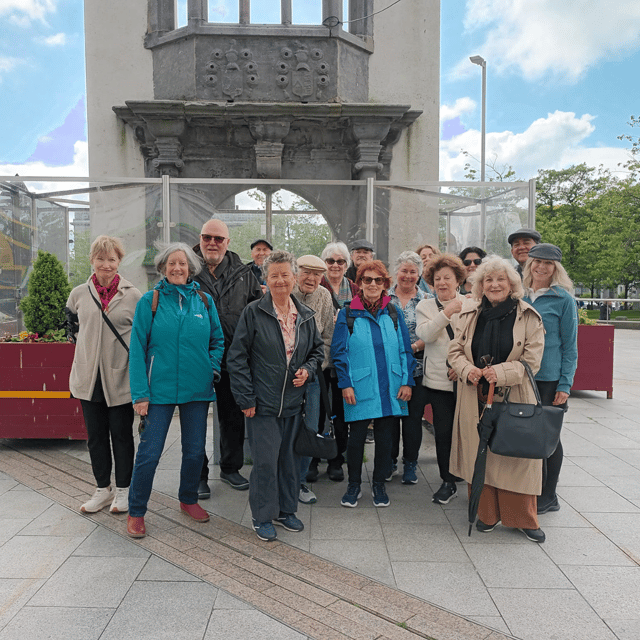
Kirwan’s Lane is one of only five lanes still in existence that preserve the names of Galway’s old families. It takes its name from the Kirwan family, another of the 14 Tribes.
The lane offers a change of pace from the larger landmarks. You will see remnants of medieval Galway in the buildings and the narrow route itself. The setting helps you think about movement through the old town, where streets and lanes were shaped by trade, homes, workshops, and family control.
This is the sort of stop that rewards attention. You might find that the lane feels less like a formal attraction and more like a surviving piece of the city’s daily structure. Listen closely to the guide here, because the meaning comes from the connection between the physical lane and the Kirwan family story.
Blake’s Castle and the harsh side of city life
At the end of Quay Street, Blake’s Castle introduces another of the 14 Tribes. The Blake family owned the building, which later fell into ruin before being restored around the 1980s.
The stop also brings up life for criminals in the jail. That subject gives the tour a harder edge. Medieval and early modern cities were not only places of trade and family power. They also had punishment, confinement, and public authority.
The restored structure lets you consider how much of Galway’s old appearance has survived through repair rather than uninterrupted use. Restoration can save a building, but it can also make it harder to tell which parts are original. A good guide helps you separate the old fabric from the later work and explains why the building still matters.
Ending at the Spanish Arch and the Claddagh
The tour finishes at the Spanish Arch, one of Galway’s most recognizable sights. Ending here works well because the arch brings together the city’s riverfront, trade, defense, and connection with the Claddagh across the River Corrib.
You will hear about the Claddagh and the tsunami that destroyed two of the arches. That detail is a reminder that Galway’s past was shaped not only by people and politics but also by natural forces. The remaining arch is therefore more than a photogenic landmark. It is part of a damaged gateway to the old waterfront.
The Spanish Arch is also a good place to pause after the tour. Since the activity ends back at Eyre Square, you are not stranded here, but you have a clear final point for photos and further exploration. The guide’s explanation gives you a stronger sense of what you are looking at than a quick stop for a picture would provide.
Timing, weather, and what to bring
The tour lasts 1.5 hours and runs in all weather. Wear comfortable shoes and bring weather-appropriate clothing, an umbrella, water, and a camera. Galway’s conditions can change quickly, so a waterproof layer is sensible even if the forecast looks calm.
You may also want a student card, cash, and a credit card. The student card and cash may be useful for the church concession or other personal expenses, while the credit card gives you a backup. Audio recording is not allowed, and smoking, alcohol, drugs, and bachelor or bachelorette party groups are not permitted.
The tour is wheelchair accessible. A severe weather warning can lead to cancellation for safety, with an alternative date or full refund offered. You can cancel up to 24 hours in advance for a full refund, and the reserve-now, pay-later option lets you hold a place without paying immediately.
Who should book the Medieval Galway Tour?
I would recommend this tour to first-time visitors who want a clear introduction to Galway’s old center. It suits anyone who enjoys local legends, family histories, churches, archaeological remains, and stories that explain why an ordinary-looking building matters.
It is also a good choice if you have only a short stay. In 90 minutes, you cover a wide range of sites without needing taxis or long transfers. Families with older children may enjoy the dramatic stories, especially the Lynch family tale and the history of the jail.
You may want a different option if you prefer long museum visits, extensive church interiors, or a tour focused only on architecture. The extra church admission is worth noting, and the route continues outdoors in poor weather.
Should you book it?
Book this Medieval Galway Tour if you want the city to make sense quickly. The $23 price is fair for a well-planned central walk led by Marteen Lane, especially because the route includes both famous sights and easy-to-miss remains.
For the best experience, arrive early at the Browne Doorway, wear proper rain gear, and decide in advance if you want to pay the separate fee for St. Nicholas’ Church. If you like history with a strong human angle, this tour should give you exactly what you are looking for.
FAQ
How long is the Medieval Galway Tour?
The tour lasts 1.5 hours.
How much does the tour cost?
The listed price is $23 per person.
Where does the tour begin?
The tour begins at the Browne Doorway in Eyre Square, on the north side of the square.
How early should I arrive?
You should arrive 15 minutes before the scheduled start time so the tour can begin on time.
Where does the tour end?
The activity ends back at the meeting point in Eyre Square.
Is entry to St. Nicholas’ Church included?
No. Adult entry costs €5, and concession entry costs €4.
What language is the tour conducted in?
The live guided tour is conducted in English.
Is the tour wheelchair accessible?
Yes, the activity is wheelchair accessible.
What happens if there is severe weather?
The tour runs in all weather, but a severe weather warning may cause cancellation. In that case, an alternative date or a full refund is offered.
Newest in Galway
- Wild Brown Trout fishing. Lough Corrib. French speaking Ghillie/Guide. Full day.★ 5.0 · 2 reviews
- Outdoor Walking Tour in Wonderful Walls of Galway City★ 4.5 · 2 reviews
- Walking the West Quarter of Inishbofin Island, Connemara coast. Self guided.5Hrs★ 5.0 · 1 review
- Private visit in an Irish Castle Home★ 5.0 · 6 reviews
- Cong The Quiet Man Museum Skip-the-Line Ticket★ 4.5 · 13 reviews
- Walking Tour of The Quiet Man Film Locations in Cong★ 5.0 · 78 reviews
- Tribe Gin School Experience in Galway★ 5.0 · 34 reviews
- Transfer – Galway City to Cork City (or reverse) – Premium Sedan★ 5.0 · 1 review
Galway Tours, compared.
Galway to Cliffs of Moher, Aillwee Cave & Dunguaire Castle Tour
Read our review →
Full-Day Cliffs of Moher & Burren Guided Tour
Read our review →
Galway to Inisheer Aran Islands, Cliffs of Moher and Boat Trip
Read our review →
Aran Islands and Cliffs of Moher Tour & Cruise
Read our review →
Cliffs of Moher & the Burren Tour from Galway
Read our review →
Cliffs of Moher and The Burren Guided Day Trip
Read our review →
Galway to Aran Islands Inisheer, Doolin, Cliffs of Moher Day Tour
Read our review →Browse the lists this tour appears in