
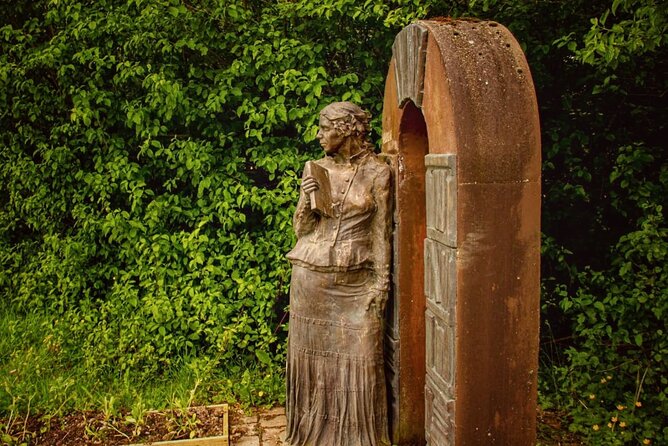
Reviewed · AUDIO TOURS
Maria Edgeworth Center-A Self-Guided Audio Tour
Maria Edgeworth deserves an hour of your Ireland trip. This self-guided tour in Edgeworthstown brings the celebrated novelist, educator, and reform-minded Edgeworth family into focus through audio, letters, portraits, books, and period objects. I like the clear link between Maria’s writing and her family’s work in education, and I like that the old schoolroom gives the story a real sense of place. The main drawback is that the experience depends on an audio guide, so you may prefer a live guide if you want a conversation or the chance to ask questions as you go.
At $9 per person, it is an easy-value stop for anyone interested in literature, local history, or Irish education. Plan for about one hour to 90 minutes, though one visitor spent three hours with the displays and related material. The centre is small enough to handle at an easy pace, but there is enough to read and hear that a rushed visit would miss much of its appeal.
In This Review
- Key points to know before you go
- Why Maria Edgeworth matters in Edgeworthstown
- Inside the former school building
- How the audio tour works
- The objects that make the story tangible
- Maria Edgeworth beside Austen and Byron
- What the visit feels like in practice
- Is $9 a fair price?
- Who should make time for this centre?
- Booking, timing, and cancellation
- Should you book the Maria Edgeworth Centre?
- FAQ
- Where is the Maria Edgeworth Centre?
- How much does the self-guided audio tour cost?
- How long does the experience take?
- Is the tour self-guided?
- What language is the audio tour offered in?
- What does the audio tour cover?
- Is admission included in the price?
- Is the centre suitable for most people?
- Can I cancel for a full refund?
- How far in advance is the experience usually booked?
Key points to know before you go
- Maria Edgeworth’s life takes centre stage: Learn about a major English-language novelist who was a contemporary of Jane Austen, Lord Byron, Sir Walter Scott, William Wordsworth, and Oscar Wilde.
- The old schoolroom gives the visit its character: The centre recreates a 19th-century classroom and explains Ireland’s hedge schools and the creation of the primary school system in 1831.
- The Edgeworth family story is larger than literature: Richard Lovell Edgeworth was an inventor, surveyor, and educator, and his ideas helped shape Maria’s work and the family’s public influence.
- Audio, letters, portraits, and objects work together: The displays help you connect Maria’s books with the people, places, and education debates around her.
- It is a practical short stop: The experience lasts roughly one hour to 90 minutes, costs $9, uses a mobile ticket, and is offered in English.
- The welcome adds a personal touch: Janine and Matt have helped bring the centre to life through introductions, local walks, and historical interpretation.
Why Maria Edgeworth matters in Edgeworthstown
If Maria Edgeworth’s name is familiar but her books are not, you are in good company. Her reputation once matched that of the major writers around her, yet she is less often discussed today than Jane Austen or Walter Scott. The centre gives you a useful chance to correct that gap without requiring a full day of literary study.
Maria was born into an unusually active family. Her father, Richard Lovell Edgeworth, worked as an inventor, surveyor, and educator. He encouraged practical thinking and educational reform, and Maria grew up in a setting where writing, science, child development, and public improvement were part of everyday family life.
That background helps explain why her novels were not simply drawing-room entertainment. Her writing often examined manners, money, class, marriage, education, and the effects of poor judgment. The centre connects those themes to her life instead of treating her as an isolated author.
I especially like that the story is not limited to a display of books. You get a picture of a whole family trying to improve the world around them, sometimes through ideas that were far ahead of their time. That makes the visit useful even if you do not plan to read Maria’s novels.
More Self-Guided Tours in Ireland:
- Cork: City Gaol Tour with Audio Guide
★ 4.8 · 108 reviews - Medieval Mile Museum Self Guided Audio Tour
★ 5.0 · 91 reviews - Galway’s City Centre: A Self-Guided Audio Tour
★ 5.0 · 7 reviews
Inside the former school building
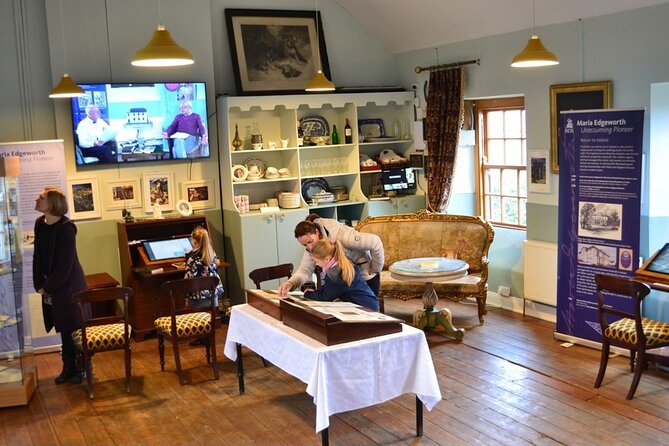
The Maria Edgeworth Centre occupies an old school building dating from 1840. That setting matters. You are not looking at education history in a modern gallery detached from the subject. You are standing in a building that was part of the local story.
The recreated 19th-century schoolroom is one of the clearest features of the visit. Here, the audio presentation explains the origins of Ireland’s hedge schools, informal places of learning that developed when formal education was limited or restricted. You also hear about the Edgeworth family’s campaign to make education a government priority.
The centre places this work in the context of the primary school system established in 1831. The Edgeworth family played an important part in that development, and the presentation shows how their ideas reached beyond their own household.
For me, this is the strongest reason to visit even if literature is not your main interest. You can see how education changed from local and often informal arrangements toward a national system. Maria’s family becomes part of a larger Irish story about access to learning, social reform, and the role of government.
The schoolroom also gives younger members of a family something concrete to look at. Portraits and written material may appeal most to adults, but an old classroom makes the past easier to picture.
How the audio tour works
This is a self-guided audio experience, not a scheduled talk led from room to room. You use a mobile ticket, and the tour is offered in English. That format gives you control over the pace, which is useful when you want extra time with a letter, portrait, or object.
A self-guided format also has limits. You cannot pause the story to ask why one family connection mattered, and you may need to spend a little more time orienting yourself than you would with a live guide. If you enjoy reading and listening at your own speed, that is a fair trade. If you prefer lively conversation, the centre’s occasional personal introductions and walking tours may suit you better.
The audio narrative covers Maria’s life and times, the Edgeworth family, local history, and connections with major literary names. It also helps place Edgeworthstown in a wider cultural setting through figures such as Oliver Goldsmith, Sir Walter Scott, and William Wordsworth.
One particularly useful feature is the combination of audio with visual material. A portrait or letter can make a name easier to remember, while the narration gives meaning to an object that might otherwise seem like a piece of old paper or furniture.
Allow at least an hour. The official estimate is one hour to 90 minutes, but the amount of time you need depends on how closely you read the displays. One especially enthusiastic visitor spent three hours with the audio guide, photographs, and letters. You do not need to copy that pace, but it confirms that the centre can reward a careful visit.
The objects that make the story tangible
The centre holds valuable artefacts, including pieces dating from the 18th century. The exact collection changes as new additions are made, but the displays include family portraits, books, letters, and objects connected with Maria and her relatives.
These items give the centre more weight than a simple biography panel. Maria’s life becomes easier to understand when you see the written record around her. Letters can reveal family relationships and intellectual interests, while books show the scale of her work and reputation.
A family-tree interest can also add another layer to the visit. One person exploring an Akenham connection found the centre especially useful for placing family names in context. If you are researching Irish ancestors, do not expect a dedicated genealogy archive from the information provided, but the family material may help you understand the people and social setting behind a local connection.
The centre has also been praised for its old images of Edgeworthstown, including views of former shops and streets. These details broaden the visit beyond Maria herself. You get a glimpse of how the town looked and how local memory has changed over time.
I would not treat the centre as a large museum. Its strength is focus. The displays concentrate on one family, one town, literature, and education, which makes the story manageable rather than overwhelming.
Something completely different for another day:
- Dublin to Cliffs of Moher, including Wild Atlantic Way and Galway
★ 5.0 · 23,331 reviews - From Dublin: Cliffs of Moher, Burren & Galway City Day Tour
★ 4.8 · 18,888 reviews - Dublin: Guinness Storehouse Entry Ticket
★ 4.6 · 16,863 reviews - Dublin to Cliffs of Moher, Burren, Wild Atlantic Way, Galway Tour
★ 5.0 · 12,924 reviews
Maria Edgeworth beside Austen and Byron
The centre presents Maria as one of the most successful English-language novelists of her era. That claim becomes more meaningful when you place her beside Jane Austen and Lord Byron, two of the period’s best-known literary figures.
You do not need to know their books in advance. The audio tour provides the basic setting and shows how Maria belonged to a serious literary culture that crossed Ireland and Britain. Her connections with Sir Walter Scott and William Wordsworth add to that picture.
The mention of Oscar Wilde extends the story into a later generation and shows how Edgeworthstown remained connected to a wider literary tradition. These links are useful because they prevent Maria from being presented as a local figure of interest only. She was part of a much larger conversation about literature and society.
Still, this is not a full literary seminar. You may leave wanting to read her novels or her letters, rather than feeling that every work has been examined. That is a positive result for a small museum. The centre gives you enough background to choose what to read next, and books are available to buy according to one account of the visit.
What the visit feels like in practice
The atmosphere is friendly and personal. Janine has welcomed people and offered an introduction to Maria and the family, while Matt has led local historical walks that end at the centre. Those personal touches can add context that a recorded narration cannot provide.
The centre has been described as easy to walk around, with clearly arranged rooms and seating outside. Tea and coffee may be available, though the supplied information does not give a firm service schedule, so I would treat that as a possible extra rather than a reason to plan your visit around it.
Most people can participate, and service animals are allowed. The centre is near public transportation. No special fitness is required, and the experience is suitable for anyone who can comfortably move through a small museum and listen to an English audio presentation.
Payment deserves a small practical note. One person arrived without cash and wondered about payment options on quieter days. Since the booking uses a mobile ticket, the safest approach is to arrange admission before you arrive rather than assume every payment method will be available on site.
Is $9 a fair price?
At $9, this is inexpensive by Irish attraction standards. You receive admission to the centre and an audio experience that covers literature, education, local history, family connections, and historic objects.
The value is best for you if you take time with the displays. A quick walk through the rooms may make the price seem less impressive, while an hour or more with the audio and material gives you a fuller return. The experience is also a good choice on a day when you want a meaningful indoor activity without committing to a large national museum.
The price does not include a live guide or a long walking tour. If you want a personal lecture or a broad tour of County Longford, you may need to pair the centre with another activity. A local historical walk with Matt has been combined with a centre visit, which could give you more town context, but the self-guided admission itself is the $9 experience described here.
Who should make time for this centre?
I would recommend it most strongly to:
- Readers who want to learn why Maria Edgeworth mattered
- People interested in Jane Austen’s literary era
- Families tracing Edgeworthstown or related family connections
- Anyone curious about the development of Irish education
- Visitors who prefer small museums with a clear local focus
- Parents and children who enjoy historic schoolrooms
- People looking for a one-hour cultural stop near public transportation
You may want to skip it if you have no interest in literature, education, family history, or small local museums. The centre is not built around grand architecture or a long list of major attractions. Its rewards come from the story and the objects.
Booking, timing, and cancellation
The average booking is made 36 days in advance, which suggests that planning ahead is sensible, particularly if you are building a fixed Ireland route. Confirmation arrives at booking, and the mobile ticket makes the admission process straightforward.
Free cancellation is available if you cancel at least 24 hours before the scheduled start time. Cancellations made less than 24 hours in advance are not refunded, and changes inside that period are not accepted. The cut-off follows local time.
I would allow 90 minutes in your schedule even if you expect to finish in an hour. That gives you time to listen carefully, look at the letters and portraits, and enjoy the schoolroom without turning the visit into a race.
Should you book the Maria Edgeworth Centre?
Book it if you want a thoughtful, affordable look at an important Irish writer and the family behind her. The old schoolroom, education story, and personal papers give the visit more substance than its modest size suggests.
I would especially recommend it to anyone passing through Edgeworthstown, researching local family ties, or trying to add literary context to an Ireland trip. The self-guided format is not perfect for people who need a live conversation, but the price is low, the timing is flexible, and the subject is genuinely distinctive. If you have read Maria Edgeworth, you will gain context. If you have not, you may leave with a new author on your reading list.
FAQ
Where is the Maria Edgeworth Centre?
The Maria Edgeworth Centre is in Edgeworthstown, Ireland. It is located in an old school building dating from 1840.
How much does the self-guided audio tour cost?
The listed price is $9 per person. Admission to the centre is included.
How long does the experience take?
The estimated duration is about one hour to 90 minutes. You can spend longer if you want to listen closely and study the displays.
Is the tour self-guided?
Yes. The experience uses a self-guided audio tour rather than a standard guided presentation.
What language is the audio tour offered in?
The tour is offered in English.
What does the audio tour cover?
It covers Maria Edgeworth’s life and work, the Edgeworth family, Edgeworthstown’s past, literary connections, Irish hedge schools, education reform, and the primary school system established in 1831.
Is admission included in the price?
Yes. The admission ticket to the Maria Edgeworth Visitor Centre is included.
Is the centre suitable for most people?
Yes. Most people can participate, and the centre is near public transportation. Service animals are also allowed.
Can I cancel for a full refund?
Yes, if you cancel at least 24 hours before the experience start time. Cancellations made less than 24 hours in advance are not refunded.
How far in advance is the experience usually booked?
It is booked an average of 36 days in advance. If your Ireland schedule is fixed, booking ahead is sensible.
Newest in Ireland
- Wicklow Mountains Private Day Tour including Glendalough★ 5.0 · 7 reviews
- Wicklow: Private Day Tour from Dublin★ 5.0 · 5 reviews
- Westport: Beach and Countryside Guided Horse Ride★ 4.8 · 6 reviews
- Westport: Fun-filled walking tour of a beautiful town★ 5.0 · 7 reviews
- Waterford Treasures: Walking Tour of the Viking Triangle★ 4.7 · 43 reviews
- From Dublin: Powerscourt House, Guinness Lake & Glendalough★ 5.0 · 2 reviews
- Waterford: Mount Congreve Gardens Entry Ticket★ 5.0 · 7 reviews
- Waterford Treasures: Medieval Museum Entry Ticket★ 4.5 · 20 reviews
Audio Tours, compared.


Turtle Bunbury’s Dublin: A Self-Guided Audio Tour from a Celebrated Author
Read our review →
Browse the lists this tour appears in