
Reviewed · WATERFORD TOURS
Waterford: The Irish Wake Museum Guided Tour
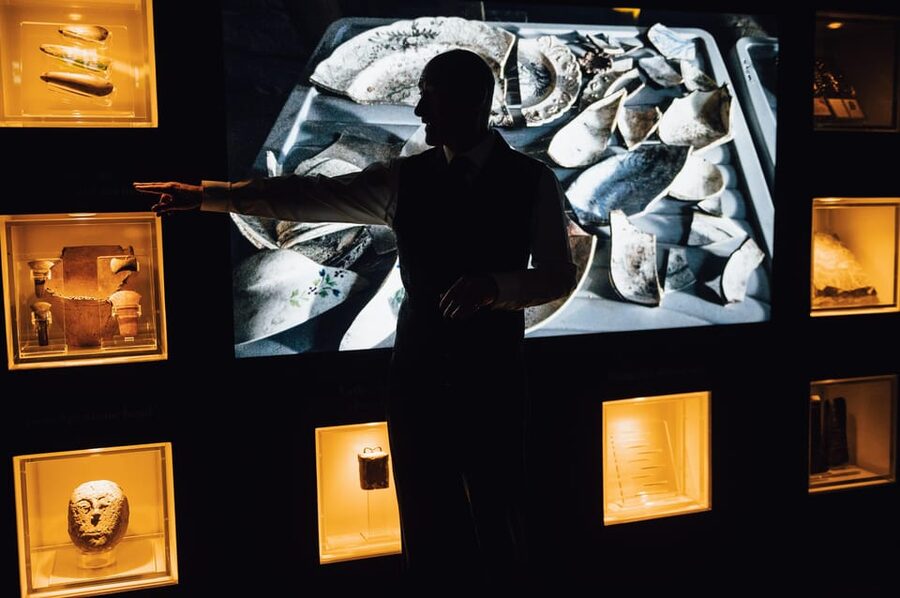
Death has a story to tell. Waterford’s Irish Wake Museum brings that story into a beautifully conserved 15th-century almshouse, where a guide explains how Irish wakes grew from early Christian customs into familiar funeral traditions. I like the rare focus on an often-misunderstood part of Irish culture, and I like that the short, guided visit stays personal rather than sprawling. The main drawback is clear: realistic depictions of the recently deceased, along with references to illness and injury, may be upsetting.
The museum sits in Waterford’s Viking Triangle, so it fits neatly into a day of sightseeing in the city center. Guide Clare has earned special praise for her work, which matters here because the subject needs tact and explanation. You should also know that the old building is not suitable for wheelchair users or people with limited mobility.
In This Review
- Key points to know before you go
- Entering Waterford’s former almshouse
- The Irish wake, explained by a live guide
- The death mask and other memorable details
- A short tour with a serious purpose
- Is the $15 price fair?
- Who will appreciate this museum most?
- Making the most of your visit
- My verdict on the Irish Wake Museum
- FAQ
- Where does the Irish Wake Museum tour start?
- How long does the guided tour last?
- What is included in the ticket?
- Is the tour conducted in English?
- Is the museum suitable for children?
- Is the tour accessible for wheelchair users?
Key points to know before you go
- Ireland’s only Wake Museum: This is a focused look at the Irish wake, not a general museum about Waterford.
- A 15th-century setting: The former almshouse connects the building itself with six centuries of stories about life and death.
- A guided visit of about 40 minutes: The tour is short enough to fit into a busy sightseeing day.
- Ireland’s oldest death mask: One of the museum’s most unusual objects gives the subject a direct, physical connection to the past.
- A serious but worthwhile theme: Expect discussion of death, illness, injury, funeral customs, and realistic figures representing the recently deceased.
- A small act of local support: Waterford Treasures donates €1 from every admission to the Waterford Hospice Movement.
Entering Waterford’s former almshouse
The experience begins at the Irish Wake Museum in the heart of Waterford’s Viking Triangle. You do not travel between several sites or need transport during the visit. You arrive at the museum, take the guided tour, and finish back where you started.
That simple setup makes the museum easy to pair with other Waterford Treasures attractions in the area. The tour lasts about 40 minutes, though the full activity may run from 40 minutes to an hour depending on the scheduled time and pace. Check the available starting times before you plan the rest of your day.
The building is more than a shell for exhibits. It was once a 15th-century almshouse, and it has been associated with life and death in Waterford across six centuries. That gives the visit a strong sense of place without requiring a large collection or a long route through galleries.
I appreciate museums that let the building do some of the explaining. Here, the age and former purpose of the almshouse help you understand why the subject feels close at hand. You are not simply reading about Irish funeral customs in a modern display room. You are hearing the story inside a place tied to care, hardship, illness, and mortality.
The old structure also creates the main practical limitation. Due to the nature of the building, the tour is not suitable for people with limited mobility or wheelchair users. If you need step-free access, this is not the right attraction for you.
More Museum Visits in Waterford:
- Waterford Treasures: Medieval Museum Admission Ticket
★ 4.5 · 132 reviews - Irish Wake Museum Tour Rituals of Death and Celebration of Life
★ 5.0 · 115 reviews - Waterford Treasures: Medieval Museum Entry Ticket
★ 4.5 · 20 reviews
The Irish wake, explained by a live guide
The central subject is the Irish wake, a tradition that brought family, friends, neighbors, and the wider community together around a person who had died. The museum explains the customs and beliefs that shaped the wake, tracing them from early Christian times through the 20th century.
This guided approach is important. Funeral customs can look strange or even morbid when presented as isolated objects. A live guide can explain how the practices fit into Irish life, and why a wake was not only a farewell but also a social and spiritual gathering.
The tour gives you a way to consider the wake as a set of traditions built around grief, belief, family duty, and community support. You may come away with a better understanding of why the wake held such a firm place in Irish culture.
The subject is handled through the eyes of an expert guide, and the strongest available praise goes to Clare, who is singled out for being great at her role. Since the tour is only around 40 minutes, a good guide makes a real difference. You need clear explanations, a steady pace, and enough sensitivity to keep the visit informative without making it feel cold.
This is not an attraction for someone who wants a light, cheerful stop between cafés. The museum specifically includes references to death, injury, and illness. It also uses realistic depictions of the recently deceased. Those details are not minor warnings. They are central to deciding if the visit suits you.
Children under eight should not attend. Families with older children should still think about temperament rather than relying only on the age guideline. An older child who is curious about history may find the museum meaningful, while someone uncomfortable with realistic death-related displays may not.
The death mask and other memorable details
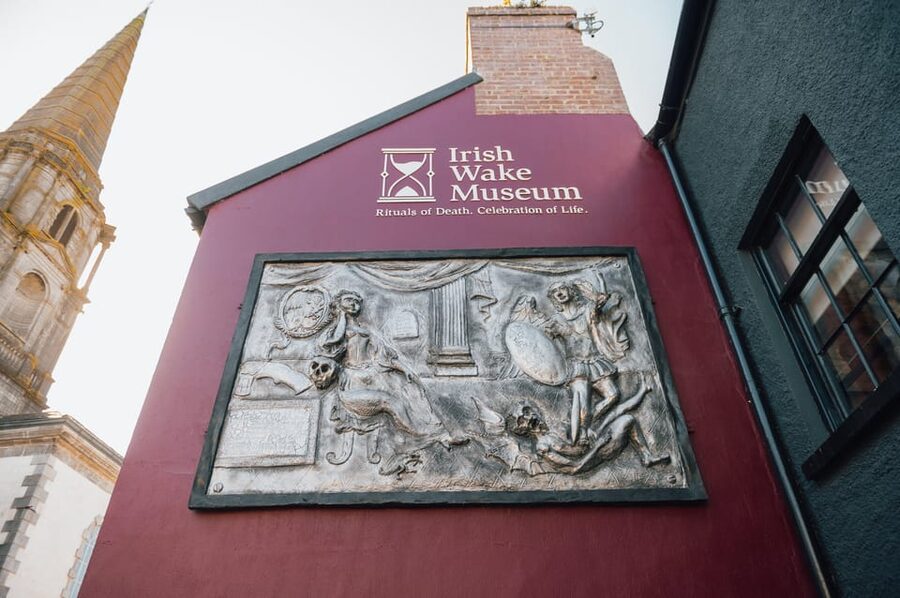
One of the museum’s headline objects is Ireland’s oldest death mask. It is an unusual piece, and its presence gives the visit a physical focal point.
A death mask can make the past feel immediate in a way that a written account cannot. You are looking at an object connected directly to the face of a deceased person, rather than a general symbol of mourning. That may be fascinating, unsettling, or both.
The museum also uses its setting and displays to explain the origins of wake customs. The supplied information does not provide a full list of individual objects, so you should not expect a catalog-style tour of every exhibit. The value comes from the way the guide links the objects, building, and traditions into one short story.
I would approach this stop with patience. The point is not to rush toward the most unusual object, take a quick look, and leave. The death mask works best as part of the wider explanation of how Irish people understood death and honored the dead.
The museum’s title may lead you to expect a narrow display about one custom. In practice, the tour places the wake within a longer account of Irish life, beginning in early Christian times and reaching into the 20th century. That wider time span helps you see how traditions change while still keeping familiar elements.
A short tour with a serious purpose
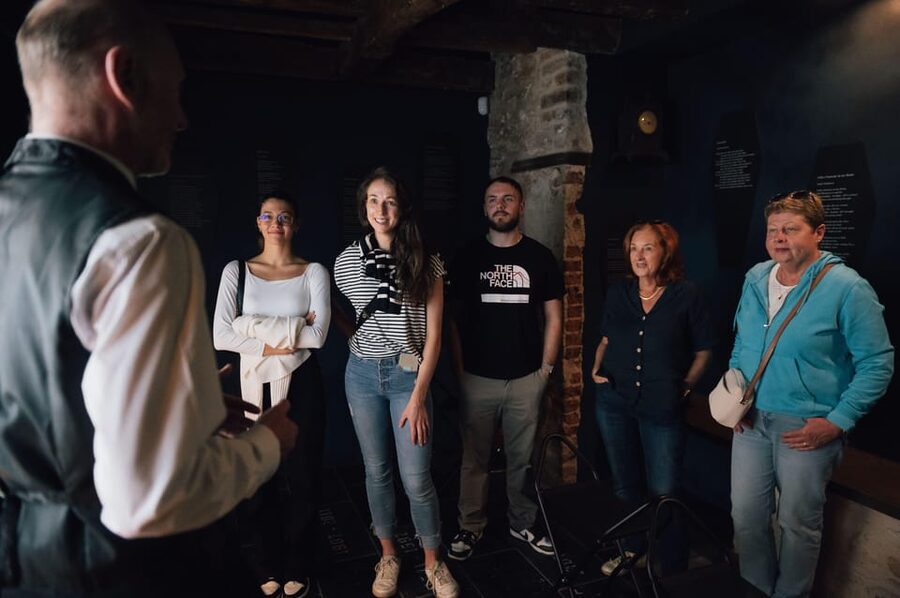
At around 40 minutes, this is a compact experience. I see that as a strength for most visitors. You can fit it between other Waterford sights without giving up half a day, and the subject does not get stretched into an exhausting lecture.
The short duration also means you should not expect a large museum with hours of independent browsing. The ticket includes entry and a reenactor-led guided tour, so the main experience is the presentation rather than free exploration.
That format suits you if you prefer context to labels. A self-guided display might offer more time with each object, but it would leave you to work out the meaning of unfamiliar practices on your own. Here, the guide provides the connections.
The tour ends at the same museum where it begins. There is no included transportation, food, or drink, but none is really needed for an attraction in the Viking Triangle. Plan to eat before or after the visit rather than expecting refreshments as part of the ticket.
The activity is in English, with a live English-speaking guide. If you need another language, the supplied information does not indicate that one is available.
A few more ways to spend a day in Waterford
- House of Waterford Crystal Guided Factory Tour
★ 4.5 · 2,303 reviews - Skip the Line: Hook Lighthouse Entrance Ticket and Guided Tour
★ 5.0 · 470 reviews - Waterford: House of Waterford Factory Tour
★ 4.8 · 256 reviews - Waterford Treasures: Epic Walking Tour
★ 4.5 · 152 reviews
Is the $15 price fair?
At $15 per person, the museum is priced as a specialized cultural attraction rather than a major full-day museum. The value depends on your interest in Irish customs and on how comfortable you are with the theme.
I think the price is reasonable if you want something distinctive in Waterford. You are paying for access to Ireland’s first Wake Museum, the historic almshouse setting, and a live guided presentation. The experience is not easily replaced by a general city walk because its subject is so specific.
The cost is less convincing if you are looking only for a broad overview of Waterford. This is not a substitute for seeing the city’s other historic sites, and the tour is short. If you have limited time and want only the biggest sights, you may prefer to spend that time elsewhere.
One detail improves the value beyond the visit itself: Waterford Treasures donates €1 from each admission ticket to the Waterford Hospice Movement. That does not change the content of the tour, but it gives part of your admission a local purpose connected to the museum’s subject.
The booking terms also reduce the risk of planning ahead. You can reserve now and pay later, and you can cancel up to 24 hours before the activity for a full refund. Keep in mind that starting times vary, so check availability before building the rest of your itinerary.
Who will appreciate this museum most?
I would recommend the Irish Wake Museum to you if you enjoy cultural history that deals with ordinary life, belief, and custom rather than famous battles or grand houses. It offers an unusual way to understand Ireland through what people did when a family member died.
It should also suit you if you have already seen some of Waterford’s major attractions and want a more focused experience. The location in the Viking Triangle makes it easy to add to a city-center day.
The museum is a good match for visitors who appreciate live interpretation. The guide-led format means you do not have to decode every display yourself, and the tour’s compact length keeps the experience manageable.
You may want to skip it if death-related subjects are difficult for you, or if you are traveling with a child under eight. The realistic depictions and references to illness and injury are clearly part of the presentation, not something you can avoid by choosing a different corner of the museum.
The building’s access limits are equally important. People with limited mobility and wheelchair users should choose another Waterford attraction, since this tour is not suitable for them.
Making the most of your visit
I would schedule the museum when you have enough time to think about it afterward. The tour itself is short, but its subject is heavier than the clock suggests. It may not be the best choice immediately before a rushed lunch or a tightly timed departure.
Arrive with an open mind. The Irish wake can be misunderstood if you view it only as a funeral custom. The guide’s job is to show how the tradition connected mourning with community, faith, family responsibility, and longstanding superstition.
Pay attention to the building as well as the displays. The almshouse is a key part of the experience, and its connection to six centuries of life and death in Waterford gives the tour a physical setting that a modern exhibition could not reproduce.
If you are deciding between this and a more general history attraction, ask yourself what kind of memory you want from Waterford. The Wake Museum offers an intimate, unusual subject. It will probably not be the most cheerful stop of your trip, but it may be one of the most distinctive.
My verdict on the Irish Wake Museum
You should book this tour if you want a short, well-guided look at an important Irish tradition and you are comfortable with direct references to death. The 15th-century almshouse, Ireland’s oldest death mask, and Clare’s praised guiding give the visit plenty of character despite its brief length.
I would not book it simply because you have spare time in Waterford. The subject is specific, the building has access limitations, and the realistic displays will not suit everyone. But for the right audience, this is a thoughtful and unusual way to understand Irish culture, with part of the admission supporting the Waterford Hospice Movement.
FAQ
Where does the Irish Wake Museum tour start?
The tour starts at the Irish Wake Museum in the heart of Waterford’s Viking Triangle.
How long does the guided tour last?
The guided tour lasts about 40 minutes. The activity duration is listed as 40 minutes to one hour, depending on the available starting time.
What is included in the ticket?
The ticket includes entry to the Irish Wake Museum and a reenactor-led guided tour.
Is the tour conducted in English?
Yes. The tour has a live guide and is conducted in English.
Is the museum suitable for children?
The experience is not suitable for children under eight. It includes references to death, illness, and injury, as well as realistic depictions of the recently deceased.
Is the tour accessible for wheelchair users?
No. Due to the nature of the historic building, the tour is not suitable for wheelchair users or people with limited mobility.
Newest in Waterford
- Waterford Treasures: Walking Tour of the Viking Triangle★ 4.7 · 43 reviews
- Waterford: Mount Congreve Gardens Entry Ticket★ 5.0 · 7 reviews
- Waterford Treasures: Medieval Museum Entry Ticket★ 4.5 · 20 reviews
- Waterford Treasures: King of the Vikings★ 5.0 · 2 reviews
- Waterford, Kilkenny and House of Waterford Crystal★ 4.0 · 12 reviews
- Waterford Treasures: Medieval Museum Admission Ticket★ 4.5 · 132 reviews
- Semi Private tour Rock of Cashel – Cahir castle & Kilkenny★ 3.5 · 9 reviews
- Osprey Viking Cruises★ 5.0 · 56 reviews
Waterford Tours, compared.

House of Waterford Crystal Guided Factory Tour
Read our review →
Skip the Line: Hook Lighthouse Entrance Ticket and Guided Tour
Read our review →

Waterford Treasures: Medieval Museum Admission Ticket
Read our review →
Irish Wake Museum Tour Rituals of Death and Celebration of Life
Read our review →

Browse the lists this tour appears in