Reviewed · DUBLIN TOURS
5-Day Northern Ireland and Atlantic Coast Small-Group Tour from Dublin
Northern Ireland meets the Atlantic coast. This five-day road trip takes you from Dublin to Belfast, Derry, Donegal, Mayo, Connemara, and Galway, pairing major sights with long stretches of rugged coast, bog, farmland, and open moor. I like the small group of no more than 16 and the choice between B&B and three-star hotel accommodation. The main drawback is the pace: you cover a lot of ground, so some stops feel more like a first look than a full visit.
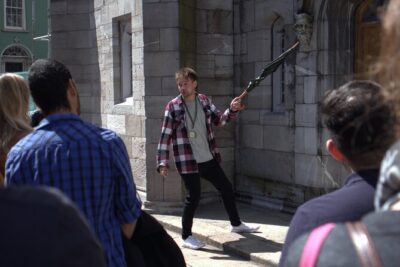
I also like the human touch supplied by a driver-guide. Guides such as Gabriel, Liam, and Feargal have been praised for storytelling, safe driving, Irish music, and useful local context. You should also budget for admission fees and your own meals, since neither is included in the $1,563.99 price.
In This Review
- Key points to know before booking
- Why this five-day route works
- Belfast and the Titanic story
- Giant’s Causeway and the northern coast
- Derry’s walls and a complicated past
- Donegal Castle and Gaelic country
- Mayo, famine history, and Achill Island
- Connemara National Park and the Twelve Bens
- Galway Cathedral and the final city
- What the driver-guide adds
- Accommodation, meals, and the real price
- Who should book this tour?
- Should you book the Northern Ireland and Atlantic Coast tour?
- FAQ
- Where does the tour start and finish?
- How long is the tour?
- What accommodation is included?
- How large is the tour group?
- Is transport included?
- Are meals and attraction admission fees included?
- How much luggage can I bring?
Key points to know before booking
- The route covers a remarkable sweep of Ireland: Belfast, Giant’s Causeway, Derry, Donegal, Mayo, Achill Island, Connemara, and Galway all appear within five days.
- The group size stays personal: The minibus carries a maximum of 16 people, giving your guide more room to adjust conversation and daily attention.
- The best moments mix scenery and history: Titanic Belfast, the walls of Derry, famine-era Mayo, and the Atlantic coast each show a different side of the island.
- Accommodation is flexible: You can request B&B or three-star hotel lodging, subject to availability.
- The luggage limit is strict: Bring one piece weighing no more than 20 kilograms, plus a small onboard bag.
- Admission costs are extra: Titanic Belfast, Giant’s Causeway, libraries, Donegal Castle, and other paid sites require separate budgeting.
Why this five-day route works
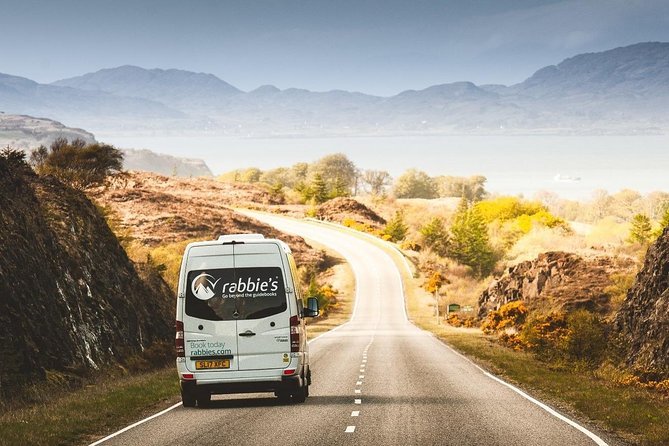
I like the shape of this tour because it does not treat Ireland as a single postcard. Northern Ireland brings industrial history, political memory, and dramatic coastal rock. Donegal and Mayo feel quieter and more remote. Connemara and Galway add mountain views, wildlife, old stone, and traditional music.
The route is also useful if you have only a few days after seeing Dublin. You do not need to arrange several hotels, study rural bus timetables, or decide which Atlantic roads are worth the time. Your driver-guide handles the long connections while you look out the window.
That convenience comes with a tradeoff. Five days is enough to sample the west and north, but not enough to know any one place in depth. You will spend substantial time on the road, and the schedule may feel full if you prefer slow mornings, long museum visits, or independent walks.
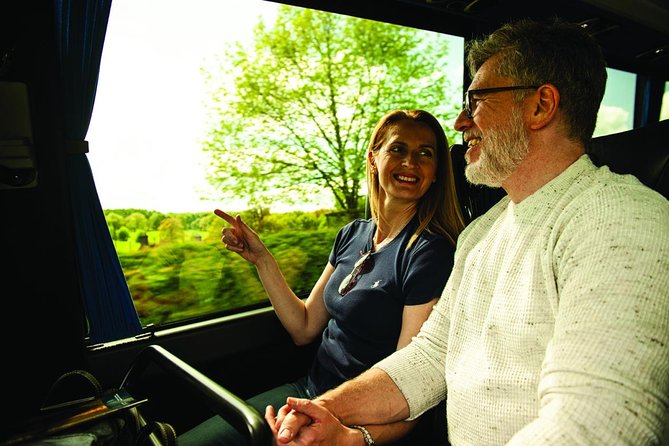
The experience starts at 9:00 a.m. outside Kilkenny Design at 6 Nassau Street in Dublin 2. Arrive at least 15 minutes early. The air-conditioned mini-coach is a practical choice for narrow rural roads, though a small vehicle naturally means less room for luggage and personal space than a full-size coach.
A few more ways to spend a day in Dublin
- Dublin to Cliffs of Moher, including Wild Atlantic Way and Galway
★ 5.0 · 23,331 reviews - From Dublin: Cliffs of Moher, Burren & Galway City Day Tour
★ 4.8 · 18,888 reviews - Dublin: Guinness Storehouse Entry Ticket
★ 4.6 · 16,863 reviews
Belfast and the Titanic story
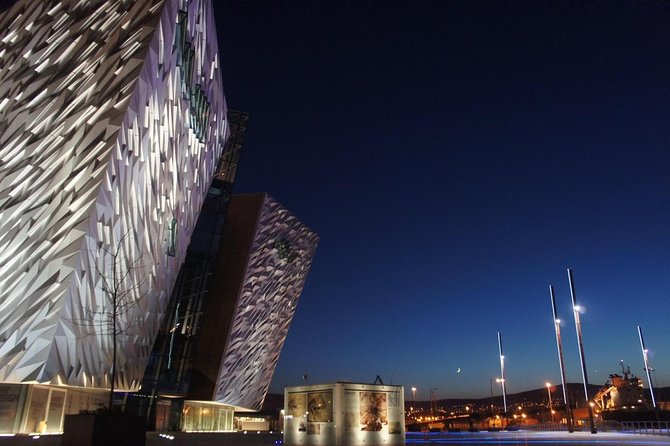
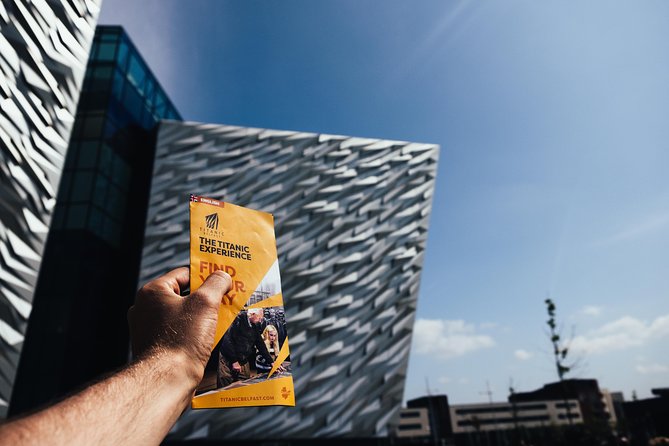
The first major stop is Titanic Belfast, with about two hours set aside. The attraction sits in the regenerated waterfront area where the ship was constructed, making the setting part of the story rather than just a backdrop.
This is more than a ship-themed museum. The visit connects Belfast’s shipbuilding skill with the people who built the Titanic and the tragedy that followed. I would allow time to absorb both sides of that story. The subject has plenty of glamour, but the human cost matters just as much.
Two hours gives you a useful introduction, though you may not see every part at a leisurely pace. Admission is not included, so check the current fee when planning your budget. The stop is especially worthwhile if you want industrial and social history alongside scenery.
From Belfast, the route heads north toward the coast. That transition is one of the pleasures of the trip. The city experience gives way to sea air and unusual rock formations, with the road itself providing a strong sense of how quickly Ireland changes.
Giant’s Causeway and the northern coast

At Giant’s Causeway, you have about one hour. The famous formations are made of tightly packed basalt columns, and their regular shapes have inspired the old stories of Irish giants. The tour description wisely gives you both the geology and the folklore.
One hour is enough for a clear first impression and time around the main formations, but it is not an open-ended coastal walk. Wear shoes suited to uneven ground and bring a rain layer. The Atlantic coast can change mood quickly, and even a short stop benefits from practical clothing.
Admission is extra here as well. That matters because the tour price looks substantial at first glance, yet several signature attractions still sit outside the package. I would treat the included transport, guide, breakfast, and accommodation as the core value, then add entry fees before deciding if the total fits your budget.
The northern coast is one of the strongest scenic portions of the journey. You get a direct contrast between a built-up port city and cliffs, sea, and volcanic rock within the same day. That variety is a major reason to choose this route instead of a city-only break.
Derry’s walls and a complicated past
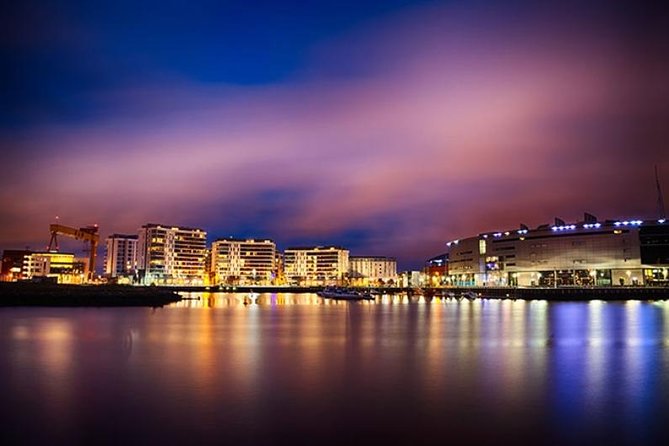
Day two turns to Derry, described as the only completely walled city in Britain and Ireland. About two hours are allocated at Derry Central Library, with time in the city for markets, spires, museums, and the old walls.
The exact stop name may sound unusual, but the real value is the city around it. Derry rewards attention to its physical layout. The walls help you understand the old town, while the museums and streets bring political and social history closer to the present.
This is one of the places where a strong guide can change the experience. A driver-guide who can explain the past without flattening it into a simple story will help you notice details you might otherwise miss. One review singled out the bad weather in Derry, a useful reminder that this stop can be atmospheric in more ways than one. Bring waterproof clothing.
The two-hour window should give you a solid introduction, but you may wish for more time if you enjoy museums or want to explore every section of the walls. The route has to keep moving, so this is not the place for a completely independent afternoon.
Something completely different for another day:
- Dublin to Cliffs of Moher, Burren, Wild Atlantic Way, Galway Tour
★ 5.0 · 12,924 reviews - Dublin to Belfast Black Cab, Dunluce Castle and Giant’s Causeway
★ 5.0 · 7,954 reviews - Kilkenny, Wicklow Mountains & Glendalough Day Tour from Dublin
★ 5.0 · 7,897 reviews - From Dublin: Wicklow Mountains, Glendalough & Kilkenny Tour
★ 4.8 · 6,235 reviews
Donegal Castle and Gaelic country
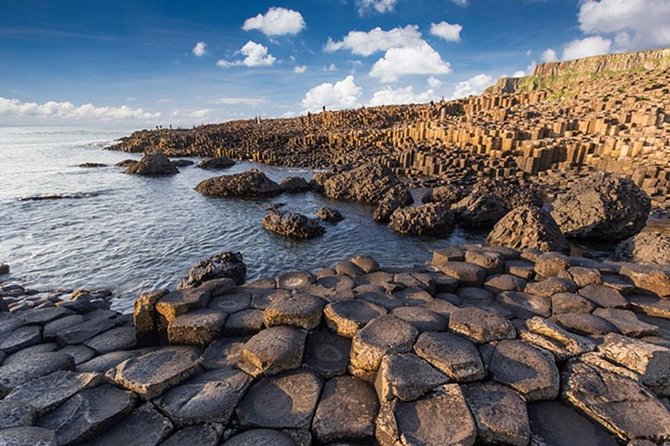
The next stop is Donegal Castle, with about an hour to explore. The castle gives the day a clear architectural focus, while the surrounding area introduces rugged coast, forest, and a strong Gaelic cultural identity.
I like this pairing with Derry. The first stop asks you to think about a walled city and its political past. Donegal shifts the mood toward older Gaelic traditions and rural Ireland. You are not simply collecting castles. You are seeing how different parts of the island express identity through buildings, language, and place.
An hour is enough to visit the castle without turning the stop into a long indoor session. If you are especially interested in architecture, you may want to read a little beforehand so the short visit has more meaning. Admission is not included, so keep a separate allowance for entry.
Donegal is also where the road journey becomes part of the attraction. Forest, open country, and rugged shore replace the denser feel of Belfast and Derry. The reward is a sense of space. The cost is that rural connections take time.
Mayo, famine history, and Achill Island
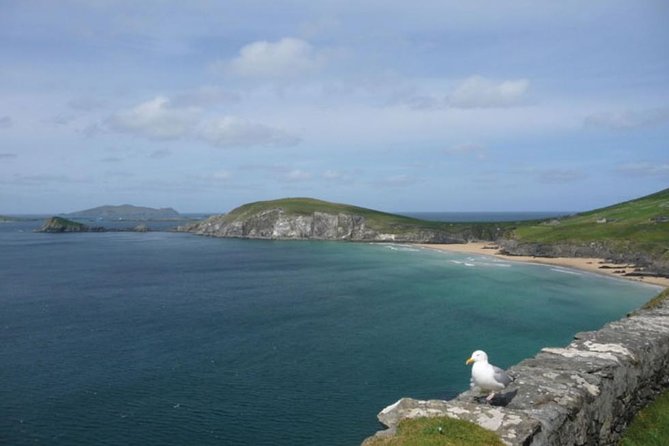
The route continues west into County Mayo, an area marked by the Great Potato Famine. The program includes time at County Mayo Library and then moves through farmland, bogs, open moor, distant hills, and Atlantic views toward Achill Island.
The Mayo section carries a different emotional weight. The scenery can look peaceful, but the famine history gives the countryside a harder edge. That contrast is important. You are not just passing pretty fields. You are moving through a region shaped by hunger, displacement, and hardship.
The description allows about an hour at the library, followed by time on Achill Island. Achill is the place to slow your attention and watch the coast. The appeal is not a long list of formal attractions. It is the combination of rough sea, quiet surroundings, wildlife, and typical western Irish scenery.
This is also a day when weather and road conditions can influence how much you see. The itinerary includes winding roads and open country, so a flexible attitude helps. You may spend less time at one viewpoint than hoped, but you will gain a broad sense of Mayo’s character.
Connemara National Park and the Twelve Bens
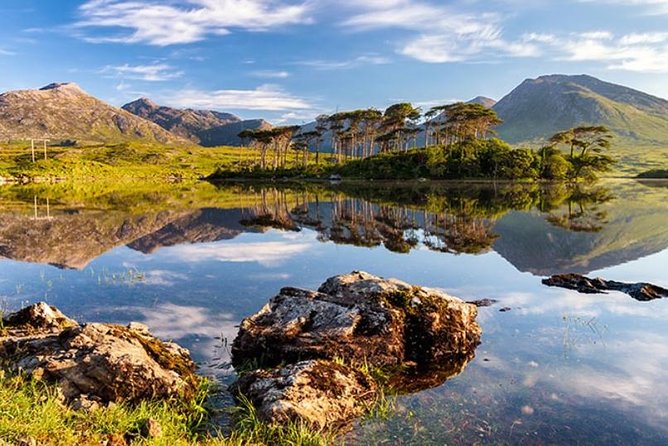
Day four brings you to Connemara National Park and its visitor centre. About an hour is set aside, with views toward the Twelve Bens and the Sky Road. The area is known for wide views and wildlife, and it provides one of the quietest settings on the route.
The short timing deserves attention. An hour lets you look around and take in the scenery, but it does not turn this into a serious hiking day. If you dream of long trails through Connemara, this particular tour may leave you wanting more.
For me, the value is the chance to see Connemara without giving up the rest of the western route. You get the mountain setting, open space, and coastal outlook, then continue toward Galway. It is a sampler, not a walking holiday.
The changing scenery keeps the drive interesting. Mayo’s bogs and moors give way to the Twelve Bens and the broader views associated with Connemara. A guide who knows the area can make these transitions more meaningful, especially when weather obscures a perfect view.
Galway Cathedral and the final city
The final formal stop is Galway Cathedral, with about an hour to visit. After several days of coast, countryside, castles, and difficult history, the cathedral offers a quieter architectural finish.
The tour then brings you into Galway, an old harbour city with stone buildings, winding lanes, medieval walls, and traditional music in its pubs. The supplied schedule identifies Galway Cathedral as the stop, so do not assume you will have a full independent city tour built into the day. Still, the setting gives you a taste of Galway’s urban character before the return to Dublin.
I like Galway as the closing point because it reconnects the rural west with a lively city. You end with streets and music rather than another remote viewpoint. The journey finishes back at the Dublin meeting point, making the tour convenient if you are staying in the capital before or after the trip.
What the driver-guide adds
The guide may be the difference between a good road trip and a memorable one. Gabriel has been praised for being full of knowledge and for making the entire five days better. Liam was credited with guiding a scenic route through greenery and rugged moorland, while Feargal was praised for storytelling, Irish music, historical tales, and safe driving.
Those details matter because the guide is not only driving. On a route with long stretches between stops, stories and music help turn travel time into part of the experience. Good driving also matters on narrow country roads, where confidence and calm make a real difference.
The small-group format supports that personal feel. With a maximum of 16 people, you have a better chance of asking questions and having your interests noticed than on a large coach. It is not a private tour, and the guide cannot redesign every day around one person, but the scale is a strong middle ground.
Accommodation, meals, and the real price
The listed price is $1,563.99 per person. That includes four nights of en-suite accommodation with breakfast, a driver-guide, and transport in an air-conditioned mini-coach. You can choose B&B or three-star hotel preferences, though availability controls the final arrangement.
Breakfast included each morning makes the price easier to assess. So does the fact that the route crosses several regions and includes five days of driving. If you arranged the same journey independently, you would need to price four nights, a vehicle or intercity transport, fuel or fares, route planning, and the time required to connect places that are not always simple to reach.
Still, do not mistake the package for an all-inclusive holiday. Meals, refreshments, and admission fees are extra. Add money for lunch, dinner, drinks, and the paid attractions before booking.
The accommodation feedback is encouraging, with B&Bs described as comfortable. If a particular room setup matters, note your preference during booking. For groups of three or more, each required room must be added separately, and the operator will try to arrange double, twin, and single rooms as requested.
Who should book this tour?
I would recommend this trip if you want a broad introduction to Northern Ireland and the Atlantic west without hiring a car. It suits you if you enjoy a mix of history, nature, local food opportunities, castles, city streets, and scenic drives.
It is also a good fit if you value a guide’s stories. The strongest praise has centered on the guides, especially their history, legends, music, and driving. That is a major part of what you are buying.
I would hesitate if you want deep time at each attraction, serious hiking, or complete control over your daily schedule. The stops are often one or two hours, and the route covers a lot of territory. You also need to be comfortable sharing a mini-coach and keeping to a group timetable.
Children under five cannot join. Most people can participate, but the provided information does not promise that every activity suits every mobility level, so ask the operator if you have specific concerns.
Pack light. The limit is 20 kilograms, roughly one airline carry-on-sized piece measuring about 55 by 45 by 25 centimetres, plus a small personal bag. That restriction is easy to live with for four nights, but it is not the time to bring a large suitcase.
One date note is important: departures from May 6 to May 13, 2026, overnight in Derry on day one instead of Portrush because of an event in Portrush. Check the arrangement if you are booking within that period.
Should you book the Northern Ireland and Atlantic Coast tour?
Book it if you want the major northern and western highlights in one organized trip, with breakfast, accommodation, and a small-group guide included. The 4.8 rating from 38 ratings and 97 percent recommendation figure support the idea that the format works well for many people.
The best reason to choose it is the combination of places that are awkward to connect independently in only five days: Titanic Belfast, Giant’s Causeway, Derry, Donegal, Achill Island, Connemara, and Galway. The best reason to pause is the pace and the extra cost of meals and admissions.
If you can accept a busy schedule and pack light, this is a strong route for a first look at Northern Ireland and Ireland’s Atlantic edge. Choose it for breadth, scenery, and storytelling. Choose something slower if you want to linger.
FAQ
Where does the tour start and finish?
The tour starts at 9:00 a.m. at Kilkenny Design, 6 Nassau Street, Dublin 2. It ends back at the same meeting point in Dublin.
How long is the tour?
The experience lasts approximately five days and includes four nights of accommodation.
What accommodation is included?
You receive four nights of en-suite accommodation with breakfast. You can request a bed-and-breakfast or three-star hotel preference, subject to availability.
How large is the tour group?
The tour uses a small group with a maximum of 16 passengers.
Is transport included?
Yes. Transport is provided in an air-conditioned mini-coach, and a driver-guide accompanies the group.
Are meals and attraction admission fees included?
Breakfast is included with the accommodation. Other meals, refreshments, and admission fees are not included.
How much luggage can I bring?
You are limited to 20 kilograms per person. This should be one airline carry-on-sized piece, approximately 55 by 45 by 25 centimetres, plus a small bag for personal items.
Newest in Dublin
- Wicklow Mountains Private Day Tour including Glendalough★ 5.0 · 7 reviews
- Wicklow: Private Day Tour from Dublin★ 5.0 · 5 reviews
- From Dublin: Powerscourt House, Guinness Lake & Glendalough★ 5.0 · 2 reviews
- Ultimate Dublin Food Tour★ 4.5 · 2 reviews
- Women Of Ireland: Trailblazers & Pioneers★ 5.0 · 4 reviews
- Wicklow tour of Glendalough★ 4.5 · 8 reviews
- Wicklow Mountains & Glendalough Luxury Private Day Tour★ 5.0 · 23 reviews
- Whiskey Tasting Tour of Dublin★ 5.0 · 117 reviews
Dublin Tours, compared.
Dublin to Cliffs of Moher, including Wild Atlantic Way and Galway
Read our review →
Cliffs of Moher, Burren & Galway City Day Tour
Read our review →
Dublin to Cliffs of Moher, Burren, Wild Atlantic Way, Galway Tour
Read our review →
Kilkenny, Wicklow Mountains & Glendalough Day Tour from Dublin
Read our review →
Wicklow Mountains, Glendalough & Kilkenny Tour
Read our review →