
Reviewed · WALKING TOURS
Dublin Highlights and Hidden Gems Guided Walking Tour
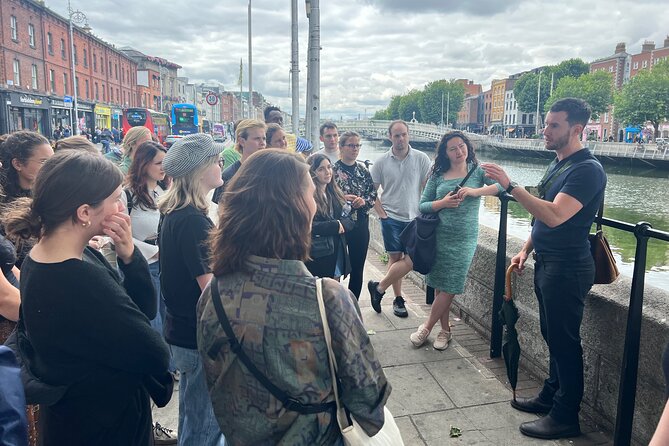
Dublin reveals itself one story at a time. This two-hour walk links the city’s big sights with odd little details, from Viking Dublin and Dublin Castle to the Cat and the Rat beneath Christ Church Cathedral. I like the route’s compact city-centre layout and the guides’ strong storytelling, especially from guides such as Barry, Keith, Helena, Dan, Dave, Karl, and James. The main catch is that this is largely an exterior tour, and major sites can be closed during holiday periods.
I also like the practical finish outside Trinity College, which gives you a useful base for the rest of your day. Guides often add pub, restaurant, museum, and sightseeing tips, making the walk useful beyond its two hours. Still, you should bring a rain jacket and expect weather to affect the experience, since the tour requires good weather and may be changed or refunded if conditions are poor.
In This Review
- Key points to know before booking
- Why this two-hour Dublin walk works
- Starting in Temple Bar at Crown Alley
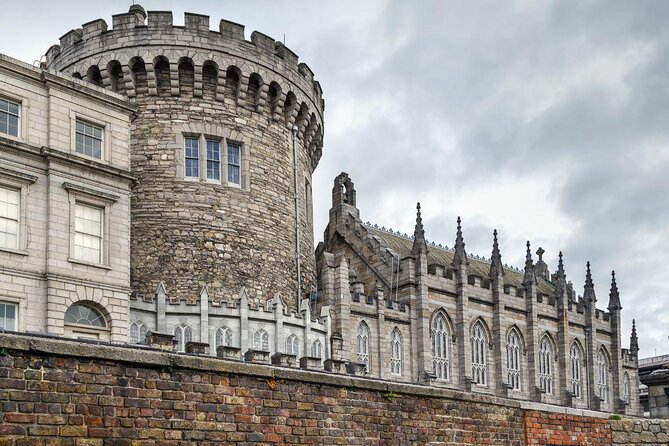
- Dublin Castle and the medieval city
- Christ Church Cathedral and the Cat and the Rat
- Smock Alley Theatre, from 1662 onward
- The Temple Bar pub and Dublin’s postcard bridges
- College Green and the Trinity College finish
- What the guide adds to the route
- Weather, walking pace, and group size
- The holiday closure warning
- Is $29.02 good value?
- Should you book the Dublin Highlights and Hidden Gems walk?
- FAQ
- How long does the Dublin Highlights and Hidden Gems Guided Walking Tour last?
- Where does the walking tour start?
- Where does the tour finish?
- Is the tour offered in English?
- What sights are included on the route?
- Does the tour include entry to Dublin Castle, Christ Church Cathedral, or Trinity College?
- How many people can join the tour?
- Can I cancel for a full refund?
Key points to know before booking
- Two hours, nine central stops: The route covers Temple Bar, Dublin Castle, Christ Church Cathedral, the Liffey, Trinity College, and several bridges and civic landmarks.
- Storytelling is the main attraction: Guides bring in Irish politics, mythology, theatre, music, famous characters, and local humor.
- A strong first-day activity: The walk helps you understand Dublin’s layout and gives you ideas for later visits.
- Mostly outdoor sightseeing: Admission is listed as free at each stop, but the tour does not promise entry into the castle, cathedral, Book of Kells exhibition, or other interiors.
- Small or full groups are possible: The maximum group size is 30, though some departures may be much smaller.
- Holiday closures matter: Dublin Castle, Christ Church Cathedral, and Trinity College may be unavailable during holiday periods, so check conditions if those sights are your main reason for booking.
Why this two-hour Dublin walk works
At $29.02 per person, this tour is priced as an easy introduction rather than a full-day historical program. You are paying for a local guide, a carefully arranged route, and the stories that connect separate sights into one picture of Dublin.
The route is efficient. You begin in Temple Bar, cross toward the medieval heart of the city, follow the River Liffey, pass major civic landmarks, and finish at Trinity College. You do not spend time on a bus or lose half the morning getting between districts.
That matters in Dublin. The central sights sit close together, but their connections are not always obvious on your first visit. A guide can explain how Viking and medieval Dublin relate to the castle, why bridges and streets carry political meaning, and how old buildings found new uses over time.
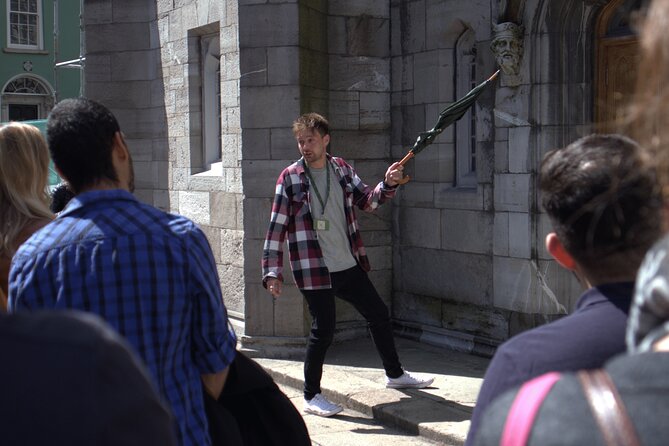
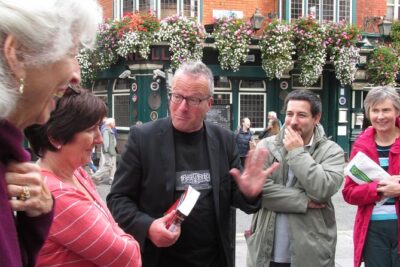
The strongest part is the human delivery. Barry is praised for storytelling and passion. Keith brings sharp Dublin humor and practical pub advice. Helena is described as warm, funny, and able to connect Irish history with politics and popular culture. Dan, Dave, Karl, James, and Emily also receive praise for clear explanations, good pacing, and friendly help.
Because guides vary, the tone will not be identical on every departure. That is part of the charm, but it also means your experience depends somewhat on who leads the walk. The consistent strength is the format: a short route, plenty of context, and room for questions.
More Walking Tours in Dublin
- Dublin: Highlights and Hidden Gems Walking Tour
★ 4.9 · 2,140 reviews - 1916 Rebellion Walking Tour
★ 5.0 · 1,605 reviews - 90 Minute Dublin Walking tour and Sightseeing tips
★ 5.0 · 916 reviews
Starting in Temple Bar at Crown Alley
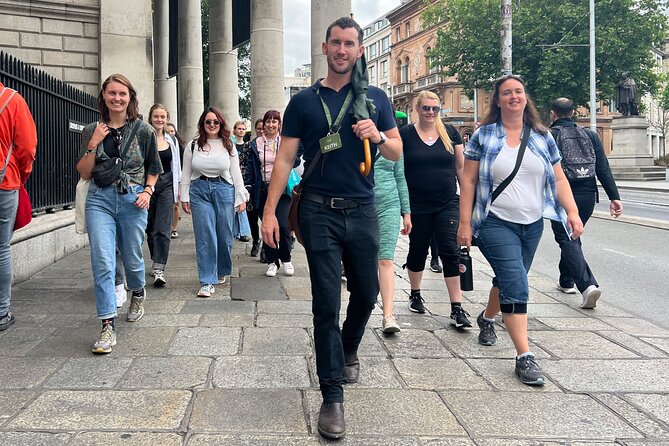
The meeting point is The Old Storehouse Bar and Restaurant at 3 Crown Alley, in the centre of Temple Bar. This is a convenient starting place if you are already near the Liffey or Dublin Castle, but Temple Bar can be crowded and confusing, so allow time to find the exact spot.
The first Temple Bar stop lasts about 15 minutes. You get an introduction to one of Dublin’s best-known cultural districts, along with suggestions for places worth visiting later. The guide also loops back through another part of Temple Bar farther along the route, so this is not just a quick photo stop.
Temple Bar is more than its famous pub sign. It is a useful opening chapter because it lets the guide explain how Dublin presents itself to visitors, where the city’s cultural life gathers, and which parts are worth your time. The area can feel touristy, so personal recommendations are especially useful here.
Do not expect a long pub visit. The tour begins at a bar and later passes The Temple Bar pub, but this is a walking and storytelling experience, not a pub crawl.
Dublin Castle and the medieval city
The walk then reaches Dublin Castle for about 20 minutes. This is one of the most valuable stops because the castle sits close to the centre of Ireland’s political story.
The guide traces the site from Viking origins through conquest and occupation to Irish independence. You will hear about the people linked with the complex and may be shown details that are easy to miss when walking through the grounds alone.
The wording here matters: the stop focuses on the grounds and the castle’s role in Irish history. It does not promise a full interior visit. If you want to see the State Apartments or other indoor areas, treat that as a separate activity and confirm opening conditions.
This part of the route suits you if you want context before visiting Dublin’s museums and historic buildings. It also gives the tour a solid backbone. Dublin is not just a collection of attractive Georgian streets and pubs. Its central buildings reflect conquest, administration, religion, and independence, and the castle helps tie those themes together.
Christ Church Cathedral and the Cat and the Rat
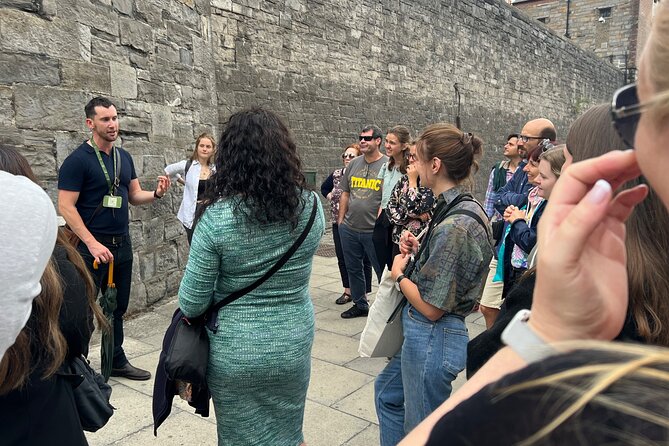
Christ Church Cathedral receives about 10 minutes. Even from outside, it is a powerful reminder that Dublin’s story reaches back roughly 1,000 years.
The guide brings up Strongbow’s tomb, the heart associated with Lorcan O’Toole, and the famous Cat and the Rat. These details give the stop a distinctly Dublin flavor. You get solemn religious history alongside the strange stories that make old buildings memorable.
The short timing is both a benefit and a limitation. It keeps the walk moving, but it is not enough for a full cathedral visit. You may find yourself wanting more time inside, especially if medieval architecture is a major interest.
This is a good example of how the tour handles its stops. It gives you a clear reason to care, then leaves you with the choice of returning later. That approach works well for a first morning in the city.
Something completely different for another day:
- Dublin to Cliffs of Moher, including Wild Atlantic Way and Galway
★ 5.0 · 23,331 reviews - From Dublin: Cliffs of Moher, Burren & Galway City Day Tour
★ 4.8 · 18,888 reviews - Dublin: Guinness Storehouse Entry Ticket
★ 4.6 · 16,863 reviews - Dublin to Cliffs of Moher, Burren, Wild Atlantic Way, Galway Tour
★ 5.0 · 12,924 reviews
Smock Alley Theatre, from 1662 onward
Smock Alley Theatre gets about 10 minutes and adds a different kind of history to the route. The building has served as a theatre and a Catholic church, and it later returned to theatrical use.
The guide explains its connection with writers, directors, and actors, including some guides who lead this walk. That personal link helps keep the stop from feeling like a dry architectural footnote.
You should think of Smock Alley as a focused exterior explanation, not a scheduled performance or backstage tour. It is a small but worthwhile change of pace after the castle and cathedral. You see how one building can reflect shifts in religion, entertainment, and city life.
The Temple Bar pub and Dublin’s postcard bridges
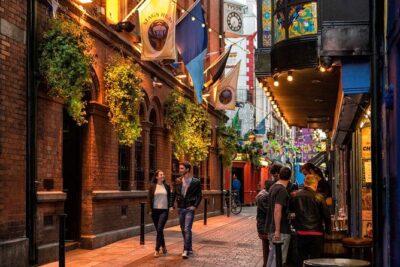
The famous Temple Bar pub gets only about five minutes. You walk past Ireland’s most photographed watering hole, hear why it became such a visual symbol, and may receive suggestions for other places to drink or eat.
This is useful if you want to avoid spending your entire evening at the most obvious address. The guide’s local alternatives can help you make better choices, though the exact recommendations will depend on the person leading your walk.
The Ha’penny Bridge follows, with about 10 minutes of explanation. The elegant footbridge has crossed the River Liffey since 1816 and is one of Dublin’s easiest landmarks to recognize. Its story includes a link to the Battle of Waterloo and even a connection to Fender guitars, an unexpected detail that shows the guide’s preference for memorable side paths.
You will have time to appreciate the bridge and take photos, but do not expect a long riverside pause. The walk keeps a steady pace.
At O’Connell Bridge, the guide explains why this bridge is wider than it is long, the events that took place nearby, and the national figure who gave it its name. This stop shifts the focus from postcard beauty to public memory and political change.
The bridge is also a useful orientation point. It connects the south side of central Dublin with O’Connell Street and helps you understand how the river divides, and joins, the city.
College Green and the Trinity College finish
College Green receives about 10 minutes. Once the centre of Georgian Dublin, it is framed by important buildings and filled with details that many people walk past without noticing.
This is where the tour’s promise of lesser-seen details is most convincing. The guide points out oddities and overlooked features rather than simply naming the buildings. If you enjoy looking up, checking doorways, and noticing small pieces of street design, pay attention here.
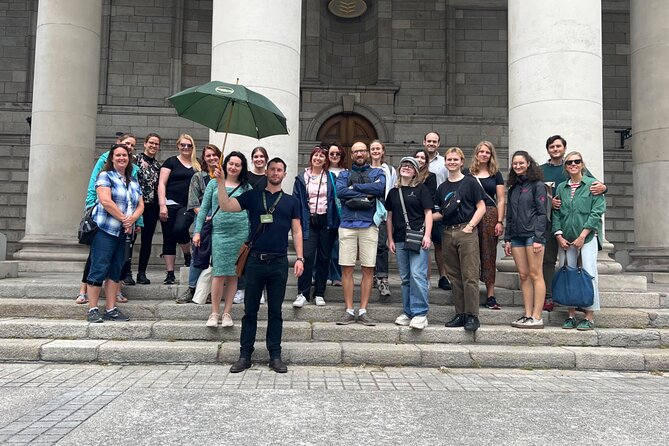
The walk ends at 27 College Green, directly outside Trinity College’s front gate. You do not finish inside the campus, and the tour does not include entry to the Old Library, the Book of Kells, or the Brian Boru Harp. Those are separate attractions, with their own access arrangements.
Still, finishing here is smart. Trinity is one of Dublin’s essential sights, and you are left in a good position to decide what to do next. You can visit the college if it is open, continue toward nearby museums, or use the guide’s suggestions to plan the rest of your day.
What the guide adds to the route
The difference between a useful city walk and a forgettable one is often the guide. Here, the praise is unusually consistent around personality, humor, and clear explanations.
Barry is especially strong for storytelling. He is described as passionate about Ireland and able to add just enough detail to make the walk feel personal without turning it into a lecture.
Keith brings a distinctly Dublin edge. His humor, local knowledge, and pub and restaurant suggestions are repeatedly singled out as valuable. If you enjoy a guide with a lively personality, he may be a particularly good fit.
Helena combines warmth with broad cultural knowledge. Her ability to discuss Irish history, politics, popular culture, and everyday life helps the tour feel connected to modern Dublin, not trapped in the past.
Dan is praised for making Ireland’s past easy to follow and for answering questions. Dave is noted for adjusting the pace and adding warm stops on a very cold day. Karl is described as energetic and entertaining, while James receives praise for being friendly, clear, and efficient.
This range tells you what to expect from the best version of the tour: facts, jokes, local stories, and practical advice. The guides do not simply point at buildings. They explain why the places matter.
Weather, walking pace, and group size
The tour lasts about two hours and requires good weather. Dublin rain and cold can change the mood quickly, especially because much of the experience happens outdoors. Wear shoes suited to city pavement and bring waterproof clothing, though those basic suggestions are simply common sense for Dublin.
Pacing seems flexible. One guide adjusted the route and added stops for a group on an extremely cold day, while another was praised for keeping a comfortable pace for older walkers. You should still expect continuous walking and regular standing.
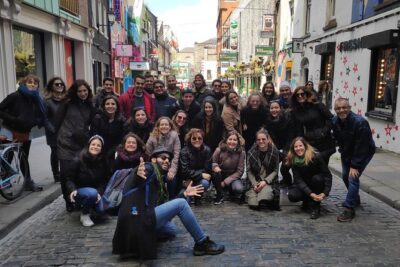
The maximum group size is 30 people. That is large enough for a lively group but still manageable on central streets. Some departures may be much smaller, including one described as a group of five. A smaller group gives you more opportunity to ask questions, but group size can vary by date.
The tour is offered in English and uses a mobile ticket. Service animals are allowed, and the activity is near public transportation. Most people can participate, but the supplied information does not give a precise distance or detailed mobility assessment, so contact the provider if you need specific access information.
The holiday closure warning
This is the most important limitation to understand before booking. During the holiday season, Trinity College, Christ Church Cathedral, and Dublin Castle may be closed.
If those interiors are your main reason for choosing the walk, check dates carefully. The guide can still explain the buildings and their role in Dublin, but you may not be able to go inside. One cold holiday departure still became a worthwhile city introduction because the guide adapted well, but the missing access was a real disappointment.
The safest plan is to book this walk for the start of your Dublin stay, then return to any site you want to explore in greater depth. That way, a closure changes your schedule, not your entire visit.
Is $29.02 good value?
At $29.02, the tour offers good value if you want orientation and stories rather than admission to several attractions. You cover nine central stops in two hours, and the route would be difficult to connect with the same historical detail on your own.
The value rises if you use the advice afterward. A guide may point you toward the National Archaeology Museum on Kildare Street, local pubs, restaurants, and other places that fit your interests. That kind of practical help can save time and improve the rest of your stay.
The value drops if you expect extensive interior access. The stops are brief, admission is listed as free, and the walk ends outside Trinity College. Budget separately for any cathedral, castle, or college visit you want to make later.
The tour is best for first-time visitors, couples, families with older children, solo visitors who like company, and anyone who wants a fast introduction before exploring alone. It also suits repeat visitors who enjoy hearing fresh stories about familiar streets.
Should you book the Dublin Highlights and Hidden Gems walk?
Book it if you want a lively introduction to Dublin’s centre, clear historical context, and useful local suggestions for the rest of your visit. The strongest guides turn the route into an entertaining conversation, with humor and odd details alongside the major events.
Skip it if you want long indoor visits, a quiet architectural tour, or a detailed examination of every site. This is a brisk outdoor overview, not a substitute for Dublin Castle, Christ Church Cathedral, or Trinity College admissions.
For most visitors, I would place it on the first day, ideally when the weather looks sound. You will finish at Trinity with the city better mapped in your mind and a short list of places worth returning to. At this price, that is a sensible way to begin Dublin.
FAQ
How long does the Dublin Highlights and Hidden Gems Guided Walking Tour last?
The tour lasts approximately two hours.
Where does the walking tour start?
It starts at The Old Storehouse Bar and Restaurant, 3 Crown Alley, Temple Bar, Dublin, D02 CX67, Ireland.
Where does the tour finish?
The walk finishes at 27 College Green, directly outside the front gate of Trinity College.
Is the tour offered in English?
Yes. The tour is offered in English.
What sights are included on the route?
The route includes Temple Bar, Dublin Castle, Christ Church Cathedral, Smock Alley Theatre, The Temple Bar pub, Ha’penny Bridge, O’Connell Bridge, College Green, and Trinity College.
Does the tour include entry to Dublin Castle, Christ Church Cathedral, or Trinity College?
The provided details describe visits to the grounds and exterior areas, with admission listed as free at each stop. They do not promise interior entry to these attractions.
How many people can join the tour?
The maximum group size is 30 people. Actual groups may be smaller.
Can I cancel for a full refund?
Yes, if you cancel at least 24 hours before the experience start time. Cancellations made within 24 hours are not refunded, and poor weather may lead to a different date or a full refund.
Newest in Dublin
- Wicklow Mountains Private Day Tour including Glendalough★ 5.0 · 7 reviews
- Wicklow: Private Day Tour from Dublin★ 5.0 · 5 reviews
- From Dublin: Powerscourt House, Guinness Lake & Glendalough★ 5.0 · 2 reviews
- Ultimate Dublin Food Tour★ 4.5 · 2 reviews
- Women Of Ireland: Trailblazers & Pioneers★ 5.0 · 4 reviews
- Wicklow tour of Glendalough★ 4.5 · 8 reviews
- Wicklow Mountains & Glendalough Luxury Private Day Tour★ 5.0 · 23 reviews
- Whiskey Tasting Tour of Dublin★ 5.0 · 117 reviews
Walking Tours, compared.

90 Minute Dublin Walking tour and Sightseeing tips
Read our review →

Historical 2-Hour Guided Walking Tour of Dublin
Read our review →
Dublin Traditional Irish 3 Course Meal Walking Tour with Local
Read our review →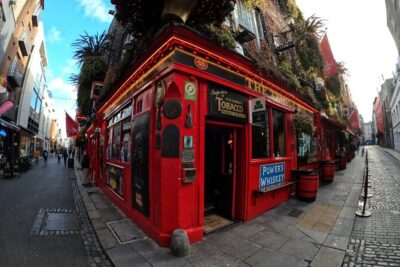
Browse the lists this tour appears in