Reviewed · DUBLIN TOURS
Dark Dublin: Torture, Murder & Mystery
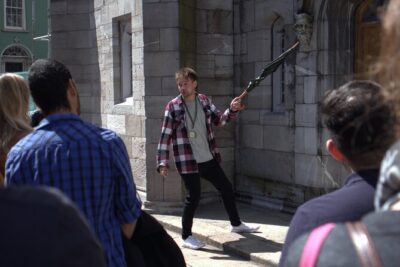
Dark Dublin has a grim side. This two-hour walk links famous landmarks with tales of torture, murder, grave robbing, and cannibalism, giving you a version of the city most standard sightseeing tours skip. I like the route’s mix of major sights and odd corners, and I like that guides such as Cillian, Kim, Michael, and Killian bring humor and energy to difficult stories. The main caution is that the tour stays outdoors, so you will not enter Dublin’s churches or castle, and traffic noise can sometimes make a story harder to hear.
The walk costs $23.22 per person and starts at 5:30 pm, a useful time for fitting it after daytime sightseeing. It is capped at 30 people, though that is a medium-sized group rather than a private experience. You should also be ready for a steady walk, since one guide has been praised for covering plenty of ground while another group found the pace a little quick.
In This Review
- Key points to know before you book
- Why Dark Dublin works better than a standard city walk
- Starting at Barnardo Square near Dublin Castle
- Dublin Castle and the Devil’s Half Acre
- The 40 Steps and stories of cannibalism
- St. Patrick’s Cathedral and Jonathan Swift
- Christ Church Cathedral and the old city
- St. Audoen’s Church and grave robbing
- St. Michan’s Church and Billy in the Bowl
- Finishing in Smithfield Square
- The guide can make or break the evening
- How difficult is the two-hour walk?
- Is $23.22 a fair price?
- Who should book Dark Dublin?
- Should you book it?
- FAQ
- Where does Dark Dublin: Torture, Murder & Mystery begin?
- Where does the tour finish?
- What time does the tour start?
- How long does the tour last?
- Does the tour enter Dublin Castle or the churches?
- What subjects are covered?
- How large is the group?
- Can I cancel for a full refund?
Key points to know before you book
- The route runs from Barnardo Square to Smithfield Square, taking you through Dublin Castle, the cathedral quarter, and several lesser-known historic spots.
- The stories are genuinely grim, covering torture, executions, body snatching, cannibalism, murder, and ghostly tales.
- You see major landmarks from outside, including Dublin Castle, St. Patrick’s Cathedral, and Christ Church Cathedral.
- The best guides use humor carefully, with Cillian, Killian, Kim, Michael, Stephen, and Mikayla all praised for lively storytelling.
- The tour begins at 5:30 pm, making it a good evening activity, especially in October and around Halloween.
- The $23.22 price is fair for a two-hour guided walk, but you are paying for storytelling and access to unusual places, not entry tickets.
Why Dark Dublin works better than a standard city walk
Dublin is easy to enjoy at street level. You can admire its Georgian doors, old churches, and handsome civic buildings without knowing much about what happened there. This tour changes that view by attaching unsettling stories to familiar places.
At Dublin Castle, the courtyards become settings for old punishments and torture. Near St. Patrick’s Cathedral, the focus shifts to Jonathan Swift and the stranger parts of his life and surroundings. At St. Audoen’s Church, you hear about grave robbing and the threatening figure known as the Black Pig. By the time you reach Smithfield, the city’s stone streets feel less innocent.
I like this approach because it gives you history with a clear emotional hook. You are not simply being told dates and names. You are asked to picture how people lived, feared punishment, dealt with illness, and treated the dead.
The route also avoids becoming a basic ghost walk. The strongest parts are tied to real places and historical events. You get general Dublin history along with tales of crime, executions, body snatching, and haunting. That makes the experience useful even if you are not devoted to spooky stories.
Still, the style depends heavily on the guide. Cillian, Killian, Kim, Michael, Stephen, and Mikayla have all been praised for keeping the group involved and adding a light touch when the subject becomes bleak. One less successful experience felt flat because the guide did not build enough suspense. That is worth remembering: this is a storytelling tour, so presentation matters as much as the route.
A few more ways to spend a day in Dublin
- Dublin to Cliffs of Moher, including Wild Atlantic Way and Galway
★ 5.0 · 23,331 reviews - From Dublin: Cliffs of Moher, Burren & Galway City Day Tour
★ 4.8 · 18,888 reviews - Dublin: Guinness Storehouse Entry Ticket
★ 4.6 · 16,863 reviews
Starting at Barnardo Square near Dublin Castle
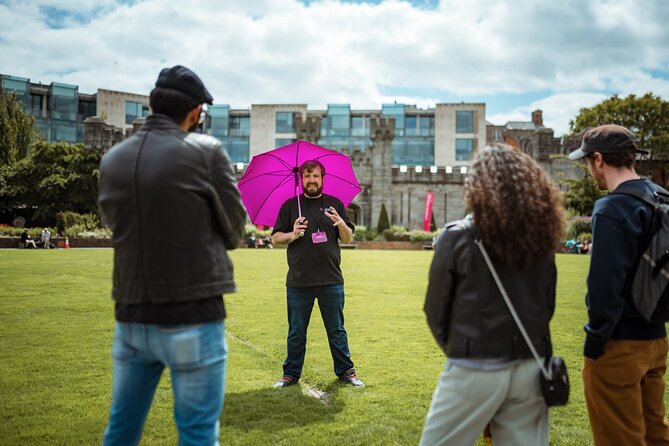
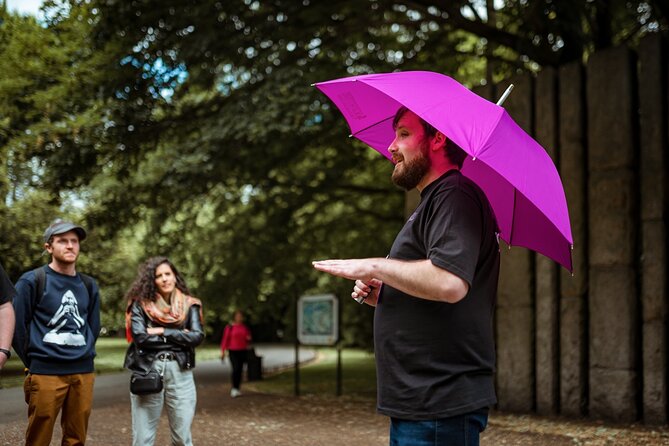
The meeting point is Barnardo Square on Dame Street, beside City Hall and opposite the Olympia Theatre. Guides use purple umbrellas, making the group easier to spot in this busy central area.
The location is practical. It is close to several major sights, and the tour begins near Dublin Castle, so you do not waste time on a long transfer before the first story. The start time is 5:30 pm, which gives you most of the day for museums, shopping, or a more traditional city tour.
Arrive with comfortable shoes and check practical needs before setting out. One guide was praised for pointing out toilets and snack options before the walk began. That is useful because the route lasts about two hours and does not include dinner or private transport.
The group can include up to 30 people. That is small enough for a guided walk to feel organized, but it is not the quiet, personal setting you would get with a private guide. Stay near the front if you want the clearest sound, especially around roads and busy public spaces.
Dublin Castle and the Devil’s Half Acre
The first major stop is Dublin Castle. You walk through the Lower Courtyard, where the guide explains methods of punishment and torture used in earlier times. The subject matter is harsh, but the courtyard gives the discussion a strong sense of place.
The group then reaches the Upper Courtyard for stories connected with the Devil’s Half Acre. These tales help explain the darker reputation attached to the castle and its surroundings.
You do not enter Dublin Castle. That limitation is important if you are expecting a castle tour with interiors, rooms, or exhibitions. The value here comes from the guide’s account of what happened around the building, not from an admission visit.
I think this is a good opening because it moves quickly from a familiar Dublin landmark to its less polished past. If you have already visited the castle during the day, the same courtyards can take on a different meaning in the evening.
The 40 Steps and stories of cannibalism
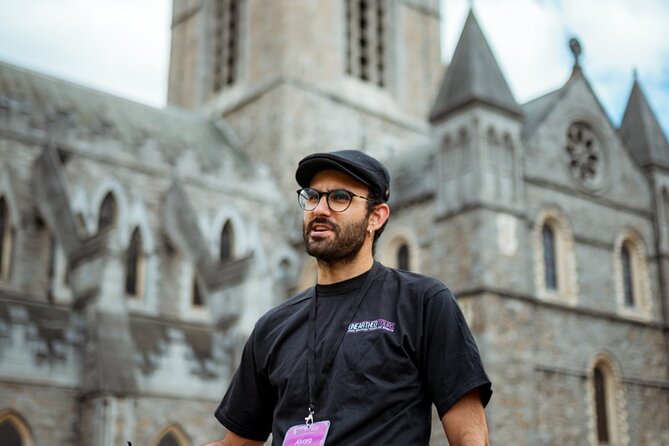
The stop known as the 40 Steps shifts the mood into stranger territory. Here, the guide tells stories of cannibalism, one of the tour’s most unusual subjects.
This section will suit you if you enjoy unsettling historical detail rather than gentle folklore. It is not simply a walk past old buildings with a few vague ghost stories. The material can be graphic and disturbing, and the tour description is direct about that.
The stop lasts about 15 minutes, which is long enough for a focused story without leaving you in one place too long. The walking format helps keep the pace moving as the group continues through the old city.
Something completely different for another day:
- Dublin to Cliffs of Moher, Burren, Wild Atlantic Way, Galway Tour
★ 5.0 · 12,924 reviews - Dublin to Belfast Black Cab, Dunluce Castle and Giant’s Causeway
★ 5.0 · 7,954 reviews - Kilkenny, Wicklow Mountains & Glendalough Day Tour from Dublin
★ 5.0 · 7,897 reviews - From Dublin: Wicklow Mountains, Glendalough & Kilkenny Tour
★ 4.8 · 6,235 reviews
St. Patrick’s Cathedral and Jonathan Swift
At St. Patrick’s Cathedral, you enter the grounds but not the church itself. The guide uses the setting to discuss Jonathan Swift and the darker stories connected with his world.
St. Patrick’s is one of Dublin’s major landmarks, so this stop gives the tour a useful balance. You are still seeing a central sight, but the subject is not a standard architectural explanation. Instead, you get a more personal and unsettling look at the people and events tied to the cathedral.
If you want to see the interior, plan a separate visit. This experience does not include admission, and the guide remains outside. That can be a drawback for first-time visitors who hoped to combine sightseeing and entry tickets in one activity.
The grounds also provide a break from the most gruesome subjects. The story remains dark, but the stop adds historical character rather than relying only on shock.
Christ Church Cathedral and the old city
Christ Church Cathedral is another major stop where you remain outside. The guide explains the church’s less familiar past and the history beneath its impressive appearance.
This is one of the tour’s most useful choices. Christ Church is a well-known Dublin sight, yet many people see only its exterior before moving on. A story-based visit gives you a reason to pause and look at the building with more curiosity.
You should not expect a formal religious or architectural tour. The focus is the hidden and troubling history connected with the church. If you want detailed information about construction, art, or the interior, a standard cathedral visit will serve you better.
The route’s south-side focus also explains why some major Dublin locations are absent. You do not cross the city to cover every famous sight. Instead, the walk stays within a manageable two-hour area, balancing well-known landmarks with unusual stops.
St. Audoen’s Church and grave robbing
St. Audoen’s Church brings the tour into one of its most atmospheric sections. The guide discusses grave robbing and attacks associated with the Black Pig.
You do not enter the church, but the surrounding area supports the story well. Old religious sites naturally lend weight to tales about burial grounds, stolen bodies, and fears surrounding the dead. This is the kind of stop that would be easy to pass without noticing on your own.
The subject of grave robbing also adds social history. Body snatching was not just a sensational crime. It reflected the period’s interest in anatomy, the demand for bodies, and the lack of acceptable ways to obtain them for study. The tour presents this material through Dublin’s own streets and buildings.
For me, this is the sort of detail that gives the walk value beyond Halloween entertainment. You get a reason to understand how the city worked and what people feared.
St. Michan’s Church and Billy in the Bowl
At St. Michan’s Church, the guide turns to Billy in the Bowl and other darker events from Dublin’s past. Again, you stay outside the church, so the stop is about the stories connected with the site rather than an interior visit.
The name Billy in the Bowl is memorable, and this part of the walk offers the kind of local tale you might not encounter in a general guidebook. The guide’s delivery matters here. A strong storyteller can make the details clear without turning the subject into cheap theater.
The stop also brings the tour closer to Smithfield, where the walk ends. By this stage, you have crossed several centuries of Dublin history and heard stories ranging from punishment and religious life to crime and the treatment of the dead.
Finishing in Smithfield Square
The final stop is Smithfield Square, a public space where the guide tells a concluding story about a local murderer. The ending gives the walk a clear finish rather than simply dropping you at a street corner.
Smithfield is useful for the rest of your evening. You finish at 7 Smithfield, with the historic core behind you and a different part of Dublin nearby. The experience does not include dinner, but the area gives you a practical point from which to continue your night.
Because the endpoint is a public square, the guide does not provide private transport back to your hotel. Check the route before booking if you need to return quickly to the starting area.
The guide can make or break the evening
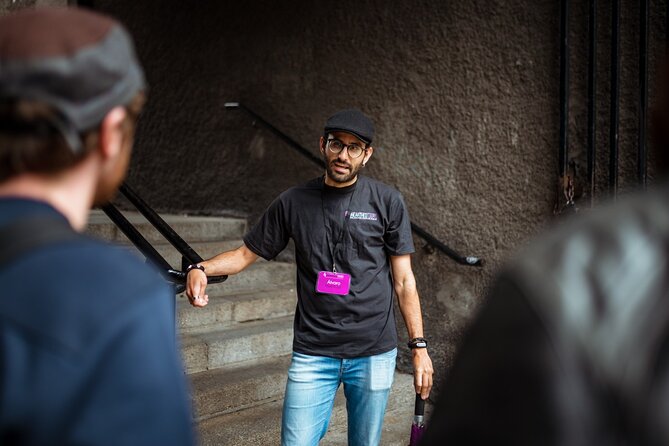
The strongest praise is aimed at the guides. Cillian and Killian are repeatedly described as captivating, lively, and funny. Kim is praised for passion and detail, while Michael is credited with keeping attention focused for the full two hours. Mikayla is noted for mixing Irish history with ghost stories, and Stephen is praised as a strong storyteller who covers several centuries of Dublin trouble.
That range of names suggests a team with different personalities rather than a single scripted performance. You might get a guide who leans into humor, or one who presents the material in a more serious way.
The ideal delivery uses humor with care. The best accounts describe a lighthearted tone that makes grim material easier to hear without making the suffering feel trivial. The weaker experience had problems with pacing, suspense, and noise from traffic and pedestrians.
You can help yourself by staying close to the guide and asking questions. One particularly positive response encouraged questions, and several guides were praised for being open, friendly, and willing to offer Dublin suggestions.
How difficult is the two-hour walk?
The walk is described as easy, with breaks between stops. Most people can take part, and service animals are allowed. Still, you should not treat easy as completely effortless.
One group found the pace a little fast for people who did not walk quickly. The route includes several stops and covers ground from Dame Street through the cathedral area to Smithfield. Comfortable footwear is sensible, and you should be prepared to walk outdoors for the full experience.
Weather can also affect the mood and comfort. A guide kept one group engaged despite rain, but wet streets and poor sound conditions can make any walking tour less pleasant. The tour is offered in English, so you need to be comfortable following spoken stories while standing outdoors.
Is $23.22 a fair price?
At $23.22 per person, the tour offers reasonable value if you want a guided introduction to Dublin’s darker past. For two hours, you get a local route, a live guide, and access to stories that are difficult to find without someone who knows the area.
You are not paying for admission to Dublin Castle, St. Patrick’s Cathedral, Christ Church Cathedral, or St. Michan’s Church. You are paying for interpretation, storytelling, and the convenience of linking these places in one walk.
That distinction matters. If your priority is entering major buildings, use the money for admission tickets and explore them during the day. If you want a focused evening walk with unusual history and no need to plan the route yourself, the price is fair.
A maximum of 30 people keeps the cost below a private tour, but do not expect every story to feel intimate. Group discounts may make it more attractive if you are booking for several people.
Who should book Dark Dublin?
I would choose this tour if you enjoy true crime, old punishments, ghost stories, and history with a morbid edge. It is also a strong choice for a repeat visit to Dublin, since the route adds new meaning to places you may already have seen.
It works well for an October evening or Halloween trip, but the content is not limited to seasonal scares. The emphasis on real places and historic events gives it year-round appeal.
You should think twice if you dislike graphic subjects involving torture, murder, cannibalism, executions, or grave robbing. You should also choose another tour if you want interiors, a quiet private guide, or a broad tour of all Dublin’s main attractions.
The high 4.9 rating from 2,232 ratings and 97 percent recommendation rate point to a consistently popular experience. The important qualification is that the quality depends on storytelling and outdoor conditions. A lively guide can make the two hours fly by, while poor sound or a flat delivery can reduce the impact.
Should you book it?
Book Dark Dublin if you want to see Dublin’s south-side historic core through stories of crime, punishment, death, and mystery. The route is well chosen, the price is sensible, and the strongest guides make the walk both funny and unsettling.
I would not book it as your only traditional Dublin sightseeing tour if you need cathedral interiors or a complete city overview. For many people, the best plan is to see the main buildings by day, then take this walk at 5:30 pm for the darker stories behind them. Free cancellation is available if you cancel at least 24 hours before the start time, giving you some flexibility when planning.
FAQ
Where does Dark Dublin: Torture, Murder & Mystery begin?
The tour begins at Barnardo Square on Dame Street in Dublin 8. The square is beside City Hall and opposite the Olympia Theatre, and guides are visible with purple umbrellas.
Where does the tour finish?
The walk finishes in Smithfield Square at 7 Smithfield, Dublin. The endpoint is a public square.
What time does the tour start?
The scheduled start time is 5:30 pm.
How long does the tour last?
The tour lasts approximately two hours.
Does the tour enter Dublin Castle or the churches?
No. You visit the courtyards or grounds of several sites, but you do not enter Dublin Castle, St. Patrick’s Cathedral, Christ Church Cathedral, St. Audoen’s Church, or St. Michan’s Church.
What subjects are covered?
The stories include torture, murder, cannibalism, grave robbing, executions, body snatching, ghost stories, and other dark events connected with Dublin.
How large is the group?
The activity has a maximum of 30 people. It is described as a small or medium-group walking tour, not a private tour.
Can I cancel for a full refund?
Yes. You can cancel at least 24 hours before the scheduled start time for a full refund. Cancellations or changes made within 24 hours are not refunded, and the experience may also be canceled if its minimum number of participants is not reached.
Newest in Dublin
- Wicklow Mountains Private Day Tour including Glendalough★ 5.0 · 7 reviews
- Wicklow: Private Day Tour from Dublin★ 5.0 · 5 reviews
- From Dublin: Powerscourt House, Guinness Lake & Glendalough★ 5.0 · 2 reviews
- Ultimate Dublin Food Tour★ 4.5 · 2 reviews
- Women Of Ireland: Trailblazers & Pioneers★ 5.0 · 4 reviews
- Wicklow tour of Glendalough★ 4.5 · 8 reviews
- Wicklow Mountains & Glendalough Luxury Private Day Tour★ 5.0 · 23 reviews
- Whiskey Tasting Tour of Dublin★ 5.0 · 117 reviews
Dublin Tours, compared.

Dublin to Cliffs of Moher, including Wild Atlantic Way and Galway
Read our review →
Cliffs of Moher, Burren & Galway City Day Tour
Read our review →
Dublin to Cliffs of Moher, Burren, Wild Atlantic Way, Galway Tour
Read our review →
Kilkenny, Wicklow Mountains & Glendalough Day Tour from Dublin
Read our review →
Wicklow Mountains, Glendalough & Kilkenny Tour
Read our review →