
Reviewed · MUSEUM VISITS IN DUBLIN
Dublin: Irish Famine Exhibition Entry Ticket
The past is waiting above a shopping center. Dublin’s Irish Famine Exhibition turns a difficult subject into a clear, self-paced visit, using rare 19th-century photographs, original newspapers, personal letters, films, and a cast iron soup pot. I especially like the step-by-step presentation and the chance to pause on a bench in each room. The main drawback is that this is a small exhibition, not a large museum, so visitors wanting a full-day experience will need to pair it with another Dublin sight.
I also like the practical format. You can allow about an hour, read the storyboards at your own pace, and watch a 15-minute overview film without joining a scheduled group. The subject is grim, and the exhibition does not soften the realities of starvation, disease, workhouses, evictions, and forced migration, so it may feel heavy for younger children or anyone looking for a light cultural stop.
In This Review
- Key points at a glance
- Why this exhibition matters in Dublin
- Finding Unit 200b inside Stephens Green Shopping Centre
- The first rooms explain the crisis step by step
- The photographs put faces and places into the story
- Original letters and newspapers make the story personal
- The cast iron soup pot shows the relief effort
- The 15-minute film gives you a useful reset
- How long should you allow?
- What you get for $16
- Who should visit this exhibition?
- Practical advice for a better visit
- Should you book the Irish Famine Exhibition?
- FAQ
- Where is the Irish Famine Exhibition located?
- How do I find the exhibition from Grafton Street?
- What are the opening hours?
- How long does the visit take?
- What is included with admission?
- Are the book and USB stick included?
- Is the exhibition wheelchair accessible?
Key points at a glance

- Original letters make the crisis personal: Read one letter from a tenant to his landlord and another from a father to his son.
- Rare photographs show 19th-century Ireland: The images give the exhibition a direct visual record of the people and places affected.
- The story unfolds room by room: Storyboards explain the causes and consequences in a simple, chronological way.
- A 15-minute film adds context: Seating is provided, making it easy to rest while getting a quick overview.
- The visit takes about one hour: This works well between shopping, sightseeing, or a nearby Dublin attraction.
- The location is central but easy to miss: The exhibition is in Unit 200b on the top floor of Stephens Green Shopping Centre.
Why this exhibition matters in Dublin
The Irish Potato Famine was not simply a story about a failed crop. The exhibition asks how more than a million people could die from starvation and disease while Ireland remained part of the British Empire, one of the wealthiest empires in the world.
That question gives the visit its purpose. You are not just looking at old photographs or reading a few tragic anecdotes. You are being shown how crop failure, poverty, political decisions, housing conditions, eviction, disease, and limited relief combined into a disaster on a huge scale.
The wording around the event can be politically and historically sensitive. The exhibition points out that food existed in Ireland during the famine years, which helps explain why the use of the word famine remains controversial. It presents the subject in a way that is easy to follow, but the central issue is difficult: available food did not reach the people who needed it.
I find this context useful before visiting other Irish sights. Many Dublin buildings, memorials, statues, and family stories connect to the famine and the mass departures that followed. A short visit here can give those places more meaning without requiring you to spend half a day in a formal museum.
More Museum Visits in Dublin
- Irish Rock ‘N’ Roll Museum Experience Dublin
★ 5.0 · 6,112 reviews - The Little Museum of Dublin Famous Guided Tour
★ 5.0 · 2,948 reviews - Dublin EPIC Museum Admission Ticket
★ 4.5 · 1,729 reviews
Finding Unit 200b inside Stephens Green Shopping Centre
The exhibition is on the second floor, described on site as the top floor, in Unit 200b of Stephens Green Shopping Centre. This is a practical location in central Dublin, but do not expect a large street-level museum entrance.
If you enter from the main entrance on Grafton Street, look for the elevator about 20 metres inside on the right. Take it to the second floor, then turn left. If you come from the car park, the exhibition is at the opposite end of the center.
That information matters because shopping centers are designed for shops, not necessarily for finding a small museum unit. I would save the address and unit number before setting out. Once you are inside, the elevator directions make the final part straightforward.
The exhibition is open every day from noon to 6 p.m. That is a narrower window than many Dublin museums, so check the current starting times and availability before you go. Since admission remains valid for 180 days, you have useful flexibility when arranging your sightseeing days.
The first rooms explain the crisis step by step
This is a self-guided exhibition. You move from room to room, following storyboards that reveal what happened in an orderly sequence.
That format is one of the strongest features here. The famine is a complicated subject, and a wall of dates and names can quickly become exhausting. Instead, the exhibition breaks the story into manageable sections. You can read, pause, sit down, and continue when you are ready.
The storyboards cover the main human and social effects of the disaster. You will encounter the breakdown of livelihoods, the harsh conditions in workhouses, evictions, disease, and the dangerous sea journeys known as coffin ships.
The term coffin ships refers to the vessels that carried Irish people away under terrible conditions. The exhibition connects forced departure with the wider famine story, rather than treating emigration as a separate footnote. That is important because millions of people were forced to flee, and the effects reached far beyond Ireland itself.
The exhibition is concise. One visitor described the experience as taking about an hour while still delivering a good amount of information. That is a fair expectation. You will not read every possible detail about the famine, but you should leave with a clearer understanding of how the catastrophe unfolded.
The photographs put faces and places into the story
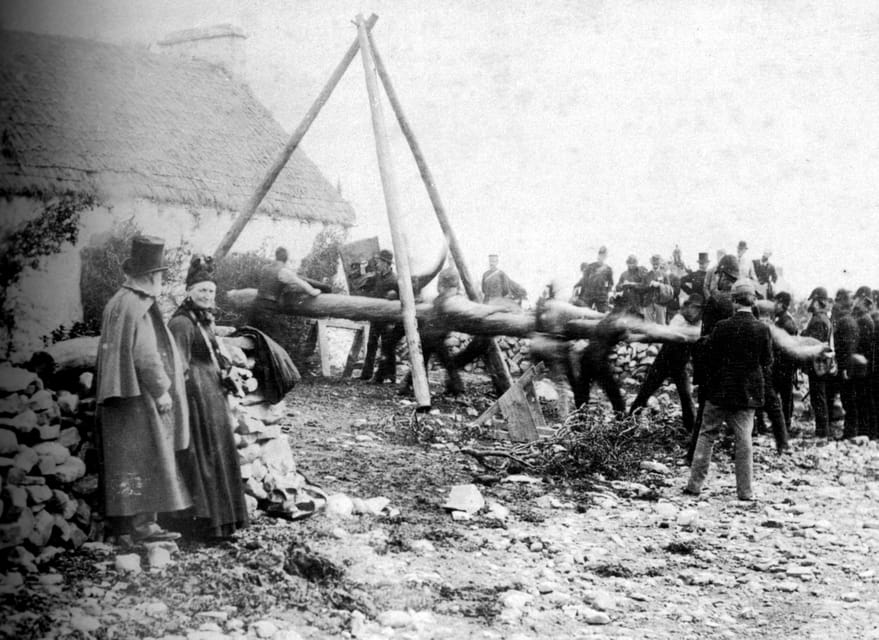
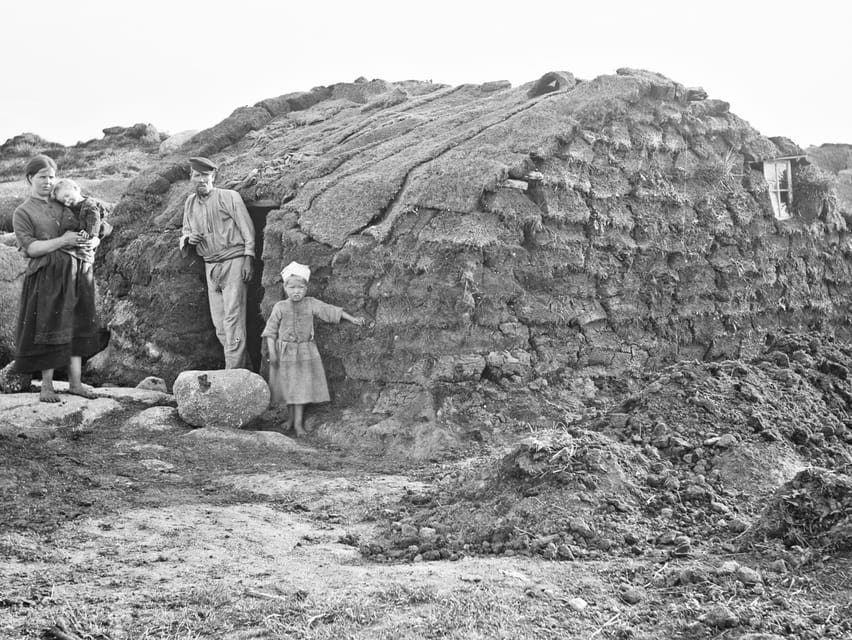
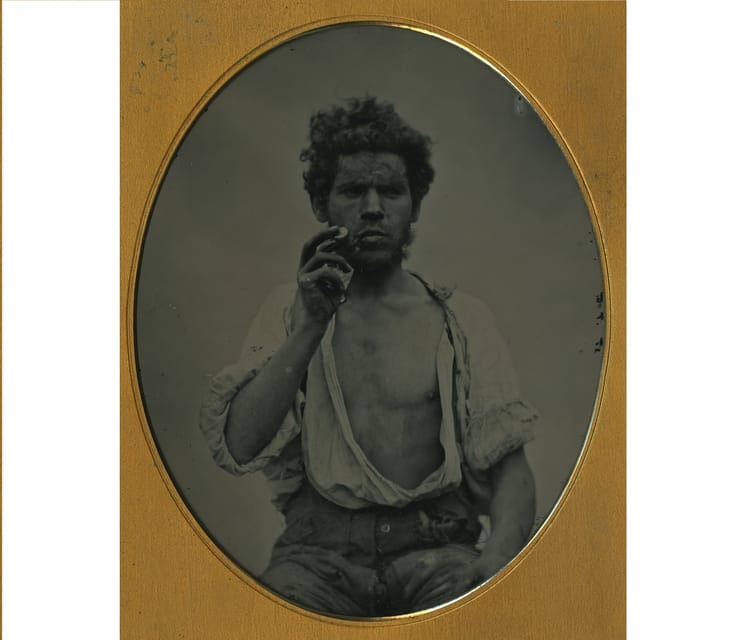
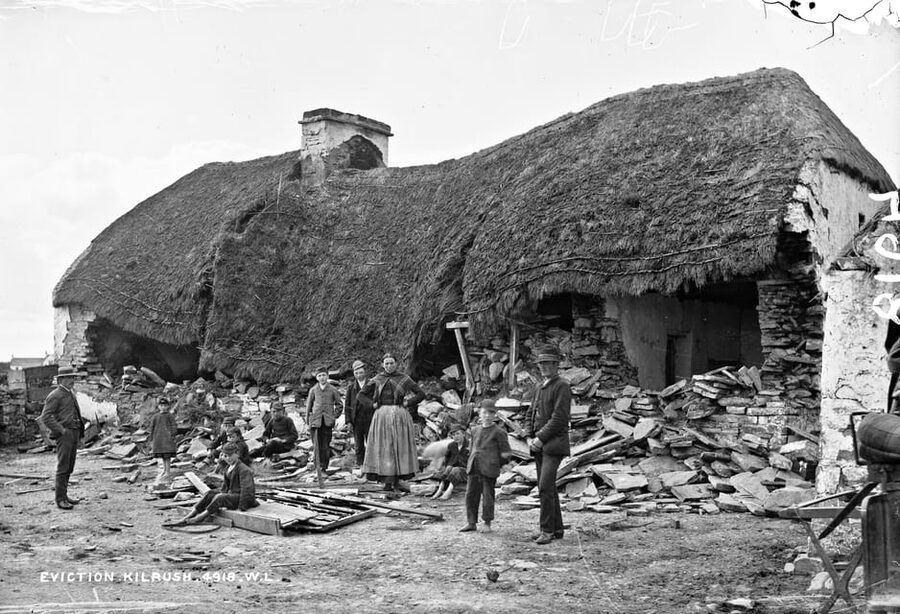
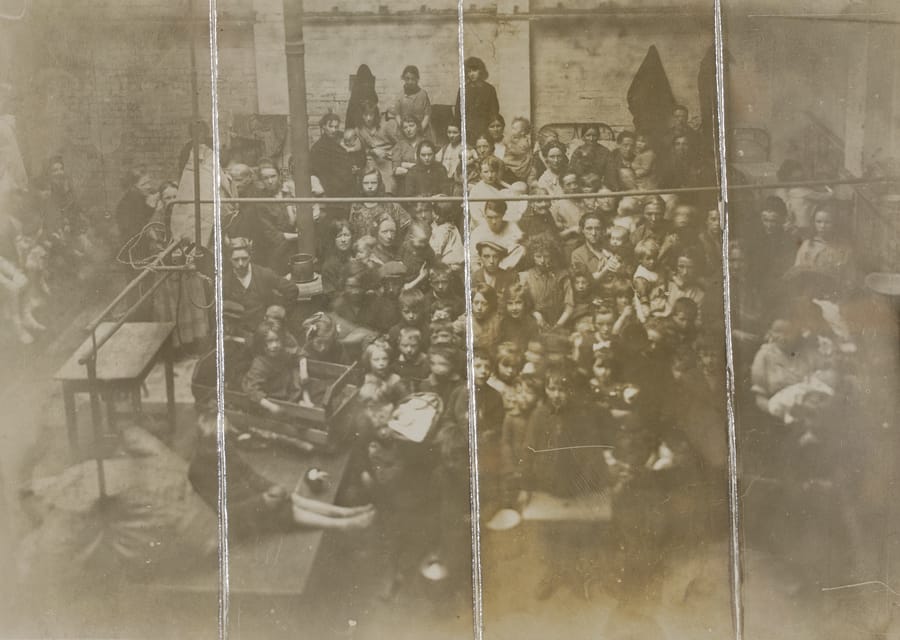
Rare 19th-century photographs are among the most valuable parts of the visit. Written explanations tell you what happened, but photographs help show the people and conditions behind the statistics.
Photography from this period is limited compared with modern visual records, which makes these images especially important. They are not just decorative displays. They help you picture the Ireland described by the storyboards and connect the large numbers to real communities.
You should take your time here. Photographs can be easy to pass quickly, especially when the subject is presented alongside a lot of text. I would look closely at clothing, buildings, expressions, and the physical conditions shown. The point is not simply to admire old images, but to consider what they reveal about poverty and survival.
The photographs also give the exhibition an authentic quality. You are seeing historical material rather than only modern recreations or polished museum graphics. For a short visit, that direct visual evidence carries a lot of weight.
Something completely different for another day:
- Dublin to Cliffs of Moher, including Wild Atlantic Way and Galway
★ 5.0 · 23,331 reviews - From Dublin: Cliffs of Moher, Burren & Galway City Day Tour
★ 4.8 · 18,888 reviews - Dublin: Guinness Storehouse Entry Ticket
★ 4.6 · 16,863 reviews - Dublin to Cliffs of Moher, Burren, Wild Atlantic Way, Galway Tour
★ 5.0 · 12,924 reviews
Original letters and newspapers make the story personal
Two original newspaper articles describe the catastrophe. Their value is not just their age. They show how the crisis was recorded and communicated at the time.
Newspapers can make a disaster feel public and political, while personal letters show what it meant inside a family or landlord-tenant relationship. The exhibition includes two original letters: one from a tenant to a landlord, and another from a father to his son.
These documents are small in physical size but large in emotional effect. A statistic tells you how many people died. A letter suggests what it felt like to face hunger, uncertainty, debt, separation, or eviction.
I like this combination of public and private evidence. The newspaper articles help frame the catastrophe as a national event. The letters bring the story down to the level of individual decisions and relationships.
The material is presented as part of the wider explanation, not as an isolated collection of treasures. That means you understand why each document matters rather than simply seeing an old piece of paper behind glass.
The cast iron soup pot shows the relief effort
A cast iron soup pot is also on display. It is a modest object, but it helps explain how relief was delivered to people who had lost access to food.
Objects like this can be more effective than another panel of text because they show the physical side of aid. A soup pot suggests the scale and basic nature of emergency feeding. It also reminds you that relief was often about keeping people alive from one day to the next, not restoring a secure way of life.
The pot is one of the details I would not rush past. It lacks the drama of a ship or a famous document, but that is precisely why it works. It is an ordinary tool connected to an extraordinary crisis.
The 15-minute film gives you a useful reset
The exhibition includes a 15-minute overview film, with seating available for the showing. There is also a bench in each room, so you do not have to remain standing while reading the storyboards.
This is helpful if you are visiting after a long day of walking around Dublin. The film offers a compact version of the main story and can help organize the information before or after you examine the displays.
If you have limited time, I would watch the film and then focus on the original letters, newspapers, photographs, and soup pot. If you have the full hour, read the storyboards first and use the film as a recap.
The film is also included on a USB stick sold at the reception desk, along with the storyboard material presented in film format and suitable mood music. That purchase is optional and is not included in admission. A book is also available if you want to continue reading after the visit.
How long should you allow?
Plan on at least one hour. That gives you time to move through the rooms, read the storyboards, look closely at the original material, and watch the 15-minute film.
You can make the visit shorter, but doing so would reduce it to a quick look at the displays. The subject deserves more attention than that. On the other hand, this is not an all-day museum, and the compact size may be a benefit if you are fitting it between other plans.
The exhibition is open from 12 p.m. to 6 p.m. every day. Since entry is valid for 180 days, you are not tied to a single narrow date, though you still need to check availability and starting times when planning.
The self-paced design also means you do not have to match a guide’s rhythm. You can spend more time with the letters and photographs, or move more quickly through sections you already understand.
What you get for $16
At $16 per person, this is a moderate-priced Dublin activity. The value depends on what you want from a museum visit.
You are paying for access to a focused exhibition with original documents, rare photographs, artifacts, storyboards, and a film. You are not paying for a long guided tour, a large collection, or several hours of entertainment.
I think the price is reasonable for visitors who want historical context and authentic primary material in a short format. The original letters and newspaper articles give the admission more substance than a display made only from reproductions. The film and seating also make the experience easy to manage.
The value is less convincing if you prefer big museums with many galleries or if you want a lively, interactive attraction. This is a quiet educational stop about suffering and displacement. It asks you to read and think, not simply look around.
The optional book and USB stick cost extra, so consider your interests before buying them. If you learn best through text, the book may be useful. If you want to revisit the story in film format, the USB stick includes the storyboards and the 15-minute overview film.
Who should visit this exhibition?
I would recommend it to anyone who wants to understand the famine beyond a brief mention in a Dublin guidebook. It is especially useful for people with Irish family connections, visitors planning to see famine memorials, and anyone interested in how government policy and poverty can turn a crop failure into a national disaster.
It also suits independent visitors. You do not need a guide, and the clear storyboard format lets you set your own pace. The translation manual is available in French, German, and Italian, which can help if English is not your first language.
Families should use their judgment. The exhibition is accessible and not physically demanding, but the subject includes starvation, disease, evictions, and death. Younger children may not gain much from the written material, while older children and teenagers studying Irish or European history may find it useful.
The exhibition is wheelchair accessible. Seating in each room is another practical advantage for anyone who needs regular rest.
Practical advice for a better visit
Go with enough time to read. The displays are concise, but the information is dense enough that rushing would weaken the experience.
Start by locating the film seating and then move through the rooms in order. I would not treat the film as a replacement for the storyboards, since the letters, newspapers, photographs, and artifacts provide the strongest direct evidence.
Bring the unit number with you. Stephens Green Shopping Centre is easy to reach, but Unit 200b is inside the building rather than obvious from the street. Use the Grafton Street entrance and the elevator on the right, or enter from the car park and walk to the opposite end.
Pair the visit with other central Dublin plans. The one-hour format makes it a sensible stop before or after shopping, a meal, or another nearby attraction. Just remember that the exhibition itself opens at noon, so it is not an early-morning activity.
Should you book the Irish Famine Exhibition?
Book it if you want a short, serious, clearly organized introduction to one of Ireland’s most important historical tragedies. The original letters, newspaper articles, photographs, and soup pot give the visit a sense of reality that a basic text display would lack.
Skip it if you are looking for entertainment, a guided walking tour, or a large museum with extensive collections. This is a focused exhibition, and its subject is painful.
For $16, I consider it a worthwhile addition to a Dublin itinerary, especially if you have an hour to spare and want historical context that will stay with you as you see the rest of the city.
FAQ
Where is the Irish Famine Exhibition located?
It is in Unit 200b on the second floor, also described as the top floor, of Stephens Green Shopping Centre in Dublin.
How do I find the exhibition from Grafton Street?
Enter through the main entrance on Grafton Street. The elevator is about 20 metres inside on the right. Go to the second floor and turn left.
What are the opening hours?
The exhibition is open every day from 12 p.m. to 6 p.m. Check availability for current starting times.
How long does the visit take?
Allow at least one hour. The visit is self-paced and includes a 15-minute overview film.
What is included with admission?
Admission includes entry to the Irish Famine Exhibition and a translation manual in French, German, and Italian.
Are the book and USB stick included?
No. The book and USB stick are optional purchases available at the reception desk.
Is the exhibition wheelchair accessible?
Yes, the exhibition is wheelchair accessible.
Newest in Dublin
- Wicklow Mountains Private Day Tour including Glendalough★ 5.0 · 7 reviews
- Wicklow: Private Day Tour from Dublin★ 5.0 · 5 reviews
- From Dublin: Powerscourt House, Guinness Lake & Glendalough★ 5.0 · 2 reviews
- Ultimate Dublin Food Tour★ 4.5 · 2 reviews
- Women Of Ireland: Trailblazers & Pioneers★ 5.0 · 4 reviews
- Wicklow tour of Glendalough★ 4.5 · 8 reviews
- Wicklow Mountains & Glendalough Luxury Private Day Tour★ 5.0 · 23 reviews
- Whiskey Tasting Tour of Dublin★ 5.0 · 117 reviews
Museum Visits in Dublin, compared.
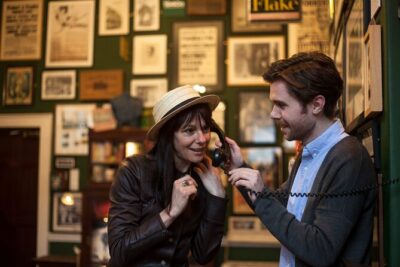
The Little Museum of Dublin Famous Guided Tour
Read our review →

Irish Whiskey Museum: Whiskey Blending Experience
Read our review →
Irish Whiskey Museum Blending Tour with Tastings
Read our review →
Browse the lists this tour appears in