
Reviewed · CRUISES & BOAT TOURS
General Entry Tickets to Foynes Flying Boat and Maritime Museum
Atlantic aviation began in an unlikely Irish corner. Foynes Flying Boat Museum brings you into the age when ocean-crossing aircraft felt more like luxury liners than modern jets, with aircraft history, wartime stories, flight simulators, and the birthplace of Irish Coffee all in one visit.
I like the strong opening film, which helps you understand why Foynes mattered before you inspect the exhibits. I also like the personal feel of the presentation, including a friendly, informative guide and a 3D hologram about Irish Coffee. The main consideration is time: the visit lasts about 90 minutes, so you will need to keep moving if you want to see every section carefully.
In This Review
- Key points to know before you go
- Why Foynes mattered to Atlantic aviation
- The flying boats and the feel of early air travel
- The film and guided introduction set the scene
- Flight simulators give you something to do
- Foynes during wartime
- The Irish Coffee story is the museum’s most unusual feature
- The control tower brings the setting into view
- The maritime museum adds a wider Irish story
- Timing, opening hours, and practical value
- Who will enjoy Foynes most
- Should you book the Foynes museum ticket?
- FAQ
- How long does the Foynes Flying Boat Museum visit take?
- What does the general admission ticket include?
- Is Irish Coffee included with admission?
- When is the museum open?
- Is the ticket delivered to a mobile device?
- Can I cancel for a full refund?
Key points to know before you go

- Step aboard aviation history: Learn what flying across the Atlantic meant before jet travel made it routine.
- See where Irish Coffee began: A 3D hologram and Irish Coffee Masterclass explain the drink’s connection to Foynes.
- Try the flight simulators: You can test your piloting skills instead of only reading about early aviation.
- Look across the Shannon Estuary: The control tower offers panoramic views connected to the site’s working airport past.
- Allow about 90 minutes: The museum covers aircraft, war, maritime history, famous figures, and Irish Coffee.
- Plan around seasonal hours: It is open Tuesday through Sunday, from 10:00 a.m. to 4:30 p.m., during the listed operating periods.
Why Foynes mattered to Atlantic aviation
Before nonstop jet flights, crossing the Atlantic by air was a major undertaking. Foynes became an important stopping point for flying boats, aircraft that landed on water and connected Ireland with North America and other destinations.
That setting gives the museum its purpose. You are not simply looking at old aviation objects in a general transport museum. You are learning why this particular place became part of the early Atlantic air route.
The museum presents flying boats as ocean liners with wings. That comparison helps you picture the period. Air travel was still new, expensive, and uncertain, yet passengers could experience a surprising level of comfort. The visit shows how aviation once borrowed ideas from luxury sea travel while taking on the risks of long-distance flight.
I find this context especially useful if you are not already interested in aircraft. The story is about travel, engineering, war, hospitality, and human courage. You can appreciate the museum without knowing the names of every early aviator.
More Museum Visits in Limerick:
- Skip the Line: Hunt Museum Ticket
★ 4.5 · 22 reviews - Irish Rock ‘N’ Roll Museum Experience Dublin
★ 5.0 · 6,112 reviews - The Little Museum of Dublin Famous Guided Tour
★ 5.0 · 2,948 reviews
The flying boats and the feel of early air travel
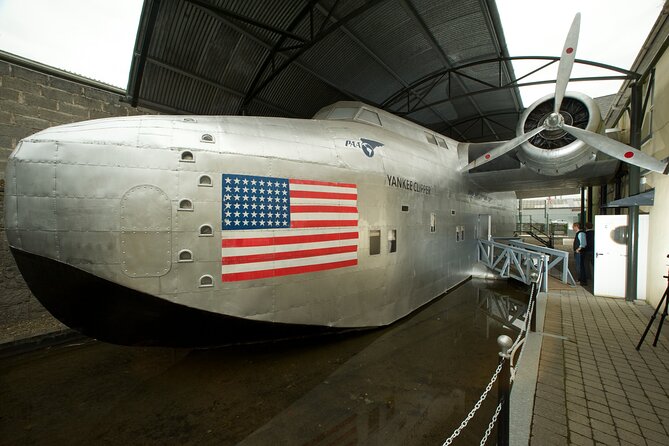
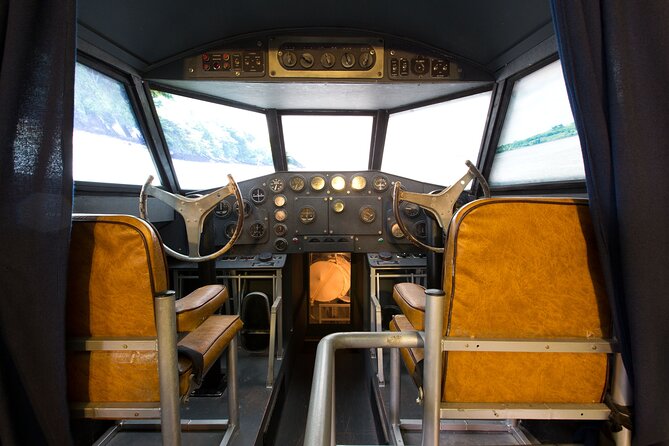
The famous flying boats are the main reason to visit. The museum lets you come aboard and picture what it was like to cross the ocean in an aircraft built for water landings.
The experience is valuable because it gives scale and atmosphere to a type of aircraft that can otherwise seem abstract. Photographs can show a large flying boat, but stepping into an aircraft space makes the era easier to understand. You begin to see why early air travel was treated as a special occasion.
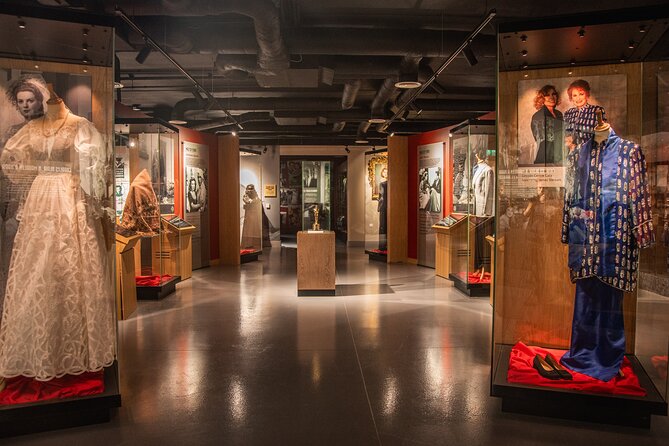
The museum also connects this aviation story with famous passengers and Hollywood figures. That detail adds a human angle. These aircraft were not only machines used by pilots and airlines. They carried people whose journeys helped give early commercial aviation its glamour.
The phrase world’s First Airforce One appears in the museum’s presentation. That makes the aircraft section more than a display of transport technology. It links Foynes with high-profile political and public travel during a period when every major Atlantic flight felt important.
You should allow enough time here to look beyond the obvious aircraft story. The point is not simply that flying boats existed. It is that they changed how people imagined the Atlantic, even before newer aircraft made air travel faster and more practical.
The film and guided introduction set the scene
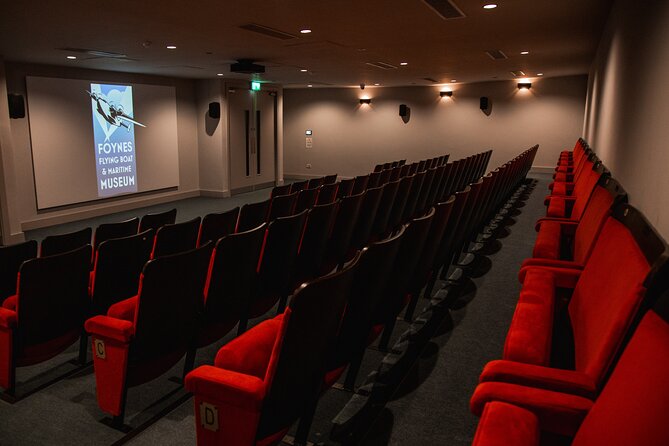
A short film begins the visit and helps establish the setting. This is a good choice for a museum with several subjects competing for your attention. You get the basic story first, then the objects and exhibits make more sense.
I value this kind of introduction because it prevents the visit from becoming a collection of disconnected displays. Once you understand Foynes as an Atlantic aviation stop, the control tower, wartime section, aircraft, and Irish Coffee story all fit together.
The guided element adds another layer. A member of the museum team provides information in a personable way, and one particularly well-liked presentation was praised for being both friendly and informative. Since this is a general entry ticket rather than a clearly defined private tour, the exact amount of guided attention may vary, but you can expect interpretation to be part of the museum experience.
The opening film was singled out as an effective way to set the scene. I would pay attention to it rather than treating it as background entertainment. It gives you the timeline and local importance that make the later displays more meaningful.
Flight simulators give you something to do
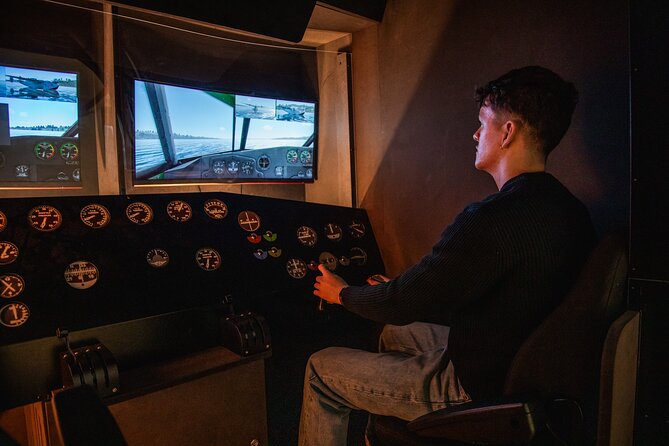
The flight simulators are a welcome change of pace. After looking at aircraft and reading about pilots, you can try your hand at flying and test your own skills.
This section should appeal to families and anyone who prefers an active museum visit. It also gives you a small sense of the concentration early pilots needed, without pretending that a simulator can recreate the full danger of an Atlantic crossing.
The simulators are useful for younger visitors because they turn aviation from a passive subject into a hands-on one. Adults may enjoy them for the same reason. You can spend a few minutes testing yourself, then return to the historical displays with a better feel for the work involved.
I would not book this visit only for the simulators. They are one part of a wider museum, not the whole attraction. Their value comes from the contrast they provide. The aircraft displays explain the past, while the simulator lets you interact with the idea of piloting.
More Boat Trips in Limerick:
- Dublin: River Liffey Sightseeing Cruise
★ 4.4 · 3,473 reviews - Galway to Inisheer Aran Islands, Cliffs of Moher and Boat Trip
★ 5.0 · 2,517 reviews - From Galway: Aran Islands and Cliffs of Moher Tour & Cruise
★ 4.8 · 2,283 reviews - Clew Bay Cruise, Westport ( 90 minutes )
★ 5.0 · 1,281 reviews
Foynes during wartime
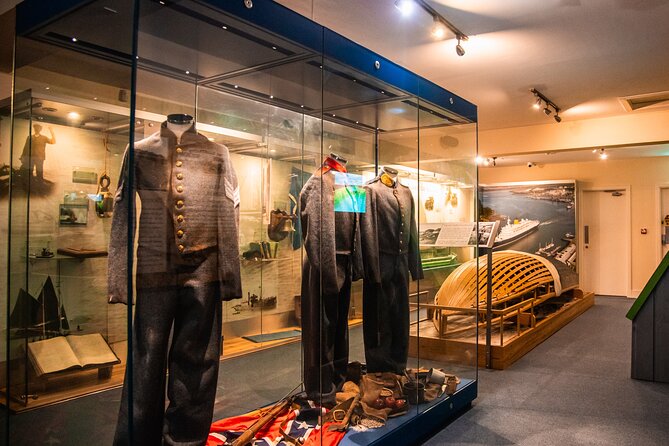
The wartime section shifts the mood. It looks at life for passengers, airline staff, and local people during the war, when travel and communication were shaped by uncertainty.
This is an important part of the visit because aviation history can otherwise become too polished. Luxury cabins and famous passengers tell only one side of the story. War affected the people who worked at the airport, those who lived nearby, and those whose journeys depended on the route.
You may find this section most rewarding if you like social history as much as aircraft. It shows that an airport is not isolated from its community. It affects daily life, jobs, security, and local identity.
The presentation also helps place Foynes within a wider period of Irish and international history without requiring a long museum visit. Since the full experience takes roughly an hour and a half, the wartime material works as a focused chapter rather than an overwhelming archive.
The Irish Coffee story is the museum’s most unusual feature
Foynes is closely linked with the creation of Irish Coffee, and the museum explains that story through a 3D hologram reenactment. That is an unusual way to present a food and drink tradition, and it gives the visit a memorable change of subject.
You also have the chance to take part in an Irish Coffee Masterclass in a 1940s setting. The period atmosphere helps connect the drink with the era of flying boats, when Foynes served passengers and crews making long Atlantic journeys.
This is more than a recipe demonstration. It shows how hospitality became part of the flying boat experience. A warm drink could matter when people arrived tired, cold, or delayed by Atlantic weather. The museum uses Irish Coffee to explain how a small act of welcome became part of Irish cultural identity.
The coffee itself is available separately at O’Regan’s restaurant on site. Admission does not include it, so budget for an additional purchase if you want to try one. That separation is reasonable, but it is worth knowing before you arrive.
I like this part of the museum because it broadens the visit. You can come for aviation and leave remembering a drink, a local story, and the role of food in travel. It is also one of the easiest sections to enjoy if you are visiting with someone who is less interested in aircraft.
The control tower brings the setting into view
The control tower provides panoramic views over the Shannon Estuary. This is not just a scenic pause. It helps you understand why the location mattered to flying boats.
From above, the connection between water, aviation, and settlement becomes easier to picture. The estuary was not a decorative backdrop. It was part of the transport system that made Foynes useful.
I would save a little time for this section rather than rushing through it at the end. The view gives the museum a physical sense of place, especially after you have learned about aircraft landing on water and crossing the Atlantic.
Weather will affect the quality of the view, and the museum information does not promise clear conditions. Even so, the control tower remains worthwhile because it connects the indoor displays with the actual setting outside.
The maritime museum adds a wider Irish story

The Maritime Museum expands the visit beyond aviation. It presents Ireland’s maritime heritage and people from Foynes who helped shape Irish history.
That wider focus gives the museum local depth. Foynes was not important only because aircraft stopped there. Its identity was also tied to the water, seafaring, local work, and people whose lives connected the area with wider events.
I appreciate this section because it prevents the museum from feeling like a single-theme attraction. If you have already seen aviation museums elsewhere, the maritime displays may be what makes this visit different.
The information provided does not list every object or person on display, so you should expect a broad local maritime presentation rather than a detailed catalogue of every Irish ship or port. The benefit is variety. You can move from aviation to maritime life without leaving the same site.
Timing, opening hours, and practical value
The ticket costs about $21.63 per person and includes general admission to the Foynes Flying Boat and Maritime Museum. For a visit of approximately 90 minutes, that is a fair price if you care about aviation, local history, or Irish Coffee.
The value improves if you use the whole visit. Watch the opening film, take time with the flying boats, try the simulator, see the wartime displays, visit the control tower, and leave room for the maritime section. A quick walk through would make the ticket feel less worthwhile.
The museum is open Tuesday through Sunday from 10:00 a.m. to 4:30 p.m. during the listed periods, from March 15 through December 19 in both 2025 and 2026. It is closed Mondays under that schedule, so check your day before setting out.
The mobile ticket is convenient. Confirmation arrives at booking, and the museum is near public transportation. Service animals are allowed, and the information provided says most people can participate.
At 90 minutes, this fits well into a wider day in County Limerick. It is long enough to offer real substance but short enough that it should not take over your entire schedule. You might spend additional time at O’Regan’s restaurant if you want Irish Coffee, but that purchase is separate from admission.
Free cancellation is available if you cancel at least 24 hours before the experience start time. Cancellations made inside that period are not refunded, and changes are not accepted within 24 hours. The cut-off uses local time.
Who will enjoy Foynes most
I would recommend this museum to anyone interested in early aviation, Atlantic travel, Irish history, or the story behind Irish Coffee. It also suits families because the simulators give children something active to do.
It works well for mixed groups. One person can focus on aircraft, another on wartime life, and another on food history or the Shannon Estuary views. The museum has enough different subjects to keep the visit from depending on one narrow interest.
You should also consider it if you enjoy places with a strong connection to their location. Foynes is not presenting a random collection of aircraft. The water, the control tower, the flying boats, and the local maritime story belong together.
The main limitation is that the museum may feel brief if you want a large aviation collection or a full-day attraction. The ticket promises a focused visit, not a vast complex. You will get the most from it if you value clear storytelling and unusual local connections over sheer size.
Should you book the Foynes museum ticket?
Yes, if you want an informative stop with a clear sense of place. The film, personable guidance, flying boats, flight simulators, wartime displays, Irish Coffee presentation, control tower, and maritime exhibits create a varied 90-minute visit.
I especially recommend it when you are already exploring Limerick or the Shannon area and want something beyond the usual city sights. Book it if the scheduled Tuesday to Sunday hours fit your plans, and arrive ready to spend the full time inside rather than treating it as a quick photo stop.
Skip it only if your schedule is extremely tight or you have little interest in aviation, maritime life, wartime history, or Irish Coffee. For everyone else, the combination of history and hands-on features makes the $21.63 admission a sensible use of part of your day.
FAQ
How long does the Foynes Flying Boat Museum visit take?
The experience lasts approximately 1 hour and 30 minutes.
What does the general admission ticket include?
The ticket includes general entry to the Foynes Flying Boat and Maritime Museum.
Is Irish Coffee included with admission?
No. Irish Coffee is available separately at O’Regan’s restaurant on site.
When is the museum open?
During the listed operating periods, the museum is open Tuesday through Sunday from 10:00 a.m. to 4:30 p.m. It is listed as operating from March 15 through December 19 in both 2025 and 2026.
Is the ticket delivered to a mobile device?
Yes. The experience includes a mobile ticket, and confirmation is received at the time of booking.
Can I cancel for a full refund?
Yes, if you cancel at least 24 hours before the experience start time. Cancellations or changes made less than 24 hours before the start time are not accepted for a refund.
Newest in Limerick
- Cliffs of Moher and Wild Atlantic Way Private Tour from Limerick.★ 5.0 · 1 review
- Limerick City: Private transfer to & from Shannon Airport★ 5.0 · 7 reviews
- Cliffs of Moher tour en route from Limerick to Galway★ 5.0 · 2 reviews
- Ring of Kerry Day Tour from Limerick: Including Killarney National Park★ 4.0 · 80 reviews
- Limerick City: Private transfer to & from Dublin | Premium Cars★ 5.0 · 2 reviews
- Private Transfer between DUBLIN & ADARE | Premium Vehicles★ 5.0 · 2 reviews
- Skip the Line: Hunt Museum Ticket★ 4.5 · 22 reviews
- Private Walking Tour of Limerick City★ 4.0 · 10 reviews
Cruises & Boat Tours, compared.

Galway to Inisheer Aran Islands, Cliffs of Moher and Boat Trip
Read our review →
Aran Islands and Cliffs of Moher Tour & Cruise
Read our review →
Dublin Sightseeing Cruise on River Liffey with Local Guide
Read our review →

Browse the lists this tour appears in