
Reviewed · MUSEUM VISITS IN DUBLIN
Irish Famine Museum / Exhibition Dublin
History can feel painfully close. Dublin’s Irish Famine Museum offers a compact, self-guided look at the Great Hunger, with 19th-century photographs, newspapers, and original objects that put human weight behind a familiar chapter of Irish history. I like the freedom to read at my own pace, and I like the included 15-minute documentary. The main drawback is that this is a temporary, pop-up exhibition in a shopping centre, not a large purpose-built museum.
I also appreciate the views over St. Stephen’s Green from the exhibition area, an unusual bonus in central Dublin. The material is serious and sometimes upsetting, so you should allow yourself time to think rather than rush through in search of entertainment. If you dislike reading panels, the experience may feel too text-heavy, with only one short film for audio-visual support.
In This Review
- Key points to know before visiting
- Finding the Irish Famine Museum in St. Stephen’s Green
- What the one-hour visit covers
- The photographs, newspapers, and original soup pot
- The 15-minute documentary
- Looking out over St. Stephen’s Green
- Why the subject still feels current
- Is the $18.15 ticket good value?
- Who will get the most from this exhibition?
- Practical planning for your hour
- Should you book the Irish Famine Museum?
- FAQ
- Where does the Irish Famine Museum experience begin?
- How long does the museum visit take?
- What are the opening hours?
- Is the visit guided?
- Is a film included?
- Are translation guides available?
- Can I cancel my booking for a refund?
Key points to know before visiting
- A temporary exhibition above a shopping centre: The museum is inside St. Stephen’s Green Shopping Centre, rather than in a traditional standalone building.
- About one hour: The visit combines self-guided displays, museum objects, photographs, newspapers, and a 15-minute documentary.
- Rare city views: Look for aerial views of St. Stephen’s Green while you are inside.
- A serious account of the Great Hunger: The exhibition examines starvation, emigration, political decisions, and the slow response to the crisis.
- Translation help is available: Guides are offered in French, German, Italian, and Spanish.
- Good advance-booking record: Admission costs $18.15 per person, and 93 percent of customers recommend the experience, with a 4.7 rating from 247 reviews.
Finding the Irish Famine Museum in St. Stephen’s Green
Your visit begins at St. Stephen’s Green Shopping Centre, at St Stephen’s Green, Dublin, D02 HX65. This location is easy to pair with a day in central Dublin, but you need to adjust your expectations before you arrive: this is an exhibition inside a shopping centre, not a grand old museum building.
That setting gives the experience a slightly improvised feel. One visitor described it as a pop-up, and that is a fair way to picture it. The exhibition is temporary and scheduled to run from January 4 through September 30, 2026, with opening hours from noon to 6 p.m. every day during that period.
The advance ticket is useful if you want to avoid an entrance queue. Confirmation arrives when you book, and the activity begins and ends at the same meeting point. Since the visit lasts about an hour, you can fit it between other Dublin plans without giving up half a day.
The location is near public transportation, and most people can take part. Children must be accompanied by an adult, and service animals are allowed. The maximum group size is listed as 90 people, though the self-guided format means you are not tied to a guide’s pace or a fixed walking group.
More Museum Visits in Dublin
- Irish Rock ‘N’ Roll Museum Experience Dublin
★ 5.0 · 6,112 reviews - The Little Museum of Dublin Famous Guided Tour
★ 5.0 · 2,948 reviews - Dublin EPIC Museum Admission Ticket
★ 4.5 · 1,729 reviews
What the one-hour visit covers
The exhibition tells the story of the Irish Potato Famine, also known as the Great Hunger. It focuses on the agricultural crisis itself, the suffering it caused, the political response, and the long-term effects on Irish families and the country.
You walk through the room on your own, stopping to read the displays and examine the objects. The format gives you control. You can spend extra time with a photograph or move past a panel that feels familiar. I find that especially useful in a subject where visitors often arrive with very different levels of background knowledge.
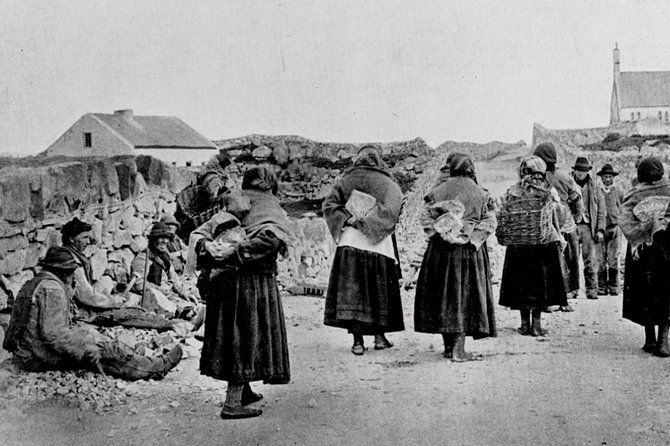
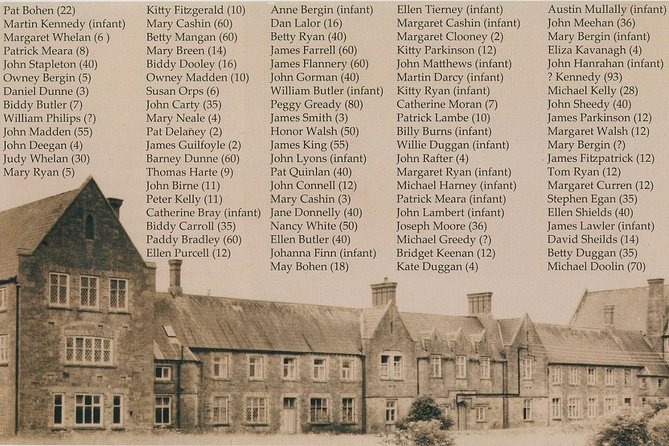
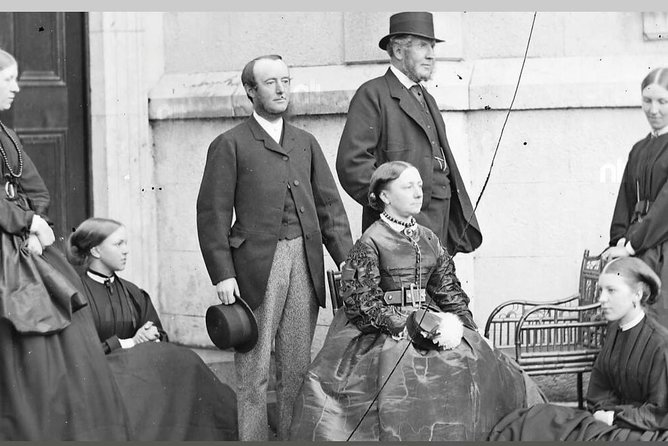
The exhibition uses many 19th-century photographs, newspapers, and written panels. An original soup pot is also included, a modest object that helps make food relief feel more concrete. It is one thing to read about hunger and soup kitchens. It is another to see an item connected to the basic attempt to feed people during a national disaster.
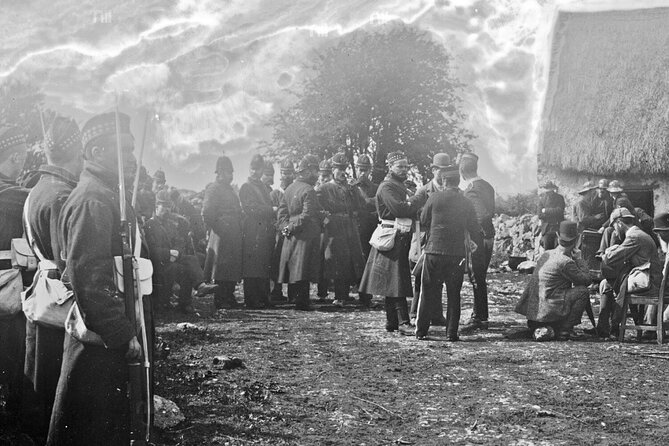
The displays also address the government response and the role of landowners. The emphasis is not only on crop failure, but on the decisions made before and during the crisis. That gives the visit a wider purpose: you are asked to consider how policy, poverty, food supply, and political power shaped the outcome.
The photographs, newspapers, and original soup pot
The strongest part of the experience is its use of simple physical evidence. The photographs show people and places from the period, while newspapers record how the crisis was presented and discussed at the time.
The original soup pot may sound like a small exhibit item, but it has real value. It connects the broad political story to daily survival. The museum’s approach is not based on a long list of impressive objects. Instead, it uses a limited group of items to support a clear account.
You should plan to read. This is not an attraction built around elaborate special effects or a large number of film screens. The main work is done by the written displays and historical images.
That can be a strength if you want a direct account and prefer to set your own pace. It can also be a weakness if you learn best through spoken explanation, interactive displays, or a guide. The exhibition team says it tries to limit the amount of text, but a visitor who dislikes reading may still find the room demanding.
I would treat the museum as a place for careful attention, not a quick photo stop. The material is presented in plain terms, and one positive response described the story as being told through simple facts. That straightforward approach suits the subject.
The 15-minute documentary
A short documentary is included with admission. At about 15 minutes, it gives the exhibition a change of rhythm after the written displays.
The film is useful for visitors who want a spoken and visual account alongside the panels. It may also help younger visitors or family members who struggle with a room full of text. Still, you should keep its scale in mind. This is one short film, not a full cinema presentation or a long guided lecture.
The screening area may feel warm because the exhibition space is not climate controlled. That is a practical point worth knowing, particularly if you are visiting in warm weather or plan to spend extra time seated there. You can always balance the film with time walking through the displays, but comfort may not be perfect.
I like the film as part of the visit because it gives the hour a clear middle section. You can read first, watch the documentary, then return to any displays you want to consider more closely. Since the tour is self-guided, you are not forced to move on when the film ends.
Something completely different for another day:
- Dublin to Cliffs of Moher, including Wild Atlantic Way and Galway
★ 5.0 · 23,331 reviews - From Dublin: Cliffs of Moher, Burren & Galway City Day Tour
★ 4.8 · 18,888 reviews - Dublin: Guinness Storehouse Entry Ticket
★ 4.6 · 16,863 reviews - Dublin to Cliffs of Moher, Burren, Wild Atlantic Way, Galway Tour
★ 5.0 · 12,924 reviews
Looking out over St. Stephen’s Green
The museum offers rare aerial views of St. Stephen’s Green. These views add a welcome sense of place, especially because the exhibition itself is in an upper area of the shopping centre.
The sight of the park below also creates an interesting contrast. Outside, you see one of Dublin’s most familiar green spaces. Inside, you are learning about hunger, displacement, and mass emigration. I would make a point of looking out before leaving, since the views are an unusual feature of this otherwise compact exhibition.
Do not treat the views as the main reason to buy a ticket. They are a bonus, not a major viewing platform. The historical displays and film are the substance of the visit.
Why the subject still feels current
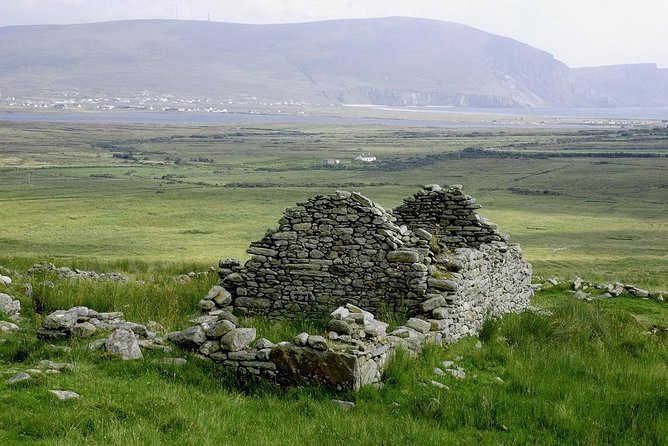
The exhibition is firmly about the 19th-century famine, but it can prompt modern questions about food shortages, public responsibility, and disaster response. One response connected the story to the Covid period and current concerns about wheat supplies.
That does not mean the exhibition turns into a modern politics display. Rather, it gives you a way to think about how governments respond when ordinary people face a crisis they did not cause. The focus on slow action and poor political decisions gives the museum more than a narrow agricultural story.
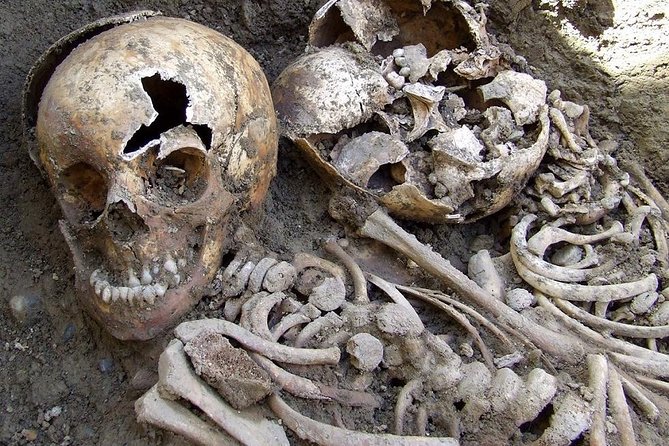
The subject is also closely tied to Irish emigration. The famine changed families, communities, and the population of the island for generations. The displays may be especially meaningful if you have Irish ancestry or are trying to understand why relatives left Ireland.
You should expect strong emotions. One parent described leaving with a son who felt anger and sadness about the treatment of their ancestors. That reaction is not unusual for a subject involving starvation, loss, and forced movement. I would be cautious about bringing very young children unless you already know they can handle difficult historical material.
Is the $18.15 ticket good value?
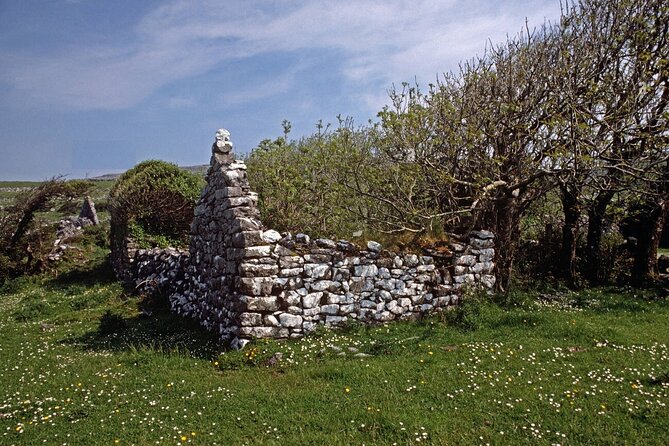
At $18.15 per person, this is not the cheapest short museum visit in Dublin. You are paying for about one hour, and the exhibition is self-guided. If you expect a large collection, a personal guide, or a full multimedia show, the price may seem high.
The value improves if you care about Irish history and want a focused introduction to the Great Hunger. You receive access to the displays, historical objects, the short documentary, translation guides, and the St. Stephen’s Green views. The advance ticket can also save time by helping you avoid an entrance line.
The exhibition has earned a 4.7 rating from 247 reviews, and 93 percent of customers recommend it. Those figures suggest that the experience works well for most people, especially those who come ready to read and reflect.
I would not measure value by the number of objects. This is a small exhibition with a specific purpose. Its worth depends on how much you want a clear, concentrated account of the famine. For a casual stop with no interest in Irish history, the price may feel less attractive.
Who will get the most from this exhibition?
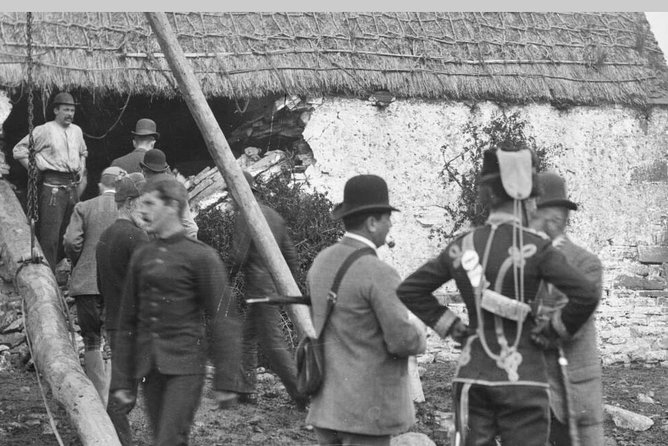
I recommend it most to readers who want context for Irish emigration, family history, or the political story behind the famine. The displays offer a useful foundation even if you know only the basic outline of the period.
It also suits independent visitors. You are not required to follow a guide, and you can decide how long to spend with each part. A solo visitor can read quietly, while a family can move at different speeds and meet again for the documentary.
The translation guides make the exhibition more approachable for people who speak French, German, Italian, or Spanish. The main offering is in English, so English-language reading is still central unless you use one of those guides.
I would be less likely to recommend it to someone who wants an interactive museum or a long guided tour. The exhibition is primarily a room of panels, photographs, newspapers, and objects, supported by one 15-minute film. That is not a flaw in itself, but it is an important match-your-expectations detail.
Practical planning for your hour
The daily opening window is noon to 6 p.m. from January 4 through September 30, 2026. Since the exhibition is temporary, confirm the date and hours when you plan your Dublin day.
Book ahead if avoiding a line matters to you. The activity is commonly reserved well before the visit, with an average booking lead time of 35 days. That does not guarantee the exhibition will sell out, but it is a useful sign that advance planning is sensible.
Set aside roughly one hour, then add extra time only if you know you read slowly or want to revisit sections. The official activity ends back at St. Stephen’s Green Shopping Centre, so it is easy to continue with other central Dublin plans afterward.
Free cancellation is available if you cancel at least 24 hours before the start time. Changes or cancellations made less than 24 hours ahead are not accepted for a refund, and the cut-off is based on local Dublin time.
Should you book the Irish Famine Museum?
Book this exhibition if you want a serious, affordable introduction to the Great Hunger and are comfortable learning through written displays. The original soup pot, period photographs, newspapers, documentary, and clear political focus make the one-hour visit worthwhile for history-minded visitors.
Skip it if you want a large traditional museum, extensive audio-visual material, or a fully guided experience. The shopping-centre setting, warm film area, self-guided format, and text-heavy presentation are real limitations.
For many people, the best reason to go is simple: the exhibition helps turn a broad historical phrase into the experience of individual families and communities. Allow yourself enough time to read, watch the film, look over St. Stephen’s Green, and leave with the subject still in your thoughts.
FAQ
Where does the Irish Famine Museum experience begin?
It begins at St. Stephen’s Green Shopping Centre, St Stephen’s Green, Dublin, D02 HX65, Ireland.
How long does the museum visit take?
The visit lasts approximately one hour.
What are the opening hours?
From January 4 through September 30, 2026, it is open Monday through Sunday from 12 p.m. to 6 p.m.
Is the visit guided?
No. It is a self-guided exhibition, so you explore the displays at your own pace.
Is a film included?
Yes. Admission includes a documentary film lasting about 15 minutes.
Are translation guides available?
Yes. Translation guides are available in French, German, Italian, and Spanish.
Can I cancel my booking for a refund?
Yes, if you cancel at least 24 hours before the experience start time. Cancellations or changes made less than 24 hours before the start time are not accepted for a refund.
Newest in Dublin
- Wicklow Mountains Private Day Tour including Glendalough★ 5.0 · 7 reviews
- Wicklow: Private Day Tour from Dublin★ 5.0 · 5 reviews
- From Dublin: Powerscourt House, Guinness Lake & Glendalough★ 5.0 · 2 reviews
- Ultimate Dublin Food Tour★ 4.5 · 2 reviews
- Women Of Ireland: Trailblazers & Pioneers★ 5.0 · 4 reviews
- Wicklow tour of Glendalough★ 4.5 · 8 reviews
- Wicklow Mountains & Glendalough Luxury Private Day Tour★ 5.0 · 23 reviews
- Whiskey Tasting Tour of Dublin★ 5.0 · 117 reviews
Museum Visits in Dublin, compared.
The Little Museum of Dublin Famous Guided Tour
Read our review →


Irish Whiskey Museum: Whiskey Blending Experience
Read our review →
Irish Whiskey Museum Blending Tour with Tastings
Read our review →
Browse the lists this tour appears in