
Reviewed · DUN LAOGHAIRE TOURS
A Self-Guided Stroll Along Dún Laoghaire’s East Pier
History begins beside St Michael’s Church. This self-guided walk takes you through Dún Laoghaire’s old town, along the Metals, and out to the East Pier Lighthouse while explaining the harbor’s links to emigration, war, rail travel, and Irish independence. I like the offline audio and map access, and I like that you can walk at your own pace without joining a crowd. The main drawback is that you need your own smartphone and headphones, and the audio tour cannot be refunded or changed after booking.
At $8.99, this is a modestly priced way to get more meaning from a waterfront walk. I especially like the mix of maritime monuments and everyday town life, from the Pavilion Theatre to the Crimean War cannon. Still, the experience depends on your phone working properly, and the advertised one hour to one hour fifteen minutes may stretch if you pause for views, photographs, or food.
In This Review
- Key points to know before you go
- Why Dún Laoghaire works so well for a walking tour
- St Michael’s Church sets the opening scene
- Pavilion Theatre shows the town’s modern side
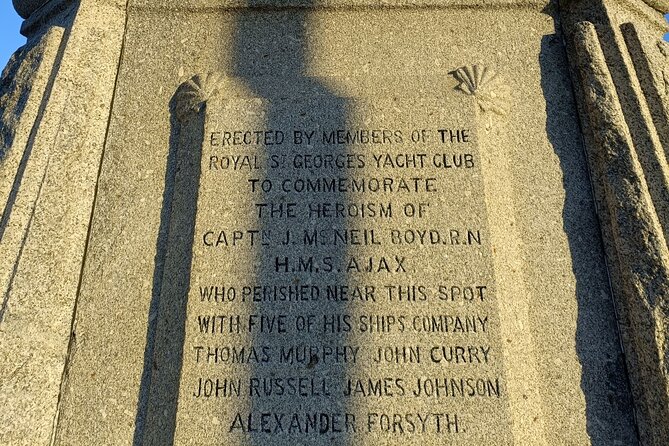
- Royal memory and wartime loss near the harbor
- Walking the Metals, an old railway route
- The East Pier delivers the big views
- Carlisle Pier and the Forgotten Irish Memorial
- The East Pier Bandstand Sun Shelter
- A Russian cannon with a Romanov eagle
- Roger Casement provides the final note
- What $8.99 gets you
- Who will enjoy this self-guided walk
- Practical tips for using VoiceMap
- Should you book this Dún Laoghaire tour?
- FAQ
- Where does the Dún Laoghaire audio tour begin?
- Where does the tour finish?
- How long does the walk take?
- What language is the tour offered in?
- What is included with the booking?
- Do I need to bring anything?
Key points to know before you go
- Start and finish at St Michael’s Church: The route begins on Marine Road and returns to the same meeting point.
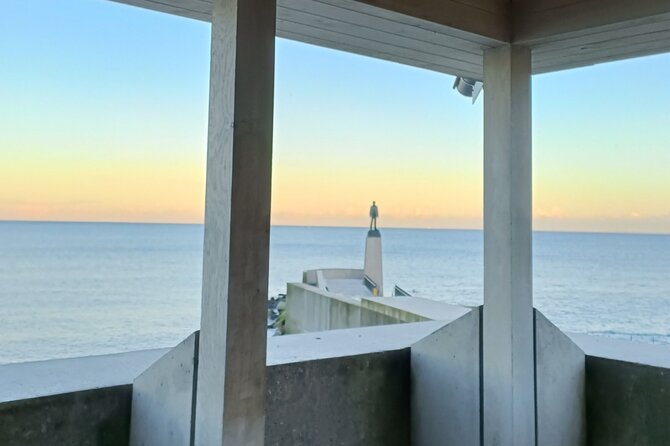
- The East Pier is the main reward: You get open views across Dublin Bay and toward the city, along with the East Pier Lighthouse.
- History arrives in layers: The walk covers the railway Metals, Carlisle Pier, the RMS Leinster Memorial, the Forgotten Irish Memorial, and a Russian cannon.
- VoiceMap works offline: You receive lifetime access in English, including audio, maps, and geodata after downloading the tour.
- This is private but not guided: Only your group participates, yet you follow the app rather than a live guide.
- Plan for a self-contained outing: Transportation, food, drink, a smartphone, and headphones are not included.
Why Dún Laoghaire works so well for a walking tour
Dún Laoghaire is easy to appreciate from the waterfront, but its story makes more sense when you connect the town to its monuments and old transport routes. This walk does that in a compact area. You begin among civic buildings and churches, then move through reminders of royal visits, railway travel, emigration, wartime loss, and political change.
I like that the route does not treat the pier as a single scenic stop. The harbor becomes the center of the story. As you walk, you see how Dún Laoghaire changed from a coastal settlement into an important port, and how its links to Britain, Ireland, and the wider world shaped local life.
The format suits you if you prefer independence. There is no fixed departure time listed beyond the activity being open every day from midnight to midnight, so you can choose your own start. You will need to follow directions on the VoiceMap app and keep an eye on the route yourself. That freedom is useful, but it also means there is no person beside you to answer questions or adjust the pace.
More Self-Guided Tours in Dublin
- St Patrick’s Cathedral: Self-Guided Cathedral Admission
★ 4.5 · 2,126 reviews - Christ Church Cathedral Entrance Ticket & Self-Guided Tour
★ 4.6 · 773 reviews - Dublin Ghost Hunt Exploration Game and Tour
★ 4.0 · 34 reviews
St Michael’s Church sets the opening scene
The tour begins at St Michael’s Church on Marine Road. Established in the 1820s, the church introduces Dún Laoghaire as a settled community with roots that reach back before the harbor became the town’s defining feature.
I find this a sensible starting point. A church gives you a calm place to get your bearings before the route moves toward public buildings and the sea. The opening also helps frame the town as more than a pier and a place for a walk. Its story includes local worship, civic growth, transport, and public memory.
Because this is an audio tour, you should start with your phone charged and the app ready. Downloading the audio, map, and geodata before setting off is wise, especially if you want to avoid relying on a mobile connection during the walk.
Pavilion Theatre shows the town’s modern side
Next, you pass the Pavilion Theatre, a contemporary cultural center. Its presence adds a useful contrast to the older church and harbor landmarks.
This is one of the route’s quieter strengths. The tour does not keep you locked in the past. Dún Laoghaire is still a working town with places for entertainment and public life, and the theatre helps show that old and new uses share the same streets.
Do not expect a theater visit as part of the experience. You pass by it, so the value comes from the setting and the explanation rather than from entering the building. If you want a full cultural outing, you would need to arrange any performance separately.
Royal memory and wartime loss near the harbor
The King George IV Monument introduces the town’s royal connections. It is followed by the RMS Leinster Memorial, which shifts the mood toward remembrance.
The RMS Leinster was sunk during World War I, and the memorial honors those who died in one of Ireland’s deadliest maritime disasters. This stop gives the harbor a more serious meaning. The water is not only a pleasant view. It also points toward danger, wartime disruption, and the families affected by events at sea.
I appreciate the order of these stops. Royal history and local loss sit close together, showing how Dún Laoghaire has been touched by both ceremony and tragedy. You should allow a little quiet time here rather than treating the memorial as a quick photo stop.
The audio can add context that a plaque cannot easily provide. At the same time, this portion may feel heavier than the rest of the walk. If you want a purely light waterfront outing, the war memorial section is worth knowing about in advance.
More Dun Laoghaire trips:
- Boat Trip from Dublin City to Dun Laoghaire
★ 4.5 · 344 reviews - Dublin: Dublin Bay Cruise from Dun Laoghaire to Howth
★ 4.5 · 139 reviews - Dublin Bay: Cruise from the City Centre to Dun Laoghaire
★ 4.3 · 139 reviews - Dublin (Dun Laoghaire) Top-Rated Coastal Walking Tour
★ 5.0 · 80 reviews
Walking the Metals, an old railway route
The route then follows the Metals, the remains of the old railway track that became a promenade. This is a good example of how a former transport route can remain part of daily town life after its original use has ended.
The Metals helps connect Dún Laoghaire’s growth to movement. Rail access changed how people and goods reached the port, and the path now gives you a direct way to move through the area on foot. I like this stop because it is less formal than a monument. You are walking on a piece of the town’s working past rather than simply looking at an object.
The route description places the Metals in the story of Dún Laoghaire’s change from fishing village to major port. That makes the walk feel more connected from stop to stop. You are not just collecting unrelated facts. The church, railway route, harbor, and piers all help explain the town’s development.
The East Pier delivers the big views
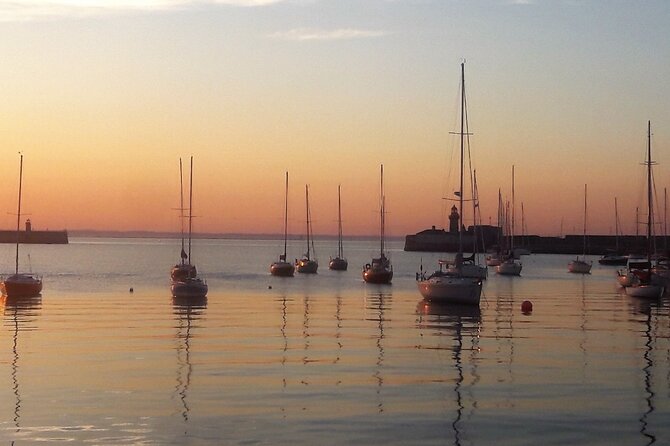
The central portion takes you along Dún Laoghaire Pier toward the East Pier Lighthouse. This is where the walk becomes most scenic. You get broad views across Dublin Bay and toward the city, with the harbor architecture and open water providing a strong change from the streets.
The pier is also where the tour’s larger themes come together. The harbor’s construction helped shape Dún Laoghaire and influenced Ireland’s connections by sea. The audio explains why this sheltered port mattered, while the walk lets you see its scale for yourself.
I would not rush this section. The stated duration is about one hour to one hour fifteen minutes, but your real time will depend on how often you stop. The tour price remains reasonable if you treat it as a guided walk with time for views, though the short estimate may feel tight if you want many photographs or a relaxed meal afterward.
The East Pier Lighthouse gives the route a clear visual goal. It is satisfying to have a definite endpoint on the water rather than simply wandering along the harbor. Wind and weather can affect how enjoyable the pier feels, so sensible footwear and a jacket are practical choices, even though the supplied information does not specify any special equipment.
Carlisle Pier and the Forgotten Irish Memorial
Carlisle Pier dates from the 1820s and offers another link to Dún Laoghaire’s seafaring past. It helps you picture the harbor as a place of arrivals and departures, not just a pleasant promenade.
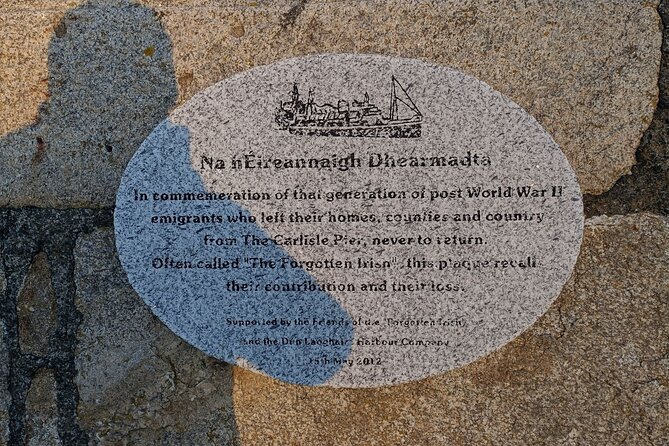
The Forgotten Irish Memorial adds a human story to that maritime setting. It honors Irish emigrants who left home to seek new opportunities and build lives elsewhere. This stop gives the walk emotional range. The harbor carried people toward work, family, and uncertain futures, and the memorial keeps those journeys visible.
I find this combination especially effective. Carlisle Pier explains the physical setting, while the memorial brings attention to the people who used such places. You get a clearer sense of why a port matters to a town’s identity.
The memorial may also be a reason to slow down. An audio explanation can supply background, but the subject deserves more than a hurried listen while walking. If you are traveling with children, this could be a useful point to explain emigration in simple terms, though the tour is not described as a dedicated family program.
The East Pier Bandstand Sun Shelter
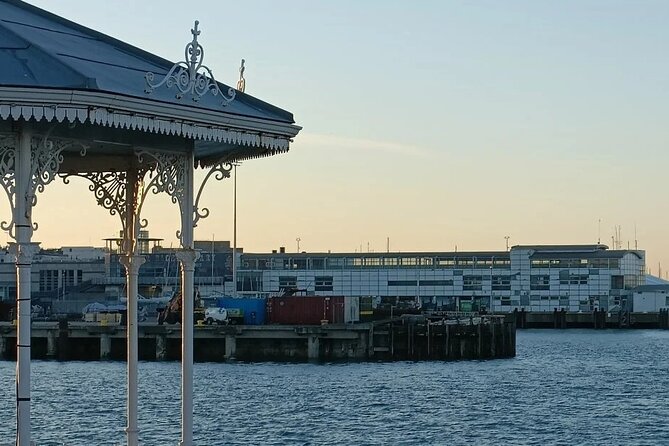
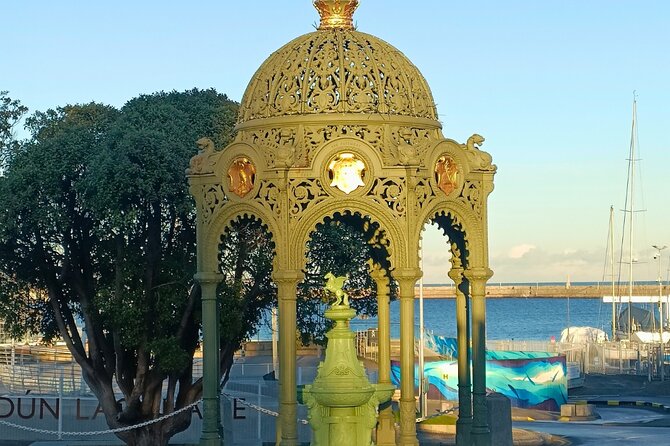
The unusual East Pier Bandstand Sun Shelter is another stop along the harbor. Its architecture adds variety to the walk and gives you something distinctive to look for beyond the better-known monuments.
This kind of detail is one reason an audio route can improve a familiar stroll. Without guidance, you might pass the structure and never ask why it was built or what role it played. The shelter also breaks up the longer stretch along the pier, giving the route another point of interest between the major memorials.
Do not expect every stop to be grand. Some are valuable because they reveal how public spaces were designed and used. That is part of the charm here. The walk gives attention to small features as well as major events.
A Russian cannon with a Romanov eagle
One of the more unexpected sights is the Crimean War cannon, marked with the eagle motif of the Romanov family. Its presence in Dún Laoghaire makes a memorable story: a Russian cannon ended up in Dublin.
This is the sort of detail I would want from a walking tour. It is specific, visual, and easy to remember. The cannon also widens the story beyond Ireland and Britain, bringing in the international consequences of the Crimean War.
You can appreciate the object quickly, but the audio explanation gives it more value. Without context, it is simply an old weapon. With context, it becomes evidence of how military history, imperial connections, and civic display can appear in an Irish harbor town.
The cannon also keeps the route from becoming too predictable. You expect churches, piers, and memorials. A Russian weapon with a Romanov emblem is a less obvious stop and one of the walk’s best conversation starters.
Roger Casement provides the final note
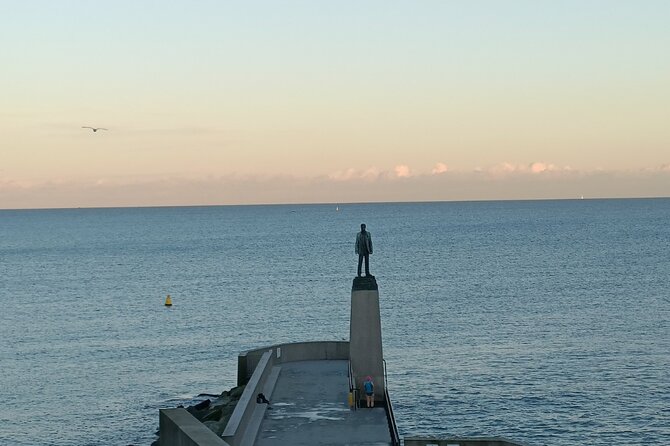
The route ends near the Roger Casement Statue, honoring the Irish revolutionary. This brings the walk back from royal links and international conflict to Irish political identity.
Casement’s inclusion gives the tour a strong final contrast. Dún Laoghaire is presented as a place with regal associations, maritime connections, and a resilient spirit of rebellion. The ending near his statue leaves you thinking about the political forces that shaped modern Ireland, not only about the harbor’s engineering.
The activity returns to the original meeting point, so you do not need to arrange a separate pickup. Nearby eateries let you continue the outing with food or a drink, but those purchases are not part of the tour price.
What $8.99 gets you
At $8.99 per person, the main value is the combination of structure and independence. You receive lifetime access to the English tour through VoiceMap, along with offline audio, maps, and geodata. If you are spending several days in Dublin, that lifetime access may be useful beyond a single visit to Dún Laoghaire.
The price is also lower than many live guided activities, but the comparison needs care. You are not paying for a person, group conversation, or customized route. You are paying for recorded narration and navigation that you can use privately.
For two people, the cost remains modest, especially if you already have a smartphone and headphones. For a larger group, the per-person charge may add up, although the private format means your group is not mixed with strangers. Since the tour is non-refundable and cannot be changed after booking, you should be confident about your schedule and check your equipment before purchasing.
The limited rating data gives the experience a 4.5 out of 5 overall, based on six reviews. One available comment is oddly garbled by automatic translation, but its readable sense points to the pleasure of the adventure and the awakening of the senses. I would treat the rating as encouraging but not decisive, since six reviews do not provide a large record of performance.
Who will enjoy this self-guided walk
I would recommend this experience if you like:
- Short walking tours with a clear route
- Maritime history and harbor architecture
- Memorials that connect local places to international events
- Audio tours you can pause and replay
- Private outings without a scheduled group
- Exploring Dublin beyond the city center
It is less suitable if you want a live guide, extensive personal conversation, or transport between sights. You also need to be comfortable managing your own phone and following app directions.
The activity says most people can participate, service animals are allowed, and the start is near public transportation. No detailed accessibility information is provided, so you should confirm any specific mobility requirements before booking, especially for the pier portion.
Practical tips for using VoiceMap
Install the VoiceMap app for Android or iOS and make sure the tour content is available offline before you leave. The package includes the maps and geodata, but your phone and headphones are your responsibility.
Begin at St Michael’s Church on Marine Road. Since the activity is available every day around the clock, you have room to choose a time that suits your day. An earlier or later start may change the feel of the waterfront, but no specific lighting, weather, or seasonal claims are provided, so plan according to conditions on the day.
Keep the route’s one-hour estimate in mind, then add extra time for the pier, memorials, and any stop at a nearby eatery. You will get more from the audio if you pause when a monument deserves attention instead of trying to finish quickly.
Should you book this Dún Laoghaire tour?
Book it if you want an affordable, private audio walk that links Dún Laoghaire’s harbor views with stories of railways, emigration, war, royal visits, and Irish independence. The East Pier Lighthouse, Forgotten Irish Memorial, RMS Leinster Memorial, and Romanov cannon give the route enough variety to justify the small fee.
Skip it if you need a live guide, cannot use a smartphone, or want the flexibility to cancel. For the right kind of independent explorer, this is a well-shaped way to spend about an hour beside Dublin Bay, with plenty of room to pause and make the harbor your own.
FAQ
Where does the Dún Laoghaire audio tour begin?
It begins at St Michael’s Church on Marine Road, Dún Laoghaire, County Dublin.
Where does the tour finish?
The activity ends back at the original meeting point.
How long does the walk take?
The estimated duration is one hour to one hour fifteen minutes.
What language is the tour offered in?
The tour is offered in English.
What is included with the booking?
You receive lifetime access to the tour through the VoiceMap app for Android and iOS, including offline access to the audio, maps, and geodata.
Do I need to bring anything?
You need your own smartphone and headphones. Transportation, food, and drink are not included.
Newest in Dublin
- Wicklow Mountains Private Day Tour including Glendalough★ 5.0 · 7 reviews
- Wicklow: Private Day Tour from Dublin★ 5.0 · 5 reviews
- From Dublin: Powerscourt House, Guinness Lake & Glendalough★ 5.0 · 2 reviews
- Ultimate Dublin Food Tour★ 4.5 · 2 reviews
- Women Of Ireland: Trailblazers & Pioneers★ 5.0 · 4 reviews
- Wicklow tour of Glendalough★ 4.5 · 8 reviews
- Wicklow Mountains & Glendalough Luxury Private Day Tour★ 5.0 · 23 reviews
- Whiskey Tasting Tour of Dublin★ 5.0 · 117 reviews
Dun Laoghaire Tours, compared.

Dublin Bay: Cruise from the City Centre to Dun Laoghaire
Read our review →
Dublin (Dun Laoghaire) Top-Rated Coastal Walking Tour
Read our review →

Private Transfer from Dublin city to Dun Laoghaire Cruise Port
Read our review →Browse the lists this tour appears in