

Reviewed · WALKING TOURS
Dublin (Dun Laoghaire) Top-Rated Coastal Walking Tour
The coast changes the pace. This 3.5-hour walk links Dun Laoghaire’s harbour, seaside villages, castle ruins, and Dalkey, giving you a lively look at Dublin beyond the city centre. I like the easy meeting point beside the DART station, and I like the mix of coastal scenery with local stories rather than a simple point-to-point stroll. The main catch is distance: you may cover around 10,000 steps, and the paths can be uneven.
Guide Marina Boyle receives especially warm praise for her friendly manner, local pride, patience, and clear storytelling. I also like that the walk ends at Dalkey DART station, where you can catch a train back toward Dublin or Dun Laoghaire. Bring proper walking shoes, eat a good breakfast, and remember that train fare, food, and transport to the start are not included.
In This Review
- Key points to know before you book
- Why this coastal route is worth your morning
- Meeting at Dun Laoghaire Harbour
- People’s Park and the railway lane
- Sandycove and the James Joyce Tower
- Bulloch Harbour and the chance of seals
- Bulloch Castle and Dalkey’s medieval remains
- The walking effort, pace, and comfort level
- Price, group size, and what you receive
- Who will enjoy this tour most
- Ending in Dalkey and getting back
- My verdict: book it for the coast, not just the tower
- FAQ
- Where does the tour begin?
- Where does the tour end?
- How long does the walking tour last?
- What places are visited?
- Is entry to the James Joyce Tower included?
- Is the James Joyce Museum open every day?
- Is transportation included?
- Are food and snacks included?
- How many people can join the tour?
- Can the tour be canceled because of weather?
Key points to know before you book
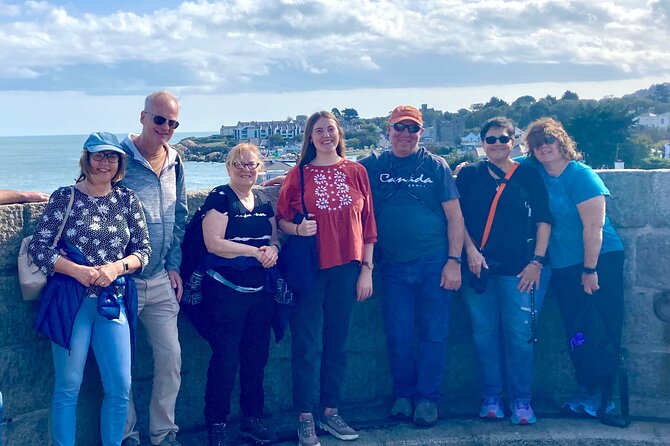
- Start beside Dun Laoghaire DART station: The meeting point at 1 Harbour Road is convenient, including for cruise passengers arriving near the port.
- Walk from harbour to village: The route connects Dun Laoghaire, Sandycove, Bulloch Harbour, and Dalkey rather than focusing on one attraction.
- Climb the James Joyce Tower: Admission is included, along with the spiral staircase and rooftop views when the museum is open.
- Expect a real walk: The tour lasts about 3 hours 30 minutes, with roughly 2.5 hours spent walking according to one detailed account.
- Watch for seals at Bulloch Harbour: They are sometimes seen in the water or resting on the rocks.
- Finish near food and trains: Dalkey offers places for a drink or meal, but refreshments cost extra and the DART fare is separate.
Why this coastal route is worth your morning
Dublin’s centre gets most of the attention, but the southeastern coast gives you a different picture of the city. Here, the story is tied to ports, railways, villages, castles, writers, swimming spots, and daily life by the sea.
I like the route because it does not treat the coast as scenery alone. You hear how Dun Laoghaire developed as a harbour town, how the railway shaped the area, why Dalkey has so many castle remains, and how the shoreline still functions as a social place for swimmers and walkers.
The group can contain up to 20 people. That is large enough to offer company but small enough to keep the walk personal if everyone stays together. The public rating is 5.0 from 80 ratings, with 100 percent recommending the experience, and the repeated praise centres on Marina’s warmth and ability to make local history easy to follow.
This is not a fast sightseeing circuit. You will stop often, listen, look around, and walk between places. The pace is described as relaxed and steady, but the total distance still adds up. If you want a short stroll with one viewpoint, choose something smaller. If you enjoy spending half a day outdoors and learning how an area fits together, this route is a good match.
More Walking Tours in Dublin
- Dublin Highlights and Hidden Gems Guided Walking Tour
★ 5.0 · 6,020 reviews - Dublin: Highlights and Hidden Gems Walking Tour
★ 4.9 · 2,140 reviews - 1916 Rebellion Walking Tour
★ 5.0 · 1,605 reviews
Meeting at Dun Laoghaire Harbour
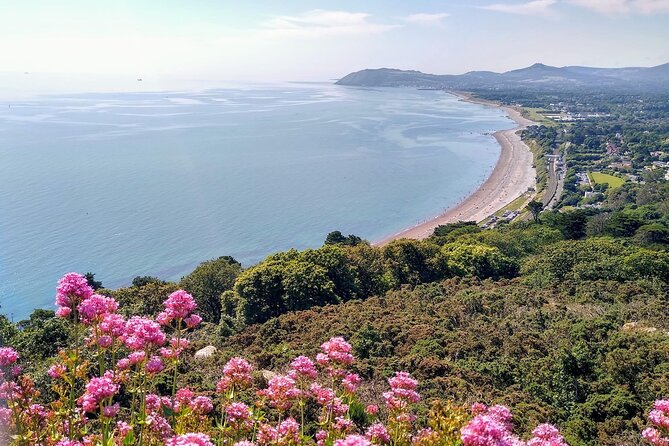
The tour begins at 1 Harbour Road, near the DART station in Dun Laoghaire. That location is one of the practical strengths of the outing. You do not need to find a hotel lobby or search for an obscure street corner. It is also useful if you arrive by cruise ship, as the meeting point is a short walk from the port area.
The first stop is Dun Laoghaire Harbour, where you hear about the piers and the harbour’s past. The visit here is brief, listed at about 10 minutes, but it sets the tone for the rest of the walk. Instead of rushing straight into a village, Marina explains why this part of the coast mattered to Dublin’s maritime life.
A nearby maritime museum is discussed from outside. You do not appear to enter it as part of the tour, so think of this as an introduction rather than a museum visit. That distinction matters if you are hoping to spend time indoors. The value is in placing the harbour and its buildings within the wider story of the area.
People’s Park and the railway lane
People’s Park provides an early change of mood. The park is a pleasant local green space, and the stop lasts about 10 minutes. If you take the tour on a Sunday, extra time is spent at the farmers market, which adds a more everyday feel to the route.
That Sunday timing is worth noting. The market can make this stop more interesting if you like food stalls and local activity, but the tour does not include snacks. Bring money if you want to buy something along the way.
Next comes the Metals, a historic laneway linked with Dun Laoghaire’s railway story. The stop itself is short, around five minutes, yet it helps explain how people and goods moved through the coastal suburbs. I enjoy this kind of detail because it connects an ordinary-looking passage with the growth of the town.
The route then continues through a typical Irish village before reaching the coast again. The supplied schedule does not name every short stop, so the day feels less like a string of formal attractions and more like a guided walk through connected neighborhoods. You will hear about local life as you move, rather than waiting at each site for a long lecture.
Sandycove and the James Joyce Tower
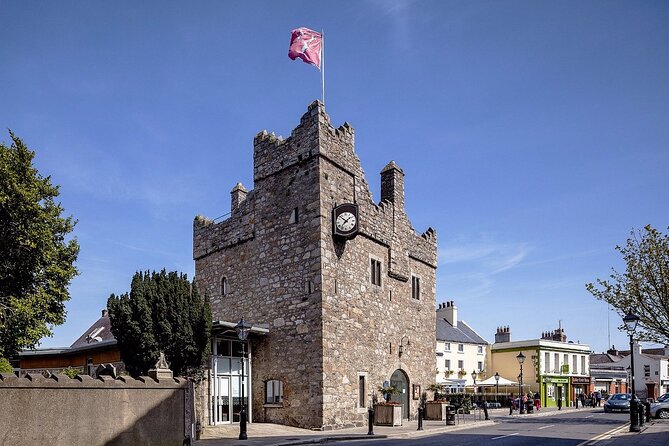
One of the route’s most memorable points is the swimming area at Sandycove. It is known as one of Dublin’s most famous swimming spots, and the walk gives you a chance to see the local tradition for yourself.
The stories about swimmers in cold, windy weather add character to this part of the coast. You may find people in the water even when the conditions look far from inviting. It is a useful reminder that the shoreline is not only for photographs. It is part of daily life.
The James Joyce Tower and Museum is the main indoor attraction. Admission is included, and the visit lasts about 20 minutes. You enter the museum, hear about its place in the area, and climb the spiral staircase to the rooftop viewing point.
The climb is a highlight, but it is also the one part of the tour that may test your legs or balance. One account specifically enjoyed the stairs, while another noted uneven paths elsewhere. Good trainers are the sensible choice. Hiking boots are not described as necessary, but flip-flops are a poor idea.
The rooftop gives you a wide view over the coast. The experience is not only literary. It also gives you a better sense of the relationship between the sea, the villages, and the route you are walking.
There is one important scheduling detail: the James Joyce Museum is closed on Mondays. The tour still operates with plenty to see, but the museum entry and tower climb may not be available that day. Check the date before you book if this stop is a priority.
More Dun Laoghaire trips:
- Boat Trip from Dublin City to Dun Laoghaire
★ 4.5 · 344 reviews - Dublin: Dublin Bay Cruise from Dun Laoghaire to Howth
★ 4.5 · 139 reviews - Dublin Bay: Cruise from the City Centre to Dun Laoghaire
★ 4.3 · 139 reviews - Dublin: Dublin Bay Cruise from Howth to Dun Laoghaire
★ 4.3 · 44 reviews
Bulloch Harbour and the chance of seals
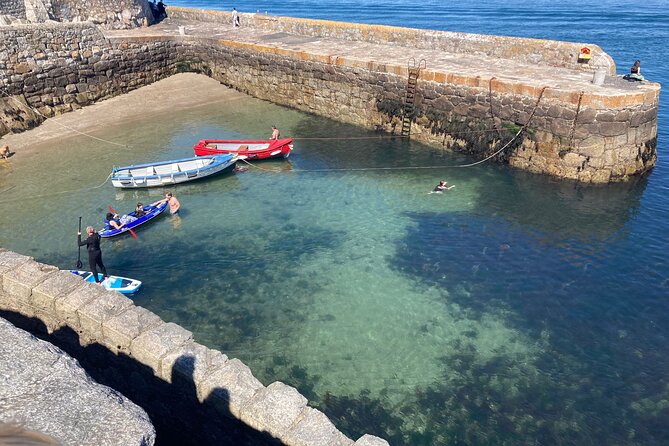
Bulloch Harbour is a small village harbour with a different feel from Dun Laoghaire’s larger waterfront. Marina explains its industrial past and how it is used today. The stop lasts about 10 minutes, which gives you time to look across the water without turning the walk into a long break.
Seals are sometimes seen in the harbour, either in the water or resting on the rocks. They are not guaranteed, so treat them as a lucky extra rather than a promised sighting. The harbour itself remains worthwhile for its setting and local story.
This is also a good point to appreciate the route’s variety. Within a few hours, you move from a major harbour to a village waterfront, then on to medieval remains and an affluent town. The changes are close enough to connect on foot but distinct enough to keep the outing interesting.
Bulloch Castle and Dalkey’s medieval remains
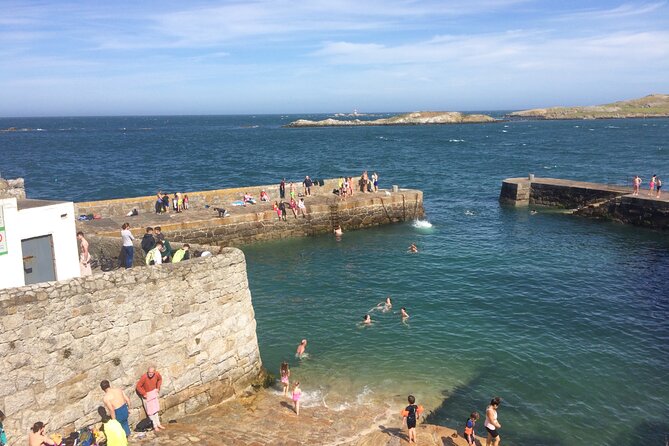
At Bulloch Castle, you see a medieval ruin and hear how Dalkey once had seven castles. The tour includes views of three castle sites, though some are seen from outside and only briefly. Bulloch Castle is listed as a five-minute stop, so expect an introduction and a look at the remains rather than a long archaeological visit.
That short timing is not necessarily a flaw. The attraction here is the wider picture: medieval Dalkey was important enough to have a network of fortified buildings, and the surviving ruins are woven into the modern village. You are not spending the entire afternoon inside one monument. You are seeing how old structures sit within a living coastal town.
The walk through Dalkey continues that theme. The village is described as one of Dublin’s most affluent, and Marina shares its Viking history along with suggestions for nightlife and dining. The stop lasts about 10 minutes, but the end of the tour gives you a chance to stay on for food or a drink at your own cost.
Another castle and heritage centre is viewed along the way, with an explanation of the Norman castle and its role in local history. The route also includes a view of a nearby village island, along with its Viking and Catholic connections, seen from the railway area. These shorter observations are easy to miss if you explore alone, which is one of the strongest reasons to take a guided walk here.
The walking effort, pace, and comfort level
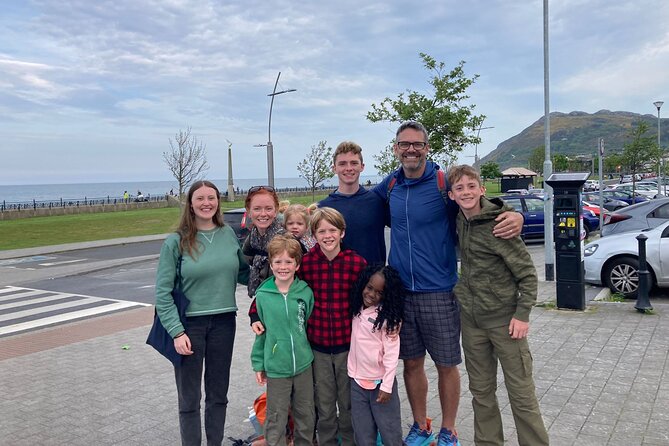
The listed duration is approximately 3 hours 30 minutes, but plan your day with some flexibility. One detailed account called it close to four hours and noted that the actual walking portion lasted around 2.5 hours. Another estimate put the total at roughly 10,000 steps.
The pace is generally described as comfortable and steady. Marina has been praised for stopping when needed and keeping the group from feeling rushed. There are places to rest, but this remains an active excursion, not a gentle promenade with frequent transport.
You should wear supportive walking shoes and dress for changeable coastal weather. The route includes paths that can be uneven, stairs at the tower, and stretches beside the sea. The tour requires good weather, and poor conditions can lead to a new date or a full refund.
Food planning deserves attention. The standard experience does not include snacks, and one person wished the tour had made the late meal timing clearer. I would eat a substantial breakfast and carry water. Dalkey is the natural place to stop for lunch afterward, but that meal is separate from the tour.
Price, group size, and what you receive
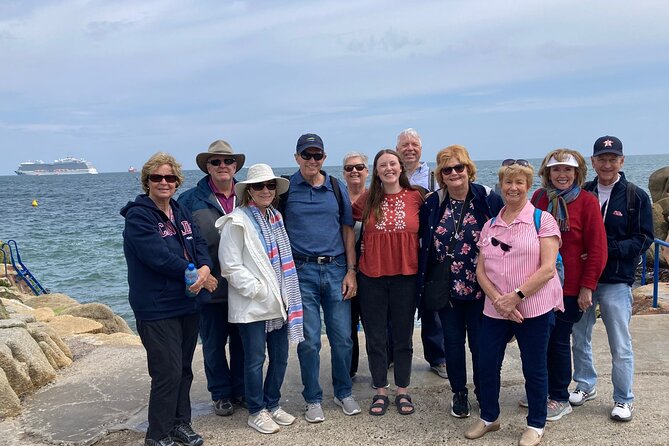
At $114.65 per person, this is not the cheapest way to see the Dublin coast. The price includes the local guide, museum entry at the James Joyce Tower, and all listed fees and taxes. It does not include the DART fare, snacks, lunch, or transport to Dun Laoghaire.
The value depends on how much help you want with context and navigation. If you simply want to walk the harbour and villages, you can spend less by using public transport and exploring independently. You would then need to plan the route, identify the castle remains, manage the tower opening hours, and piece together the maritime, railway, Viking, and literary stories yourself.
I see the strongest value in the guide’s local perspective. Marina is repeatedly praised for being friendly, well-informed, patient, and proud of her home. She also gives suggestions for other Dublin sights and places to eat, which can help if this is your first day in the area.
The maximum group size is 20. That is worth considering for people who prefer small private tours. You may not receive the same quiet, one-to-one attention as you would with a private guide, but a group tour can be more sociable and may suit solo visitors who like meeting people during the walk.
Group discounts are available, which may improve the price for families or parties booking together.
Who will enjoy this tour most
I would recommend this walk to you if you have already seen central Dublin and want a different side of the city. It also suits cruise passengers who prefer to stay near Dun Laoghaire rather than spend the day heading into the centre.
Families can enjoy it too. Marina has been praised for making a large family group feel welcome and for mixing formal history with fun facts. Still, parents should be honest about the distance and the 3.5-hour duration before bringing young children.
The tour works well for people who like:
- Coastal views with frequent historical stops
- Small villages instead of major city attractions
- Local stories about ordinary places
- A social group setting
- A walk that finishes near food and public transport
I would hesitate to book it if you have difficulty with long walks, uneven surfaces, or stairs. I would also check the schedule carefully if entering the James Joyce Tower is essential, especially for a Monday departure.
Ending in Dalkey and getting back
The tour finishes at Dalkey DART station. From there, you can take a train toward Dublin city centre, Dun Laoghaire, or another DART stop. The train fare is not included, and you should budget separately for it.
The guide has helped people use the ticket machine when no ticket office was open. Card payment, including tap payment, was available in one account, and two adults paid about 5 euros to return to Dun Laoghaire. Fares and payment arrangements can change, so treat that figure as a useful example rather than a fixed price.
Ending in Dalkey is practical because you are not forced to retrace the whole route on foot. It also gives you a pleasant choice: leave by train, or stay for a pub lunch, drink, or further exploration at your own expense.
My verdict: book it for the coast, not just the tower
I would book this tour if I wanted an active half-day with sea views, village streets, castle remains, and a guide who can explain how the pieces fit together. Marina’s local knowledge and considerate pace are the clearest strengths, and the route offers much more variety than a simple harbour walk.
The decision is less certain if you want a short outing, a private guide, or guaranteed museum access on a Monday. The $114.65 price also makes more sense when you value guided interpretation and included tower admission, not merely the walking route.
For the best experience, choose a day with good weather, wear trainers, eat breakfast first, and leave time for Dalkey afterward. If those details suit your plans, this is a strong way to see Dublin’s coast without spending the day in the city centre.
FAQ
Where does the tour begin?
It begins at 1 Harbour Road in Dun Laoghaire, near the DART station.
Where does the tour end?
The tour ends at Dalkey DART station.
How long does the walking tour last?
The listed duration is approximately 3 hours 30 minutes. Some accounts describe the full outing as closer to four hours, so allow extra time.
What places are visited?
The route includes Dun Laoghaire Harbour, People’s Park, the Metals laneway, Sandycove, the James Joyce Tower and Museum, Bulloch Harbour, Bulloch Castle, and Dalkey.
Is entry to the James Joyce Tower included?
Yes. Admission to the James Joyce Tower and Museum is included in the tour price.
Is the James Joyce Museum open every day?
No. The museum is closed on Mondays, so the tower and museum entry may not be available on a Monday tour.
Is transportation included?
No. Transport to the meeting point and the train from Dalkey are not included.
Are food and snacks included?
No. Snacks, lunch, and other refreshments are not included. You can find food in Dalkey after the walk at your own cost.
How many people can join the tour?
The maximum group size is 20 people.
Can the tour be canceled because of weather?
Yes. The experience requires good weather. If poor weather causes cancellation, you will be offered another date or a full refund. Free cancellation is available up to 24 hours before the start time.
Newest in Dublin
- Wicklow Mountains Private Day Tour including Glendalough★ 5.0 · 7 reviews
- Wicklow: Private Day Tour from Dublin★ 5.0 · 5 reviews
- From Dublin: Powerscourt House, Guinness Lake & Glendalough★ 5.0 · 2 reviews
- Ultimate Dublin Food Tour★ 4.5 · 2 reviews
- Women Of Ireland: Trailblazers & Pioneers★ 5.0 · 4 reviews
- Wicklow tour of Glendalough★ 4.5 · 8 reviews
- Wicklow Mountains & Glendalough Luxury Private Day Tour★ 5.0 · 23 reviews
- Whiskey Tasting Tour of Dublin★ 5.0 · 117 reviews
Walking Tours, compared.
Dublin Highlights and Hidden Gems Guided Walking Tour
Read our review →
90 Minute Dublin Walking tour and Sightseeing tips
Read our review →

Historical 2-Hour Guided Walking Tour of Dublin
Read our review →
Dublin Traditional Irish 3 Course Meal Walking Tour with Local
Read our review →
Browse the lists this tour appears in