
Reviewed · CYCLING TOURS
Bike Tour Along The Historic Waterways Of Dublin
Dublin opens up on two wheels. I like that this private ride reaches places many city tours skip, from Bull Island and Glasnevin Cemetery to the River Liffey and War Memorial Gardens. I also like the mix of coastal air, park paths, Irish sporting history, and difficult national stories. The main drawback is the length: up to eight hours on a bike, with one report of an older bicycle and an uncomfortable seat.
The route is led by Ben, a guide praised for his clear communication, care with road safety, and broad knowledge of Irish culture, history, language, and wildlife. You get a helmet, high-visibility vest, and a full day of sights for $198.25 per person. That price is fair for a private tour with a guide, but lunch, cemetery admission, and any Kilmainham Gaol visit are extra.
In This Review
- Key points to know before you book
- Why this Dublin bike tour feels different
- Starting at Capel Street and heading for Dublin Bay
- Bull Island and Captain Bligh’s sea wall
- Guinness parkland and Croke Park
- Glasnevin Cemetery, where Dublin’s past gets personal
- Lunch at John Kavanagh The Gravediggers
- Tolka Valley Park and Phoenix Park
- Along the Liffey to the War Memorial Gardens
- Kilmainham Gaol from the outside
- Royal Hospital Kilmainham and Croppies Acre
- Bicycle comfort, safety, and the long timetable
- Is $198.25 a fair price?
- Who should book this ride?
- Should you book the Dublin waterways bike tour?
- FAQ
- Where does the bike tour begin?
- Can I get picked up from my accommodation?
- How long does the tour last?
- Is the tour private?
- What equipment is included?
- Is lunch included?
- Are attraction admissions included?
- What happens if the weather is poor?
Key points to know before you book
- A broad Dublin route: You cycle from the coast and Bull Island through parks, sporting landmarks, cemeteries, and the historic Liberties area.
- Private guiding: Only your group takes part, making it easier to ask questions and set a comfortable pace.
- Strong historical range: The route covers Captain Bligh, the Gaelic Athletic Association, the 1916 Rising, the 1798 Rebellion, World War I, and Dublin’s waterways.
- A real fitness day: The outing lasts about 5 to 8 hours and requires comfort cycling in an urban setting.
- Lunch is at John Kavanagh The Gravediggers: The pub dates to 1833, but you pay for your own meal.
- Bike quality matters: Most of the experience depends on your bicycle fitting well, so check the bike before setting off.
Why this Dublin bike tour feels different
Many Dublin sightseeing routes stay close to the central streets. This one uses the city as a starting point, then carries you outward along cycle lanes, waterways, parks, and quieter paths.
You get a wider view of Dublin. The city is not presented only through famous buildings and literary associations. You see how the coast, rivers, recreation grounds, cemeteries, military sites, and working neighborhoods fit together.
The route also has a useful balance of scenery and explanation. One stretch gives you sea views and fresh air. Another passes beneath Croke Park, where Ben explains the Gaelic Athletic Association and its role in Irish communities. Later, the mood changes at Glasnevin Cemetery and Kilmainham, where the stories are more somber.
Because the tour is private, you are not tied to a large group. That matters on a long ride. You can ask about a plaque, pause for a photograph, or tell the guide if you need a slower pace. The experience is offered in English.
More Bike Tours in Dublin
- Cycle Dublin – Bike & ebike Tours
★ 5.0 · 748 reviews - Dublin Panoramic e-Bike Tour with Howth Adventures
★ 5.0 · 544 reviews - Dublin: Bike & E-Bike Tour with a Local Guide
★ 4.6 · 477 reviews
Starting at Capel Street and heading for Dublin Bay
The tour begins at 37 Capel Street in North City, Dublin. If your accommodation is within one kilometer, Ben can meet you up to 20 minutes before the start and walk with you to the meeting point.
The first section heads toward the coast along a newly completed cycle lane. Rather than treating the ride as dead time, the guide explains the story of Dublin’s transport infrastructure while you look across Dublin Bay and take in the sea air.
That opening is useful because it gets you away from the tight center quickly. It also sets the pattern for the day: movement is part of the sightseeing, not simply a way to reach the next stop.
You should be comfortable riding in an urban environment. The tour is not designed for someone who wants a short, gentle spin with frequent transfers. You need a reasonable fitness level and the ability to remain on a bicycle for much of the day.
Bull Island and Captain Bligh’s sea wall
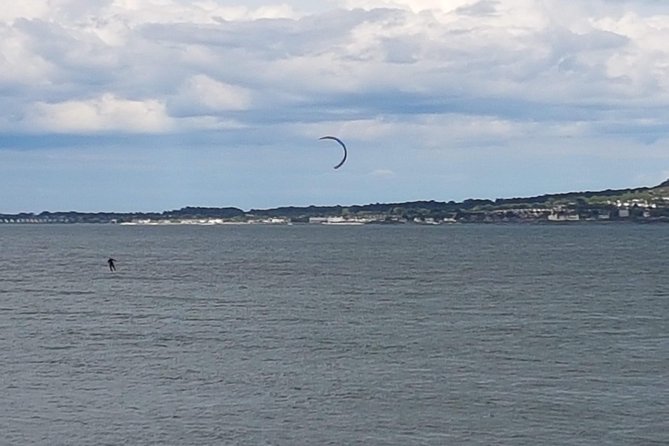
Bull Island is one of the most enjoyable early pauses. You stop for about 30 minutes at a distinctive cafe perched on a 200-year-old sea wall.
The wall was connected with Captain Bligh, the naval officer associated with Mutiny on the Bounty. Over a cup of tea and a snack, you hear how Dublin Bay changed and how Bull Island, now a major nature reserve, formed by accident.
This is a good example of why the tour works best for curious cyclists. The point is not only to look at the bay. You learn how engineering, tides, and human plans helped shape the coast.
The cafe stop is not included as a meal, so plan to pay for your drink or snack. It is a welcome rest early in a long day, especially before the route moves through more city parks and historic sites.
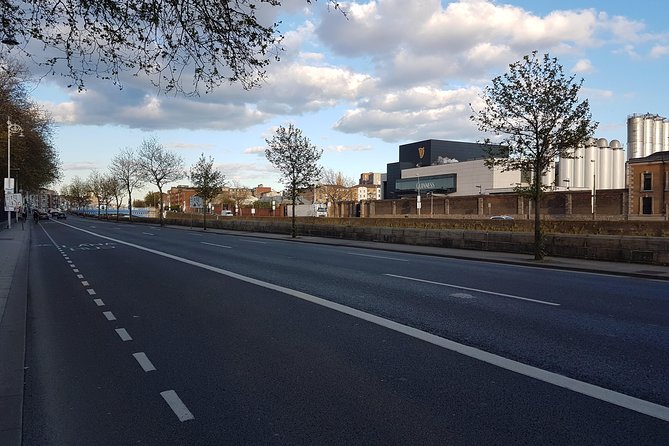
Guinness parkland and Croke Park
The route then passes through an elegant park once owned and developed by the Guinness family. Tree-lined lanes give you a calmer stretch for cycling, with room to ride at a relaxed pace.
The next stop is Croke Park Stadium. You park beneath the 83,000-capacity stadium, described as the third largest in Europe. The stop lasts about 15 minutes, so this is an exterior visit rather than a stadium tour.
The value here comes from the explanation. Gaelic games are not a side note in Ireland. The Gaelic Athletic Association has shaped clubs, communities, and local identity since its foundation nearly a century and a half ago.
Ben also tells the story of a nearly forgotten man who played a major role in getting the organization started and shaping it. That kind of detail gives the stadium more meaning than a quick photograph outside a large sports ground.
If you are hoping to enter Croke Park, this tour does not include stadium admission. You see and discuss the site from outside.
More History Tours in Dublin
- Dublin Historical Centre Food Tour with 8 Food Tastings & Drinks
★ 5.0 · 1,718 reviews - 2-Hour Historical Walking Tour from Dublin
★ 5.0 · 875 reviews - Historical 2-Hour Guided Walking Tour of Dublin
★ 4.7 · 865 reviews - Dublin to Cork, Blarney Castle & Cóbh Heritage Centre by train
★ 4.5 · 510 reviews
Glasnevin Cemetery, where Dublin’s past gets personal
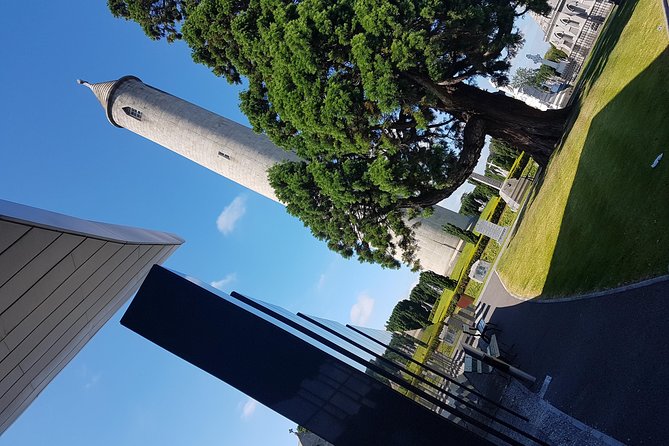
Glasnevin Cemetery is the longest formal stop, at about 1 hour and 30 minutes. You join a public cemetery tour, and admission is not included in the bike tour price.
This is one of the day’s strongest sections. The cemetery holds famous, eccentric, tragic, and little-known figures, so the storytelling reaches beyond dates and monuments. You hear about the people behind Ireland’s political and social story, including characters whose lives were far less tidy than a textbook account suggests.
The public tour format changes the rhythm of the day. After cycling with your private group, you join a separate guided presentation. That can be a plus if you want a fuller explanation of the cemetery, though it means the experience is not entirely private from this point.
Allow for the admission cost when comparing the total price of the outing. If you prefer a quick look at a cemetery, 90 minutes may feel long. If you enjoy personal stories and national history, it is likely to be time well spent.
Lunch at John Kavanagh The Gravediggers
After Glasnevin, you stop at John Kavanagh The Gravediggers for about 45 minutes. The pub opened in 1833 and takes its unusual name from the workers who used to frequent it.
This is a fitting place for lunch because it connects neatly with the cemetery next door. The setting is part of the experience, not just a convenient place to eat. You get a break from the saddle and a chance to absorb the cemetery visit.
Lunch is not included. The tour information calls for a hearty meal, but your food and drink costs are your responsibility. Forty-five minutes gives you time to eat, though you will not have the freedom of a long, leisurely restaurant stop.
For this tour, I would treat lunch as an important recovery break. Do not skip it simply to save time. You still have several stops and cycling sections ahead.
Tolka Valley Park and Phoenix Park
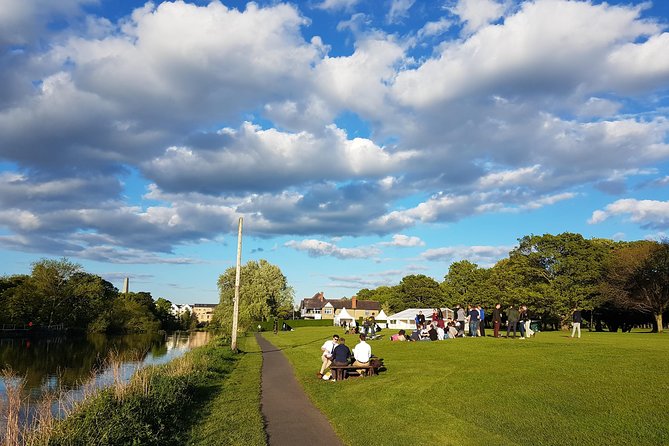
The route continues through Tolka Valley Park, using a recently constructed cycle path that runs through lush foliage. The listed stop is brief, about 10 minutes, but the park adds another change of scenery after the more crowded urban sections.
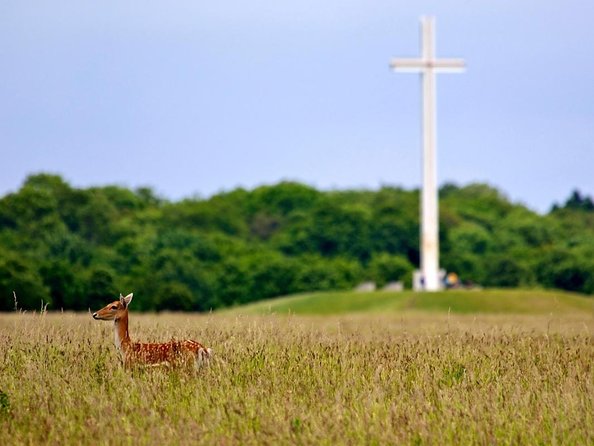
Next comes Phoenix Park, the largest enclosed public park in any European capital city. Its story reaches back to 1662, when red deer were introduced. Deer still roam there today.
The park gives the tour space to breathe. You are no longer focused only on monuments or city streets. You are cycling through a major public park with a long connection to Dublin’s civic life and open land.
The exact timing inside Phoenix Park is not stated, so the overall 5 to 8 hour range is important. Weather, cycling pace, breaks, and time spent listening can all affect the day. You should not book another fixed activity immediately afterward.
Along the Liffey to the War Memorial Gardens
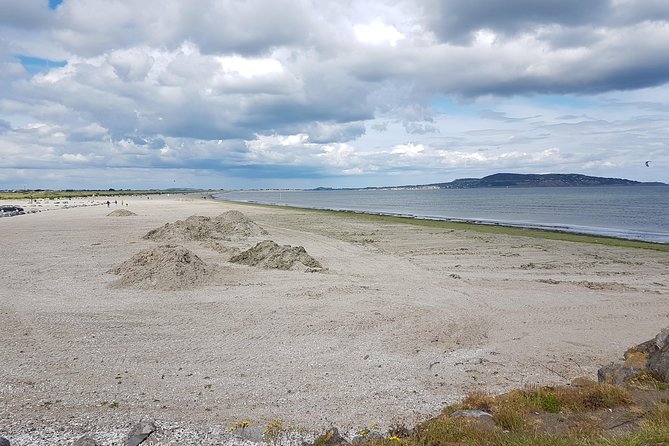
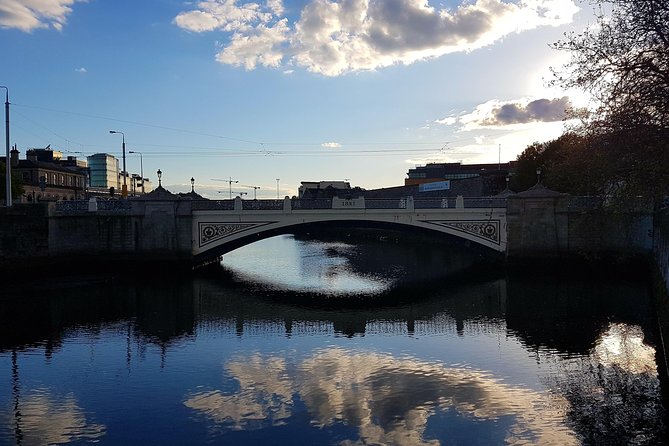
By the River Liffey, you follow a superb riverside path and may watch rowers working their way along the water. This section is one of the clearest expressions of the tour’s theme: Dublin’s waterways are not merely scenic edges, but active parts of the city.
At the Irish National War Memorial Gardens, you pause to recognize the 49,400 Irishmen who fought in World War I. The site also opens a less familiar chapter of Irish memory, since those men were often forgotten or treated poorly in later nationalist narratives.
Ben explains the story of a well-known Irish nationalist who escaped execution through cunning and the meaning of the two swans associated with the gardens. The listed stop is about 10 minutes, so expect a concise introduction rather than a long visit.
I value this part because it avoids a simple version of Irish history. The tour makes room for competing loyalties, uncomfortable memories, and people whose wartime service did not fit later political expectations.
Kilmainham Gaol from the outside
At Kilmainham Gaol, you stop outside the famous 18th-century prison for about 10 minutes. Admission is not included, and this experience does not describe an interior prison tour.
Even from outside, the site carries considerable weight. You hear about the prison’s uses over time, including public executions, the Great Famine, and the executions of leaders of the 1916 Rising.
If entering Kilmainham Gaol is a major priority, plan a separate visit on another day. A proper interior tour needs more time, and trying to add it during this bicycle route would make an already long day even tighter.
The short stop works well as historical orientation. You learn why the prison matters, see where it fits into the city, and continue without turning the bike tour into a single-site excursion.
Royal Hospital Kilmainham and Croppies Acre
The Royal Hospital Kilmainham provides a five-minute view over formal public gardens based on the original 17th-century design. Beside them is the former military hospital, now home to the Irish Museum of Modern Art.
This is a quick photographic and historical stop. Museum entry is not included, so anyone wanting to see the galleries should return separately.
The final stop is Croppies Acre Memorial Park. According to local legend, it was a mass burial place for victims of the 1798 Rebellion. It sits near Collins Barracks National Museum and the Guinness Brewery, giving you a strong final cluster of Dublin landmarks.
At this point, the tour has moved through military memory, rebellion, imprisonment, sport, religion, public parks, industry, and waterways. That range is the main reason to choose this route over a standard center-only bicycle ride.
Bicycle comfort, safety, and the long timetable
The tour includes a bicycle, helmet, and high-visibility vest. Ben has been praised for keeping the ride safe and communicating clearly, which is especially important when a route includes urban streets and several different types of cycle paths.
Still, bicycle condition deserves attention. One detailed account found the bike a little old, with gears that did not change and a seat without much padding. That person still had a very good day, but discomfort becomes more noticeable on an all-day ride.
Before leaving, check the brakes, gears, saddle height, and general fit. If an e-bike is important to you, ask what is available when booking. One account refers to comfortable e-bikes, while the stated inclusions simply promise use of a bicycle, so you should not assume an electric model is automatic.
The tour requires good physical fitness. You do not need to be a competitive cyclist, but you should be comfortable riding for 5 to 8 hours with stops. The private format helps, yet it cannot remove the physical demands of the route.
Is $198.25 a fair price?
At $198.25 per person, this is not a budget bicycle rental. You are paying for a private guide, a long route, equipment, safety gear, and a full day of interpretation across many parts of Dublin.
The value is strongest if you want context rather than simple navigation. Ben’s role links sites that can feel scattered on a map. You also avoid spending the day in traffic or moving between distant areas by public transport.
The price is less attractive if you mainly want to pedal casually, take a few photographs, or visit the interior of major attractions. Lunch is extra, Glasnevin admission is extra, and Kilmainham Gaol entry is not part of the experience.
For a private day with a strong historical focus, I consider the price reasonable, provided the bicycle is comfortable and you are ready for the mileage.
Who should book this ride?
I would recommend it to active adults, couples, families with older children, and small groups who want to see a broader side of Dublin. It suits you especially well if you enjoy local stories, parks, coastlines, cemeteries, sports, and political history in one outing.
It is also a good choice for a repeat visitor. You see major places such as Phoenix Park and Kilmainham, but the route reaches beyond the usual sightseeing circuit.
I would be cautious if you have limited cycling experience, dislike urban riding, or want a short activity. The duration is approximate, and the day includes enough stops and historical explanation to feel like a full excursion.
The experience has a 4.9 rating from 15 reviews, with 100 percent recommending it. Ben receives especially strong praise for his safety, communication, and ability to explain Irish history and culture without making the ride feel like a lecture.
Should you book the Dublin waterways bike tour?
Book it if you want a full, active day that connects Dublin’s coast, parks, river paths, and difficult history. The private format, strong guiding, and unusual route make it more than a standard city cycle.
Before confirming, ask about the exact bicycle, especially if you want an e-bike or need reliable gears and a padded saddle. Also budget for lunch and Glasnevin Cemetery admission.
The tour offers free cancellation up to 24 hours before the start. Bad weather or failure to meet the minimum number of participants can lead to a new date or a full refund. With the right bike and a reasonable level of fitness, this is a thoughtful way to see Dublin without spending the day confined to its busiest streets.
FAQ
Where does the bike tour begin?
It begins at 37 Capel Street, North City, Dublin, D01 X2E5, Ireland.
Can I get picked up from my accommodation?
If your hotel or accommodation is within one kilometer of the start point, the guide can meet you up to 20 minutes before the scheduled start and walk with you to the meeting point.
How long does the tour last?
The experience takes approximately 5 to 8 hours.
Is the tour private?
Yes. Only your group participates in the activity.
What equipment is included?
The price includes use of a bicycle, a safety helmet, and a high-visibility vest.
Is lunch included?
No. Lunch at John Kavanagh The Gravediggers is not included in the price.
Are attraction admissions included?
Glasnevin Cemetery admission is not included, and admission to Kilmainham Gaol is also not included. The other listed stops are described as free stops or exterior visits.
What happens if the weather is poor?
The tour requires good weather. If it is canceled because of poor weather, you can choose another date or receive a full refund.
Newest in Dublin
- Wicklow Mountains Private Day Tour including Glendalough★ 5.0 · 7 reviews
- Wicklow: Private Day Tour from Dublin★ 5.0 · 5 reviews
- From Dublin: Powerscourt House, Guinness Lake & Glendalough★ 5.0 · 2 reviews
- Ultimate Dublin Food Tour★ 4.5 · 2 reviews
- Women Of Ireland: Trailblazers & Pioneers★ 5.0 · 4 reviews
- Wicklow tour of Glendalough★ 4.5 · 8 reviews
- Wicklow Mountains & Glendalough Luxury Private Day Tour★ 5.0 · 23 reviews
- Whiskey Tasting Tour of Dublin★ 5.0 · 117 reviews
Cycling Tours, compared.
Dublin Panoramic e-Bike Tour with Howth Adventures
Read our review →
E-Bike & Bike Tour with a Local Guide in Dublin
Read our review →
Self-Guided Bike Tour of Killarney National Park, Muckross Gardens & Waterfall
Read our review →
Aran Islands Bike Tour with Tea & Scones – Day Trip to Inisheer from Doolin
Read our review →Browse the lists this tour appears in