
Reviewed · HISTORICAL TOURS
Historical 2-Hour Guided Walking Tour of Dublin
Dublin’s streets carry centuries of argument, rebellion, and change. I like this tour because it connects major sights such as Dublin Castle and Temple Bar to the larger story of Ireland, rather than treating them as isolated photo stops. I also like the guides’ mix of scholarship and humor, with past guides including Jodie, Daragh, Colm, Grace, Eoin, Tommy, and Nate. The main drawback is the pace: two hours is enough for a strong introduction, but not enough to cover every chapter or enter the State Apartments at Dublin Castle.
The walk is led by history graduates from Trinity College Dublin and University College Dublin. That matters here. Ireland’s past can become a blur of names, dates, uprisings, treaties, and political divisions, but a good guide can show how those events connect. Several guides also use songs, personal stories, and theatrical delivery to keep the group alert.
At $22 per person, this is a good-value way to get your bearings in central Dublin. You finish where you began, making it easy to continue sightseeing, and free cancellation up to 24 hours before the tour gives you some useful flexibility. Bring comfortable shoes, and be ready to listen closely, since the tour covers a lot of ground in a short time.
In This Review
- Key points to know before you book
- Starting at Trinity College with Ireland’s story in view
- Dublin Castle and the power behind the walls
- Temple Bar beyond the nightlife reputation
- City Hall and the Medieval City
- From revolutions to the Potato Famine
- The 1916 Rising and the War of Independence
- Northern Ireland and modern Dublin
- Why the guides make or break the experience
- A small-group feel and the $22 price
- Practical advice for making the most of the walk
- Who should book this Dublin walking tour?
- FAQ
- How long is the Historical 2-Hour Guided Walking Tour of Dublin?
- Where does the tour meet?
- Where does the tour finish?
- Is the Dublin Castle State Apartments entry included?
- What language is the tour conducted in?
- Is the tour wheelchair accessible?
- Should you book it?
Key points to know before you book
- History graduates lead the walk: Guides trained at Trinity College Dublin or University College Dublin bring academic background without turning the tour into a dry lecture.
- Major central sights fit into two hours: The route includes Dublin Castle, Temple Bar, City Hall, and the Medieval City.
- Ireland’s story goes far beyond medieval Dublin: Expect discussion of the American and French revolutions, the Potato Famine, the 1916 Rising, the War of Independence, and the Northern Ireland Peace Process.
- The delivery is a major strength: Jodie and Daragh are praised for lively storytelling, while Colm is known for humor, songs, and easy answers to questions.
- You walk and stop often: This is an outdoor city walk with historical pauses, so comfortable footwear is essential.
- The meeting point is simple: Find the Henry Grattan Statue opposite Trinity College’s front gate, where your guide wears an Authenticity Tours badge or lanyard.
Starting at Trinity College with Ireland’s story in view
The tour begins at the Henry Grattan Statue, opposite the front gate of Trinity College Dublin. This is a practical meeting point in the heart of the city, and it gives the tour an appropriate opening: you are starting beside one of Ireland’s best-known academic institutions before moving into the streets where political, religious, and commercial life unfolded.
Look for a guide wearing an Authenticity Tours badge or lanyard. Since this is a city-center meeting point, arrive with enough time to identify the group without rushing. The tour ends back at the same place, which makes planning the rest of your day easy.
From the start, you can expect a spoken history lesson paired with a walk through the city. The guides do not simply recite dates. They explain why places matter and how Dublin’s buildings, statues, streets, and surviving marks connect to wider events.
That approach is especially helpful if Irish history is new to you. The subject can feel tangled at first, with English rule, religious division, rebellion, famine, independence, and the later peace process all overlapping. A chronological explanation gives you a framework for the rest of your Ireland trip.
More History Tours in Dublin
- Dublin Historical Centre Food Tour with 8 Food Tastings & Drinks
★ 5.0 · 1,718 reviews - 2-Hour Historical Walking Tour from Dublin
★ 5.0 · 875 reviews - Dublin to Cork, Blarney Castle & Cóbh Heritage Centre by train
★ 4.5 · 510 reviews
Dublin Castle and the power behind the walls
Dublin Castle is one of the tour’s key stops. It represents political authority in the city and provides a natural setting for discussing the long relationship between Ireland and Britain.
The tour does not include entry into the State Apartments, so you should not book this walk expecting a full indoor visit. Instead, the castle functions as an important outdoor point for explanation and context. That is useful if you want to understand what the site meant politically, not just admire its architecture.
Your guide may connect the castle to later events in Irish history, including the 1916 Rising and the War of Independence. Those events are central to understanding modern Ireland, and hearing about them at the place where power was exercised can make the subject easier to grasp.
The drawback is worth stating plainly: if your main goal is to see the castle interiors, you will need a separate ticket or visit. For a history-focused walk, though, the exterior discussion is still valuable, especially because the tour has limited time.
Temple Bar beyond the nightlife reputation
Temple Bar is often presented to visitors as Dublin’s nightlife district. This tour gives you a reason to look past the pubs and crowds.
The area forms part of the Medieval City route, helping you picture Dublin as an older settlement rather than only a modern capital. The guide’s job here is to point out how the city developed and how everyday streets can preserve traces of earlier Dublin.
That wider framing is one of the tour’s best features. You are not just being directed toward famous stops. You are being shown how the city’s identity changed over time, from medieval roots through political conflict and into present-day Dublin.
Temple Bar can be noisy, and city sounds may compete with the guide. One particularly practical detail is that Jodie was praised for speaking clearly enough to be heard even in busy streets. Still, you should pay attention to where the group gathers and stay close when the route passes through crowded areas.
City Hall and the Medieval City
City Hall adds another useful layer to the walk. The stop helps connect Dublin’s older past with the institutions of civic government and the city you see today.
The Medieval City section is not just a march between attractions. It is where the tour can show how Dublin’s street plan, buildings, and public spaces reflect earlier periods. You might notice details you would otherwise pass without a thought, including architectural features and marks linked to later conflict.
Daragh’s tour, in particular, included attention to lesser-seen details such as bullet holes. Small physical traces like these can say more than a long list of dates. They give you something concrete to look at while learning about the forces that shaped Dublin.
The walking itself is generally manageable, but this is still a two-hour city walk. One person described it as an easy route with frequent stops, while also advising good walking shoes. That is sound advice. Dublin’s central streets invite wandering, but comfortable footwear will help you concentrate on the guide rather than your feet.
More Walking Tours in Dublin
- Dublin Highlights and Hidden Gems Guided Walking Tour
★ 5.0 · 6,020 reviews - Dublin: Highlights and Hidden Gems Walking Tour
★ 4.9 · 2,140 reviews - 1916 Rebellion Walking Tour
★ 5.0 · 1,605 reviews - 90 Minute Dublin Walking tour and Sightseeing tips
★ 5.0 · 916 reviews
From revolutions to the Potato Famine
The tour’s historical reach is wide. It looks at the influence of the American and French revolutions, then moves through events that shaped Ireland’s political ambitions and social structure.
This comparison is valuable because Irish history did not develop in isolation. Revolutionary ideas crossed borders, and political change elsewhere affected how people in Ireland viewed government, rights, and national identity.
The Potato Famine is another major subject. A short tour cannot explain every social and economic consequence in detail, but placing the famine within the wider story helps you understand why it remains such an important part of Ireland’s memory.
I appreciate that the guides aim to place events in order. One guide was praised for making a long and complicated story easier to follow by arranging it chronologically and showing Dublin’s role in each stage. That is the kind of structure you need when you have only two hours.
You should expect a brisk overview rather than a specialist seminar. History fans may wish the tour lasted longer or covered more ground. One piece of feedback made exactly that point. If you already know the basics, you will probably value the extra context and local details more than a beginner will.
The 1916 Rising and the War of Independence
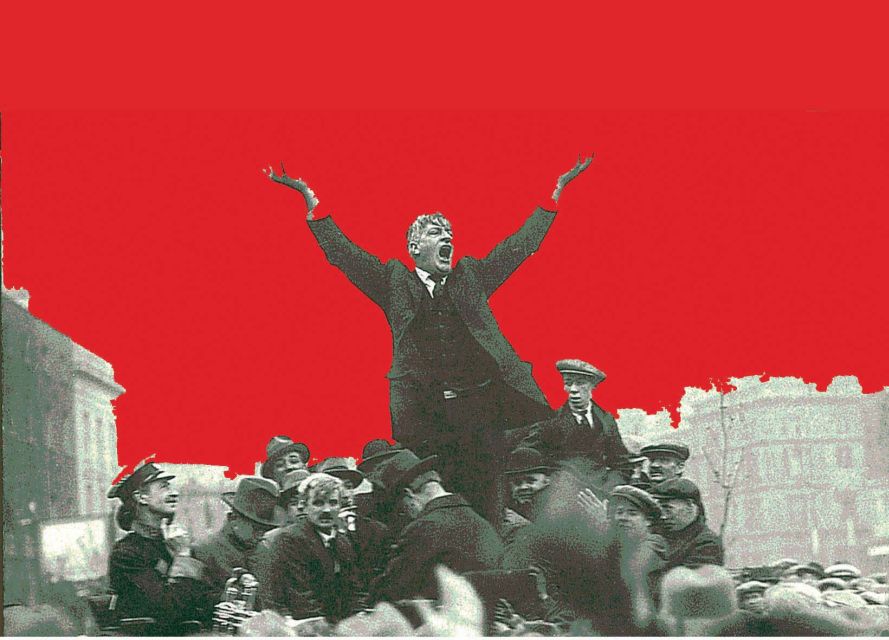
The 1916 Rising and the War of Independence receive important attention during the walk. These events help explain the transition from long political pressure to open rebellion and then to the creation of an independent Irish state.
The value of discussing these subjects on foot is that Dublin becomes more than a backdrop. Streets, public buildings, and surviving marks become part of the explanation. You can better understand why certain places matter and why memory remains so visible in the city.
The guides appear especially strong at linking historical facts to human choices. Daragh was praised for tying names and dates to their wider meaning, while Colm was noted for adding songs related to events under discussion. That kind of delivery can make a serious subject easier to remember.
Still, you need to be comfortable with a lot of information. Names and dates come quickly, and the tour is delivered in English. If English is not your first language, strong listening skills will help. You may understand the broad story perfectly well, but smaller details could be easy to miss.
Northern Ireland and modern Dublin
The walk does not stop with the early twentieth century. It also discusses the Northern Ireland Peace Process and the effects of more recent history on Irish society.
This modern section is important because it prevents the tour from presenting Ireland as a country frozen in rebellion and famine. Dublin today is shaped by recent political developments as much as by medieval streets or the 1916 Rising.
Jodie was praised for taking the story from the Stone Age through Brexit in a lively, actor-like style. That is a lot of time to cover, so you should treat the modern section as an introduction rather than a complete account of recent politics.
The guide’s skill matters most here. Modern Irish history can become politically sensitive and difficult to reduce to a few sentences. A good explanation gives you enough background to ask better questions during the rest of your trip.
Why the guides make or break the experience
The strongest feature of this tour is the people leading it. The guides are not simply reading prepared facts. They are expected to explain, answer questions, and make the material enjoyable.
Jodie is repeatedly praised for being friendly, funny, clear, and well organized. Daragh receives especially strong praise for his command of Irish history and his ability to connect names and dates to context. Colm is remembered for humor, personal stories, and occasional singing.
Other guides named in the feedback include Grace, Eoin, Tommy, and Nate. Grace is described as clear and interesting, Eoin as entertaining, Tommy as passionate, and Nate as enthusiastic about Ireland’s past. The exact style will depend on who leads your departure, but the general aim is consistent: serious information with an Irish sense of humor.
Some people may find the format lecture-like, especially when the guide is covering many facts in a short time. That is not necessarily a weakness, but it is useful to know. This tour suits you best if you enjoy listening, asking questions, and building a broad understanding of place.
A small-group feel and the $22 price
The listed price is $22 per person. For two hours with a specialist local guide in central Dublin, I consider that fair value, especially if you use the walk as an introduction to the city.
The value comes from interpretation, not admission-heavy sightseeing. You are paying for a guide who can explain why Dublin Castle, Temple Bar, City Hall, and the Medieval City matter together. Entrance fees are included where they apply in the itinerary, but the State Apartments at Dublin Castle are specifically excluded.
The group experience can vary, but one person praised the small-group setting. A smaller group usually makes it easier to hear the guide and ask questions, though you should not assume every departure will have the same size.
Two hours is also a smart length for a first-day orientation. It is long enough to give you a framework, yet short enough to fit around another attraction or meal. The tradeoff is that the tour moves quickly through a large subject. If you want a slow architectural walk or extended time inside buildings, this is not the right format.
Practical advice for making the most of the walk
Meet at the Henry Grattan Statue opposite Trinity College’s front gate. Your guide will have an Authenticity Tours lanyard or badge, and the tour returns to this same point.
Wear good walking shoes. You will move through central Dublin for about two hours, with stops for explanation. The walk is wheelchair accessible, but the experience remains an outdoor route through city streets, so you may want to confirm current conditions when booking.
The tour is in English, and the guide speaks throughout most of the experience. If you prefer to absorb history slowly, choose a departure when you are rested. This is not a walk to squeeze in while distracted by shopping or trying to catch a train immediately afterward.
I would also take notes mentally rather than trying to record every date. Focus on the broad sequence: medieval Dublin, outside political influence, famine and social upheaval, rebellion, independence, Northern Ireland, and modern Dublin. Once you have that outline, the individual stories will stick better.
You can cancel up to 24 hours before the start for a full refund, and the reserve-now, pay-later option keeps your plans flexible. Check the available start times before booking because departures vary.
Who should book this Dublin walking tour?
This is a strong choice for a first visit to Dublin, especially if you want context before visiting museums, castles, or sites connected with the 1916 Rising. It also suits repeat visitors who have seen the central sights but want a clearer explanation of how they fit together.
History fans should enjoy the large sweep of the subject and the focus on specific places. Families with older children may also find the humor and stories more engaging than a formal museum visit, though the amount of spoken information may be demanding for younger children.
You should think twice if you dislike group walks, have difficulty following English narration, or want extensive indoor access. The tour includes the main castle area but not the State Apartments, and its purpose is explanation rather than a long visit at one attraction.
FAQ
How long is the Historical 2-Hour Guided Walking Tour of Dublin?
The tour lasts two hours. Starting times vary, so check availability when booking.
Where does the tour meet?
Meet at the Henry Grattan Statue opposite the front gate of Trinity College Dublin. The guide wears an Authenticity Tours badge or lanyard.
Where does the tour finish?
The tour ends back at the Henry Grattan Statue, the same location where it begins.
Is the Dublin Castle State Apartments entry included?
No. Entry into the State Apartments at Dublin Castle is not included.
What language is the tour conducted in?
The live tour is conducted in English.
Is the tour wheelchair accessible?
Yes, the activity is listed as wheelchair accessible.
Should you book it?
Book this tour if you want a clear, entertaining introduction to Dublin and Ireland in a short period. The best reason to choose it is the guide-led interpretation, especially if you get someone with the energy and depth shown by Jodie, Daragh, or Colm.
At $22, it offers good value for a central walk covering Dublin Castle, Temple Bar, City Hall, and the Medieval City, with history reaching from early Ireland to the Northern Ireland Peace Process. Just keep your expectations realistic: it is a fast-moving outdoor overview, not a full castle visit or a specialist course.
Bring good shoes, listen closely, and leave room for questions. If you do, you will come away with a useful map of Dublin’s past and a better sense of what you are seeing for the rest of your time in Ireland.
Newest in Dublin
- Wicklow Mountains Private Day Tour including Glendalough★ 5.0 · 7 reviews
- Wicklow: Private Day Tour from Dublin★ 5.0 · 5 reviews
- From Dublin: Powerscourt House, Guinness Lake & Glendalough★ 5.0 · 2 reviews
- Ultimate Dublin Food Tour★ 4.5 · 2 reviews
- Women Of Ireland: Trailblazers & Pioneers★ 5.0 · 4 reviews
- Wicklow tour of Glendalough★ 4.5 · 8 reviews
- Wicklow Mountains & Glendalough Luxury Private Day Tour★ 5.0 · 23 reviews
- Whiskey Tasting Tour of Dublin★ 5.0 · 117 reviews
Historical Tours, compared.

Dublin Historical Centre Food Tour with 8 Food Tastings & Drinks
Read our review →
Dublin to Cork, Blarney Castle & Cóbh Heritage Centre by train
Read our review →
Jeanie Johnston Tall Ship Irish Famine History Tour
Read our review →

Deliciously Dublin: The Artisan Donut Walking & History Tour
Read our review →
Browse the lists this tour appears in