

Reviewed · CITY TOURS
DayTripper Dublin: A Guided City Walking Tour
Dublin makes more sense on foot. DayTripper Dublin links major sights with the stories that shaped them, making it a useful first-day introduction to the city. I like the central start at Wolfe Tone’s statue and the broad route, which takes you from St Stephen’s Green through Grafton Street, the medieval core, Temple Bar, O’Connell Street, and Trinity College. I also like that the guide leaves time for questions and practical tips on food, sights, and places worth seeking out later.
The main consideration is pace. You cover a lot in roughly two and a half hours, though the tour description also refers to a three-hour history-packed walk. Most stops are short, and the tour stays outside the main attractions, so you get context rather than entry. For first-time Dublin visitors, that trade-off is often useful, but you should not book this expecting a slow museum tour.
In This Review
- Key points at a glance
- Why this walk works best at the start of your Dublin stay
- Wolfe Tone and St Stephen’s Green: a thoughtful beginning
- Grafton Street and Molly Malone: Dublin in public
- St Patrick’s Cathedral and Dubh Linn Gardens: old Dublin in two views
- Dublin Castle and Christ Church Cathedral: power, faith, and Viking roots
- Temple Bar: a brief look at Dublin’s famous quarter
- O’Connell Street and Trinity College: politics and memory
- What the guides add to the experience
- Price, pace, and physical demands
- Who should book this Dublin walk?
- Should you book DayTripper Dublin?
- FAQ
- Where does the tour start?
- Where does the tour finish?
- How long does the walking tour last?
- What language is the tour offered in?
- Are admission tickets included?
- Is lunch included?
- How much does the tour cost?
- What is the maximum group size?
- Can I cancel for a full refund?
Key points at a glance
- A strong first walk: The route gives you a quick mental map of central Dublin before you explore on your own.
- History with a local voice: Guides including Ciarán, Ciaran, Keiron, and Kyron have been praised for clear explanations and strong local knowledge.
- Major sights without admission fees: You see St Patrick’s Cathedral, Dublin Castle, Christ Church Cathedral, and Trinity College from the outside.
- More than monuments: Irish music, dance, working-class life, political struggle, the Famine, and Viking Dublin all enter the story.
- Useful end point: The walk finishes at College Green, close to Grafton Street and about 15 minutes from Tara or Pearse Station.
- Good value at $27.82: The price is reasonable for an in-person guide and a wide-ranging orientation, especially early in your stay.
Why this walk works best at the start of your Dublin stay
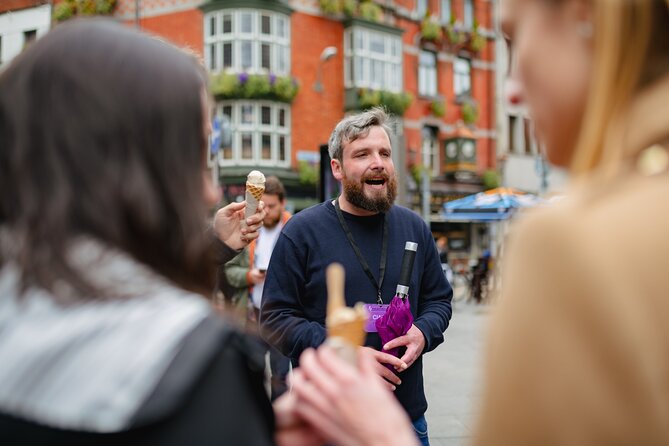
Dublin’s center is compact, but it can feel like a pile of disconnected landmarks at first. A statue, a Georgian park, a castle yard, a cathedral, and a famous pub district do not automatically explain how the city fits together. This walk gives you that framework.
I like tours that help you decide what deserves more of your own time. Here, you pass several places you may later choose to enter, including St Patrick’s Cathedral, Dublin Castle, Christ Church Cathedral, and Trinity College. Seeing them with an explanation first can help you spend your admission money wisely.
The route also connects Irish political history with ordinary city life. You move from national figures and independence struggles to Grafton Street, Molly Malone, music, dance, and the places where Dublin’s daily character is easiest to notice. That mix keeps the walk from becoming a parade of dates and names.
The group can reach up to 25 people. That is not a tiny private walk, but it is still small enough for an in-person guide to keep the group moving together. Some people have ended up with very small groups when others did not attend, and that can create an unusually personal experience. You should regard that as good fortune, not something to count on.
More Walking Tours in Dublin
- Dublin Highlights and Hidden Gems Guided Walking Tour
★ 5.0 · 6,020 reviews - Dublin: Highlights and Hidden Gems Walking Tour
★ 4.9 · 2,140 reviews - 1916 Rebellion Walking Tour
★ 5.0 · 1,605 reviews
Wolfe Tone and St Stephen’s Green: a thoughtful beginning
The meeting point is the Wolfe Tone Sculpture at St Stephen’s Green. A central meeting place matters in Dublin, since it is easy to build a day around this part of town. The tour begins with Theobald Wolfe Tone, an important figure in Irish political history, then moves into the park.
St Stephen’s Green gives the guide room to explain Irish history and culture before the walk enters the denser streets. I find that useful because a park allows you to pause, listen, and get your bearings without immediately dodging traffic or other pedestrians.
The park portion is listed as about 15 minutes. That is enough for an introduction, not a full study of the gardens. If you want a long, quiet stroll through St Stephen’s Green, return on your own. The tour uses it as a setting for the national story, not as its sole attraction.
The walk also includes discussion of Irish dance and music. That detail helps balance the political material. Dublin is not only a city of rebellion, government, and old buildings. Music and dance are part of how Irish culture is presented and understood, and this section gives the tour a more human rhythm.
Grafton Street and Molly Malone: Dublin in public

From St Stephen’s Green, the walk reaches Grafton Street, one of Dublin’s busiest high streets. The scheduled stop is short, about 10 minutes, so expect a moving commentary rather than time to browse every shop or listen to every street performer.
Grafton Street is useful on a first walk because it shows the modern city at work. You can compare its commercial energy with the quieter park and the older streets that follow. The guide’s role here is to explain what you are seeing, not to turn the stop into a shopping break.
The Molly Malone statue offers another change of tone. The guide introduces working-class Dublin and the story connected with Molly Malone. This is a good reminder that public memory is not built only around presidents, generals, and political leaders. Popular characters and city folklore matter too.
I would pay attention to the small local details at this point. One guide was praised for pointing out little bits of local knowledge and playful details that are easy to miss alone. That is the sort of information that can make a familiar-looking street more interesting without adding much time to the route.
St Patrick’s Cathedral and Dubh Linn Gardens: old Dublin in two views
At St Patrick’s Cathedral, the guide meets the group in the gardens and explains the origins of Dublin City. You do not go inside the cathedral, and admission is not included. That limitation is clear, but the exterior stop still helps place the building within the city’s story.
If you want to see the interior, plan a separate visit. The walk gives you an introduction and a chance to understand why the cathedral matters, but it does not replace an entry ticket or a self-guided look inside.
Next comes Dubh Linn Gardens, a smaller and more picturesque stop. The gardens connect to Dublin’s Viking past and to the name of the city itself. The scheduled time is about 10 minutes, enough for a brief explanation and a look around.
This is one of the useful features of the route: it places major buildings beside less obvious historical spaces. You are not simply moving from one famous photograph to another. The guide shows how names, streets, gardens, and buildings preserve older layers of Dublin.
Something completely different for another day:
- Dublin to Cliffs of Moher, including Wild Atlantic Way and Galway
★ 5.0 · 23,331 reviews - From Dublin: Cliffs of Moher, Burren & Galway City Day Tour
★ 4.8 · 18,888 reviews - Dublin: Guinness Storehouse Entry Ticket
★ 4.6 · 16,863 reviews - Dublin to Cliffs of Moher, Burren, Wild Atlantic Way, Galway Tour
★ 5.0 · 12,924 reviews
Dublin Castle and Christ Church Cathedral: power, faith, and Viking roots
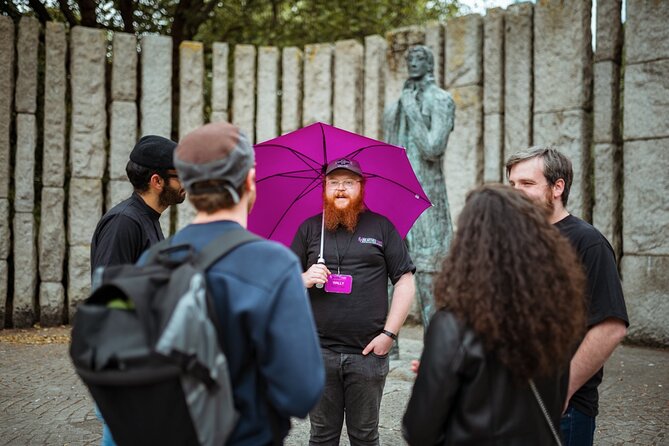
The guide takes you into the courtyards of Dublin Castle, but not into the castle itself. The discussion includes Northern Ireland and the political struggles that have shaped the island. That topic gives the walk weight, especially for anyone who wants more than a surface-level tour of Dublin.
The courtyard stop lasts about 10 minutes. That is short for a subject as complicated as Irish and Northern Irish politics, so think of it as a clear starting point. A good guide can give you the basic sequence and point out why the site mattered. You will need other sources or a longer visit if you want detailed political history.
The route then continues to the courtyard outside Christ Church Cathedral. The guide explains the cathedral’s founding and Dublin’s Viking history while you look at the exterior architecture. Again, you do not enter the cathedral, and the admission fee is not included.
I appreciate the pairing of Dublin Castle and Christ Church. One represents political authority, while the other brings in religion, architecture, and early city origins. Their proximity makes the city’s long story easier to follow. You can see how different institutions occupied the same small central area over time.
Temple Bar: a brief look at Dublin’s famous quarter
The Temple Bar stop is only about five minutes. That tells you exactly what to expect: a quick walk through the neighborhood, not a full evening in its pubs or a detailed study of its architecture.
Temple Bar can be an expensive and crowded place to spend a whole night, depending on your plans. A short guided pass gives you orientation without using up a large part of your day. You can then decide for yourself if you want to return, eat there, hear music, or simply move on to another part of Dublin.
This is also a useful moment to ask the guide for practical advice. The tour includes time for questions, and the guides have helped people plan the rest of their day. Ask about food, areas to revisit, and what fits your schedule. The value of this walk is not only what you hear while moving. It is also the local judgment you can draw on afterward.
O’Connell Street and Trinity College: politics and memory
O’Connell Street shifts the focus toward Ireland’s political story in the 20th century. The guide visits various statues and explains the political setting around them. This part should help you read the street as more than a wide route through the city.
The stop is listed at about 10 minutes. That is enough to connect several public figures and events, but not enough to discuss every statue in detail. If one figure catches your interest, note the name and return later.
The final major stop is outside Trinity College and the Central Bank of Ireland. The guide talks about the Great Irish Hunger, also known as the Famine, as well as Trinity’s history. You do not enter Trinity College, so the famous library and Book of Kells are not part of this experience.
That is important when comparing the $27.82 price with an attraction ticket. You are paying for the guide and the route, not for admission to Dublin’s headline interiors. Still, the outside explanation can make a later visit more meaningful. You will know why the college matters and how the Famine fits into the country’s wider story.
The walk ends at College Green, a convenient finish near Grafton Street. Tara and Pearse stations are about a 15-minute walk away. This makes it easy to continue sightseeing, find lunch, or return to your accommodation, although lunch itself is not included.
What the guides add to the experience
The strongest part of this tour is the guide’s role. Several guides have been praised by name, including Ciarán, Ciaran, Keiron, and Kyron. Their qualities are described in practical terms: clear explanations, warmth, local perspective, passion for Irish history, and an ability to answer questions.
One especially useful feature is flexibility. A guide was able to shape a private-feeling walk around a guest’s interest in women’s history. You should not assume every departure will be private or customized, but the example shows why it pays to speak up about what you want to learn.
The guides also appear to be good at explaining difficult subjects in plain language. Ireland’s independence, political conflict, the Famine, and the history of Northern Ireland can become confusing when presented as a list of dates. A guide who can connect those events to the streets around you makes the subject easier to remember.
I would save a few questions for the end, when recommendations are offered. Ask for help with the rest of your Dublin day, places to eat, and areas you may have overlooked. That practical exchange can be as useful as another monument on the route.
Price, pace, and physical demands
At $27.82 per person, this is fairly priced for an English-language, in-person walking tour that covers so much central Dublin. You receive a guide, city orientation, historical context, and the chance to ask for local advice. You do not receive lunch or entry to the cathedral, castle, or Trinity College.
The tour lasts about two and a half hours, although the description also refers to three hours. I would keep a little flexibility in your schedule rather than booking a tight connection immediately afterward. The exact pace may depend on the group, questions, and time spent at each location.
You need a moderate level of physical fitness. The route involves walking between numerous central stops, with time spent standing while the guide talks. Wear comfortable shoes and bring clothing suited to Dublin weather. The provided information does not promise shelter or a weather adjustment, so it is sensible to be prepared.
The service is offered in English, uses a mobile ticket, allows service animals, and runs near public transportation. The maximum group size is 25. Those details make it a practical choice if you want a standard city walk without arranging a private guide.
Who should book this Dublin walk?
I would choose this tour if you are visiting Dublin for the first time and want a clear introduction before exploring alone. It also suits anyone who enjoys political history, local culture, public statues, Viking origins, and stories tied to ordinary city life.
It is a good fit for a short Dublin stay because the route covers many central sights in one outing. It can also help if you are arriving from a cruise or have only part of a day, though you should allow enough time to finish the walk and reach your next stop.
You may want something else if your priority is entering Dublin’s major attractions. This tour does not include the interiors of St Patrick’s Cathedral, Dublin Castle, Christ Church Cathedral, or Trinity College. It is also not ideal if you prefer a slow, single-neighborhood walk with long stops.
Should you book DayTripper Dublin?
I would book it near the beginning of a Dublin visit, especially at $27.82. The route gives you a useful city map, the guides bring warmth and clear explanations, and the final recommendations can improve the rest of your stay.
Go in expecting an outdoor introduction, not a series of admission visits. If that suits you, this is a strong-value way to connect Dublin’s music, politics, religion, Viking beginnings, and everyday streets in one walk. If you want the Book of Kells or cathedral interiors, add those separately.
FAQ
Where does the tour start?
The tour starts at the Wolfe Tone Sculpture at St Stephen’s Green in Dublin.
Where does the tour finish?
It finishes at College Green, about a two-minute walk from Grafton Street and around a 15-minute walk from Tara or Pearse Station.
How long does the walking tour last?
The listed duration is approximately two hours and 30 minutes. The tour description also refers to a three-hour history-packed walk, so allow some extra time.
What language is the tour offered in?
The tour is offered in English.
Are admission tickets included?
No. The tour visits the courtyards or outside areas of St Patrick’s Cathedral, Dublin Castle, Christ Church Cathedral, and Trinity College. Admission is not included, and the group does not enter those attractions.
Is lunch included?
No. Lunch is not included in the tour price.
How much does the tour cost?
The listed price is $27.82 per person.
What is the maximum group size?
The tour can have a maximum of 25 travelers.
Can I cancel for a full refund?
Yes. You can cancel at least 24 hours before the local start time for a full refund. Cancellations or changes made less than 24 hours before the start time are not accepted for a refund.
Newest in Dublin
- Wicklow Mountains Private Day Tour including Glendalough★ 5.0 · 7 reviews
- Wicklow: Private Day Tour from Dublin★ 5.0 · 5 reviews
- From Dublin: Powerscourt House, Guinness Lake & Glendalough★ 5.0 · 2 reviews
- Ultimate Dublin Food Tour★ 4.5 · 2 reviews
- Women Of Ireland: Trailblazers & Pioneers★ 5.0 · 4 reviews
- Wicklow tour of Glendalough★ 4.5 · 8 reviews
- Wicklow Mountains & Glendalough Luxury Private Day Tour★ 5.0 · 23 reviews
- Whiskey Tasting Tour of Dublin★ 5.0 · 117 reviews
City Tours, compared.
Cliffs of Moher, Burren & Galway City Day Tour
Read our review →

Dublin to Rock of Cashel, Cork City & Blarney Castle Guided Tour
Read our review →
City Sightseeing Dublin Hop-On Hop-Off Bus Tour
Read our review →

Go City: Dublin Pass | Save up to 50% – Includes 35+ Things To Do
Read our review →

Aran Islands and Cliffs of Moher Day Cruise sailing from Galway City Docks
Read our review →Browse the lists this tour appears in