
Reviewed · WALKING TOURS
Dublin: Highlights and Hidden Gems Walking Tour
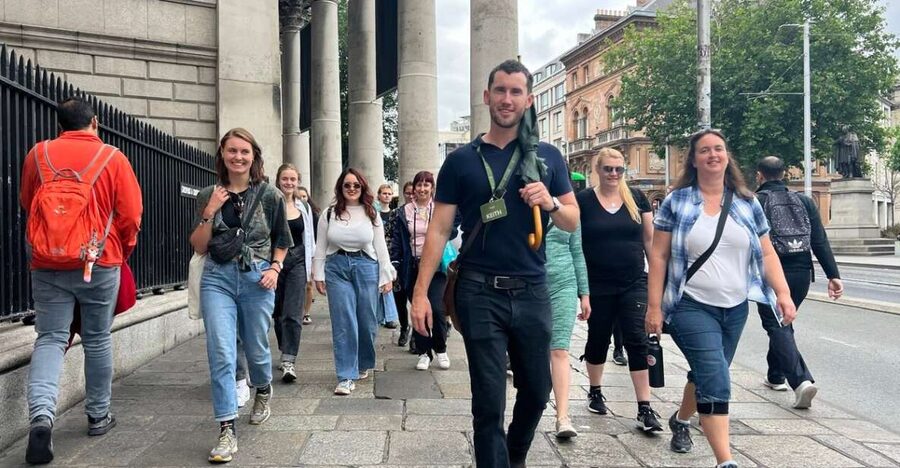
Dublin tells big stories in small spaces. This city-center walk links Viking Dublin and medieval lanes with Georgian streets, rebel history, and modern Irish life. I like the strong mix of famous sights and lesser-known corners, and I like that the guides bring the past to life with jokes, local pride, and practical advice. The main thing to consider is pace: it is advertised as two hours, but one account describes a tour lasting nearly three hours.
You meet outside The Old Storehouse pub, look for the green umbrella, and finish back at the same place. At $27 per person, this is a sensible first-day purchase if you want the city to make sense quickly. Guides including Ian, Keith, Alan, Dave, Kieran, Helena, Gemma, Emily, Karl, James, and Chris have been praised for clear storytelling, humor, and useful suggestions for food, music, and places to avoid.
In This Review
- Key points at a glance
- Why this Dublin walk works so well
- Meeting at The Old Storehouse
- Viking Dublin and the city’s earliest layers
- Christchurch Cathedral and medieval Dublin
- Dublin Castle and the shift in political power
- Temple Bar, Smock Alley, and Dublin’s public life
- Crossing the River Liffey
- The GPO and the story of rebellion
- Trinity College and the grander city center
- Storytelling, humor, and the guide you get
- Timing, walking effort, and practical value
- Who should book this walking tour?
- Should you book the Dublin Highlights and Hidden Gems Walking Tour?
- FAQ
- How long is the Dublin walking tour?
- What language is the tour conducted in?
- Where does the tour start?
- Where does the tour finish?
- How early should I arrive?
- Is hotel pickup included?
- Are food and drinks included?
- Is the walking tour wheelchair accessible?
- Can I cancel the tour for a refund?
Key points at a glance
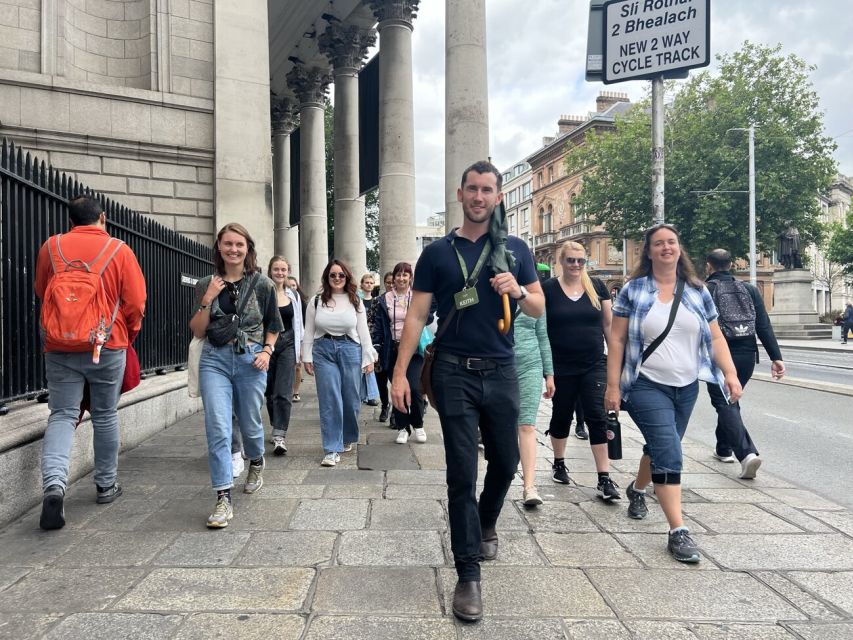
- A thousand years in two hours: The route moves from Viking Dublin and medieval streets to Georgian boulevards, Victorian hardship, and modern Ireland.
- Major sights with local color: See Dublin Castle, Christchurch Cathedral, Trinity College, the River Liffey, Ha’Penny Bridge, O’Connell Bridge, and the GPO.
- Guides make the difference: Ian, Keith, Alan, Dave, Kieran, Helena, Gemma, Emily, Karl, James, and Chris have all been singled out for warmth, humor, and strong storytelling.
- Useful first-day advice: The guide can suggest places to eat, drink, hear live music, shop for souvenirs, and avoid tourist traps.
- Easy central meeting point: Find the green umbrella outside The Old Storehouse pub, arriving at least 10 minutes early.
- Good value for active sightseers: You get a live English-language guide, a city-center walk, and cultural context without paying for transport or food.
Why this Dublin walk works so well
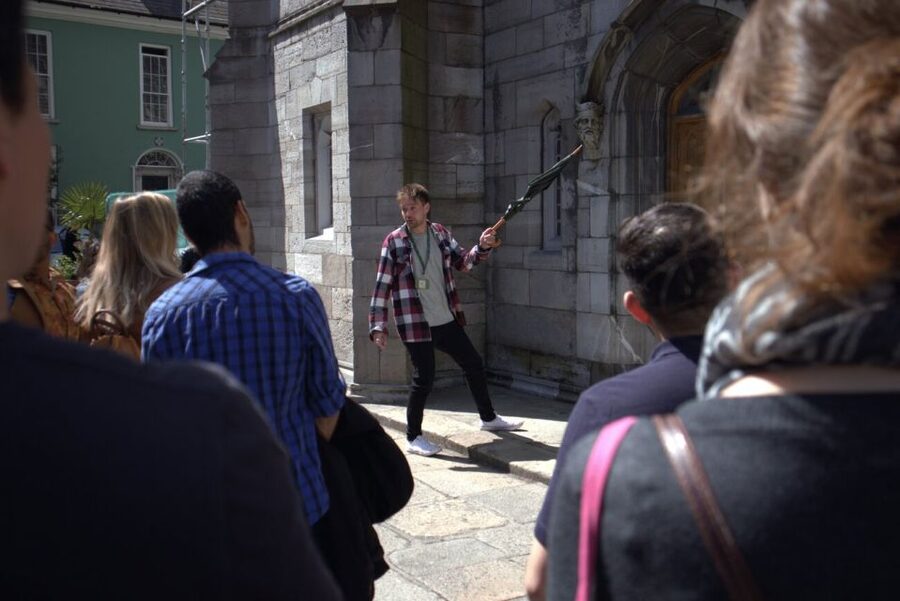
Dublin is compact enough to explore on foot, but its story can feel scattered when you walk alone. One street points to Viking settlement, another to medieval trade, another to the Easter Rising, and another to the city’s literary or musical life. A good guide connects those pieces.
That is the main value here. You are not simply ticking off Dublin Castle, Trinity College, and the Ha’Penny Bridge. You are hearing why these places matter and how they fit into the city’s long rise, decline, and recovery.
The tour also promises a clear look at Dublin’s contrasts. You move from royal power to religious authority, from old river crossings to political rebellion, and from grand Georgian planning to the difficult conditions of Victorian slums. That range gives you a better sense of Dublin than a route made up only of photogenic buildings.
I especially like the way the experience treats Dublin as a city of people. Writers, rebels, rock stars, rogues, and political figures all appear in the story. The tone is not meant to be a dry lecture. The strongest guide accounts describe a lively mix of facts, anecdotes, humor, and personal pride in Ireland.
More Walking Tours in Dublin
- Dublin Highlights and Hidden Gems Guided Walking Tour
★ 5.0 · 6,020 reviews - 1916 Rebellion Walking Tour
★ 5.0 · 1,605 reviews - 90 Minute Dublin Walking tour and Sightseeing tips
★ 5.0 · 916 reviews
Meeting at The Old Storehouse
The starting point is outside The Old Storehouse pub in central Dublin. Look for the green umbrella, which is the key visual marker for the group.
Arrive at least 10 minutes before the scheduled start. You should have your booking ready to show the guide. This small bit of planning matters in a city center where streets can be crowded and navigation can take longer than expected.
There is no hotel pickup. You make your own way to the meeting point, and the tour ends there as well. That is convenient if you want to continue with a meal or drink nearby, but you should factor in walking time from your accommodation.
The activity is conducted in English and led by a live guide. It is listed as wheelchair accessible, though a city walk can still involve busy pavements, uneven historic streets, and frequent stops. If you use a wheelchair, confirm the route details when booking so the accessibility information matches your needs on the day.
Viking Dublin and the city’s earliest layers
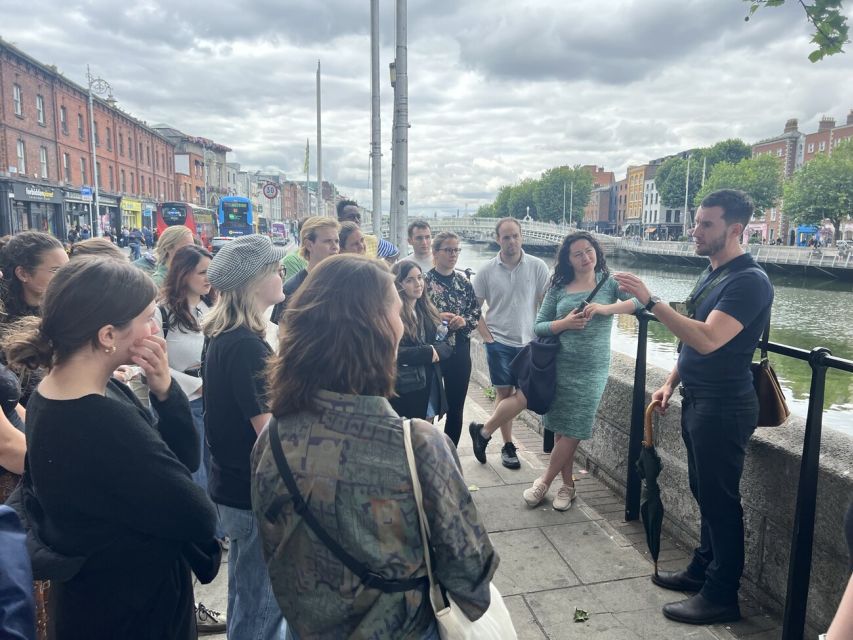
The opening section reaches back to Dublin’s Viking origins. This is a useful place to start because it gives the rest of the route a firm base. Instead of thinking of Dublin as only an Irish political or literary capital, you see it as a settlement shaped by movement, trade, conquest, religion, and the River Liffey.
The guide’s job here is to turn an old date or archaeological reference into something you can picture. You might hear how the early settlement affected the street pattern, how medieval Dublin grew, or how later buildings covered earlier layers of the city.
That long view is one of the tour’s best features. You are not asked to remember every name and year. You are given a way to read the city as you continue walking.
Christchurch Cathedral and medieval Dublin
Christchurch Cathedral brings the medieval chapter into focus. It is one of the city’s most important landmarks, and its presence helps explain the religious and civic power of old Dublin.
From here, the medieval streets are more than attractive backdrops. They point to a period when Dublin was smaller, more fortified, and shaped by close ties between church, government, and commerce. A guide can show you how the city’s medieval identity still appears in its lanes and buildings, even after centuries of change.
The tour includes Smock Alley Theatre, another useful stop for understanding Dublin beyond its best-known monuments. It adds a cultural note to the route and helps show how performance and public life have long been part of the city.
The drawback is that a walking tour can only offer an introduction to major buildings. You should not expect a full interior visit or a long architectural inspection at every stop. The reward is breadth: you see several important places and understand their place in the city story.
Something completely different for another day:
- Dublin to Cliffs of Moher, including Wild Atlantic Way and Galway
★ 5.0 · 23,331 reviews - From Dublin: Cliffs of Moher, Burren & Galway City Day Tour
★ 4.8 · 18,888 reviews - Dublin: Guinness Storehouse Entry Ticket
★ 4.6 · 16,863 reviews - Dublin to Cliffs of Moher, Burren, Wild Atlantic Way, Galway Tour
★ 5.0 · 12,924 reviews
Dublin Castle and the shift in political power
Dublin Castle gives the route a strong political center. It is closely tied to the administration of Ireland and to the changing balance of power between Ireland and Britain.
A guide can make the castle more meaningful than a quick photograph from outside. The value comes from hearing about the people and decisions connected with the site, then placing those stories beside the religious world of Christchurch and the commercial life around the river.
This is also where a good guide’s judgment matters. The historical record includes conflict, division, and painful subjects. The best approach is neither a polished fairy tale nor a list of grievances. Accounts of guides such as Keith and Karl point to a willingness to discuss the full story and encourage you to think about what you are seeing.
You may find the castle area especially useful if you are visiting Dublin for the first time. It helps explain why the city center contains such a mix of official buildings, older streets, and later memorials.
Temple Bar, Smock Alley, and Dublin’s public life
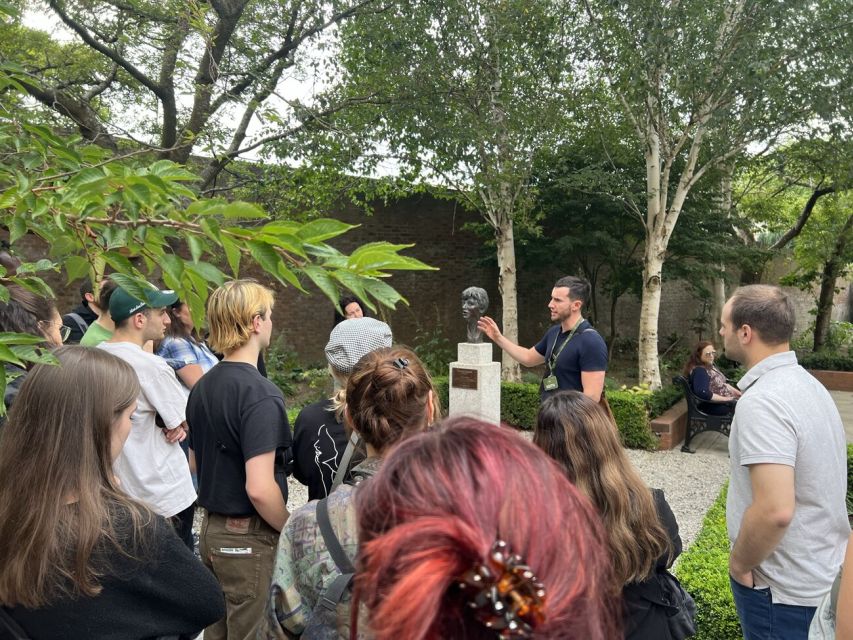
Temple Bar is one of Dublin’s most famous areas, but it is also easy to misunderstand. Many visitors see pubs, signs, and busy streets without learning how the district fits into the city’s wider story.
The walking tour uses Temple Bar as part of a larger picture rather than treating it as the whole of Dublin. That distinction matters. You get the recognizable scene, then move toward history, politics, architecture, and local character.
Smock Alley Theatre adds a different angle. It reminds you that Dublin’s entertainment life is not limited to pubs and live music. Theatre, storytelling, and public performance are also part of the city’s identity.
The tour also gives practical advice about where to eat, drink, hear live music, and pick up souvenirs. One guide, Dave, was especially praised for pointing out tourist-trap areas and offering useful alternatives. I would treat that advice as a starting point, then make your own choice based on location and budget.
Crossing the River Liffey
The River Liffey is the natural thread through the central route. Crossing it helps you understand Dublin as two sides of one city, joined by bridges and shaped by water.
Ha’Penny Bridge is the most familiar crossing on the walk. Its name is part of Dublin’s everyday charm, and its narrow span offers one of the route’s simplest photo stops.
O’Connell Bridge gives the river section a broader civic scale. From there, the city opens toward O’Connell Street and some of Dublin’s most important political and public spaces.
These bridge stops are brief but valuable. They break up the historical narration and help you orient yourself. You can see how close the major sights are, which makes the city easier to navigate after the tour.
Do not expect a quiet riverside stroll. This is central Dublin, with traffic, pedestrians, and working city streets. The reward is seeing the river as part of daily life rather than as a separate scenic attraction.
The GPO and the story of rebellion
The General Post Office, usually called the GPO, brings the tour into Ireland’s modern political story. It is one of the most important stops for understanding rebellion, national identity, and the formation of the Irish state.
The building is more than an impressive piece of civic architecture. Its role in Irish history gives the guide a chance to explain how political events affected ordinary people and how public memory remains part of Dublin’s streets.
This section should appeal to anyone interested in Ireland’s twentieth-century history. It also helps prevent the earlier stops from feeling disconnected. Dublin’s story is not frozen in the medieval past. It continues through conflict, independence, rebuilding, and modern city life.
A short city walk cannot cover every detail of the rebellion or its aftermath. Still, the GPO gives you a clear anchor. If the subject catches your interest, you will know which museums, memorials, or historic buildings deserve a longer visit later.
Trinity College and the grander city center
Trinity College is another major landmark on the route. It represents education, scholarship, and the more formal side of Dublin’s city center.
The contrast between Trinity’s ordered setting and the older streets around Temple Bar is part of what makes the walk useful. Within a short distance, Dublin changes mood and scale. A guide can explain how these parts of the city developed and why Trinity remains such a powerful symbol.
The tour includes Trinity College as a stop, but you should not assume that the walking experience includes a full campus tour or entry to every attraction. If you want to see a particular interior or collection, check separately and plan extra time.
Still, even an outside explanation can improve a later visit. You will know what you are looking at, what questions to ask, and how Trinity fits into Dublin’s wider cultural life.
Storytelling, humor, and the guide you get
The strongest pattern in the feedback is the quality of the guiding. Ian is praised for wit and humor. Keith is described as personable, passionate, and willing to present the full story. Alan is noted for being organized, friendly, funny, and clear.
Dave receives praise for kindness, comedy, and practical local advice. Kieran is repeatedly highlighted for making the tour interactive while keeping an eye on the group. Helena and Gemma are described as friendly, funny, and well informed. Emily is praised for bringing ancient and modern Dublin together.
James is singled out as an entertaining storyteller who can hold attention for the full walk. Karl is appreciated for explaining Irish culture in a personal way, while Chris is credited with engaging the group and mixing facts with fun.
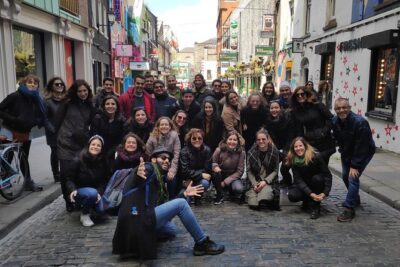
You cannot choose which guide leads your departure, so the experience may vary in personality. That is normal for a live tour. The consistent theme is that the guides do more than recite information. They use humor, local pride, anecdotes, and questions to keep the group involved.
If you prefer silent sightseeing or a fixed audio guide, this may feel talkative. If you want context and a human connection to the city, that energy is a major reason to book.
Timing, walking effort, and practical value
The stated duration is two hours. That is long enough to cover the main central sights without taking up an entire day, and it fits well on your first afternoon in Dublin.
Plan for steady walking and frequent stops. Wear comfortable shoes, and bring a rain layer because Dublin weather can change quickly. Food and drinks are not included, and there is no scheduled meal break.
One account describes a tour lasting close to three hours without a snack or toilet stop. That may not reflect every departure, but it is a useful warning. Use the bathroom before meeting the group, carry water if needed, and avoid scheduling a tight reservation immediately afterward.
At $27 per person, the price is reasonable if you use the tour as an orientation walk. You are paying for a local guide, historical explanation, city-center navigation, and recommendations that can shape the rest of your visit.
The value drops if you only want photographs of the main landmarks or if you plan to spend the day inside museums. In that case, a self-guided walk may be enough. But for a first visit, the guide can save you time and give meaning to places you might otherwise pass without noticing.
You can cancel for a full refund up to 24 hours before the activity, and you can reserve now while paying later. Those terms are useful if your Dublin schedule is still shifting.
Who should book this walking tour?
I would choose this tour for a first-time visitor who wants a broad introduction before exploring alone. It is also a good fit for solo visitors, couples, families, and anyone who enjoys history presented with a light touch.
It suits you especially well if you want:
- A clear introduction to Dublin’s main sights
- Stories about Vikings, medieval Dublin, political conflict, and modern culture
- A guide who can suggest food, pubs, music, and shopping
- A central walk with no transport arrangements
- A lively group experience in English
You may want something else if you need a quiet, highly specialized tour focused only on architecture, literature, religion, or political history. The strength here is range, not exhaustive detail in one subject.
Should you book the Dublin Highlights and Hidden Gems Walking Tour?
Yes, I would book it as an early Dublin activity, provided you are comfortable walking and listening for two hours or possibly a little longer.
The best reason to go is the combination of major landmarks, local stories, and practical advice. You see Dublin Castle, Christchurch Cathedral, Trinity College, the bridges, the GPO, Temple Bar, and the river, but you also get the city’s odd corners and human characters.
Arrive early at the green umbrella, wear good shoes, and keep your post-tour schedule flexible. At $27, this is a strong-value way to get your bearings and begin the rest of your Dublin visit with a better sense of place.
FAQ
How long is the Dublin walking tour?
The stated duration is two hours. Allow extra time if possible, since one account describes a tour lasting nearly three hours.
What language is the tour conducted in?
The live tour guide speaks English.
Where does the tour start?
Meet outside The Old Storehouse pub. Look for the green umbrella.
Where does the tour finish?
The walk ends back at the meeting point outside The Old Storehouse pub.
How early should I arrive?
You should aim to arrive at least 10 minutes before the scheduled start and have your booking ready to show the guide.
Is hotel pickup included?
No. Hotel pickup and drop-off are not included.
Are food and drinks included?
No. Food and drinks are not included in the tour.
Is the walking tour wheelchair accessible?
The activity is listed as wheelchair accessible.
Can I cancel the tour for a refund?
Yes. You can cancel up to 24 hours in advance for a full refund.
Newest in Dublin
- Wicklow Mountains Private Day Tour including Glendalough★ 5.0 · 7 reviews
- Wicklow: Private Day Tour from Dublin★ 5.0 · 5 reviews
- From Dublin: Powerscourt House, Guinness Lake & Glendalough★ 5.0 · 2 reviews
- Ultimate Dublin Food Tour★ 4.5 · 2 reviews
- Women Of Ireland: Trailblazers & Pioneers★ 5.0 · 4 reviews
- Wicklow tour of Glendalough★ 4.5 · 8 reviews
- Wicklow Mountains & Glendalough Luxury Private Day Tour★ 5.0 · 23 reviews
- Whiskey Tasting Tour of Dublin★ 5.0 · 117 reviews
Walking Tours, compared.
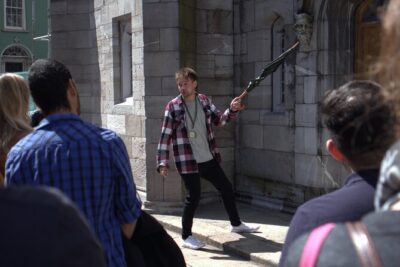
Dublin Highlights and Hidden Gems Guided Walking Tour
Read our review →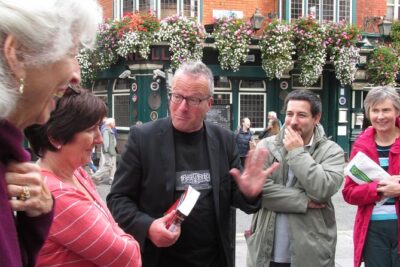
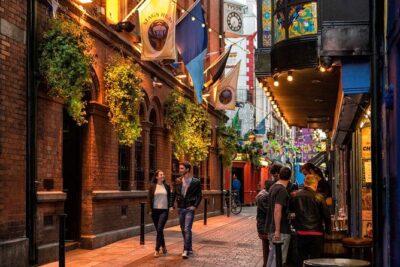
90 Minute Dublin Walking tour and Sightseeing tips
Read our review →

Historical 2-Hour Guided Walking Tour of Dublin
Read our review →
Dublin Traditional Irish 3 Course Meal Walking Tour with Local
Read our review →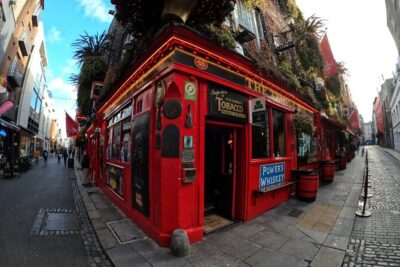
Browse the lists this tour appears in