
Reviewed · CITY TOURS
2 Hour Walking Tour of Dublin’s City Centre
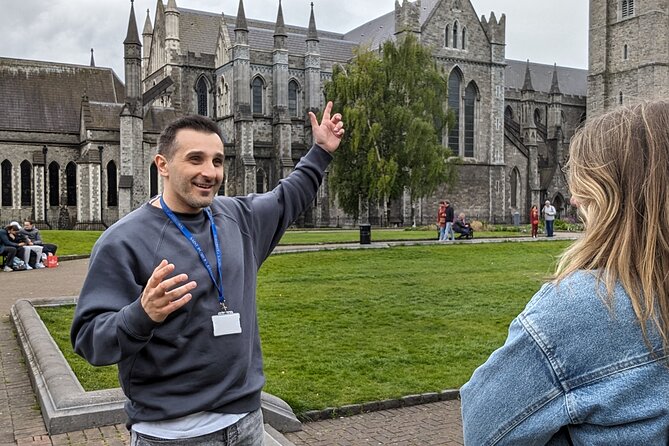
Start with Dublin’s stories, not just its streets. This two-hour walking tour links the Gaiety Theatre, cathedrals, Dublin Castle, Temple Bar, Trinity College, and St. Stephen’s Green in one tidy route. I like the easy central meeting point and the small group size, capped at 10 people, which makes it easier to hear the guide and ask questions.
I also like the choice of morning or afternoon departures. Guides such as Alin, Alan, and Leonor have been praised for lively explanations, old photographs, questions, quizzes, and useful pub and restaurant tips. The main consideration is that two hours gives you an outside look at several major sights, but entrance fees are not included and there is not enough time for long interior visits.
In This Review
- Key points to know before you book
- Why this two-hour Dublin walk works
- Beginning at the Gaiety Theatre
- St. Patrick’s Cathedral and Dublin’s medieval past
- Dublin Castle, from power base to jewel-heist setting
- Christ Church Cathedral and layers of rebuilding
- Temple Bar beyond the pub signs
- Trinity College and the Book of Kells connection
- The Bank of Ireland and Ireland’s political turning point
- Finishing at St. Stephen’s Green
- What the guide style adds to the experience
- Price, timing, and physical effort
- Who should book this Dublin walking tour?
- Should you book it?
- FAQ
- How long does the Dublin walking tour last?
- Where does the tour begin?
- Where does the tour end?
- Is the tour offered in English?
- Are entrance fees included?
- How many people can join the tour?
- Can I cancel for a full refund?
Key points to know before you book
- Eight central sights in two hours: The route covers Dublin’s main historic core, from the Gaiety Theatre to St. Stephen’s Green.
- A small group capped at 10: You get a more personal feel than on a large city tour, with better chances to ask questions.
- Strong guide-led storytelling: Alin and Alan are praised for clear history, humor, photos, games, and local food suggestions.
- Mostly an orientation tour: Several stops are viewed from outside, so plan separate visits if you want to enter the cathedrals or Dublin Castle.
- A useful first-day activity: The tour helps you understand Dublin’s layout and choose what to revisit later.
- Good value at $28.96: The price is reasonable for two hours of focused guiding, especially if you use the advice to shape the rest of your stay.
Why this two-hour Dublin walk works
Dublin’s city centre is compact, but its landmarks can feel scattered when you first arrive. A castle appears around one corner, a medieval cathedral sits behind another, and Trinity College seems to belong to a different part of the city altogether. This walk ties those pieces together.
I see it as a get your bearings fast tour. You are not spending half a day inside one museum. Instead, you move through the historic centre and hear why each place matters. That makes it especially useful on your first morning or afternoon in Dublin.
The pace is helped by the route’s eight planned stops, each allowing about 15 minutes. That is enough time for a story, a few photographs, and questions, though the schedule does not leave room for long, unplanned visits.
The small group format matters here. A guide can keep the conversation lively without shouting across a crowd. Past groups have been as small as two people, while the official limit is 10. That means your experience could feel almost private, but you should not book expecting a guaranteed private tour.
The guide’s style is a major part of the value. Alin is praised for humor, personal recommendations, and interactive questions. Alan is noted for old photographs that help you picture earlier Dublin. Leonor is also singled out for excellent guiding. Names may vary by departure, but the consistent strength is an engaging, story-based approach rather than a dry list of dates.
More Walking Tours in Dublin
- Dublin Highlights and Hidden Gems Guided Walking Tour
★ 5.0 · 6,020 reviews - Dublin: Highlights and Hidden Gems Walking Tour
★ 4.9 · 2,140 reviews - 1916 Rebellion Walking Tour
★ 5.0 · 1,605 reviews
Beginning at the Gaiety Theatre
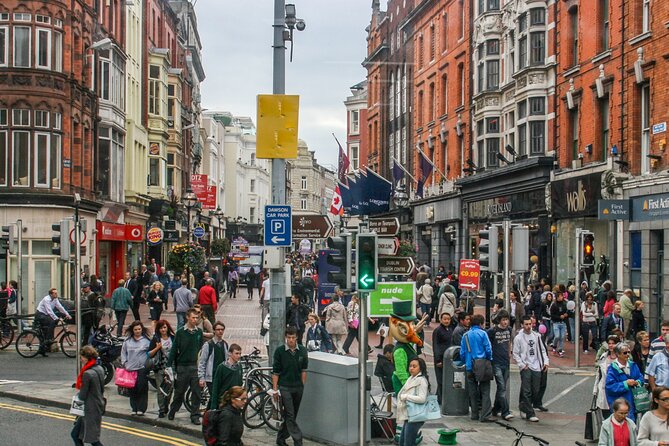
The meeting point is outside the Gaiety Theatre on King Street South in Dublin 2. This is a practical place to begin because it is central and easy to locate, reducing the usual first-tour worry of circling unfamiliar streets.
The Gaiety Theatre stop is scheduled for about 15 minutes, with no admission ticket needed. You should expect an introduction to Dublin’s cultural setting and the wider city centre before the group sets off.
This opening stop also helps set the tone. The tour is not just a march between famous buildings. The stated aim is to bring the city’s past to life, and the guide’s use of questions, quizzes, and visual material can make the first part feel social rather than formal.
Arrive with comfortable shoes and a little spare time. The walk is only two hours, but the route includes several streets and outdoor stops. Dublin weather can change quickly, so a light waterproof layer is sensible even when the forecast looks kind.
St. Patrick’s Cathedral and Dublin’s medieval past
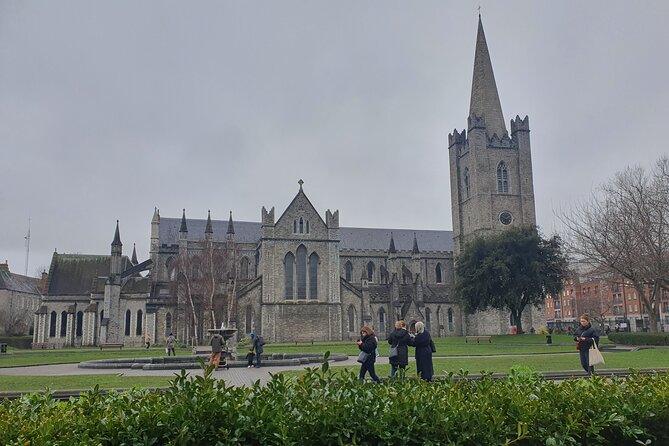
St. Patrick’s Cathedral is the first major church stop. It is linked with St. Patrick himself and has passed through several striking phases, from an Anglo-Norman foundation to periods of decline and near ruin.
The story does not end with medieval builders. The cathedral was later rescued through support from the Guinness family, adding a distinctly Dublin chapter to its long story. That combination of religious tradition, architecture, neglect, and private restoration gives the guide plenty to work with.
You have about 15 minutes here, and admission is not included. In practical terms, this is usually a guided exterior introduction unless you choose to return and pay for entry separately. If the cathedral is high on your list, treat the walking tour as a preview, then schedule a dedicated visit later.
This is one of the places where the tour’s limits are clear. Fifteen minutes can explain why the building matters, but it cannot replace time inside. Still, hearing the background before entering on your own can make a later visit more meaningful.
Dublin Castle, from power base to jewel-heist setting
Dublin Castle shows how a place can change roles over the centuries. It began with an Anglo-Norman tower and grew into a larger complex that served as a seat of power and a prison.
The stop also includes a more unusual detail: a daring jewel heist. That sort of story gives the tour a lighter edge and helps break up the political and architectural material.
Admission is not included, and the planned stop lasts around 15 minutes. You should expect to learn about the castle from the outside rather than take a full interior tour. If you want to explore its rooms and grounds in detail, you will need extra time and a separate ticket.
I like this stop because it gives you a useful framework for Dublin’s political past without asking you to sit through a long lecture. The guide can connect architecture, government, crime, and changing power in one compact explanation.
Something completely different for another day:
- Dublin to Cliffs of Moher, including Wild Atlantic Way and Galway
★ 5.0 · 23,331 reviews - From Dublin: Cliffs of Moher, Burren & Galway City Day Tour
★ 4.8 · 18,888 reviews - Dublin: Guinness Storehouse Entry Ticket
★ 4.6 · 16,863 reviews - Dublin to Cliffs of Moher, Burren, Wild Atlantic Way, Galway Tour
★ 5.0 · 12,924 reviews
Christ Church Cathedral and layers of rebuilding
Christ Church Cathedral reaches back to 1030, when Vikings founded it. That alone makes it one of the most interesting stops on the route, since it links Dublin’s Norse beginnings with later changes under Anglo-Norman rule.
The cathedral gained Gothic features over time, then faced further alteration and a 19th-century restoration funded through whiskey money. The building’s appearance is therefore not the product of one era. It is a record of Dublin changing hands, tastes, and fortunes.
Like St. Patrick’s Cathedral, Christ Church does not include admission in the tour price. The 15-minute stop is best viewed as an introduction. You can decide later which cathedral deserves your paid entry time, rather than trying to fit both interiors into this short walk.
For a first visit, that is a sensible trade. You get context for two major religious buildings and can return when you are ready to explore without a group schedule.
Temple Bar beyond the pub signs

Temple Bar is the most familiar name on the route, but its past is less polished than its present image. It was once a maze-like area with a poor reputation. Today, it is known for pubs, galleries, nightlife, and a steady flow of visitors.
The guide can help you see beyond the obvious pub frontage. A 15-minute stop is enough to explain how the area changed and why it became one of Dublin’s best-known districts.
This is also the point where expectations matter. Temple Bar is lively and heavily geared toward visitors, so it may not feel like the quietest or most local part of the city. The benefit of seeing it with a guide is that you get historical context before deciding how much time, if any, you want to spend there later.
The tour’s local food and pub advice can be useful here, though you should ask for specific recommendations during the walk. Several guides have been praised for pointing people toward places away from the main tourist areas.
Trinity College and the Book of Kells connection
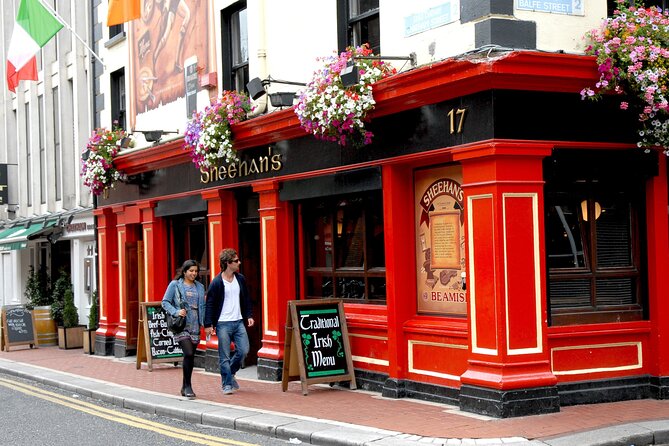
Trinity College Dublin brings the route into one of the city’s best-known academic settings. The college has a turbulent past but is now famous for learning, its campus, and the Book of Kells.
The tour includes about 15 minutes here, with no admission ticket included. That means you should not assume the walk provides entry to the Book of Kells exhibition. If seeing the manuscript and Old Library is a priority, plan that as a separate visit.
Even without going inside, Trinity is worth understanding as part of Dublin’s identity. The guide can explain how the college fits into the city’s political, cultural, and educational story. You also get a chance to note where you might return for a longer look.
This stop is particularly useful for first-time visitors who have heard of the Book of Kells but are unsure how it fits into a wider Dublin itinerary. The tour gives you the basic map and context, then leaves the choice of paying for the full experience up to you.
The Bank of Ireland and Ireland’s political turning point
The Bank of Ireland occupies what was once the Old Parliament House. This stop shifts the focus from churches and colleges to Irish politics.
The building witnessed important changes, including the Act of Union. It also influenced the design of grand buildings elsewhere, giving the guide a chance to discuss architecture alongside political history.
No admission ticket is required for this stop, and the visit lasts around 15 minutes. As with several other locations, the value comes from the explanation rather than an extended interior visit.
I find this kind of stop easy to miss when planning a Dublin walk on your own. Most visitors naturally focus on the castle, churches, and Temple Bar. Including the former parliament gives you a fuller picture of how Dublin functioned as a centre of government and debate.
Finishing at St. Stephen’s Green
The tour ends at Fusiliers Arch, the grand entrance to St. Stephen’s Green on Grafton Street. The official end point is listed as 3 St. Stephen’s Green, Dublin, D02 X025, and it is beside the Luas tram stop.
The park itself has a social history worth hearing. It was once an exclusive green space used by Dublin’s elite. Support from the Guinness family helped turn it into a public park, allowing everyone to enjoy it.
This is a pleasant place to finish because you are left in a useful part of central Dublin rather than at an isolated coach stop. You can continue along Grafton Street, rest in the park, or use the nearby Luas connection.
The ending also gives the tour a nice arc. You begin with theatre and city culture, pass through religious and political landmarks, and finish in a public park that reflects a change in who could enjoy Dublin’s urban spaces.
What the guide style adds to the experience
The strongest part of this tour is not the number of buildings. It is the way the guide connects them.
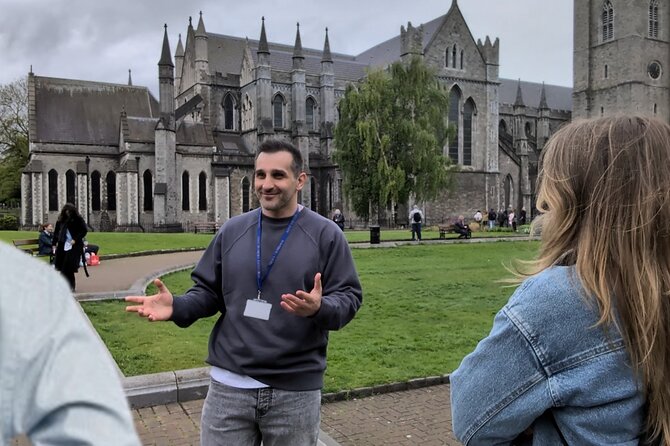
Past descriptions praise Alin for keeping the pace personal and answering questions. Alan has used a binder of old photographs, a simple but effective tool for showing how streets and buildings looked in earlier periods. Other guide-led touches include quizzes, games, and questions directed to the group.
That makes the tour suitable for mixed ages. A family with children aged 11, 13, and 15 found the games helped keep everyone involved, while older family members also enjoyed the explanations. I would still describe the experience as an adult-oriented history walk, but the interactive approach makes it less demanding for younger participants.
The guides also appear willing to adjust when the group has particular needs or interests. That does not mean the route can be rebuilt from scratch, but it suggests you should speak up if you want more detail on food, politics, medieval Dublin, or later sightseeing.
The best practical tip is to ask questions. The tour is short, and your guide may have more useful advice than the published route can show. Ask about restaurants, pubs away from the busiest streets, and which interiors deserve your limited time.
Price, timing, and physical effort
At $28.96 per person, this is fair value if you want a focused orientation with a live guide. You are paying for two hours of explanation and route planning, not for admission to Dublin Castle, St. Patrick’s Cathedral, Christ Church Cathedral, or the Book of Kells.
That distinction is important. If you want a series of interior tours, the total cost will rise because entrance fees are separate. If you mainly need a clear introduction and a shortlist of places to revisit, the price is easier to justify.
The morning or afternoon choice helps you fit the walk around flights, meals, and other bookings. I would choose the first available time on your first full day if you want advice that can shape the rest of your stay. An afternoon departure works well if you arrive earlier or prefer a slower start.
A moderate level of physical fitness is required. The activity is a walking tour, not a seated sightseeing experience, and you should expect to remain outdoors for much of the two hours. Wear shoes that can handle city streets and keep your hands free for photographs.
The meeting point is near public transportation, and the tour ends beside the Luas stop at St. Stephen’s Green. Service animals are allowed. Confirmation is provided at booking, and mobile tickets make it easy to keep the details on your phone.
Free cancellation is available if you cancel at least 24 hours before the start time. Cancellations or changes made inside that window are not accepted for a refund, with cut-off times based on local Dublin time.
Who should book this Dublin walking tour?
I would choose this for a first visit, especially if you want the main historic sights explained without spending a full day on one subject. It suits solo visitors and couples who like meeting a few people, as well as families who respond well to questions and games.
It is also a good fit if you want practical advice. The guides have offered suggestions for local restaurants and pubs away from the most obvious tourist spots, which can be just as useful as another date from a history book.
You may want a different plan if your main goal is entering every major attraction. The schedule is too tight for that, and admission fees are not covered. In that case, use this walk as an orientation, then reserve separate time for the interiors that matter most to you.
Should you book it?
Yes, if you want a friendly, efficient introduction to Dublin’s centre at a reasonable price. The combination of a maximum 10-person group, strong guide personalities, historical stories, visual aids, and a practical finish at St. Stephen’s Green gives the tour more value than a simple point-and-name walk.
Book it early if your Dublin dates are fixed, since it is commonly reserved well ahead of time. Choose the morning if you want to use the guide’s suggestions for the rest of your trip. Choose the afternoon if you want a gentle first look at the city after arriving.
Just remember what you are buying: a well-paced overview, not eight full attraction visits. If that matches your needs, this is a smart way to begin Dublin.
FAQ
How long does the Dublin walking tour last?
The tour lasts approximately two hours.
Where does the tour begin?
It begins at the Gaiety Theatre on King Street South, Dublin 2, Ireland.
Where does the tour end?
The tour ends at Fusiliers Arch in St. Stephen’s Green, near the Grafton Street entrance and beside the Luas tram stop.
Is the tour offered in English?
Yes. The tour is offered in English.
Are entrance fees included?
No. Admission fees and taxes are not included. Separate admission may be required for St. Patrick’s Cathedral, Dublin Castle, Christ Church Cathedral, and the Book of Kells experience.
How many people can join the tour?
The tour has a maximum of 10 participants. Some departures may be smaller, but a private tour is not guaranteed.
Can I cancel for a full refund?
Yes, if you cancel at least 24 hours before the experience start time. Cancellations or changes made less than 24 hours in advance are not accepted for a refund.
Newest in Dublin
- Wicklow Mountains Private Day Tour including Glendalough★ 5.0 · 7 reviews
- Wicklow: Private Day Tour from Dublin★ 5.0 · 5 reviews
- From Dublin: Powerscourt House, Guinness Lake & Glendalough★ 5.0 · 2 reviews
- Ultimate Dublin Food Tour★ 4.5 · 2 reviews
- Women Of Ireland: Trailblazers & Pioneers★ 5.0 · 4 reviews
- Wicklow tour of Glendalough★ 4.5 · 8 reviews
- Wicklow Mountains & Glendalough Luxury Private Day Tour★ 5.0 · 23 reviews
- Whiskey Tasting Tour of Dublin★ 5.0 · 117 reviews
City Tours, compared.
Cliffs of Moher, Burren & Galway City Day Tour
Read our review →

Dublin to Rock of Cashel, Cork City & Blarney Castle Guided Tour
Read our review →
City Sightseeing Dublin Hop-On Hop-Off Bus Tour
Read our review →

Go City: Dublin Pass | Save up to 50% – Includes 35+ Things To Do
Read our review →

Aran Islands and Cliffs of Moher Day Cruise sailing from Galway City Docks
Read our review →Browse the lists this tour appears in