
Reviewed · HISTORICAL TOURS
Cork: Guided Historical Walking Tour
Cork’s streets hide a river below. This 75-minute walk makes Cork’s unusual waterways and maritime past easy to understand, while linking the city’s monuments through lively local stories. I like the route because it covers a lot without asking you to spend half a day on your feet.
I also like the human touch. Guides such as Noel, Mary O’Sullivan, Gerard, Jarrod, Catherine, and Aiden are praised for telling personal stories alongside the facts, and some guides grew up in Cork. The main drawback is the brisk format: at only 75 minutes, you see many places from the street but do not get extended visits inside them.
In This Review
- Key points to know before you book
- Why this short Cork walk works
- Beginning at the Cork Tourist Information Centre
- Following the river beneath Cork’s curved main street
- Cork Opera House and the view toward Shandon
- Careys Lane and the Huguenot cemetery
- Coal Quay, Cornmarket Street, and Grand Parade
- Nano Nagle and a bridge with a social purpose
- St Fin Barre’s Cathedral, South Gate Bridge, and Elizabeth Fort
- South Mall’s old boathouse entrances
- Finishing at Princes Street and the English Market
- Guide quality and group comfort
- Is $26 good value for 75 minutes?
- Practical advice for rain, footwear, and timing
- Who should take this Cork walking tour?
- Should you book the Cork historical walking tour?
- FAQ
- How long does the Cork historical walking tour last?
- Where does the tour start?
- Where does the tour finish?
- What language is the tour in?
- Is hotel pickup included?
- What sights are included on the route?
- Does the tour include food or drinks?
- Is the tour wheelchair accessible?
- What happens if it rains?
Key points to know before you book
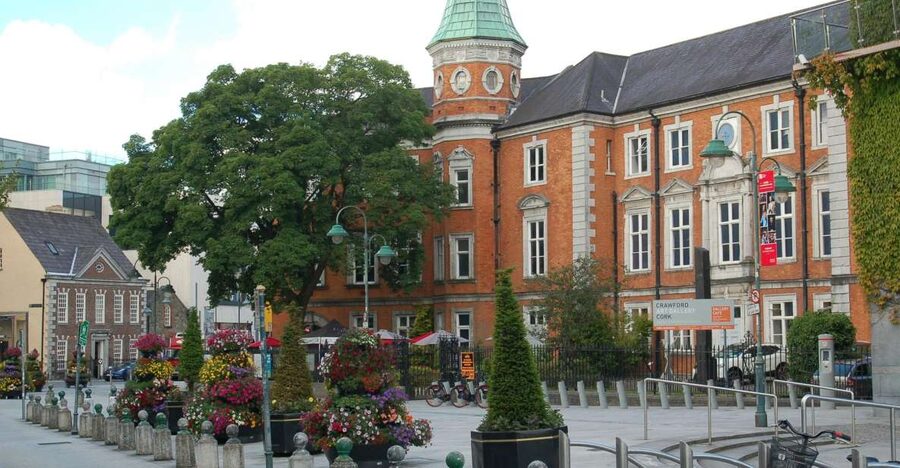
- Streets built over waterways: Follow the curved main street along the course of the river hidden beneath Cork’s centre.
- A strong local voice: Guides including Noel, Mary, Gerard, Jarrod, Catherine, and Aiden are praised for warmth, humor, and clear storytelling.
- Many landmarks in one walk: The route takes in Cork Opera House, Shandon, the Huguenot cemetery, Grand Parade, St Fin Barre’s Cathedral, Elizabeth Fort, and the English Market.
- Maritime Cork explained: Learn how the city grew through transatlantic and European trade, with clues such as old boathouse entrances along South Mall.
- Useful first-day orientation: The walk ends at the English Market, making it a smart way to choose later stops.
- Simple but weather-dependent: The tour runs rain or shine, so bring suitable clothing and arrive at the Cork Tourist Information Centre 10 minutes early.
Why this short Cork walk works
Cork can feel confusing at first. The city centre is shaped by water, with streets and lanes following old channels rather than a tidy grid. That is one reason this tour earns its $26 price: it gives you a framework for the city instead of handing you disconnected dates and building names.
The central idea is simple. Cork developed as a trading city linked to Europe and the Atlantic, and its buildings, bridges, street curves, and waterfront remnants still reflect that past. Once you understand the waterways and trade routes, the city is easier to read as you walk around on your own.
I particularly like that the tour is not limited to grand monuments. You hear about former boat house entrances, refugee communities, ex-slave heroes, local music, and Nano Nagle’s work with poor children. Those details give the walk a human scale.
The rating is 4.7 from 310 reviews, and the praise is remarkably consistent. The strongest themes are friendly guides, clear voices, local knowledge, and storytelling that makes Cork’s past feel connected to ordinary streets. Some groups have been around 20 people, and at least one guide used a headset microphone, which helped with city noise.
More Walking Tours in Cork
- The Titanic Trail: 1-Hour Guided Walking Tour of Cobh
★ 4.8 · 78 reviews - Cork Instagram Photography Walking Tour
★ 5.0 · 54 reviews - Meet and Eat Dublin: Cork Food Walking Tour
★ 5.0 · 25 reviews
Beginning at the Cork Tourist Information Centre
You meet at the Cork Tourist Information Centre and should arrive 10 minutes before the start. The tour ends back at the same meeting point, so you do not need to plan a return journey or arrange transport across town.
The opening part sets up Cork as a former transatlantic and European trading hub. This matters because the city’s history is not just a string of local events. Cork’s position and waterways connected it to wider trade, migration, and movement across the sea.
Your guide leads you on foot through the city centre. The pace is intended for a one-hour stroll, though the advertised duration is 75 minutes. That gives the guide room for questions and short explanations, but you should still expect an active walk rather than a long stop at each monument.
Following the river beneath Cork’s curved main street
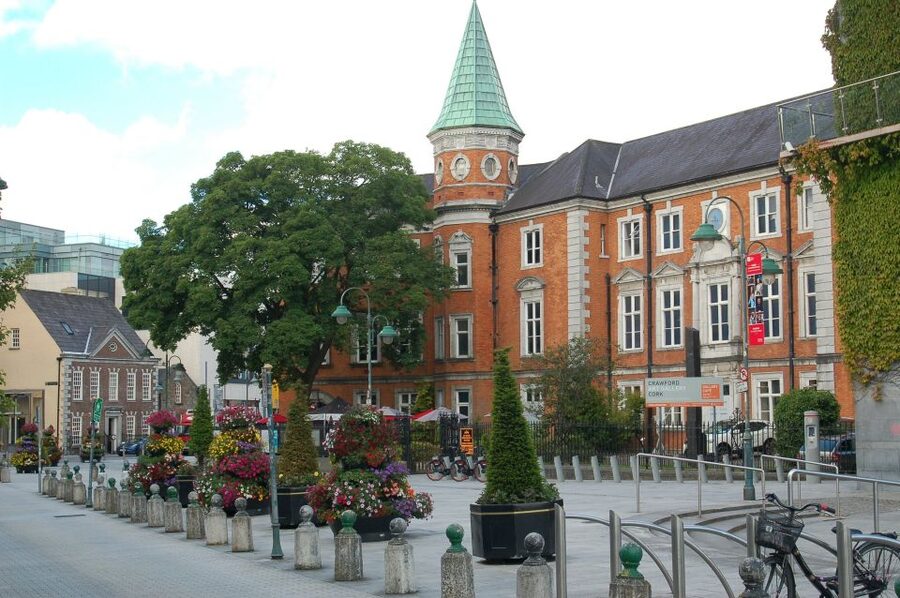
One of the most memorable ideas on the route is that ancient waterways meander beneath the modern streets. You follow the curve of the main street while learning how the river helped shape the city’s layout.
This is the kind of detail that can change your whole visit. Without an explanation, a curved street is simply a curved street. With the story, it becomes a clue to Cork’s older geography and maritime life.
The tour also points out remnants of former boathouse entrances. These traces are easy to miss if you are walking quickly toward a shop or café. Your guide helps you notice how the working city once met the water, even where the present-day street scene looks thoroughly urban.
This part is especially useful if you enjoy cities that reveal themselves gradually. The tour does not rely only on impressive façades. It trains you to look down, around corners, and at details in the street plan.
Cork Opera House and the view toward Shandon
The route takes you past Cork Opera House. From there, you can look across the river toward the shape of Shandon Church, with its distinctive red and white brick bell tower and clock faces.
Shandon gives the walk one of its clearest visual markers. The tower is easy to recognize, and the guide uses it to help you understand Cork’s character and architecture. One group also learned about St Anne’s Church and the Shandon Bells, including the option to climb the tower and pull the bell ropes for an additional €6 per person.
That bell tower visit is not included in this walking tour, so treat it as a possible follow-up rather than part of the package. The walking tour gives you the context and location, while a separate visit lets you spend more time at the church.
I like this arrangement. You are not rushed through an included attraction simply because it appears on the route. Instead, you can decide later if climbing the tower suits your energy, schedule, and budget.
More History Tours in Cork:
- Historic Cork Delicious Donut Adventure by Underground Donut Tour
★ 5.0 · 232 reviews - Cork Chat and History Walking Tour
★ 5.0 · 3 reviews - Historic Gems Unveiled: Private Walking Tour of Cork
★ 5.0 · 2 reviews - Dublin Historical Centre Food Tour with 8 Food Tastings & Drinks
★ 5.0 · 1,718 reviews
Careys Lane and the Huguenot cemetery
The walk continues down Careys Lane to the Huguenot cemetery. This is a quieter stop, and it broadens the story beyond Cork’s famous buildings.
A cemetery connected with Huguenots points to the movement of people into Cork and the city’s links with refugees and newcomers. The route also touches on the lives of ex-slave heroes, giving the city’s past a wider human frame than a standard monument-by-monument tour.
You should not expect a long cemetery visit. The tour is short, and the stop works mainly as a chance to hear the story and understand its place in Cork’s development. If you want detailed genealogy or a lengthy discussion of religious history, you may need to explore further on your own.
Still, this is an important inclusion. It shows how a good city walk can connect architecture with people who arrived, worked, worshipped, and helped shape the place.
Coal Quay, Cornmarket Street, and Grand Parade
Next come the Coal Quay and Cornmarket Street. These names carry the feel of Cork’s trading past, and the guide uses the streets to explain how commerce influenced the city.
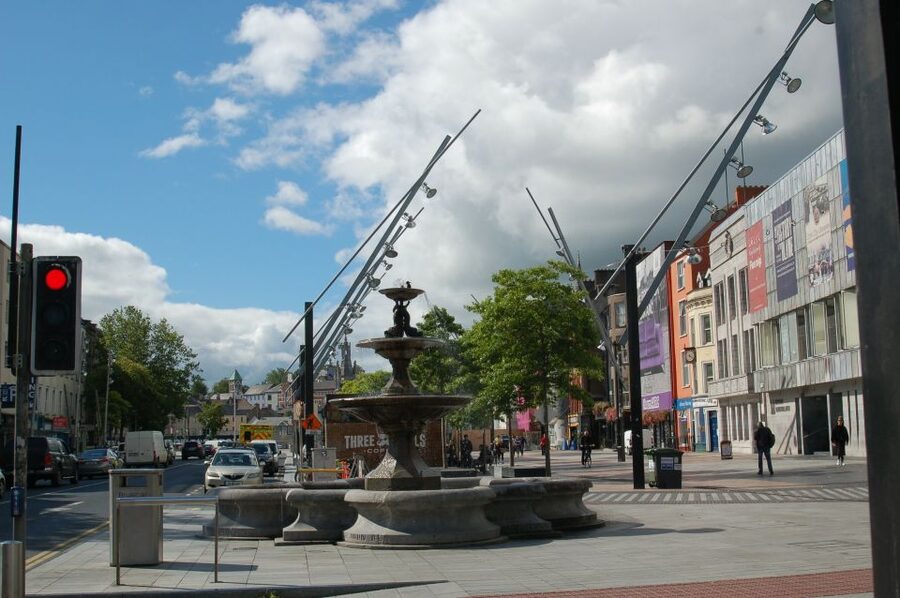
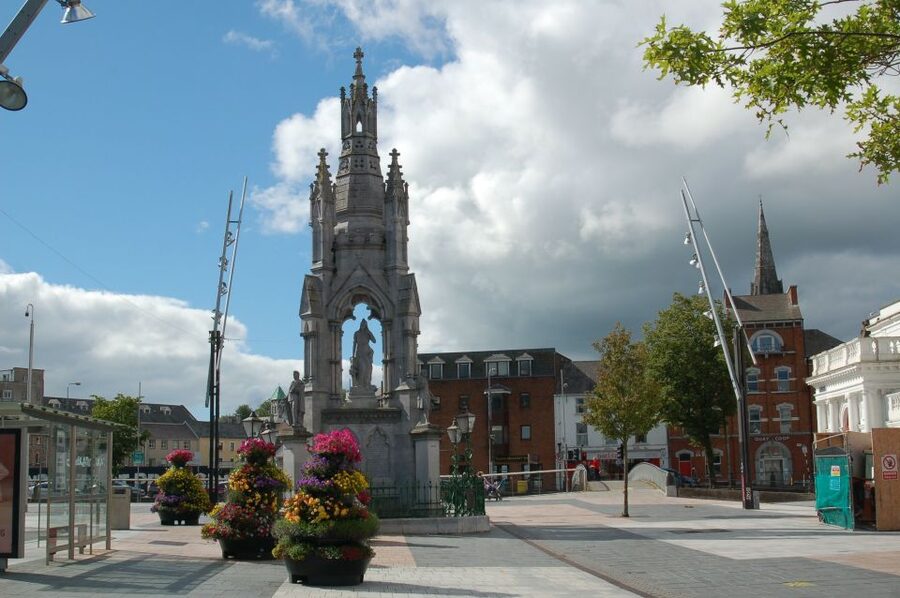
The route then reaches Grand Parade, described as the widest street in Cork. Here you see Bishop Lucy Park, the Berwick fountain, and the National Memorial. These stops give you a change of scale, from lanes and small historic traces to a broad public space.
Grand Parade is also a practical orientation point. After the tour, you can return to this part of the city and recognize where you are without constantly checking a map. That is one reason I would take this walk near the beginning of a Cork visit.
The guide’s style matters here. The most praised tours are not just lists of dates. Noel is repeatedly singled out for storytelling and personal experience, while Mary is praised for local knowledge, warmth, and a voice that carried over background noise. Those qualities make open streets and busy public spaces easier to follow.
Nano Nagle and a bridge with a social purpose
The walk includes a footbridge named in honor of Nano Nagle. There, you hear about her humanitarian work and efforts to bring education to the poorest classes.
This stop adds a social dimension to the tour. Cork’s story is not only about trade, churches, forts, and public buildings. It is also about people who worked to improve education and daily life for those with few resources.
A short tour cannot explore every part of Nano Nagle’s work in detail, but the stop gives you a clear reason to remember her name. It also shows how bridges, streets, and public spaces can carry civic memory.
I find this kind of stop valuable for families and first-time visitors because it gives the history a personal focus. Children may remember a person and a bridge more easily than a long sequence of dates.
St Fin Barre’s Cathedral, South Gate Bridge, and Elizabeth Fort
The route then takes in St Fin Barre’s Cathedral, South Gate Bridge, and Elizabeth Fort. These are among the walk’s main monuments, but they represent different sides of Cork.
St Fin Barre’s Cathedral brings in religious architecture and the city’s long Christian tradition. South Gate Bridge points to movement through the city, while Elizabeth Fort recalls Cork’s defensive past.
The tour does not promise extended interior visits, so plan your expectations carefully. You will learn about these places and see them along the route, but the 75-minute schedule is not designed for a full cathedral inspection or a detailed fort tour.
That limitation is also part of the value. You get a compact introduction to several major sights, then you can choose which ones deserve a return visit. If your schedule is tight, this is a useful way to see the broad outline of Cork without committing to multiple separate attractions.
South Mall’s old boathouse entrances
South Mall is now known as Cork’s leading business quarter, but the walk points out former boathouse entrances along the street. These details reveal how much the city has changed while retaining physical links to its past.
This may be the tour’s best example of looking beyond the obvious. An office-lined street does not immediately suggest boats or waterways. Once the guide explains the entrances, you begin to see South Mall as part of a former water-based city rather than just a modern commercial district.
The maritime theme returns here with good reason. Cork’s trade shaped its buildings and streets, and the old entrances provide a physical reminder of that working past.
The city’s streetlights can also prompt questions. One group found out how the tall, bulky lights came to be, a small detail that shows the tour is open to the kinds of everyday curiosities you might notice while walking.
Finishing at Princes Street and the English Market
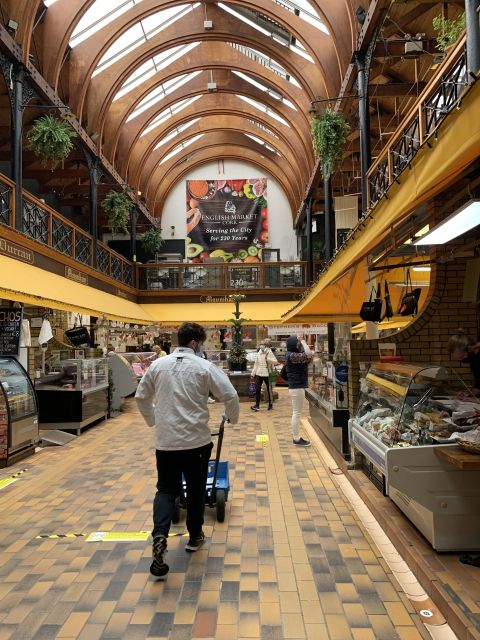
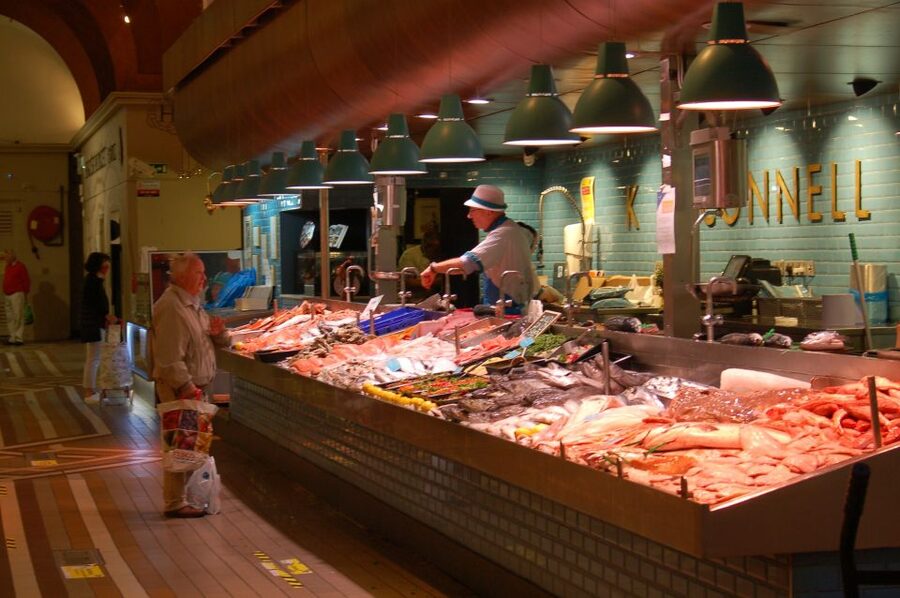
The tour ends in Princes Street at the main entrance to the English Market. This is a smart finish because the market is one of Cork’s most useful places to continue exploring on your own.
You are not left at an isolated landmark or a random crossroads. Instead, you finish near food, local shopping, and a central attraction that can fill the next part of your day. One guide’s route made the English Market a natural final stop for continued sightseeing.
Food and drinks are not included, so budget separately if you want to eat there or nearby. The tour itself is focused on the city and its stories, not on tastings or a market lunch.
Guide quality and group comfort
The guides are the main reason this experience receives such strong marks. Noel is praised for being a warm storyteller with extensive personal experience of Cork. Gerard is described as friendly and engaging, while Jarrod is praised for humor and clear explanations.
Mary O’Sullivan is also singled out for local knowledge and a voice that was easy to hear, helped by minor amplification. Catherine is praised for passion and interesting delivery, and Aiden for professional, fun storytelling and good energy.
Of course, guide style can vary from one departure to another. That is worth remembering when you book any walking tour. The consistent strengths here are local connection, humor, and the ability to answer questions rather than recite a script.
Group size may be around 20 people, though it can vary. A group of that size is large enough to create energy but small enough for a walking guide to manage. The headset microphone mentioned by one participant is useful in city-centre traffic and street noise.
Is $26 good value for 75 minutes?
At $26 per person, the tour is not the cheapest way to walk around Cork, since you can visit the streets without a guide. The value comes from interpretation: you learn what lies under the streets, why the city curves, how trade shaped Cork, and what the small architectural clues mean.
I consider it good value if you are new to Cork and want a quick orientation. The tour covers many key areas and can help you decide where to spend more time later.
It is less suitable if you prefer long museum visits, slow photography stops, or a deep architectural study of one building. The route moves through several places, so the experience is broad rather than detailed at each stop.
For many people, the best use is on the first day in Cork. Take notes on the places that interest you, then return to St Fin Barre’s Cathedral, Elizabeth Fort, Shandon, the English Market, or other stops at your own pace.
Practical advice for rain, footwear, and timing
The tour operates rain or shine. Bring weather-appropriate clothing, and wear shoes you can comfortably use for a city walk.
Cork’s weather can change, and there is no promise of shelter during every explanation. A waterproof layer is more useful than relying on an umbrella in a group, especially when you need to hear the guide and keep moving.
Arrive 10 minutes early at the Cork Tourist Information Centre. Hotel pickup and drop-off are not included, so make your own way to the meeting point.
The activity is wheelchair accessible, though the supplied details do not describe every surface or route condition. If you need specific assistance, confirm the practical arrangements before booking.
There is also conflicting booking information about cancellation. The stated policy says you can cancel up to 24 hours ahead for a full refund and that you may reserve now and pay later, while another note calls the tour non-refundable. Check the terms shown for your exact date before committing.
Who should take this Cork walking tour?
I would recommend it to first-time Cork visitors, cruise or short-stay visitors, families who want a manageable history lesson, and anyone curious about the city’s waterways and maritime trade.
It also suits people who learn best through stories. The guides connect monuments with local characters, refugees, social reform, music, trade, and recent history. That mix gives you more than a set of dates.
You may want something else if you need extensive interior sightseeing or a slower pace. This is a city overview, not a cathedral tour, fort tour, food tour, or Shandon bell experience.
Should you book the Cork historical walking tour?
Book it if you want a friendly, compact introduction to Cork that explains why the city looks the way it does. The old waterways, hidden boathouse entrances, maritime links, and strong local storytelling make the $26 fee worthwhile for most first-time visitors.
Skip it if you already know Cork well or prefer exploring without a fixed route. For everyone else, I would schedule it early in your stay, carry weatherproof clothing, and use the finish at the English Market as the starting point for the rest of your Cork day.
FAQ
How long does the Cork historical walking tour last?
The advertised duration is 75 minutes. The route is described as a one-hour stroll through Cork city centre, with the remaining time allowing for explanations and questions.
Where does the tour start?
The tour starts at the Cork Tourist Information Centre. You should arrive 10 minutes before the activity begins.
Where does the tour finish?
The walk ends back at the meeting point. The route finishes at Princes Street, near the main entrance to the English Market, before returning to the meeting point.
What language is the tour in?
The live guided tour is conducted in English.
Is hotel pickup included?
No. Hotel pickup and drop-off are not included, so you need to make your own way to the Cork Tourist Information Centre.
What sights are included on the route?
The route includes Cork Opera House, views toward Shandon Church, the Huguenot cemetery, Coal Quay, Cornmarket Street, Grand Parade, Bishop Lucy Park, the Berwick fountain, the National Memorial, the Nano Nagle footbridge, St Fin Barre’s Cathedral, South Gate Bridge, Elizabeth Fort, South Mall, and the English Market entrance.
Does the tour include food or drinks?
No. Food and drinks are not included in the tour price.
Is the tour wheelchair accessible?
Yes, the activity is listed as wheelchair accessible. The supplied details do not provide further information about individual surfaces or access points.
What happens if it rains?
The tour takes place rain or shine. Bring clothing suitable for the weather.
Newest in Cork
- Wild Coast Bike and EBike Tour in Kinsale Cork Ireland★ 5.0 · 12 reviews
- Toe Head Clifftop Hike in West Cork★ 5.0 · 48 reviews
- Fota House, Arboretum & Gardens Admission Ticket★ 5.0 · 67 reviews
- Full-Day Private Whispers of Kerry Emerald Dreams Tour from Cork★ 5.0 · 6 reviews
- The River Lee Cork To Dublin Airport Or Dublin City Private Chauffeur Transfer★ 5.0 · 1 review
- This Is Cork Tours Cork’s Many Childhoods A Family Tour★ 4.5 · 2 reviews
- Private Ring of Kerry Highlights Tour from Cork, Car or Minibus★ 5.0 · 39 reviews
- Historic Gems Unveiled: Private Walking Tour of Cork★ 5.0 · 2 reviews
Historical Tours, compared.

Dublin Historical Centre Food Tour with 8 Food Tastings & Drinks
Read our review →

Historical 2-Hour Guided Walking Tour of Dublin
Read our review →
Dublin to Cork, Blarney Castle & Cóbh Heritage Centre by train
Read our review →
Jeanie Johnston Tall Ship Irish Famine History Tour
Read our review →

Deliciously Dublin: The Artisan Donut Walking & History Tour
Read our review →Browse the lists this tour appears in