
Reviewed · IRISH MYTHS AND STORYTELLING TOURS
Dublin: Mythology, Folklore and Legends Walking Tour
Stories make Dublin stranger. This two-hour walk turns familiar streets into stages for fairies, warriors, banshees, and rebels, with a local folklore guide explaining how old tales still shape Irish identity. I especially like the mix of mythology and modern Dublin, plus the route’s effort to move beyond the usual tourist circuit. The $27 price is fair for a focused, guide-led experience, though you should be comfortable listening in English while walking and standing outdoors.
I also like the human touch. Guides such as Helena, Emily, Dave, and Lee have been praised for humor, warmth, strong storytelling, and useful Dublin suggestions. The main limitation is that this is a story tour, not a grand sightseeing tour with interiors or major attractions. You see familiar areas from a new angle, but the reward comes from the tales rather than from entering monuments.
In This Review
- Key details that make this Dublin walk different
- Why a folklore walk belongs early in your Dublin visit
- Starting in Temple Bar with Ireland’s mythical origins
- Meeting the banshee, púca, and leprechaun
- Ancient warriors and the power of Gaelic storytelling
- The Georgian Quarter’s darker side
- The Abbey Theatre and a tragic chapter
- Ending on O’Connell Street with the Gaelic revival
- How the guides shape the experience
- Is $27 good value for two hours?
- Who should book this folklore walk?
- My verdict on the Dublin Mythology, Folklore and Legends Tour
- FAQ
- How much does the Dublin mythology walking tour cost?
- How long does the tour last?
- Where does the tour start?
- Where does the tour finish?
- What language is the tour conducted in?
- Is the tour wheelchair accessible?
- Can I cancel the tour for a refund?
Key details that make this Dublin walk different
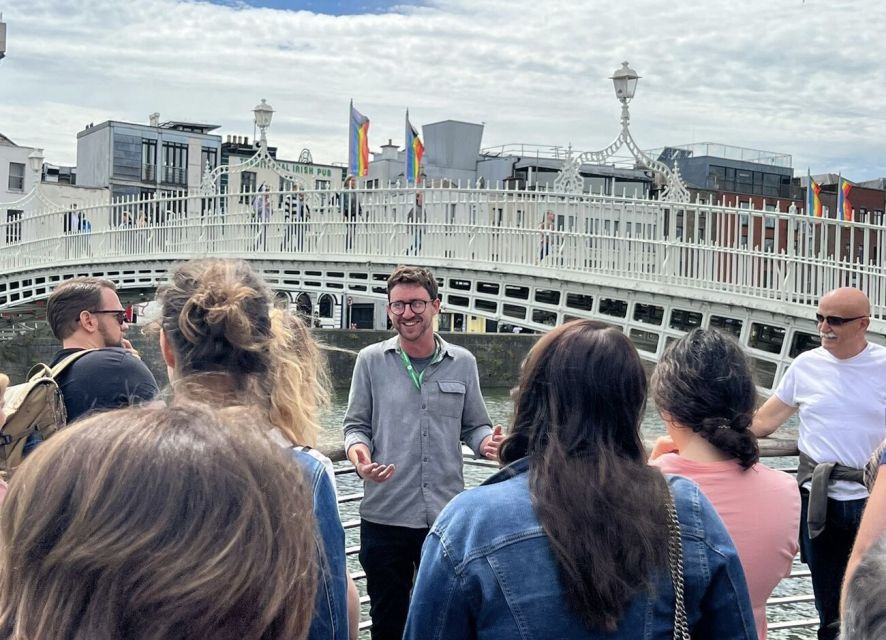
- Temple Bar becomes a doorway into Celtic belief: The tour begins outside The Old Storehouse pub, under the green umbrella, then uses the area to introduce Ireland’s mythical beginnings.
- Fairies are treated as serious folklore: You hear about the banshee, púca, leprechaun, and other supernatural figures within Irish and Gaelic traditions.
- The route reaches Dublin’s less obvious stories: The Georgian Quarter brings tales of rebellion, grave robbing, revolution, and darker chapters that standard sightseeing walks may skip.
- The Abbey Theatre has a tragic side: Its story connects performance, national identity, and loss in a way that gives the theatre more meaning than a quick photo stop.
- O’Connell Street supplies the modern ending: The walk closes with the Gaelic revival, the Irish language, and contemporary street characters.
- The guides are the main attraction: Helena, Emily, Dave, and Lee have all been praised for energy, humor, patience, and the ability to keep children and tired adults engaged.
Why a folklore walk belongs early in your Dublin visit
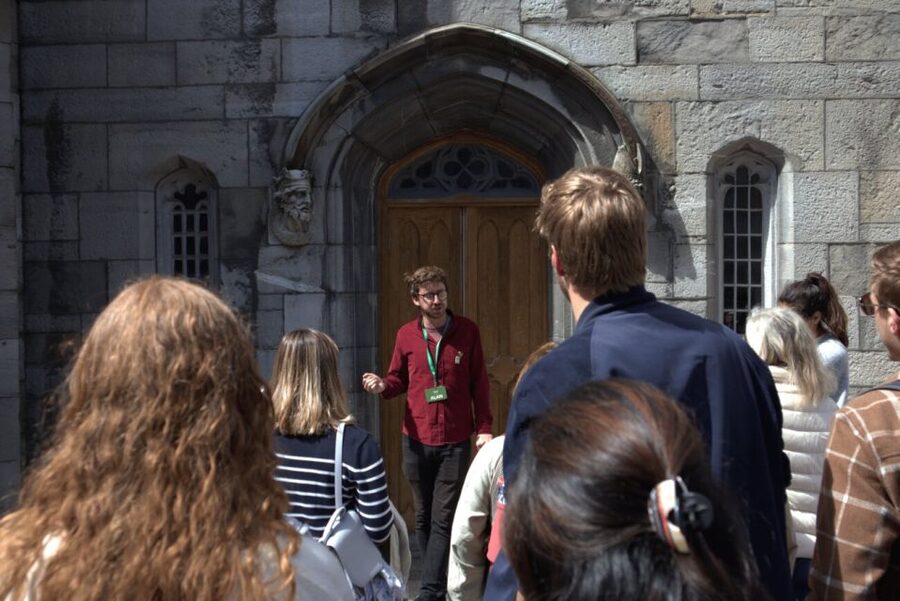
I would put this tour near the start of a Dublin stay. It gives you a set of stories that can change the way you see the city for the rest of your visit. Temple Bar becomes more than pubs and crowds, O’Connell Street becomes more than a broad avenue, and the Georgian Quarter picks up a darker human edge.
This is not a lecture packed with dates. The guide connects myths to language, politics, performance, and daily life. That matters because Irish folklore is not presented as a pile of old fairy stories. You learn how storytelling helped preserve identity and how Gaelic culture continued to influence modern Ireland.
The tone also seems easygoing. Helena is repeatedly praised for making complex material entertaining, while Emily is singled out for warm, engaging storytelling. Dave adds humor and practical Dublin advice, and Lee has been praised for keeping the pace comfortable with several longer stops.
That combination suits you if you want context without spending two hours in a quiet room. You listen, walk, pause, and ask questions. The format also gives you time to notice the streets around each story.
More Storytelling Tours in Dublin
- Dublin Mythology and Folklore Tour with Irish Stories and Legends
★ 5.0 · 1,003 reviews - Storytelling of Irish Myths and Legends
★ 5.0 · 158 reviews - Howth Hiking Trail from Dublin: Mythology and Legend
★ 5.0 · 77 reviews
Starting in Temple Bar with Ireland’s mythical origins
Meet outside The Old Storehouse pub in Temple Bar and look for the green umbrella. This is a busy part of Dublin, so allow yourself enough time to find the meeting point without rushing. The activity returns here at the end, making the start and finish simple to manage.
Temple Bar is often treated as Dublin’s nightlife district. This tour asks you to look past that image. The opening section introduces Ireland’s mythical origins and Celtic beliefs, giving the neighborhood a role in the country’s imagined beginnings.
I like this choice of starting point because the contrast is sharp. You begin in one of Dublin’s most familiar tourist zones, then hear material that many standard city walks leave out. Instead of only learning where to eat or take photos, you get a sense of how Irish culture used stories to explain origins, people, places, and forces beyond ordinary life.
Expect the guide to do much of the work through spoken storytelling. There are no listed audio devices, printed materials, or museum entries included. The experience depends on being able to hear the guide and follow the narrative, so staying reasonably close to the group is important.
Meeting the banshee, púca, and leprechaun
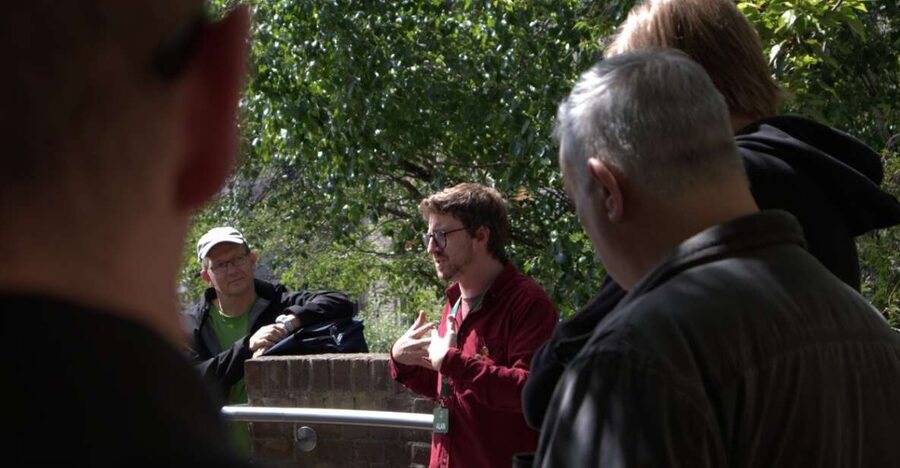
The supernatural section is likely the most immediately appealing part of the walk. You learn about fairies and figures such as the banshee, púca, and leprechaun, along with the place these characters hold in Irish folklore.
The useful point is that the tour does not treat these creatures only as cartoon symbols. It places them within older Celtic and Gaelic beliefs. That gives you a better way to understand why folklore matters in Ireland, rather than reducing the subject to souvenir-shop imagery.
The banshee can bring a macabre tone. The púca adds a more unpredictable character, while the leprechaun is the figure most familiar to many people before arriving in Ireland. Hearing these stories together helps you notice the range of Irish folklore, from ominous warnings to mischievous encounters.
The guides’ personalities matter here. Helena’s humor and enthusiasm, Emily’s storytelling skill, and Dave’s ability to keep children interested all fit this material well. You are not simply memorizing names. You are listening to tales designed to be told aloud, with rhythm, suspense, and a little theatrical flair.
Families may find this section especially effective. One account specifically praises Dave for keeping young girls interested throughout the walk. Still, some stories may have a darker tone, so parents should use their judgment with very young children.
Ancient warriors and the power of Gaelic storytelling
The tour also introduces Ireland’s ancient warriors and the traditions connected to them. This expands the subject beyond supernatural creatures and shows how legends can help a country imagine its heroes and origins.
I appreciate this part because it links folklore with national identity. Ancient warriors are not just colorful characters from a distant past. Their stories can express ideals about courage, loyalty, sacrifice, and belonging. The guide’s job is to make that connection clear without turning the walk into a dry history class.
You may also come away with a better sense of why oral storytelling has such force in Irish and Gaelic culture. A story passed from person to person can preserve ideas even when political power, language, or public institutions change. That theme returns later on O’Connell Street with the discussion of Gaelic revival.
The tour’s 4.9 rating from 703 reviews supports the idea that guides are delivering this material well, but the exact experience depends on who leads your group. The recurring praise is not for a particular prop or landmark. It is for guides who can tell a story with humor, answer questions, and make the subject feel alive.
More Walking Tours in Dublin
- Dublin Highlights and Hidden Gems Guided Walking Tour
★ 5.0 · 6,020 reviews - Dublin: Highlights and Hidden Gems Walking Tour
★ 4.9 · 2,140 reviews - 1916 Rebellion Walking Tour
★ 5.0 · 1,605 reviews - 90 Minute Dublin Walking tour and Sightseeing tips
★ 5.0 · 916 reviews
The Georgian Quarter’s darker side
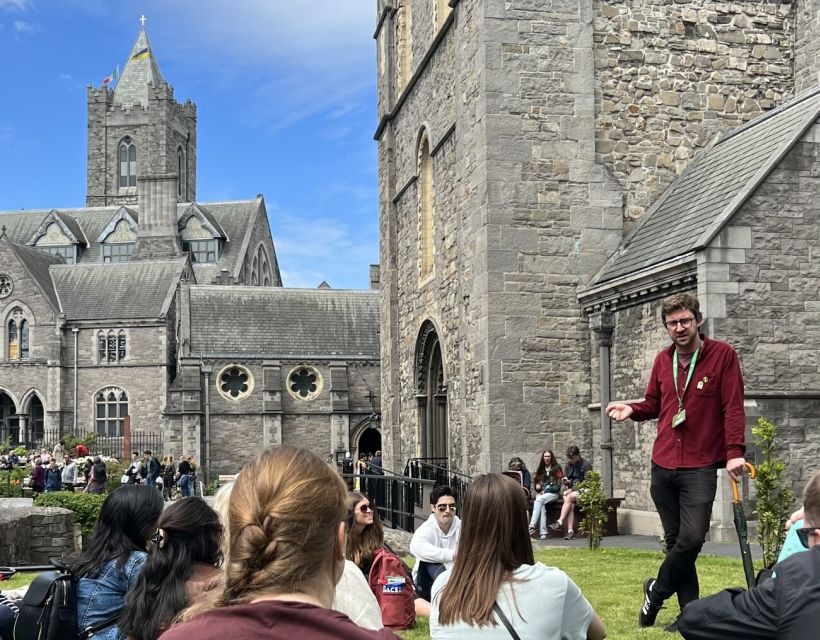
The move into the Georgian Quarter changes the mood. Here, the tour covers rebellions, grave robbing, and revolutions, giving you a more macabre view of Dublin.
This is one of the strongest reasons to choose the experience over a standard city walk. Many first-time tours focus on major landmarks and broad national events. This route instead uses less familiar locations and unsettling stories to show how people lived, died, resisted, and responded to social change.
The grave-robbing material should appeal to anyone who likes the darker side of urban history. It also gives the Georgian Quarter a different character. You are not only looking at elegant streets or period buildings. You are hearing about the actions and fears that existed behind the city’s polished appearance.
There is a practical benefit to the pacing. The tour includes several longer stops, so you are not walking continuously for two hours. That makes it more manageable if your feet are already tired from sightseeing. Helena has been praised for choosing suitable resting points and keeping different energy levels in mind.
Still, this is an outdoor walking activity. Even with pauses, you should expect to move between locations and stand while listening. The tour is listed as wheelchair accessible, which is useful, but anyone with specific mobility needs should still confirm the route and starting time when booking.
The Abbey Theatre and a tragic chapter
The Abbey Theatre provides another change in subject. Rather than offering only a quick look at a famous cultural institution, the tour covers its tragic history.
That stop helps explain why theatre matters in Ireland. The Abbey is tied to storytelling, public culture, and the formation of national ideas. Its story belongs naturally on a folklore tour because the stage can carry legends, language, memory, and political feeling to a wide audience.
The tragic element also keeps the tour from becoming too light. You get humor from the guides and entertaining tales about mythical beings, but the route includes loss, conflict, and difficult parts of Dublin’s past. That balance is important. Irish folklore is not only cheerful leprechauns and amusing pub stories.
You may find this section especially valuable if you plan to visit cultural sites during your trip. It gives you a framework for understanding why performance and language have carried such weight in Irish life.
Ending on O’Connell Street with the Gaelic revival
The tour finishes on O’Connell Street, returning to the meeting point afterward. This final section introduces the revival of the Gaelic language and culture, then brings the subject into the present with contemporary Dublin street characters.
That closing move is smart. It shows that folklore is not locked in an ancient past. The tour begins with mythical origins and ends with modern people, linking old stories to a living culture.
The Gaelic revival section adds needed context. You learn that language can be more than a communication tool. It can also express heritage, political feeling, and a desire to preserve a distinct identity. The route’s focus on Gaelic culture gives the mythology a wider purpose.
One guide, Emily, has also been praised for discussing present-day examples connected with community life, including Gay Pride and HIV awareness. This suggests that the tour can connect old traditions with current Dublin experiences rather than pretending culture stopped in the past.
O’Connell Street is a fitting place to finish because it is a highly visible part of modern Dublin. You end with a reminder that the city’s stories are still being made, told, and reshaped.
How the guides shape the experience
The guide is the key factor here. The route itself is useful, but the same streets could feel ordinary without a skilled storyteller.
Helena is praised for enthusiasm, humor, clear explanations, and helpful recommendations after the tour. Emily receives similar praise for making everyone feel welcome and for turning folklore into an engaging narrative. Dave is described as funny, informative, and particularly good at keeping children interested. Lee is praised for warmth, good energy, and a relaxed pace.
That range suggests the company has a strong team, but it also means your experience may vary slightly in tone. One guide may lean into humor, another into cultural context, and another into performance. The shared strength is a clear passion for the subject.
I like that the guides appear willing to answer questions and talk with people between stops. That makes the walk feel less formal. You can ask about Dublin, local customs, or places to visit afterward instead of simply waiting for the next scripted section.
Is $27 good value for two hours?
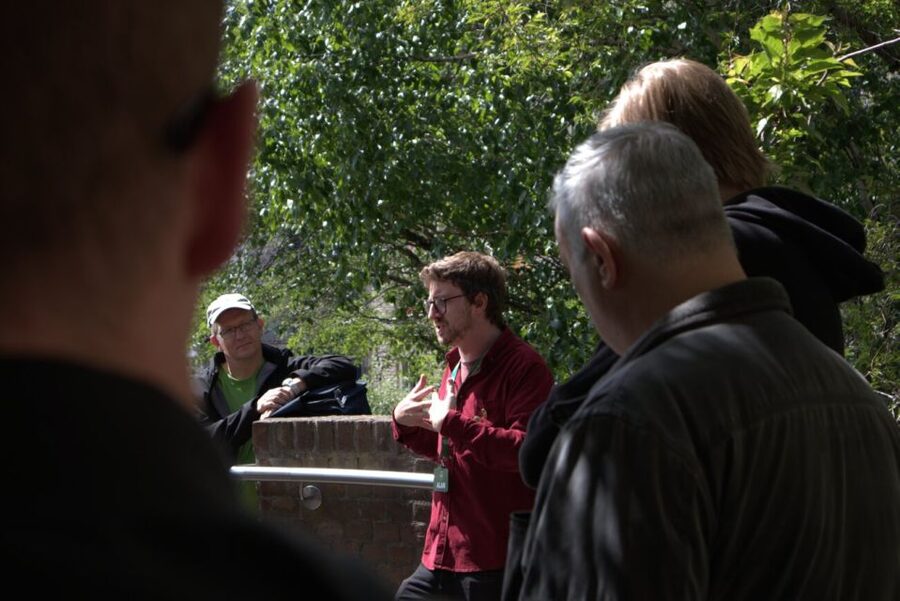
At $27 per person, I consider this a reasonable Dublin activity, especially if you enjoy guided storytelling. You are paying for two hours with an accredited local folklore expert, not for entry to a major attraction or transportation between sights.
The value comes from interpretation. You could walk through Temple Bar, the Georgian Quarter, and O’Connell Street for free, but you would not automatically understand the myths, cultural links, or darker stories attached to them. A good guide turns ordinary streets into places with meaning.
This is also a sensible choice if you want a compact activity. Two hours is long enough to cover several themes but short enough to fit around lunch, a museum visit, or an evening plan. The route begins and ends at the same meeting point, which simplifies your schedule.
You should skip it if you want a conventional architectural tour, a visit inside historic buildings, or a broad survey of every major Dublin landmark. This is a specialist walk, and its value depends on your interest in folklore, language, storytelling, and unusual historical details.
Who should book this folklore walk?
I would recommend it to:
- First-time Dublin visitors who want more than the standard route
- Anyone interested in Irish mythology, fairies, warriors, and oral tradition
- Families with children who enjoy stories and can manage a two-hour guided walk
- Repeat visitors looking for a different side of Temple Bar and the Georgian Quarter
- People who enjoy guides with humor and personality
- Visitors who want Dublin suggestions from a local guide
It may be less suitable if you prefer silent sightseeing, dislike supernatural themes, or want most of your time spent inside attractions. The tour is in English, so you need enough English to follow spoken stories and explanations.
The activity is listed as wheelchair accessible. Hotel pickup and drop-off are not included, so you make your own way to Temple Bar. You can cancel up to 24 hours before the start for a full refund, and the reserve-now, pay-later option allows you to hold a place without paying today.
My verdict on the Dublin Mythology, Folklore and Legends Tour
Book this tour if you want Dublin to feel like a city of stories, not just a list of sights. Its best qualities are the guides, the unusual subject, and the route through familiar areas with less familiar meaning.
I especially like the progression from Celtic origins and supernatural beings to warriors, grave robbing, rebellion, the Abbey Theatre, Gaelic revival, and modern street life. It gives the two hours a clear shape and keeps the material from feeling like unrelated folklore trivia.
The main caution is simple: you are choosing storytelling over landmark entry. If that sounds appealing, $27 is a fair price for a lively introduction to Irish culture and a useful way to get your bearings early in a Dublin visit.
FAQ
How much does the Dublin mythology walking tour cost?
The tour costs $27 per person.
How long does the tour last?
The walking tour lasts two hours. Starting times vary, so check availability when booking.
Where does the tour start?
Meet outside The Old Storehouse pub in Temple Bar. Look for the green umbrella.
Where does the tour finish?
The activity ends back at the meeting point.
What language is the tour conducted in?
The live tour guide speaks English, and English is the listed tour language.
Is the tour wheelchair accessible?
Yes, the activity is listed as wheelchair accessible.
Can I cancel the tour for a refund?
Yes. You can cancel up to 24 hours in advance for a full refund. The reserve-now, pay-later option is also available.
Newest in Dublin
- Wicklow Mountains Private Day Tour including Glendalough★ 5.0 · 7 reviews
- Wicklow: Private Day Tour from Dublin★ 5.0 · 5 reviews
- From Dublin: Powerscourt House, Guinness Lake & Glendalough★ 5.0 · 2 reviews
- Ultimate Dublin Food Tour★ 4.5 · 2 reviews
- Women Of Ireland: Trailblazers & Pioneers★ 5.0 · 4 reviews
- Wicklow tour of Glendalough★ 4.5 · 8 reviews
- Wicklow Mountains & Glendalough Luxury Private Day Tour★ 5.0 · 23 reviews
- Whiskey Tasting Tour of Dublin★ 5.0 · 117 reviews
Irish Myths and Storytelling Tours, compared.
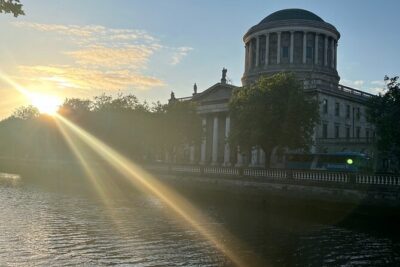
Dublin Mythology and Folklore Tour with Irish Stories and Legends
Read our review →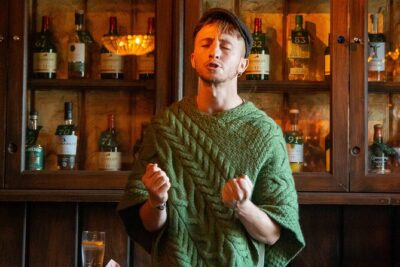
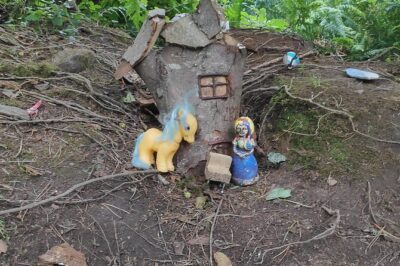
Howth Hiking Trail from Dublin: Mythology and Legend
Read our review →
Forks, Focail and Folklore – Storytelling Tour via eBike
Read our review →
Private Dublin Pub Odyssey: Storytelling, and Pub Culture
Read our review →

Bioluminescent Swim Experience in West Cork with Storytelling
Read our review →
Browse the lists this tour appears in