
Reviewed · WALKING TOURS
90 Minute Dublin Walking tour and Sightseeing tips
Dublin reveals itself quickly on foot. This short city walk packs Viking origins, rebellion, literature, architecture, and local pub advice into roughly 1 hour and 45 minutes. I like the compact route from the River Liffey to Christ Church Cathedral, and I like the way guides such as Alex adjust the talk to questions and interests. The main drawback is that the tour leans heavily toward dates, politics, and architecture, so anyone wanting long visits inside major sights may find it too brisk.
At $21.77 per person, this is a sensible first look at central Dublin. You get a local guide, a clear route through several important areas, and useful ideas for the rest of your stay. Bring good shoes and a rain jacket, though. Dublin weather can turn a pleasant walk into a windy one fast, and traffic noise may make it hard to catch every word.
In This Review
- Key points at a glance
- Why this walk works well on your first day
- From Aston Quay to O’Connell Street
- The General Post Office and the memory of rebellion
- Crossing to Trinity College and College Green
- Temple Bar beyond the pub signs
- City Hall and the lost Viking settlement
- Dublin Castle, power, gardens, and books
- Christ Church Cathedral and the final questions
- The guide makes the difference
- Price, pace, and practical value
- Who should book this Dublin walk?
- Should you book the 90 Minute Dublin Walking Tour?
- FAQ
- How long does the walking tour last?
- Where does the tour begin and end?
- What language is the tour offered in?
- Are food, drinks, or lunch included?
- How many people can join the tour?
- What happens if the tour is canceled because of bad weather?
Key points at a glance
- A useful north-to-south introduction: Walk from Aston Quay and O’Connell Street across the Liffey to Trinity College, Temple Bar, Dublin Castle, and Christ Church Cathedral.
- History with plenty of character: Hear about Viking Dublin, the 1916 Rising, the Irish Civil War, Nelson’s Pillar, Cú Chulainn, and the city’s changing buildings.
- Strong local guidance: Alex receives especially high praise for clear storytelling, humor, patience, and good restaurant and pub suggestions. Sam has also led the tour with warmth and enthusiasm.
- A good orientation before sightseeing alone: The walk gives you a map in your head, helping you decide which places deserve more time later.
- Small-group potential: The maximum is 25 people, though some departures can be much smaller, even private-feeling.
- The pace is active: You will walk outdoors between stops, with little time for lengthy visits inside attractions.
Why this walk works well on your first day
Dublin is easy to cross on foot, but its story is not always easy to follow. A Viking settlement, a medieval power center, a Georgian city, a rebel stronghold, and a modern cultural capital all occupy a fairly compact area. Without some context, you can pass an important building and see only another handsome facade.
This tour gives you that context quickly. You begin at 12 Aston Quay near the River Liffey and finish at Christ Church Cathedral, moving through the historic core in a logical line. I like this arrangement because you are not simply circling the same few streets. You see the city change from the broad civic space of O’Connell Street to the older lanes and courtyards around Temple Bar and Dublin Castle.
The guide also invites questions at the start and along the route. That matters more than it may sound. If you want Irish political history, Viking archaeology, architecture, food, music, or suggestions for the evening, you can help shape the conversation.
The tour earns a 4.9 rating from 917 reviews, with 97 percent recommending it. The strongest praise goes to the guides’ storytelling, personal attention, and ability to make complicated events understandable. Alex is mentioned repeatedly, while Sam is also praised for enthusiasm and taking care of the group.
More Walking Tours in Dublin
- Dublin Highlights and Hidden Gems Guided Walking Tour
★ 5.0 · 6,020 reviews - Dublin: Highlights and Hidden Gems Walking Tour
★ 4.9 · 2,140 reviews - 1916 Rebellion Walking Tour
★ 5.0 · 1,605 reviews
From Aston Quay to O’Connell Street
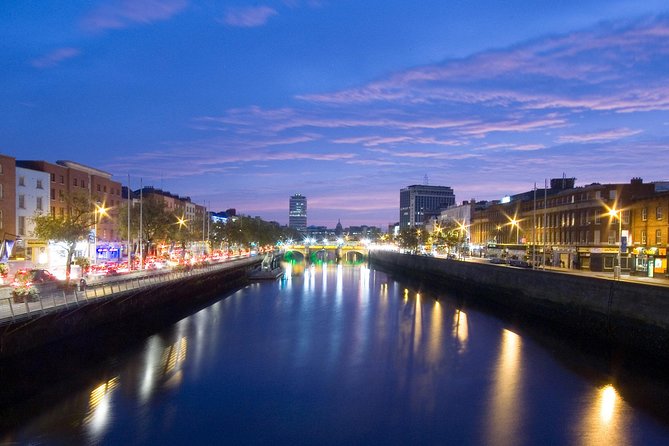
The meeting point at 12 Aston Quay puts you beside the Liffey, a useful place to begin because the river has long divided and connected Dublin. After a quick introduction, the group heads toward O’Connell Street.
The opening exchange is brief, about five minutes, but it gives you a chance to tell the guide what interests you. If you arrive with no background on Ireland, do not worry. The tour is designed as an introduction, not as an exam in Irish history.
O’Connell Street provides a dramatic first lesson. It is Ireland’s widest street and one of the central stages of the country’s political past. You hear how it received its present name after being renamed twice, then meet its statues and learn about the events that unfolded here during the struggle for independence and the Civil War.
The guide also covers Nelson’s Pillar, the statue that once dominated the street, and the remarkable story of how windows along the street were broken at the same time. These details give the avenue a human scale. You are not just hearing dates. You are picturing a public street suddenly caught in conflict.
Traffic can be loud here. One person specifically wished for individual audio equipment, and another noted that a guide sometimes had to raise their voice. Stay close to the guide and position yourself where you can see their face. On a windy day, that small choice may save you from missing the best parts.
The General Post Office and the memory of rebellion
The stop at An Post General Post Office is one of the tour’s most important moments. The building is linked directly to the 1916 Rising and the fighting on O’Connell Street. You hear about the rebels, the gunboat Helga sailing up the Liffey, and the bombardment of central Dublin.
The guide explains what happened after the fighting and how the executions of the rebel leaders changed public feeling and helped shape the revolution that followed. This is a useful way to understand Irish independence. The story is not presented as a simple march from rebellion to freedom. It includes defeat, punishment, changing public opinion, and the difficult politics that came after independence.
You may get a chance to step beneath the post office’s high ceiling, although that is not guaranteed. Even if you remain outside, bullet damage can still be seen on the building’s exterior. That makes the stop worthwhile for visitors who want to connect national events with physical evidence on the street.
Nearby, the statue known as The Death of Cú Chulainn introduces one of the major figures of Irish mythology. The sculpture was cast in 1935 by Oliver Sheppard. This shift from modern rebellion to ancient legend is typical of the walk. Dublin’s story is presented in layers rather than as one tidy timeline.
Crossing to Trinity College and College Green
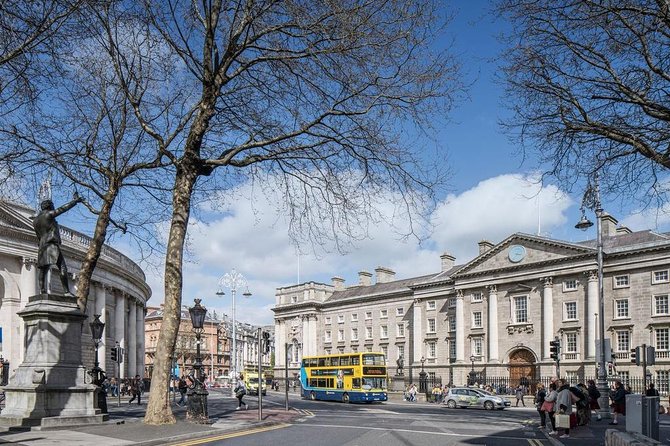
The route then works back toward Westmoreland Street and Trinity College. Crossing from the north side of Dublin to the south side is a small practical victory, especially if this is your first visit. You begin to understand how the central districts connect instead of treating each sight as an isolated stop.
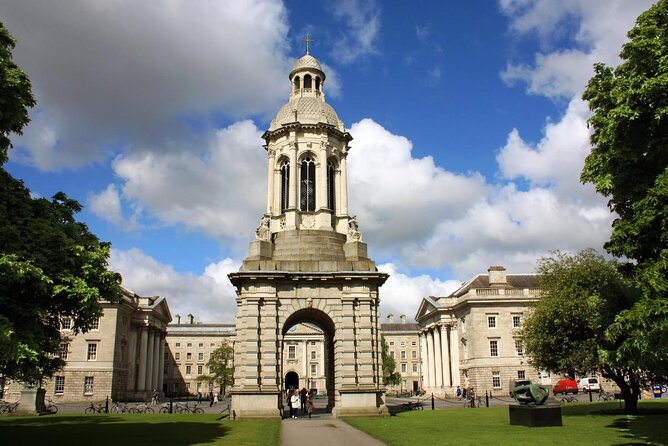
The area around College Green also reaches back before the college itself. The guide discusses a monastery associated with St Patrick and stories of early Christian activity among pagan Celts. From there, the talk moves forward to the founding and development of Trinity College and the traditions of modern students.
This is a short stop, around five minutes, so you should not expect a full college tour or entry to the Book of Kells. The value is orientation and context. You learn why Trinity occupies such an important place in Dublin’s civic life and how the district changed over time.
I would use this part of the walk to note places you want to revisit. If Trinity interests you, plan a separate visit when you can give the campus and its collections proper time. This tour helps you decide that, but it does not replace it.
Something completely different for another day:
- Dublin to Cliffs of Moher, including Wild Atlantic Way and Galway
★ 5.0 · 23,331 reviews - From Dublin: Cliffs of Moher, Burren & Galway City Day Tour
★ 4.8 · 18,888 reviews - Dublin: Guinness Storehouse Entry Ticket
★ 4.6 · 16,863 reviews - Dublin to Cliffs of Moher, Burren, Wild Atlantic Way, Galway Tour
★ 5.0 · 12,924 reviews
Temple Bar beyond the pub signs
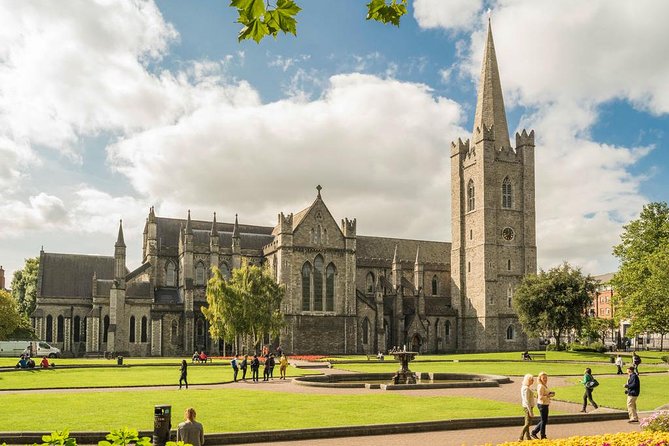
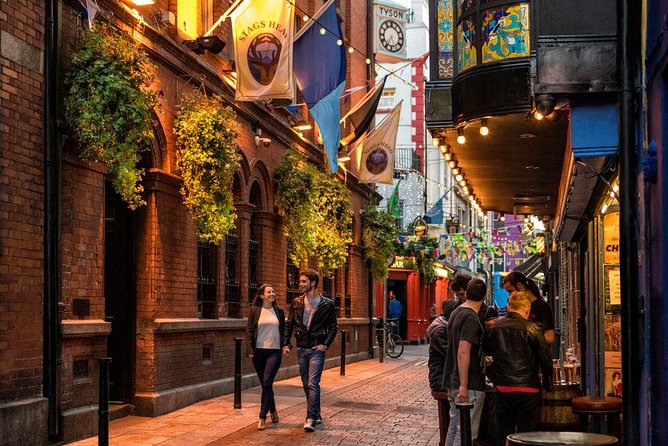
Temple Bar is the most familiar name on the route, and it is also where local advice becomes especially useful. The group pauses at Meeting House Square, away from the pressure to simply follow the loudest music or enter the first pub with a Guinness sign.
The guide talks about what locals think of Temple Bar and offers suggestions for Irish music and places to look for a good pint. That is valuable because Temple Bar can be fun, but it can also be expensive and crowded. A short conversation here helps you see the area as more than a nightlife district.
The history is also worth your attention. The district’s lanes and buildings reflect several different periods, and the guide connects them to old industries, changing city plans, and Dublin’s cultural life. You may hear about Shakespeare’s Hamlet, Handel’s Messiah, and former soap factories, an entertaining mix that shows how many lives this small quarter has had.
Do not expect a long stop for food or drinks. Neither is included, and the tour keeps moving. Treat Temple Bar as a place to collect ideas, then return later if you want music, a meal, or a closer look.
City Hall and the lost Viking settlement
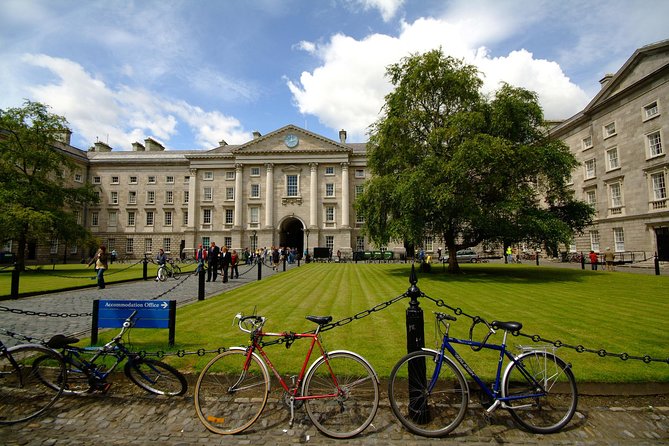
From Temple Bar, the walk heads toward City Hall and Dublin Castle, passing the area where the original Viking settlement of Dubhlinn was established. The name eventually became Dublin, and the guide explains how the settlement was lost, rediscovered, and then covered by later building.
This may be one of the more unusual sections of the walk because it deals with what is no longer visible. Dublin’s earliest story survives beneath later streets and structures, and the guide helps you imagine the settlement that once occupied this ground.
The subject can become dense, especially if you prefer a tour built around famous views and photo stops. One person felt the talk focused too much on architecture and academic detail. That is a fair warning. If you want a light, joke-heavy stroll with constant landmark stops, this may feel more serious than expected.
Still, the guide’s best moments come from connecting the old and the unexpected. Viking ships, theater, religious music, and soap manufacturing all become part of the same city story. Ask questions if one topic catches your attention. The guides are encouraged to respond to individual interests, and several visitors appreciated that flexibility.
Dublin Castle, power, gardens, and books
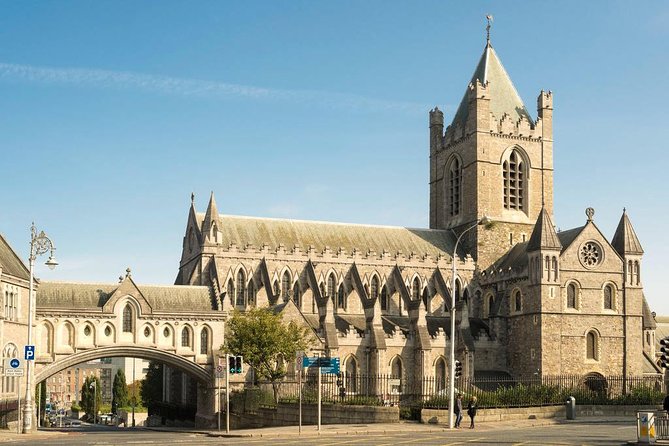
Dublin Castle was once the main center of English and British authority in Ireland. Its construction was completed around 1230 under King John of England, and the complex remained linked with the office of the Lord Lieutenant until 1922.
The guide uses the castle to explain power, architecture, and the long shift toward Irish independence. You hear about the kings, lords, soldiers, and rebels connected with the site, then get a quick look at what lies behind the walls.
The Dubh Linn Gardens offer a quieter contrast to the streets. The Chester Beatty Library adds another layer, with religious texts and art from different traditions. The tour does not include a full visit to either attraction, but knowing they are here can change your Dublin plans. If you have extra time, these are the kinds of places you might otherwise overlook while rushing between the castle and cathedral.
The castle stop lasts about ten minutes. That is enough for a strong introduction, not enough for detailed exploration. I would mark it for a return visit if you enjoy state apartments, gardens, or the library.
Christ Church Cathedral and the final questions

The walk ends at Christ Church Cathedral, founded by the Viking king Sigtrygg Silkbeard, who ruled for more than 40 years before his defeat at the Battle of Clontarf. That beginning gives the final stop a strong link to the tour’s opening theme of Viking Dublin.
The cathedral has watched the city change from a settlement filled with Viking longships to a commercial port served by Guinness barges. You finish outside, in the cathedral’s shadow, with time for final questions and suggestions for the rest of your day.
This is a smart endpoint. Christ Church is close to several other central sights, and you are left in a useful part of Dublin rather than returned to the starting point. You can continue exploring, find a meal, or go inside the cathedral separately if you want more time.
The ending also reinforces the tour’s main purpose: not to complete Dublin, but to give you enough structure to continue on your own.
The guide makes the difference
The most praised part of this tour is the guiding. Alex receives repeated credit for clear explanations, humor, storytelling, and the ability to connect Irish events with subjects familiar to American visitors. Several people also appreciated that he kept the group moving at a comfortable pace while still allowing questions.
Small groups can make the experience especially personal. One January departure had only two people, yet the guide still gave the tour full attention and shaped it around their interests. Another small group received restaurant advice at the end and found the tour a strong way to begin a first visit.
Sam has also led the walk, bringing enthusiasm and extra care to the group. Since guides can vary, the tone may not be identical every time. The common thread is a focus on Dublin’s history, buildings, politics, and local suggestions.
There is one clear tradeoff. The information can be quite detailed, and a few people found the talk too academic or felt the tour ran longer than expected. If you prefer a strictly timed route with short, simple facts, tell the guide early. If you enjoy stories, dates, and connections between events, you will likely get more from it.
Price, pace, and practical value
At $21.77, the tour offers good value for a first orientation. You pay for a professional local guide and a route that covers several major areas without separate admission costs. Food, drinks, lunch, and entry to attractions are not included, so budget for those independently.
The advertised duration is about 1 hour and 45 minutes, despite the short 90-minute name. The listed stops add up to a brisk walking program, and the actual finish can vary if questions continue. Wear comfortable shoes and prepare for rain and wind. You need a moderate level of fitness, and children must be accompanied by an adult.
The maximum group size is 25 people, although the booking information also mentions a maximum of 40 per booking. In practical terms, you should expect a group that can be larger than a private walk but may be quite small on some dates.
The tour is offered in English and uses a mobile ticket. It is near public transportation, which makes it easy to fit into a first or second day in Dublin. It is often booked about 32 days ahead, so reserving early is sensible if your schedule is fixed.
Free cancellation is available up to 24 hours before the start time. Changes or cancellations inside that window are not refunded, and poor weather or failure to meet the minimum group size can lead to a replacement date or full refund.
Who should book this Dublin walk?
I would recommend it to first-time visitors who want to understand central Dublin before choosing where to spend more time. It is also a good fit after arrival, since the route covers a practical part of the city and helps you get oriented quickly.
History fans will get the most from the tour. You will hear about Viking settlement, early Christianity, Irish mythology, rebellion, independence, architecture, and modern city life in one continuous walk.
It also suits solo visitors and families who value the chance to ask questions. The guides can tailor parts of the talk, and the short format is easier to fit around other plans than a half-day tour.
I would think twice if you want extensive indoor sightseeing, a food tour, or a gentle stroll with very little historical detail. This walk is best treated as a lively introduction, not a complete tour of every building you pass.
Should you book the 90 Minute Dublin Walking Tour?
Book it if you want a strong first orientation with a local voice, a useful route, and plenty of ideas for later. The combination of O’Connell Street, the General Post Office, Trinity College, Temple Bar, Dublin Castle, and Christ Church Cathedral gives you a solid view of central Dublin for a modest price.
Skip it if you already know the city well or want long, detailed visits inside the sights. For most first-time visitors, though, the value is clear: you leave with a better sense of where you are, what you have seen, and what deserves a closer look.
FAQ
How long does the walking tour last?
The experience lasts approximately 1 hour and 45 minutes. It is marketed as a 90-minute Dublin walking tour, but the full stated duration is slightly longer.
Where does the tour begin and end?
It begins at ThingsToDoDublin, 12 Aston Quay, Temple Bar, Dublin. It ends at Christ Church Cathedral on Christchurch Place, Wood Quay.
What language is the tour offered in?
The tour is offered in English.
Are food, drinks, or lunch included?
No. Food, drinks, and lunch are not included in the tour price.
How many people can join the tour?
The activity has a maximum of 25 travelers. The booking information also lists a maximum of 40 people per booking.
What happens if the tour is canceled because of bad weather?
You will be offered a different date or a full refund if poor weather causes the tour to be canceled.
Newest in Dublin
- Wicklow Mountains Private Day Tour including Glendalough★ 5.0 · 7 reviews
- Wicklow: Private Day Tour from Dublin★ 5.0 · 5 reviews
- From Dublin: Powerscourt House, Guinness Lake & Glendalough★ 5.0 · 2 reviews
- Ultimate Dublin Food Tour★ 4.5 · 2 reviews
- Women Of Ireland: Trailblazers & Pioneers★ 5.0 · 4 reviews
- Wicklow tour of Glendalough★ 4.5 · 8 reviews
- Wicklow Mountains & Glendalough Luxury Private Day Tour★ 5.0 · 23 reviews
- Whiskey Tasting Tour of Dublin★ 5.0 · 117 reviews
Walking Tours, compared.
Dublin Highlights and Hidden Gems Guided Walking Tour
Read our review →


Historical 2-Hour Guided Walking Tour of Dublin
Read our review →
Dublin Traditional Irish 3 Course Meal Walking Tour with Local
Read our review →
Browse the lists this tour appears in