
Reviewed · HISTORICAL TOURS
Private Ennis Essential History Tour with Dr Jane O’Brien
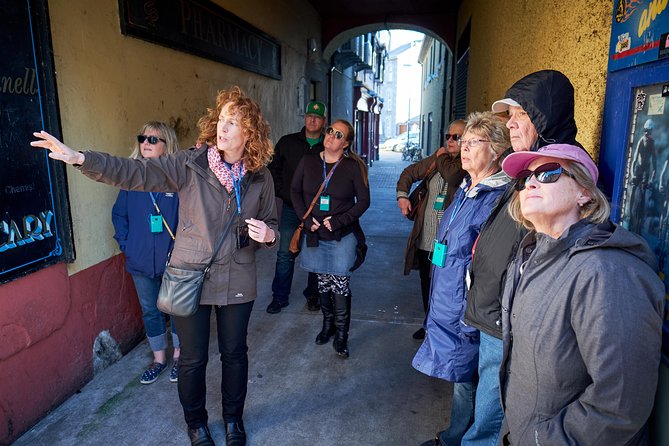
Small towns often hide the best stories. This private walking tour uses Ennis streets, lanes, churches, monuments, and old buildings to explain how a medieval market town grew into County Clare’s main centre. Dr Jane O’Brien brings together historical sources, real people, and everyday details, so you get more than dates and names.
I especially like the private format, which gives your group of up to six a more personal hour with the guide. I also like the route itself: it covers major sights but gives equal attention to narrow bow-ways, famine-era overcrowding, old punishments, and the lives of children in an industrial school. The main drawback is the short duration. At about 1 hour and 10 minutes, the tour moves briskly and leaves little time for long visits inside buildings.
In This Review
- Key points at a glance
- Why Ennis works so well as a walking tour
- Starting beside Clare Museum
- Daniel O’Connell and Catholic Emancipation
- Bow-ways on Abbey Street
- Ennis Friary, the Fergus, and 1916
- Francis Street and the O’Brien connection
- Arthur’s Row and difficult institutional history
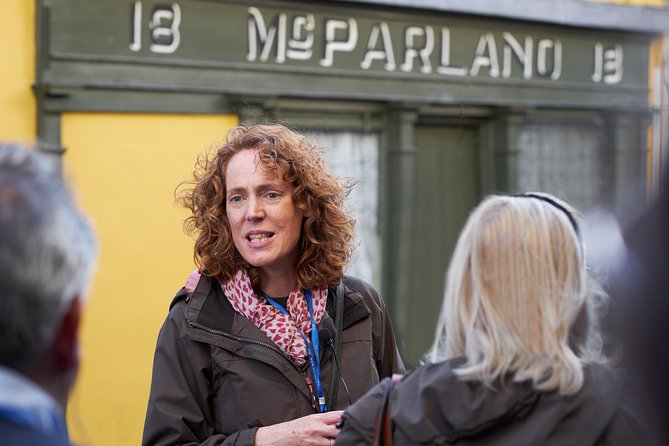
- McParland House on Parnell Street
- Chapel Lane and the Great Famine
- Market Place and the life of a Clare market town
- Barrack Street and the old Gallows Green
- The cathedral finish
- The pace, group size, and listening arrangements
- Is $270.32 good value for up to six people?
- Who should book this walk?
- Should you book the Ennis Essential History Tour?
- FAQ
- How long does the Ennis Essential History Tour last?
- How many people can join the private tour?
- Where does the tour begin?
- Where does the tour end?
- Is the tour offered in English?
- Is an amplification device available?
- Are admission tickets included?
- Are service animals allowed?
- Can I cancel for a full refund?
- Does this tour include food tastings?
Key points at a glance
- Dr Jane O’Brien leads the walk, using historical sources to recreate Ennis life across several centuries.
- The route covers 11 central stops, from Clare Museum and the Daniel O’Connell Monument to Ennis Friary and the Cathedral of Saints Peter and Paul.
- The private group limit is six people, useful if you want to ask questions or have family links to Ennis.
- The walk includes difficult subjects, including famine suffering, poor housing, crime, punishment, orphanage life, and the 1916 uprising.
- An amplification device is available, which can help you hear clearly in busy streets or enclosed lanes.
- The Gourmet History Tour is a separate option, with snacks and local food tastings.
Why Ennis works so well as a walking tour
Ennis is compact enough to explore on foot, but its story has several layers. The town began as a medieval settlement in the 13th century and grew around markets, religious foundations, local power, and trade. Later stops bring in Catholic Emancipation, the Great Famine, British rule, church life, and the changing use of old civic buildings.
I like that this is not simply a parade of grand monuments. Some of the most revealing places are modest lanes and house fronts. A narrow passage can explain social class. A half-door can suggest how a shop once worked. A market sculpture can open a conversation about livestock, courtship, gossip, and faction fighting.
The route is also a useful choice if you have only a short time in Ennis. You get a guided introduction before deciding where to return on your own. Since the tour is private, your group can ask about a family name, a church, or a particular period without having to compete with a large crowd.
More History Tours in County Clare:
- Self Guided Electric Bike Tour of Historical Sites in the Burren Co Clare
★ 5.0 · 18 reviews - Private Ennis Dark History Tour with Dr Jane O’Brien (1-6 people)
★ 5.0 · 13 reviews - Dublin Historical Centre Food Tour with 8 Food Tastings & Drinks
★ 5.0 · 1,718 reviews
Starting beside Clare Museum
The tour begins at the Ennis Tourist Information Centre on Arthur’s Row, close to Clare Museum. The museum site was once connected with the Convent of the Sisters of Mercy, giving Jane an immediate way to introduce both the town and the role of religious communities.
This opening stop sets the time frame. Ennis originated as a medieval market town in the 13th century, and the rest of the walk traces how that early settlement developed. You will not spend a long period inside the museum on this tour. The stop is brief, about five minutes, and works mainly as a starting point for the town’s story.
That short introduction matters. Without it, the later streets could look like a collection of old buildings. With it, you begin to see Ennis as a place shaped by trade, faith, political change, poverty, and local power.
Daniel O’Connell and Catholic Emancipation
A short walk brings you to the Daniel O’Connell Monument in the centre of Ennis. This is linked with major events in the campaign for Catholic Emancipation, a turning point in Irish political and religious life.
The stop is brief, but it gives the tour a strong connection to national events. You are not only hearing about an important political figure in the abstract. You are standing at a place associated with public gatherings and a major milestone.
I would pay close attention here if you want to understand how Ennis fits into the wider story of Ireland. The tour keeps returning to that connection between local streets and national change.
Bow-ways on Abbey Street
Abbey Street includes one of Ennis’s atmospheric bow-ways, narrow lanes that connected the main streets with poorer tenement areas. These passages offer a useful contrast with monuments and formal buildings.
This is one of the places where the tour’s attention to ordinary life pays off. You can picture how movement through the town was divided by status and housing conditions. The lane is small, and the stop lasts about five minutes, but it adds social detail that a standard town walk might skip.
The footing and width of old lanes can make listening harder for some people. An amplification device is available if needed, so ask Jane about using it at the start.
A few more ways to spend a day in County Clare
- Dublin: Cliffs of Moher, Doolin, Burren, and Galway Day Trip
★ 4.5 · 2,851 reviews - From Doolin: Cliffs of Moher Boat Tour
★ 4.4 · 279 reviews - Public Ennis Walking Tour with Local Expert Dr Jane O’Brien
★ 5.0 · 262 reviews - Galway: Cliffs Cruise, Aran Islands & Connemara Day Tour
★ 4.7 · 111 reviews
Ennis Friary, the Fergus, and 1916
At Ennis Friary, Jane explains the role of the Franciscan Friars in the town’s development. The old Ennis Abbey dates from around the 1280s, placing you close to the town’s medieval roots.
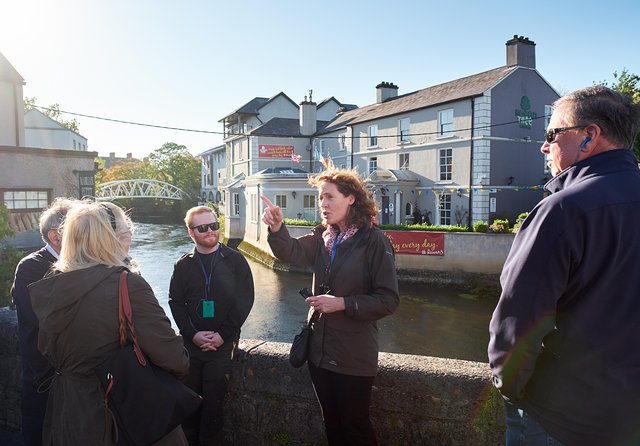
The stop also gives you a pleasant view of the River Fergus, which flows through Ennis. Nearby memorials connect the setting to the 1916 uprising against British rule. This combination of river, religious building, and political memory makes the stop feel layered without requiring a long visit.
You should expect the tour to focus on interpretation rather than a full architectural inspection. The stop is roughly five minutes, so anyone wanting a detailed look at the friary may wish to return later.
Francis Street and the O’Brien connection
Francis Street is described as the oldest street in Ennis. It leads toward the site associated with the O’Brien Kings, who founded the town. For anyone with the surname Ennis or O’Brien in the family tree, this part can have particular appeal.
One review described the tour as especially meaningful for a participant whose family name was Ennis. That is a good clue about the tour’s value for people researching family connections. Jane can place a name or local tradition within the physical setting of the town, rather than leaving it as a line on a family document.
The stop also includes the Friary, originally built in the 1850s, with stained glass windows and a quiet atmosphere. The contrast is interesting: medieval origins on one side of the story, a later church interior on the other.
Arthur’s Row and difficult institutional history
At Arthur’s Row, the walk returns near the old convent building. Here, Jane discusses archived experiences of children from the orphanage and industrial school once located on the site.
This is one of the more serious parts of the tour. It moves away from attractive façades and religious architecture to ask how institutions treated children and how those experiences were recorded. The subject may be uncomfortable, but it gives the town’s past a human scale.
The stop lasts only about five minutes, so it will not provide a full study of the orphanage or industrial school. It does, however, point you toward a part of Ennis’s past that is easy to miss if you look only for picturesque streets.
McParland House on Parnell Street
Parnell Street is home to McParland House, dating from around 1620. It is described as the only known surviving timber-framed house in Ireland and the oldest house in Ennis to remain in continuous use without major structural changes.
The original shopfront and half-door help you imagine an earlier market town. This is a good example of how Jane uses a building’s physical details to explain daily life. You are not simply told that the house is old. You can look at the frontage and consider how people entered, traded, and lived in the same structure.
Because this is an exterior stop, the experience depends on Jane’s explanation. The building may not make its importance obvious at first glance, which is exactly why a local guide adds value here.
Chapel Lane and the Great Famine
Near Chapel Lane market, you see a building that was once a church built in 1735 during the penal times. The lane also opens the discussion of overcrowding during the Great Famine and the damage that event caused in Ennis.
This stop gives the tour some of its strongest social context. Famine history can become too broad when it is presented only through national figures. Here, the focus comes back to housing, lanes, food, and the pressure placed on a particular town.
You should expect a serious discussion rather than a cheerful food-and-market stop. The later Gourmet History Tour offers snacks and local tastings, but this Essential History Tour is focused on historical interpretation.
Market Place and the life of a Clare market town
Market Place explains why Ennis mattered as the main market town for County Clare. Markets involved livestock and produce, but they were also social occasions. People met, arranged matches, shared news, and sometimes took part in faction fighting.
That range of activity makes the stop especially useful. A market was not only a place to buy something. It was a meeting point and a public stage. Jane also explains the meaning of the Market Day sculpture located there today.
I like this stop because it connects history with habits that feel familiar. Town markets still bring people together, but the older market could affect work, marriage, reputation, and local rivalries in ways that are harder to see now.
Barrack Street and the old Gallows Green
Barrack Street was once the town’s Gallows Green. Jane uses the Ennis corporation manuscript from 1660 to discuss crimes and punishments recorded there.
This is likely to be one of the more memorable stops for visitors who enjoy the darker side of local history. Punishments that were accepted in the 17th century can seem shocking now, and the original records provide a direct link to the way authorities dealt with crime.
The topic may not suit young children or anyone looking for a purely gentle introduction to Ennis. For most adults, though, it adds an honest edge to the tour. Town history includes conflict and punishment, not only churches and old shopfronts.
The cathedral finish
The tour usually ends near the Cathedral of Saints Peter and Paul, a major Catholic church built between 1830 and 1870. The cathedral is opposite the Old Ground Hotel, on the site of the old town jail. The area also includes a haunted tower house dating from the 1500s.
This final section brings together several strands from the walk: Catholic life, older defensive buildings, local authority, and changing uses of urban space. You have the option of visiting the cathedral or returning toward the starting point along O’Connell Street, the main pedestrianised shopping street.
The supplied details also state that the activity ends back at the meeting point, while the route description says the tour usually finishes at the cathedral with the option to return at your own pace. I would confirm the exact end arrangement when booking, especially if you have a tight connection afterward.
The pace, group size, and listening arrangements
The experience lasts about 1 hour and 10 minutes. Eleven stops are listed, each with an estimated five minutes, but walking between them takes part of the total time. This is a brisk orientation walk, not a slow archaeological inspection.
The private format is the largest practical advantage. Your group can include up to six people, and no one outside your party joins you. That suits families, small groups, and anyone with personal questions about Ennis or local ancestry.
The walk does involve getting around central Ennis on foot. Most participants can take part, and the route is near public transportation. Service animals are allowed. An amplification device can be used for easier listening, a useful option in open streets, lanes, or busy areas.
Is $270.32 good value for up to six people?
The listed price is $270.32 per group, not per person, for as many as six people. If six people share the cost, that works out to about $45 per person. For two people, the cost per person is much higher, so the value depends heavily on your group size.
I see the price as reasonable for a small group that wants a focused private introduction to Ennis. You are paying for Jane’s research, preparation, and attention, not for entry tickets. The stops are free, and the tour does not include a long indoor visit.
If you are traveling alone or as a pair and mainly want to see the streets, the price may feel high for just over an hour. It makes more sense if you value personal questions, family connections, or a guide who can explain the meaning behind small details.
The separate Gourmet History Tour may suit you better if snacks and local food tastings are a priority. Those tastings are not part of the Essential History Tour.
Who should book this walk?
I would choose this tour if you want Ennis to make sense quickly. It suits first-time visitors, history fans, small family groups, and people with Irish ancestry to investigate. The comments about Jane’s informative and pleasant manner also suggest a guide who can make a compact route engaging without turning it into a lecture.
It is also a good fit if you prefer local stories over a long list of famous names. Jane covers political events, but she also explains lanes, housing, punishment, markets, children, churches, and shopfronts.
I would think twice if you dislike walking, want extended time inside historic buildings, or expect food tastings. The tour is short and moves between many stops. You will see a lot, but you will not have time to study every building at length.
Free cancellation is available if you cancel at least 24 hours before the start time. Changes or cancellations made within 24 hours are not accepted for a refund, and the cut-off follows local time.
Should you book the Ennis Essential History Tour?
Book it if you want a clear, human introduction to Ennis and can share the private-group cost. Dr Jane O’Brien’s appeal is her use of sources and stories about real people, not just broad claims about Ireland’s past.
The tour is best treated as a guided first look. Afterward, you can return to the friary, cathedral, museum, or McParland House at your own pace. If your main goal is local food, choose the Gourmet History Tour instead. If your goal is to understand how Ennis grew, suffered, traded, worshipped, and changed, this compact private walk is a strong choice.
FAQ
How long does the Ennis Essential History Tour last?
The tour lasts approximately 1 hour and 10 minutes.
How many people can join the private tour?
The private tour is for one group of up to six people.
Where does the tour begin?
It begins at the Ennis Tourist Information Centre on Arthur’s Row, O’Connell Street, Clonroad Beg, Ennis, County Clare, Ireland.
Where does the tour end?
The route usually ends near the Cathedral of Saints Peter and Paul. The activity information also states that it ends back at the meeting point, so confirm the exact arrangement when booking.
Is the tour offered in English?
Yes. The tour is offered in English.
Is an amplification device available?
Yes. The guide can use an amplification device to make listening easier.
Are admission tickets included?
The listed stops have no admission charge. The tour is primarily an outdoor walking experience.
Are service animals allowed?
Yes. Service animals are allowed.
Can I cancel for a full refund?
Yes, if you cancel at least 24 hours before the experience start time. Cancellations made less than 24 hours before the start time are not refunded.
Does this tour include food tastings?
The Essential History Tour does not list food tastings as included. Snacks and local food tastings are associated with the separate Gourmet History Tour.
Newest in County Clare
- Cliffs of Moher from Shannon Airport en route to Galway★ 5.0 · 2 reviews
- Shannon Airport to the Cliffs of Moher en route to Galway★ 5.0 · 1 review
- Walking in the Burren with perfumery visit. Clare. Guided 3 hours★ 3.5 · 2 reviews
- Shannon Airport to Shandon Hotel Co. Donegal Private Car Service.★ 5.0 · 3 reviews
- Craggaunowen Admission Ticket★ 5.0 · 6 reviews
- Celtic Dance Party★ 5.0 · 15 reviews
- Shannon Airport to Kilkea Castle Hotel to Car Service★ 5.0 · 1 review
- Private Transfer between DUBLIN & LAHINCH | Premium Vehicles★ 5.0 · 2 reviews
Historical Tours, compared.
Dublin Historical Centre Food Tour with 8 Food Tastings & Drinks
Read our review →

Historical 2-Hour Guided Walking Tour of Dublin
Read our review →
Dublin to Cork, Blarney Castle & Cóbh Heritage Centre by train
Read our review →
Jeanie Johnston Tall Ship Irish Famine History Tour
Read our review →

Deliciously Dublin: The Artisan Donut Walking & History Tour
Read our review →Browse the lists this tour appears in