
Reviewed · HISTORICAL TOURS
The Queenstown Story @ Cobh Heritage Centre , Great Stories of Emigration.
The past feels close here. The Queenstown Story at Cobh Heritage Centre turns a restored Victorian railway station into a moving account of Irish emigration, from the 1600s through the Great Famine and into the age of ocean liners. I like the personal emigrant trail, which gives you an individual story to follow, and I like the museum’s easy location beside the cruise terminal and train station. The Titanic and Lusitania displays add useful maritime context without taking over the main subject.
The main consideration is that this is a self-guided museum, not a continuous guided tour. You can read, listen, and watch at your own pace, but some displays require time and attention. The genealogy service may not always be staffed, so you should not count on getting immediate family-history help during your visit.
In This Review
- Key points to know before you go
- Starting at Cobh’s old railway station
- Following an emigrant through the exhibits
- The Great Famine and the reasons people left
- Titanic and Lusitania in the wider port story
- A self-guided visit that lets you set the pace
- The practical advantage for cruise passengers
- Cafe, gift shop, and family-history help
- Is $18.15 a fair price?
- Who will enjoy the Queenstown Story most?
- What to know before you book
- Should you book the Queenstown Story?
- FAQ
- How long does the Queenstown Story visit take?
- Is the Queenstown Story a guided tour?
- How much does admission cost?
- How close is the centre to the cruise port?
- Can I use public transportation to reach Cobh Heritage Centre?
- Can I cancel for a refund?
Key points to know before you go
- Follow one emigrant’s story: Your visit can feel personal rather than like a series of disconnected panels.
- Start in a former railway station: The Victorian building is part of the story, not just a container for exhibits.
- Allow 60 to 100 minutes: The stated visit takes about an hour, but you can spend longer and return on the same day.
- See more than Titanic: Irish emigration, the Great Famine, military history, and the port’s wider role receive attention.
- Excellent for cruise passengers: The centre is less than 200 yards from the ship landing area, according to the practical directions provided by visitors.
- Book ahead when timing matters: Admission costs about $18.15 per person, and advance booking gives you a mobile ticket and skip-the-line access.
Starting at Cobh’s old railway station
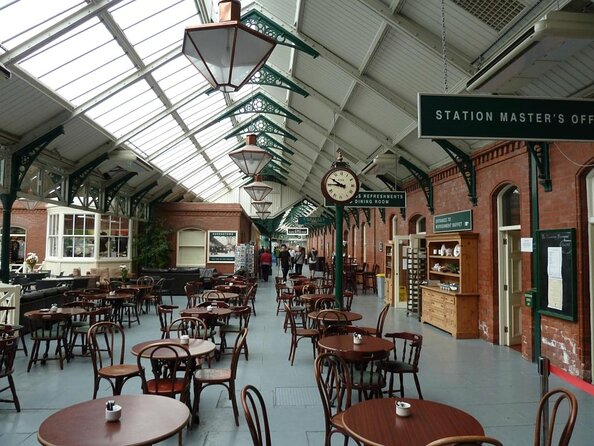
The Queenstown Story begins at Deepwater Quay, at the Cobh Heritage Centre. The address is Deepwater Quay, Ringmeen, Cobh, County Cork, P24 CY67. The building itself is a beautifully restored Victorian railway station, and that matters. Before you read about departures, you are standing in a place connected to the movement of people.
Cobh once carried the name Queenstown, and the exhibition uses that earlier name as a doorway into the port’s past. The story begins in the 1600s, when Irish people left for the American colonies and the West Indies. From there, the displays move forward through different periods and destinations.
I appreciate this chronological approach. You get a clear sense that Irish emigration was not one single event. People left for different reasons, at different times, and under very different conditions. The museum shows those changing patterns rather than reducing the subject to one famous ship or one sad chapter.
The setting also helps you place the story. You are close to the water, close to the railway, and close to the point where many people began a journey they could not easily reverse. For anyone with Irish ancestry, that physical connection can be especially powerful.
More History Tours in Cobh:
- Visit 16 Sites Key Historical Sites And Experience Cobh Rebel Tours
★ 5.0 · 167 reviews - Cobh: Guided Historic Walking Tour
★ 4.6 · 32 reviews - Cobh: 3-Hour Cultural Tour Plus
★ 4.9 · 31 reviews
Following an emigrant through the exhibits
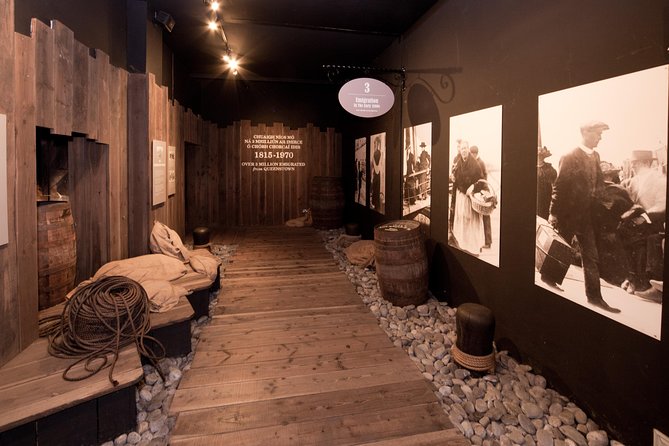
One of the most effective features is the way the museum gives you the name of an emigrant to follow. You move through the displays as if you are tracing that person’s experience, which makes the information easier to connect with.
This simple device gives the visit a human scale. Instead of only looking at dates and population figures, you keep asking what happened to one person, where that person went, and what leaving Ireland might have meant. If you have a family connection to Ireland, you may find this approach particularly affecting.
The museum deals with the lives of more than three million Irish emigrants. That number is difficult to grasp on its own. The individual trail helps turn it into something more understandable, even though no single story can represent every Irish family or every reason for leaving.
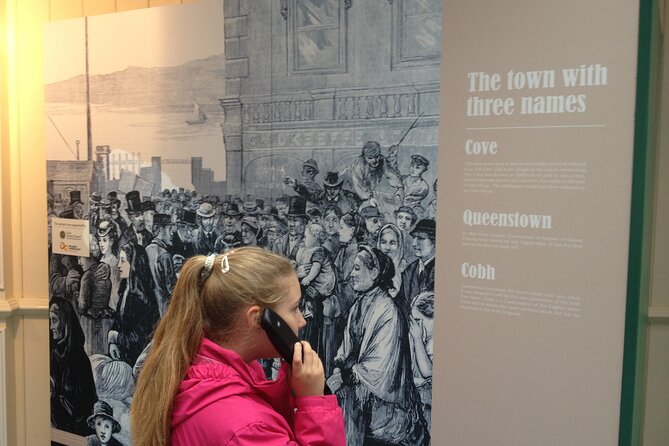
The displays use a mix of written information, audio, and video. You can also find interactive elements, including an opportunity to learn how to type Morse code. I like this mixture because it keeps the visit from becoming a long corridor of printed panels. Still, you will get the most from the centre if you are willing to stop and read. This is not a quick photo opportunity.
The Great Famine and the reasons people left
The Great Famine is an important part of the exhibition. The museum places it within the larger story of emigration, helping you see how hunger, poverty, and limited prospects pushed many Irish people toward departure.
That context is valuable because Irish emigration had many causes. Some people left because of famine and hardship. Others sought work, land, family connections, or a better chance abroad. The centre’s account of several waves of emigration gives you a broader picture than a visit focused only on the Titanic.
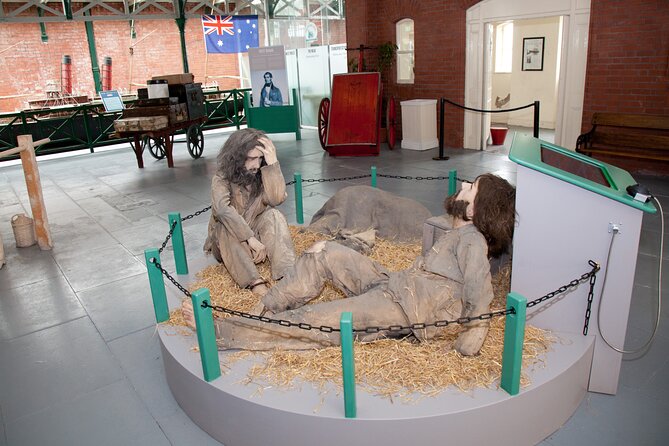
The subject can be emotionally heavy. You will encounter the sadness of families leaving home, often with little certainty about seeing Ireland again. One particularly moving part of the experience is the sense that many people who left never returned.
I would not plan this as a light, entertaining stop in the way you might approach a small transport museum. The interactive features make it easier to engage, but the central subject is loss, separation, and survival. That is also why the museum feels worthwhile. It treats emigration as lived experience, not just a line on a timeline.
Titanic and Lusitania in the wider port story
Cobh’s connection with the Titanic and the Lusitania receives clear attention. These are familiar names, but the Queenstown Story places them within the port’s wider maritime role.
The Titanic connection is likely to draw many people through the door, especially if you are already planning the nearby Titanic attraction. Here, you get a different emphasis. The museum does not present Cobh only as the Titanic’s last port of call. It shows how the town functioned as part of a much larger system of migration, shipping, and military activity.
The Lusitania material adds another layer to that story. You can see how the port’s importance continued beyond the great migration era and how Cobh became tied to major events at sea.
I like this balance. If Titanic is your main interest, you may want to visit the separate Titanic attraction nearby as well. If you want to understand why Cobh mattered as a port, the Heritage Centre gives you more context than a Titanic-only stop.
A few more ways to spend a day in Cobh
- Shore Excursion From Cork: Including Blarney Castle and Kinsale
★ 4.5 · 470 reviews - Titanic Trail Guided Walking Tour Cobh
★ 5.0 · 253 reviews - Cork and Blarney Castle Visit from Cobh by Train
★ 4.5 · 106 reviews - (Small Group) Shore Tour from Cork: Blarney Castle & Jameson Distillery
★ 3.5 · 74 reviews
A self-guided visit that lets you set the pace
The Queenstown Story is independent and self-guided. You do not need to keep up with a group or wait for a guide to finish a speech. You can pause at a family story, move quickly through familiar material, or spend extra time with the maritime displays.
The listed duration is about one hour, but I would allow 90 minutes if you want to read properly. Some people have completed the centre in roughly 90 to 100 minutes while working within a two-hour schedule. You can also return later the same day, which is useful if your first visit is interrupted by a ship departure, a meal, or a walk around Cobh.
The maximum group size is listed as 40 people. That is small enough to be manageable, although a busy cruise day may still make popular displays feel crowded. The skip-the-line ticket is most useful when you have a fixed schedule. On a quiet day, you may find no queue at all, so the advance ticket is mainly about certainty rather than guaranteed time savings.
The mobile ticket is convenient. You can head inside without stopping for a lengthy ticket purchase, although the entry flow may still direct everyone through the same area. In other words, skip-the-line access helps most when a queue has formed, but it does not necessarily create a completely separate route through the building.
The practical advantage for cruise passengers
The centre is exceptionally easy to reach from the cruise landing area. It is described as less than 200 yards from where ships dock, making this one of the simplest shore excursions in Cobh.
That short distance gives you control. You are not depending on a long bus transfer, and you can return to the ship without cutting your timing dangerously close. The centre ends where it begins, at Deepwater Quay.
You can also combine the visit with a walk through town. The train station is about a four-minute walk from the Heritage Centre, and the separate Titanic attraction is about four minutes farther on. If you are staying in Cork City, the train ride to Cobh takes about 25 minutes, followed by a short walk to the centre.
That makes the museum a good choice for a half-day plan from Cork. You can visit the exhibition, have coffee, see another nearby attraction, and walk along the waterfront without spending most of the day in transit.
Cafe, gift shop, and family-history help
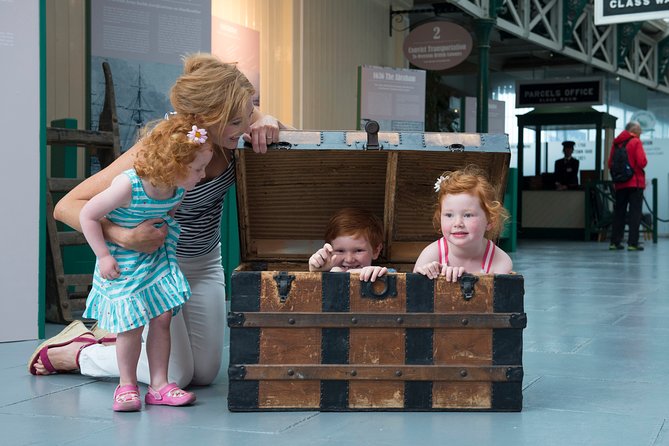
A cafe sits near the entrance, and it gives you an easy place to pause before or after the museum. Scones with cream and jam, along with coffee or tea, are part of the simple appeal. Food and drinks are not included in the admission price, so plan to pay separately.
The gift shop provides another useful stop, particularly if you are looking for Irish-themed items or something connected to emigration. The centre also has a genealogy consultant and access to Ancestry.com, which may be valuable if you are researching an Irish family line.
I would keep your expectations realistic about the genealogy service. The consultant may not be at the desk during your visit, and arranging a specific appointment in advance may not be straightforward. If family research is your main reason for coming, contact the centre before you go rather than assuming someone will be available.
The building also receives praise for its clean facilities and attentive staff. Service animals are allowed, public transportation is nearby, and most people can take part without special arrangements.
Is $18.15 a fair price?
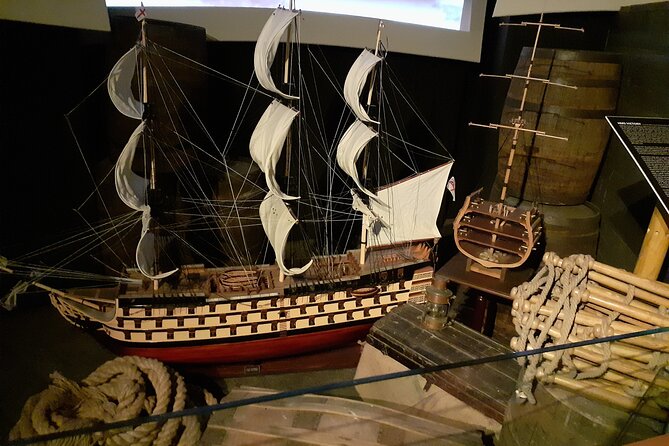
At about $18.15 per person, the admission is not the cheapest small museum ticket in Ireland. I still think it offers fair value if you give it enough time.
You are paying for more than a few Titanic artifacts. The ticket covers an extended account of Irish emigration, the Great Famine, the port’s maritime and military roles, and Cobh’s connection with the Titanic and Lusitania. The displays also include interactive material, audio, and video, so the experience has more variety than a basic panel exhibit.
The value improves if you have Irish ancestry, are visiting Cobh from a cruise ship, or want a clear introduction to the town before exploring more of County Cork. It is less compelling if you only have 20 minutes or if you want a fully guided presentation from start to finish.
The admission also includes the freedom to stay as long as you want during the visit and return on the same day. That flexibility helps, especially when you are building the museum into a larger Cobh itinerary.
Who will enjoy the Queenstown Story most?
I would recommend this experience to you if you fit one of these profiles:
- You are tracing Irish ancestors and want an emotional connection to the places they left.
- You are arriving by cruise ship and need an attraction close to the dock.
- You want to understand Irish emigration beyond the Titanic story.
- You prefer self-guided museums where you control the pace.
- You are visiting Cork and want an easy train trip with a strong historical focus.
- You enjoy museums that combine text, sound, film, and hands-on displays.
Families may also find the interactive parts useful, though the subject matter can be sad. Young children who need constant action may lose interest in the reading-heavy sections. Older children and teenagers with an interest in ships, migration, or family history should have more to hold their attention.
The museum also works well for a solo visit. You can take your time without worrying about holding up a group, and you can pause when a particular story catches your attention.
What to know before you book
The centre is offered in English. Confirmation arrives at booking, and the mobile ticket can save time when the port is busy. The experience is scheduled from 9:30 a.m. to 4 p.m., Monday through Sunday, for the listed dates from September 1 through December 30, 2026.
Check the timing carefully if you are visiting on a cruise. The museum is close to the ship, but you still need time for the full walk back, ship security, and any delays at the port.
Free cancellation is available if you cancel at least 24 hours before the start time. Changes or cancellations made within 24 hours are not accepted for a refund, and the cut-off follows local time.
Should you book the Queenstown Story?
I would book it if you want the human story behind Cobh. The Titanic connection is useful, but the real strength is the wider account of Irish people leaving home across several centuries. The individual emigrant trail, the former railway station, and the museum’s close location make the experience easy to fit into a day.
I would skip it only if you have very little time, dislike self-guided exhibits, or want a guide speaking throughout. For most people with 60 to 100 minutes in Cobh, the $18.15 ticket buys a thoughtful and genuinely local history stop, with enough flexibility to pair it with the waterfront, the Titanic attraction, or a train trip from Cork.
FAQ
How long does the Queenstown Story visit take?
The visit takes about one hour, although you may want 90 to 100 minutes to read the displays and use the interactive features. You can stay longer and return again on the same day.
Is the Queenstown Story a guided tour?
It is an independent, self-guided museum experience. The exhibits use written information, audio, video, and interactive displays. A driver or guide is listed as included with the experience, but the museum visit itself is self-guided.
How much does admission cost?
The listed price is about $18.15 per person.
How close is the centre to the cruise port?
The Heritage Centre is less than 200 yards from the ship landing area at Deepwater Quay, making it especially convenient for a cruise stop.
Can I use public transportation to reach Cobh Heritage Centre?
Yes. The centre is near public transportation. From Cork City, the train ride to Cobh takes about 25 minutes, followed by a walk of roughly four minutes from the train station.
Can I cancel for a refund?
Yes. You can cancel at least 24 hours before the experience start time for a full refund. Cancellations or changes made less than 24 hours before the start time are not accepted for a refund.
Newest in Cobh
- Private Tour Blarney Kinsale and Cobh Viator Badge of Excellence★ 5.0 · 51 reviews
- Private Tour Blarney Kinsale & Cobh Awarded Badge of Excellence★ 5.0 · 43 reviews
- Private Tour , Blarney Castle, jameson Distillery and Cobh.★ 5.0 · 8 reviews
- Cobh cruise excursion, Blarney, Cork & Kinsale. Car or Minibus.★ 4.5 · 13 reviews
- (Small Group) Shore Tour from Cork: Blarney Castle & Jameson Distillery★ 3.5 · 74 reviews
- Full Day Private Tour of Jameson Whiskey, Blarney Castle & Cobh★ 5.0 · 11 reviews
- Private tour of, Blarney Castle, Cork City and Kinsale★ 5.0 · 38 reviews
- Blarney Castle Kinsale and Cobh Shore Excursion Private Tour★ 5.0 · 2 reviews
Historical Tours, compared.

Dublin Historical Centre Food Tour with 8 Food Tastings & Drinks
Read our review →

Historical 2-Hour Guided Walking Tour of Dublin
Read our review →
Dublin to Cork, Blarney Castle & Cóbh Heritage Centre by train
Read our review →
Jeanie Johnston Tall Ship Irish Famine History Tour
Read our review →

Deliciously Dublin: The Artisan Donut Walking & History Tour
Read our review →Browse the lists this tour appears in