
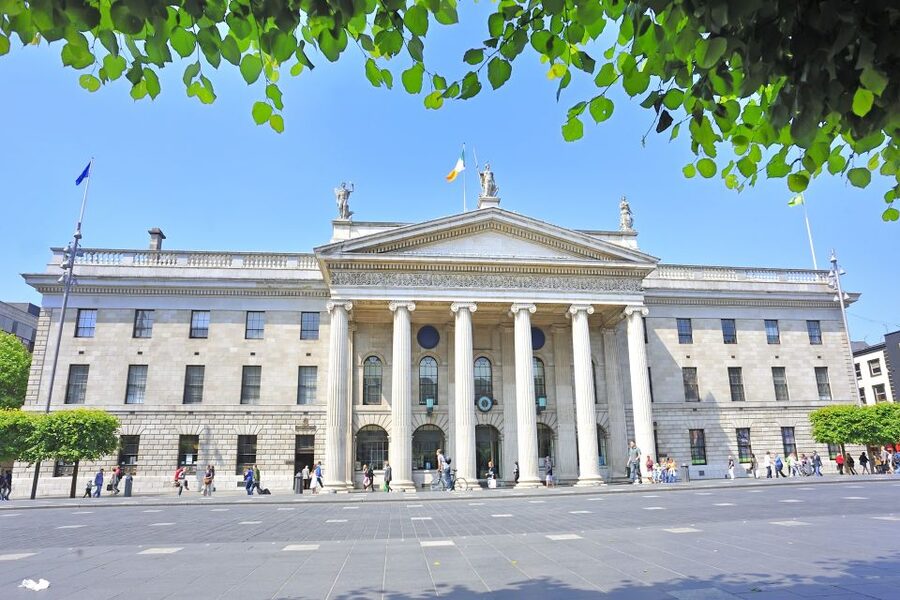
Reviewed · HISTORICAL TOURS
Dublin: IRA History Tour w/ Skip-the-Line GPO Museum Ticket
History still has a pulse in Dublin. This private walking tour makes Ireland’s difficult modern past easier to follow by linking the Easter Rising, War of Independence, and IRA story to real city streets. I especially like the private guide, who can explain the political conflict in clear context, and the skip-the-line GPO Museum ticket, which gives you a focused finish indoors. The main drawback is the price: at $204 per person, it is costly for a three-hour experience, particularly because the museum visit is self-guided.
You will meet beside the Molly Malone Statue, walk through central Dublin, and finish at the General Post Office, one of the key buildings connected with the 1916 rebellion. The tour is available in English, French, or German, and the 4-hour version adds private car transfers from your accommodation. If you want a strong introduction to Ireland’s revolutionary period without arranging several separate visits, this is a useful, tightly planned choice.
In This Review
- Key points to know before booking
- Why Dublin’s IRA story needs a good guide
- Starting beside Molly Malone and St. Andrew’s Church
- Trinity College and the city’s public memory
- Custom House and the 1921 conflict
- James Connolly and the memory of rebellion
- Arriving at the General Post Office
- What to expect inside the GPO Museum
- Choosing three hours or four hours with a car
- Is $204 per person a fair price?
- Who will enjoy this Dublin history tour?
- Practical advice for a smoother visit
- Should you book the Dublin IRA History Tour?
- FAQ
- Where does the tour start?
- Where does the walking tour finish?
- How long does the experience last?
- Is the GPO Museum entry included?
- Does the guide enter the GPO Museum?
- Which languages are available for the live guide?
- Which languages are available for the museum audio guide?
- Are private transfers included?
- How many people can travel in the private vehicle?
- Can I cancel the booking?
Key points to know before booking

- The GPO is the tour’s natural finale: You receive reserved entry and an official audio guide, but your live guide does not accompany you inside.
- The walking route connects famous sites: Molly Malone, Trinity College, the Famine Memorial, Custom House, and several political monuments appear along the way.
- You get history before the museum: The two-hour walk gives you the background needed to understand the GPO exhibits.
- The 4-hour option includes transport: A private car collects you at your Dublin accommodation and returns you afterward, with transfer time estimated at one hour.
- The guide is the strongest part: The experience is designed around expert commentary and personal attention in a private group.
- The price deserves a close look: At $204 per person, the tour makes the most sense for visitors who value a private guide and door-to-door convenience.
Why Dublin’s IRA story needs a good guide
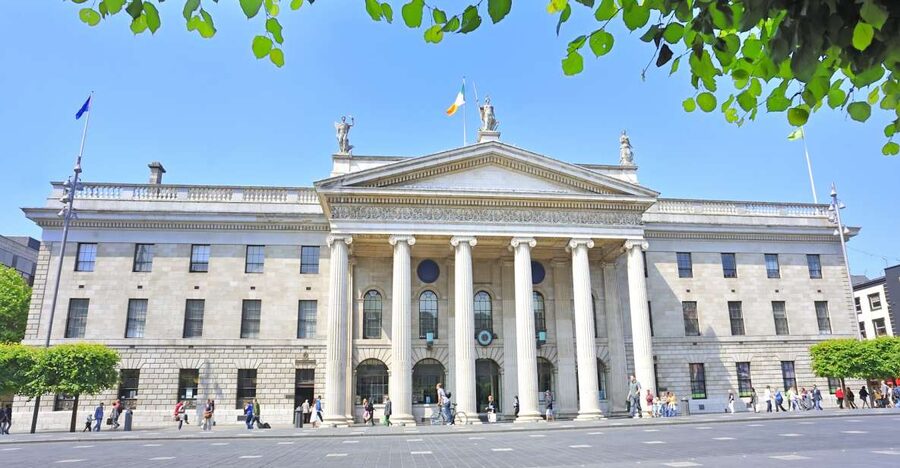
Ireland’s modern political history is not a simple tale of good rebels and bad rulers. It includes British rule, competing ideas of Irish identity, armed rebellion, imprisonment, executions, the Anglo-Irish Treaty, and later disagreement within the independence movement.
That is why the guide matters here. The tour is not just a march between statues. Before you enter the GPO Museum, your guide sets out the main events and explains how the Irish Republican Army fitted into the wider struggle. You can ask questions as the story develops, which is especially useful if your knowledge of Irish history begins and ends with the words Easter Rising.
The route also puts names and places into context. James Connolly, Daniel O’Connell, William Smith O’Brien, and Jim Larkin represent different parts of Ireland’s political and social story. You will not receive a full course in every figure, but you will see how the city remembers rebellion, nationalism, labor activism, hunger, and imprisonment.
The guide’s role is especially valuable for visitors who want more than dates. The experience focuses on what life under British rule meant, how the rebellion was prepared, and how the War of Independence led to difficult choices. Those links can be hard to grasp in a museum alone.
More History Tours in Dublin
- Dublin Historical Centre Food Tour with 8 Food Tastings & Drinks
★ 5.0 · 1,718 reviews - 2-Hour Historical Walking Tour from Dublin
★ 5.0 · 875 reviews - Historical 2-Hour Guided Walking Tour of Dublin
★ 4.7 · 865 reviews
Starting beside Molly Malone and St. Andrew’s Church
The meeting point is beside the Molly Malone Statue, outside St. Andrew’s Church on Suffolk Street in Dublin 2. This is a central location, but give yourself enough time to find the exact spot, particularly if you are unfamiliar with Dublin’s compact but busy center.
Molly Malone is one of the city’s best-known symbols, although she belongs more to Dublin folklore than to the IRA story. Her statue provides an easy landmark and a practical place to meet your guide. From there, the tour moves into a more serious account of Ireland’s political past.
Beginning here also makes the history feel connected to ordinary city life. You start among shops, streets, and daily Dublin traffic, then gradually move toward buildings that played a direct role in rebellion and government. That contrast is part of the experience.
Trinity College and the city’s public memory
Trinity College is one of the major sights on the route. The tour does not present it as an isolated university attraction. Instead, it becomes part of the setting in which Dublin’s political, cultural, and religious divisions developed.
Your guide will help place the college within the city’s larger story, although the supplied details do not promise an interior visit or a tour of the famous library. Keep your expectations focused on exterior views and historical commentary rather than a full Trinity College admission experience.
The route then takes you toward the Famine Memorial. These sculptures provide a sober reminder that Ireland’s history includes more than armed resistance and political leaders. The Great Famine caused immense hardship, and its memory remains central to how Ireland understands migration, poverty, and British rule.
This stop is important because it broadens the tour. You are not being shown only sites of military action. You are also being asked to consider the social suffering and political anger that shaped later Irish nationalism.
Custom House and the 1921 conflict
The Custom House is one of the most striking stops because it connects the independence struggle to a major civic building. The IRA occupied and burned the building in 1921, and the tour explains its place in the War of Independence.
The Custom House was not a symbolic cottage or a quiet meeting room. It represented government administration and British authority. Seeing it helps you understand why the building mattered and why the attack carried such political weight.
This is where the walking format earns its keep. A book can describe the event, but standing near the building lets you connect the story to Dublin’s streets and public institutions. You can also ask the guide to clarify how the War of Independence differed from the 1916 Easter Rising, two events often blurred together by first-time visitors.
The tour also addresses the Anglo-Irish Treaty. That agreement changed the political direction of Ireland and led to further division. The guide’s explanation should help you see that independence did not arrive as a neat final chapter. It brought new arguments and painful choices.
More Museum Visits in Dublin
- Irish Rock ‘N’ Roll Museum Experience Dublin
★ 5.0 · 6,112 reviews - The Little Museum of Dublin Famous Guided Tour
★ 5.0 · 2,948 reviews - Dublin EPIC Museum Admission Ticket
★ 4.5 · 1,729 reviews - Giant’s Causeway with the Titanic Exhibition and the best of Northern Ireland
★ 5.0 · 1,122 reviews
James Connolly and the memory of rebellion

A memorial to James Connolly appears along the route. Connolly was an Irish republican, a major labor figure, and one of the leaders executed after the Easter Rising. His story shows how nationalism and workers’ rights could overlap in the revolutionary period.
The stop is useful because it adds a social dimension to the military narrative. Connolly was not remembered only as a commander. His political ideas and working-class concerns form an important part of his legacy.
You will also encounter monuments to Daniel O’Connell, William Smith O’Brien, and Jim Larkin. These men belonged to different moments and movements, so the guide’s commentary is essential. The value is not simply seeing four names carved in stone. It is understanding how Irish political activism changed over time.
The tour also refers to Kilmainham Gaol, where Connolly was imprisoned and executed. The prison itself is not included in this experience, so do not expect to enter it. Still, the reference gives you a useful connection to one of Dublin’s most important historical sites, which you could consider visiting separately if your schedule allows.
Arriving at the General Post Office
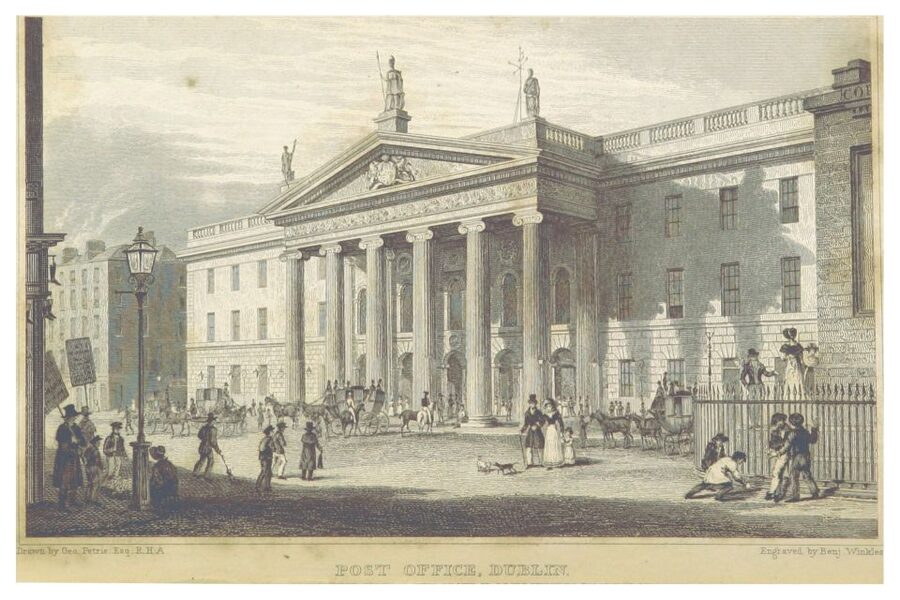
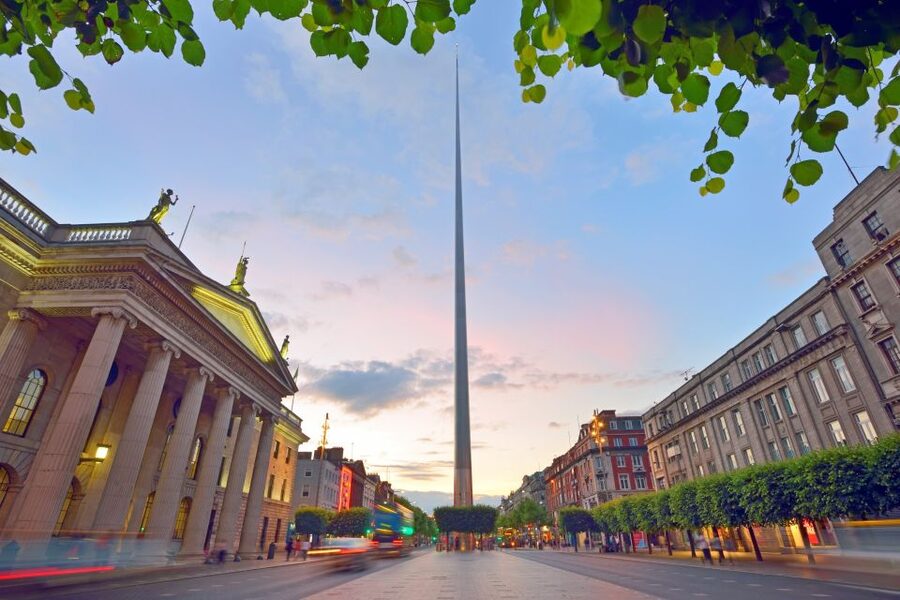
The walking portion ends at the General Post Office on O’Connell Street. The GPO served as the headquarters of the 1916 rebels and became one of the defining locations of the Easter Rising.
The building is still a working post office, which makes the site feel different from a preserved battlefield or a quiet memorial. Daily activity continues inside and around it, while the museum below presents the events that helped shape the Republic of Ireland.
Your guide’s timing matters here. By the time you reach the GPO, you should already understand the basic sequence of events: preparation for the Easter Rising, the rebellion itself, the British response, the executions, the War of Independence, and the later treaty dispute.
That preparation is the reason I would not treat the museum ticket as a stand-alone feature. The audio guide can provide information, but the live walking tour gives you a framework first. Without that framework, the names, dates, and political factions can blur together.
What to expect inside the GPO Museum
The GPO Museum visit lasts about one hour and is self-guided. Your ticket provides reserved entry, allowing you to bypass the ticket office line at your scheduled time. Your live guide will not enter the museum with you.
An official audio guide is included, with options in English, French, German, Italian, and Spanish. This is convenient for international visitors and gives you control over the pace. You can spend more time with an exhibit that catches your attention, or move along if you feel the material has already been covered on the walk.
The museum is dedicated to the history of the IRA and the events connected to the GPO. It works best as a concluding chapter, not as a replacement for the guided portion. The guide outside can answer questions and adapt the explanation to your interests. Inside, you follow the museum’s own presentation.
This split arrangement has both strengths and weaknesses. You gain freedom and a reserved time slot, but you lose the chance to ask your live guide questions as you view the displays. If having one expert with you for the entire visit is important, this format may feel incomplete.
Choosing three hours or four hours with a car
The 3-hour option includes a 2-hour private walking tour and a 1-hour audio-guided visit to the GPO Museum. You meet at the Molly Malone Statue and return to the same meeting point after the activity.
The 4-hour option adds private pickup and drop-off at your Dublin accommodation. The transfer is estimated at one hour round trip, though the actual time depends on traffic and the distance from your hotel. After the walk, you have one hour for the museum before the arranged return transfer.
I would choose the 3-hour version if you are already staying near central Dublin or are comfortable reaching Suffolk Street yourself. It keeps the schedule simple and avoids paying extra for a car you may not need.
The 4-hour option makes more sense if you are staying farther from the center, traveling with older relatives, or want a fixed private ride at the beginning and end. A standard sedan is arranged for one to four people. Groups of five or more receive a larger van, and you can book a five-person tour if you specifically want the larger vehicle.
Remember that the added hour is not another hour of guiding. It is mainly transfer time. The heart of both choices remains the same two-hour walk and one-hour museum visit.
Is $204 per person a fair price?
At $204 per person, this is not a budget history walk. The price includes a licensed guide fluent in your selected language, a private group format, GPO Museum admission, the audio guide, and private transfers only with the 4-hour choice.
The value depends on what you want from Dublin. If you simply need a general introduction to the Easter Rising, a public walking tour or a museum visit alone will likely cost less. If you want a private explanation tailored to your questions, the price becomes easier to defend.
The private format can be useful for families and small groups with different levels of interest. You can ask for clarification without worrying about slowing a large public group. Group size is limited to 25 guests per guide, although the booking is presented as a private group experience, so confirm the final group arrangement when you reserve.
I would be cautious about booking this solely for the skip-the-line benefit. The museum ticket is helpful, but the line-saving feature alone does not justify $204. The stronger reason to book is the connected city walk with a guide who can explain the political story as you move from monument to monument.
Who will enjoy this Dublin history tour?
This experience suits you if you like political history, want to understand the Easter Rising beyond a few famous names, or prefer a guide who can connect separate sights into one story. It is also a good fit if you have only half a day and want an organized introduction to central Dublin’s revolutionary past.
Families with teenagers may appreciate the walking route and the change of setting between outdoor landmarks and the museum. The subject includes executions, imprisonment, conflict, and political violence, so parents should decide if that material fits their children.
The tour works less well if you want to enter Kilmainham Gaol, explore Trinity College inside, or spend a full day on the Easter Rising. Those places and subjects are mentioned or connected to the route, but they are not included as extended visits.
It is also not the best choice if you prefer a fully guided museum experience. The GPO portion uses an audio guide, and you explore it independently after the live walk ends.
Practical advice for a smoother visit
Check your email the day before the tour for any updated meeting information. Arrive at the Molly Malone Statue with enough time to locate St. Andrew’s Church and settle in before the guide begins.
Wear comfortable shoes. The activity includes about two hours of walking through central Dublin, with several outdoor stops. The details do not specify indoor shelter at every stop, so prepare for changing Irish weather.
Choose your language carefully when booking. Live guiding is offered in English, French, and German. The GPO audio guide adds Italian and Spanish, but those languages are not listed for the live walking portion.
Keep the schedule after the tour flexible if possible. The 4-hour option includes traffic-sensitive transfers, and the 3-hour option ends after your museum visit at the original meeting point. A reserved museum time slot means timing matters, so avoid adding a tight appointment immediately afterward.
Free cancellation is available up to 24 hours in advance for a full refund, and you can reserve now while paying later. Those terms help if your Dublin plans are still changing, but they do not remove the need to check the confirmed start time before booking.
Should you book the Dublin IRA History Tour?
Book it if you want a private, organized explanation of Ireland’s revolutionary period and value seeing the relevant Dublin sites in one route. The guide-led walk is the main reason to choose it, while the GPO Museum provides a useful final hour with reserved entry and an audio guide.
Skip it if $204 per person feels too high, if you want a fully guided museum visit, or if you already know the Easter Rising and War of Independence well. For first-time visitors with a strong interest in Irish political history, the experience offers a clear route through a complicated subject. Just remember that the museum is self-guided and that the 4-hour transfer option adds convenience, not extra historical content.
FAQ
Where does the tour start?
The tour starts beside the Molly Malone Statue, outside St. Andrew’s Church on Suffolk Street, Dublin 2, D02 KX03, Ireland.
Where does the walking tour finish?
The activity ends back at the meeting point after the GPO Museum visit.
How long does the experience last?
The tour lasts three to four hours, depending on the option you select. The 3-hour choice includes two hours of guided walking and one hour in the GPO Museum.
Is the GPO Museum entry included?
Yes. Skip-the-line GPO Museum admission is included, with a reserved time slot for entry.
Does the guide enter the GPO Museum?
No. The live guide ends the walking portion outside the GPO, and you explore the museum independently with its official audio guide.
Which languages are available for the live guide?
The live guide is available in English, French, and German.
Which languages are available for the museum audio guide?
The official audio guide is available in English, French, German, Italian, and Spanish.
Are private transfers included?
Private pickup and drop-off are included only with the 4-hour option. They are not included with the 3-hour option.
How many people can travel in the private vehicle?
A standard sedan is provided for one to four people. Groups of five or more receive a larger van, and a five-person booking can be selected for that vehicle.
Can I cancel the booking?
You can cancel up to 24 hours in advance for a full refund. The reserve-now, pay-later option also lets you hold your plans without paying immediately.
Newest in Dublin
- Wicklow Mountains Private Day Tour including Glendalough★ 5.0 · 7 reviews
- Wicklow: Private Day Tour from Dublin★ 5.0 · 5 reviews
- From Dublin: Powerscourt House, Guinness Lake & Glendalough★ 5.0 · 2 reviews
- Ultimate Dublin Food Tour★ 4.5 · 2 reviews
- Women Of Ireland: Trailblazers & Pioneers★ 5.0 · 4 reviews
- Wicklow tour of Glendalough★ 4.5 · 8 reviews
- Wicklow Mountains & Glendalough Luxury Private Day Tour★ 5.0 · 23 reviews
- Whiskey Tasting Tour of Dublin★ 5.0 · 117 reviews
Historical Tours, compared.

Dublin Historical Centre Food Tour with 8 Food Tastings & Drinks
Read our review →

Historical 2-Hour Guided Walking Tour of Dublin
Read our review →
Dublin to Cork, Blarney Castle & Cóbh Heritage Centre by train
Read our review →
Jeanie Johnston Tall Ship Irish Famine History Tour
Read our review →

Deliciously Dublin: The Artisan Donut Walking & History Tour
Read our review →Browse the lists this tour appears in