
Reviewed · GHOST TOURS
Haunted Dublin Walking Tour
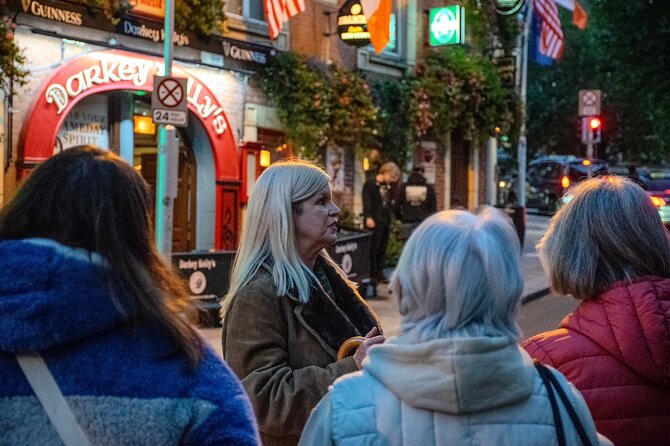
Dublin gets darker after sunset. This two-hour walking tour mixes alleged hauntings, grim crimes, witchcraft, grave robbing, and Irish folklore with a useful tour of the city center. You move from Temple Bar through Dublin Castle, old theaters, cathedrals, graveyards, and St. Stephen’s Green while your guide fills in the city’s less polished past.
I like the way the tour uses real places instead of a staged haunted-house setting. I also like the blend of history, literature, true crime, and ghost stories, which gives the evening more substance than a string of spooky tales. The main drawback is pace: you cover a good stretch of central Dublin, and some guides walk quickly, so comfortable shoes matter.
The tour begins at 6:00 p.m. in Temple Bar and ends at St. Stephen’s Green. That timing lets you see Dublin as daylight fades, though weather and seasonal darkness can affect the mood. Guides including Ciarán, Deirdre, Lee, and Ross have earned especially warm praise for their humor, storytelling, flexibility, and care in keeping the group together.
In This Review
- Key points to know before booking
- What kind of haunted tour is this?
- Temple Bar begins the evening at 6:00 p.m.
- Dublin Castle and the Bram Stoker connection
- The Olympia and Smock Alley bring theatrical ghosts
- Christ Church Cathedral and Dublin’s former Hell
- St. Patrick’s Cathedral and Marsh’s Library
- St. Kevin’s Park offers the most secluded stop
- The Royal College of Surgeons and Easter Rising history
- St. Stephen’s Green ends the walk near Grafton Street
- The guides are the heart of the experience
- Price, pace, weather, and overall value
- Should you book Haunted Dublin Walking Tour?
- FAQ
- How long does the Haunted Dublin Walking Tour last?
- Where does the tour begin?
- Where does the tour finish?
- Is the tour offered in English?
- How much does the tour cost?
- Is this a physically demanding tour?
- What happens if I need to cancel?
Key points to know before booking
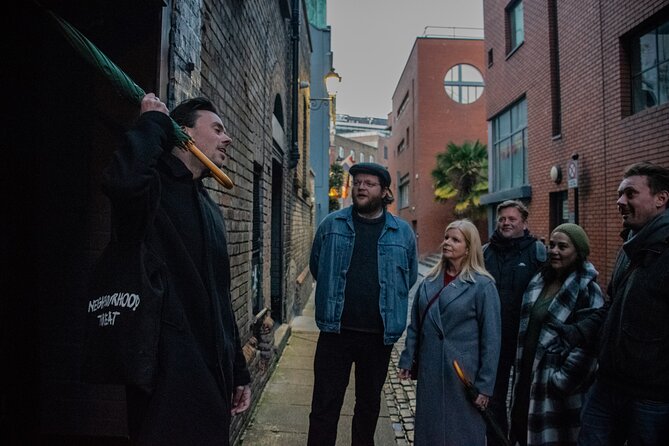
- Two hours through central Dublin: The route covers about ten stops, with frequent pauses for stories rather than long visits inside buildings.
- More history than jump scares: Expect folklore, murders, old neighborhoods, literature, and alleged hauntings. This is storytelling on city streets, not a theatrical fright show.
- Bram Stoker connection: Dublin Castle links the tour to the early working life of the author of Dracula.
- A dark look at Hell: The area near Christ Church Cathedral reveals the former streets, taverns, brothels, and violent characters once associated with Dublin’s old Hell district.
- Good guides make the difference: Ciarán is praised for humor and literary recommendations, Deirdre for warmth and lively delivery, Lee for quick adjustments, and Ross for his strong storytelling.
- Plan for the outdoors: The tour runs in the evening, includes a fair amount of walking, and has no snacks included. Free cancellation is available up to 24 hours before departure.
What kind of haunted tour is this?
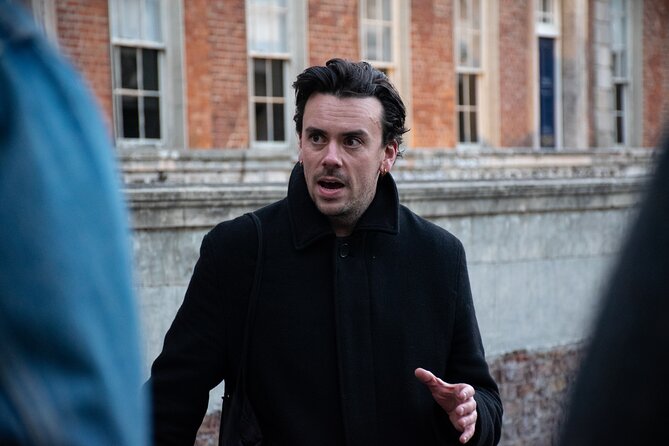
I would describe this as a dark-history walking tour with a paranormal streak. You will hear about ghosts and strange incidents, but the guide also explains Dublin’s streets, churches, theaters, political struggles, infamous characters, and literary connections.
That distinction matters. If you want actors jumping from alleys or a theatrical horror production, this may feel too restrained. If you enjoy stories that sit somewhere between documented history, local legend, and old rumor, the format works well.
The route is also a practical introduction to central Dublin. You begin in Temple Bar, pass several of the city’s best-known historic buildings, and finish beside Grafton Street. I like that arrangement because the tour can serve two purposes: an evening activity and a first look at places you may want to revisit in daylight.
The advertised group limit is 30 people. That is large enough to create a social atmosphere but still manageable for a guide moving through city streets. Staying close matters, especially around busy roads and at stops where sound can carry poorly.
More Walking Tours in Dublin
- Dublin Highlights and Hidden Gems Guided Walking Tour
★ 5.0 · 6,020 reviews - Dublin: Highlights and Hidden Gems Walking Tour
★ 4.9 · 2,140 reviews - 1916 Rebellion Walking Tour
★ 5.0 · 1,605 reviews
Temple Bar begins the evening at 6:00 p.m.
The meeting point is 3 Crown Alley in Temple Bar, in the heart of central Dublin. You spend about ten minutes here, mainly getting the group together and setting the tone for the evening.
Temple Bar is a fitting place to begin. It is one of Dublin’s most famous areas, but its modern reputation as a nightlife quarter can hide the older stories beneath it. Starting here gives the guide an easy way to place you in the historic center before leading the group toward quieter streets and more unsettling subjects.
Since the tour starts at 6:00 p.m., give yourself enough time to find Crown Alley. A mobile ticket is accepted, and confirmation is provided at booking. Public transport is nearby, though the tour itself is entirely on foot.
Dublin Castle and the Bram Stoker connection
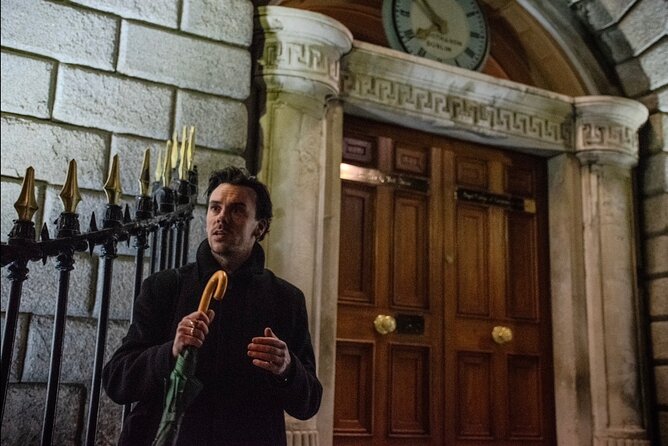
Dublin Castle receives one of the longer stops, about 15 minutes. It was a feared center of imperial rule in Ireland for centuries, so the setting carries political weight before the supernatural stories even begin.
The castle is also linked to Bram Stoker, who worked there before becoming one of the best-known writers in Gothic horror. That connection gives the tour a literary angle that I find more interesting than a simple ghost anecdote. You get a sense of how Dublin’s institutions, power struggles, and old stories could feed the imagination of a writer associated with Dracula.
One practical caution is important here. The tour normally discusses the castle from the route, but access can be affected by closures and special events. A New Year’s closure once prevented normal access, and the guide had to change the route. The guide adapted well, but the disruption shows why you should not assume every stop means entry inside a building.
The Olympia and Smock Alley bring theatrical ghosts
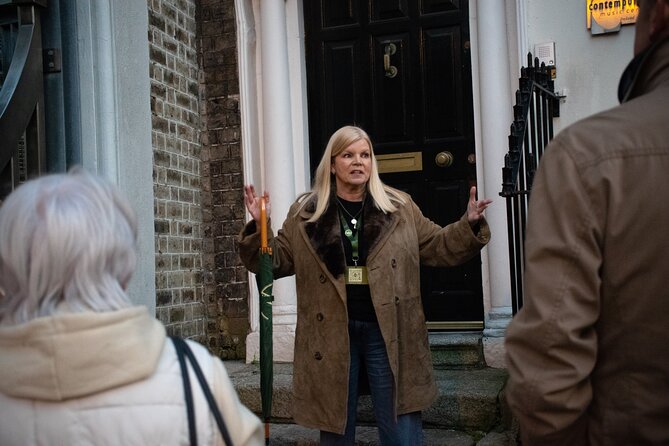
The 3Olympia Theatre is a ten-minute stop. This Victorian music hall and concert venue adds a different type of atmosphere to the walk. Instead of focusing only on churches and graveyards, the tour looks at a place tied to performance, crowds, and the theatrical world.
That variety keeps the route from becoming repetitive. The stories can shift from religious fear and political violence to stage lore and eerie incidents connected with entertainment.
Smock Alley Theatre follows with another ten-minute stop. It is identified as Ireland’s oldest theater, giving the guide another chance to connect Dublin’s cultural life with its stranger stories. Old theaters are natural settings for ghost tales, but the value here is not just the spooky mood. You are also seeing how Dublin’s public life developed around performance spaces, churches, taverns, and gathering places.
These stops are viewed as part of the walk rather than treated as full theater tours. If you want detailed architectural visits or an indoor performance, you will need to arrange those separately.
More Ghost Tours in Dublin:
- Dublin Ghost Bus Tour with Professional Actors
★ 4.5 · 949 reviews - From Dublin: Gravedigger Ghost Bus Tour
★ 4.4 · 546 reviews - Dublin’s Haunted History Walking Tour
★ 4.3 · 345 reviews - Hidden Dublin: Haunted History Walking Tour v2.0 2026
★ 4.5 · 188 reviews
Christ Church Cathedral and Dublin’s former Hell
Near Christ Church Cathedral, the tour turns toward one of the route’s most memorable historical settings. The area was once associated with a sordid network of streets known locally as Hell.
The stories here involve brothels, drinking houses, violence, wealthy patrons, and characters whose reputations have lasted far beyond their own lifetimes. Some are still said to haunt the streets. This is where the tour’s mix of true crime and folklore comes into focus.
Christ Church Cathedral gives the stop a strong contrast. The cathedral represents religious authority, while the former Hell district nearby was linked with vice and disorder. I like this kind of contrast because it shows that old Dublin was not a tidy collection of grand monuments. The city’s powerful, poor, pious, reckless, and criminal communities often lived close together.
The stop lasts about 15 minutes. You should expect storytelling outside rather than a formal cathedral visit. The atmosphere may be especially effective after dark, but poor weather can make it harder to hear or linger comfortably.
St. Patrick’s Cathedral and Marsh’s Library
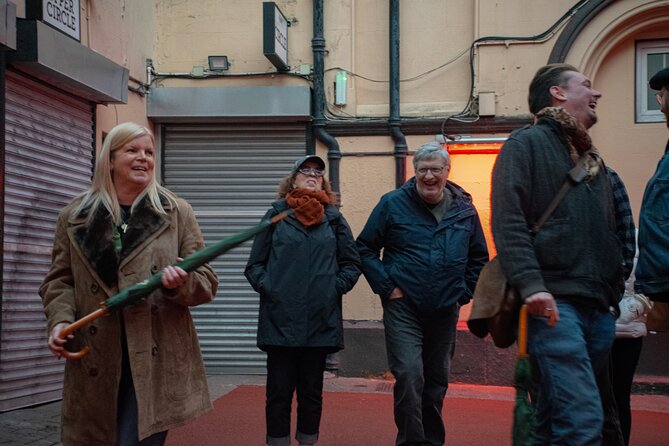
St. Patrick’s Cathedral is named for Ireland’s patron saint, yet the stories here focus on the sinners and strange events connected with the surrounding area. The stop lasts about ten minutes, followed by another ten minutes at Marsh’s Library.
The cathedral section includes tales from the Liberties and the notorious four corners of Hell. These stories widen the tour beyond one building and help explain how Dublin’s darker reputation was tied to entire neighborhoods.
Marsh’s Library is particularly appealing for anyone who likes books, writers, and old institutions. It is Ireland’s oldest public library and sits in the shadow of St. Patrick’s Cathedral. The guide uses the setting for ghost stories and other unsettling incidents.
I would not treat this part as a replacement for a daytime visit to the cathedral or library. The tour gives you context and atmosphere, but it is a guided walk, not an interior sightseeing program. If these buildings interest you, note them for another visit when they are open for normal admission.
St. Kevin’s Park offers the most secluded stop
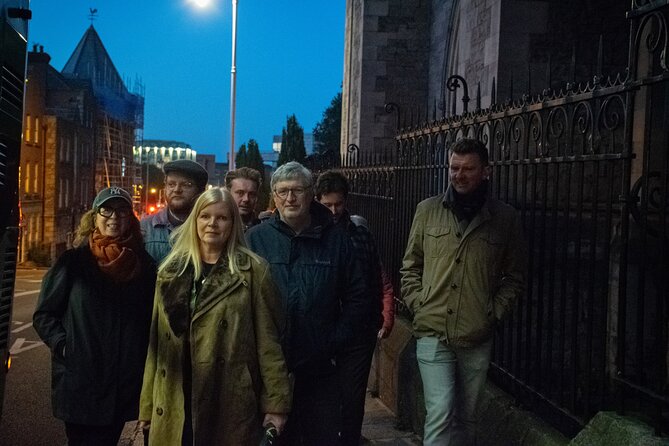
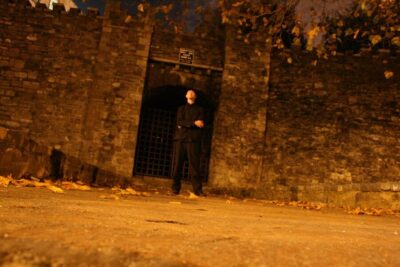
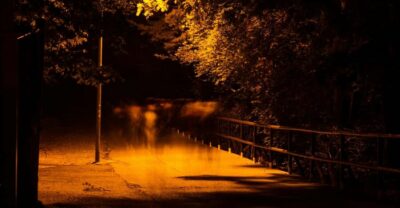
St. Kevin’s Park takes about ten minutes and brings the group to the ruins of an old church graveyard down a dark laneway in the middle of the city. This is one of the route’s clearest shifts in mood.
After the public spaces of Temple Bar, the castle, and major theaters, a small ruin hidden from the main streets feels more private and enclosed. The setting helps the guide’s stories land without needing theatrical effects.
You may find this stop more atmospheric than frightening. The tour’s power comes from the place, the guide’s delivery, and the knowledge that the modern city continues around an old burial ground. It is a good example of what this experience does best: showing you a part of Dublin you could easily pass without noticing.
Because the stop is outdoors and reached by foot, shoes with firm soles are a smart choice. The route is not described as severely strenuous, but it does involve enough walking that thin dress shoes could become uncomfortable.
The Royal College of Surgeons and Easter Rising history
The Royal College of Surgeons is a ten-minute stop on the west side of St. Stephen’s Green. It was one of the garrisons during the 1916 Easter Rising, so the story here shifts from ghosts and crime toward rebellion and political violence.
That change is useful. Dublin’s darker past is not only about apparitions. It also includes real conflict, fear, imprisonment, and death. The building’s connection with the Easter Rising adds modern Irish history to the older tales of witchcraft, grave robbing, and notorious criminals.
The stop also places you at the edge of St. Stephen’s Green, making the route feel like a gradual movement from the older medieval city toward the Georgian center. Guides may connect the physical surroundings with the events that took place there, giving you a more grounded sense of Dublin’s past.
St. Stephen’s Green ends the walk near Grafton Street
The final ten-minute stop takes place in St. Stephen’s Green, Dublin’s best-known Georgian square and park. The tour finishes here, at the top of Grafton Street.
This is a convenient ending. You are within a short walk of restaurants, pubs, shops, and public transport, so you do not have to retrace the full route to continue your evening. It also gives you an easy chance to compare the polished Georgian setting with the rougher, more troubled stories heard earlier.
The ending is not a dramatic haunted-house finale. Instead, the tour closes in a central public space after a broad walk through Dublin’s past. I think that suits the experience. You finish with a city map in your head, a list of places to revisit, and several stories that may make ordinary streets look different.
The guides are the heart of the experience
The strongest part of this tour is the guide. Ciarán receives repeated praise for being funny, engaging, and a gifted storyteller. His style combines spooky and gory historical details with practical Dublin advice, and he has also been appreciated for Irish literature and theater recommendations.
Deirdre is praised for warmth, humor, and keeping the group interested, including during rain and on Halloween evenings. Her story of Billy in the Bowl became a memorable comic moment for one group, which says something about the tour’s tone: the evening can be grim, but it is not relentlessly bleak.
Lee has been especially good at adapting when church bells, closures, or other interruptions interfere with the planned presentation. Ross is praised for bringing old Dublin to life with charm and strong storytelling.
Guide quality can vary on any scheduled walking tour, but the pattern here is clear. You are paying for interpretation, not admission tickets. A guide who can switch locations, handle noise, answer questions, and keep a mixed-age group together makes a major difference.
Price, pace, weather, and overall value
At $29.02 per person, the tour costs about what I would expect for a two-hour guided walk in a major European capital. There are no separate attraction admissions included, but most stops are viewed from public areas, so you are not paying for a collection of short indoor visits.
The value comes from the route and the guide’s storytelling. You see a wide section of central Dublin while learning stories you might not find in a standard sightseeing walk. For a first evening in the city, that combination can be worthwhile.
The main cost is physical rather than financial. You cover much of central Dublin, and several people have found the walking pace quick. Wear comfortable shoes, keep your group close, and allow for wet weather. The tour runs outside, so rain can affect your comfort even when it does not spoil the stories.
The advertised physical requirement is moderate fitness. Service animals are allowed, and the route is near public transportation. Snacks are not included, so eat beforehand or plan something after reaching St. Stephen’s Green.
The tour is particularly good for:
- First-time visitors who want an unusual introduction to Dublin
- People who enjoy folklore, ghost stories, and true crime
- History fans who prefer stories tied to real streets and buildings
- Couples, families with older children, and mixed-age groups
- Anyone looking for an evening activity that is not simply pub-based
It may be less suitable if you want a very scary production, a slow architectural walk, or extensive access inside Dublin’s historic buildings.
Should you book Haunted Dublin Walking Tour?
I would book this tour if you like history with a darker edge and want to see central Dublin after sunset. The best reason to choose it is the mix: Bram Stoker, the old Hell district, theaters, graveyards, witchcraft, rebellion, ghosts, and local characters all appear within one compact route.
Book with comfortable shoes and realistic expectations. You are getting a lively outdoor story walk, not proof of the supernatural and not a series of haunted attractions. If Ciarán, Deirdre, Lee, or Ross is leading your tour, expect a guide who can add humor and local color to the evening.
At $29.02, it is a fair-value choice for an entertaining overview of Dublin’s less respectable past. I would be cautious around major holidays or known castle closures, since the route can change. Otherwise, this is a smart pick for a first Dublin visit, especially if you want your sightseeing served with a little graveyard dust.
FAQ
How long does the Haunted Dublin Walking Tour last?
The tour lasts approximately two hours.
Where does the tour begin?
It begins at 3 Crown Alley in Temple Bar, Dublin, at 6:00 p.m.
Where does the tour finish?
The walk finishes at St. Stephen’s Green in Dublin 2, near the top of Grafton Street.
Is the tour offered in English?
Yes. The experience is offered in English.
How much does the tour cost?
The listed price is $29.02 per person.
Is this a physically demanding tour?
A moderate level of physical fitness is recommended. You cover a good amount of ground on foot, and some guides may walk quickly, so comfortable walking shoes are advised.
What happens if I need to cancel?
You can cancel for a full refund up to 24 hours before the experience start time. Cancellations or changes made less than 24 hours before departure are not accepted for a refund.
Newest in Dublin
- Wicklow Mountains Private Day Tour including Glendalough★ 5.0 · 7 reviews
- Wicklow: Private Day Tour from Dublin★ 5.0 · 5 reviews
- From Dublin: Powerscourt House, Guinness Lake & Glendalough★ 5.0 · 2 reviews
- Ultimate Dublin Food Tour★ 4.5 · 2 reviews
- Women Of Ireland: Trailblazers & Pioneers★ 5.0 · 4 reviews
- Wicklow tour of Glendalough★ 4.5 · 8 reviews
- Wicklow Mountains & Glendalough Luxury Private Day Tour★ 5.0 · 23 reviews
- Whiskey Tasting Tour of Dublin★ 5.0 · 117 reviews
Ghost Tours, compared.
Hidden Dublin: Haunted History Walking Tour v2.0 2026
Read our review →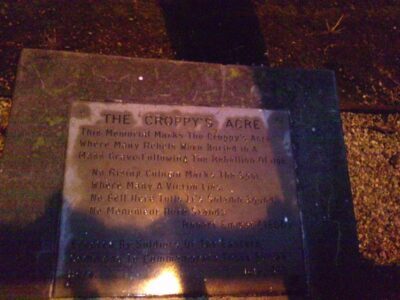
Browse the lists this tour appears in