
Reviewed · WALKING TOURS
Dublin: Highlights and Hidden Corners Walking Tour
Dublin reveals itself one story at a time. This 2.5-hour walk links major sights with overlooked corners, taking you from Dame Street through the medieval quarter, Temple Bar, the River Liffey, O’Connell Street, and Trinity College. I like the way it gives you a useful first map of central Dublin while still making room for odd, memorable details, including a former cinema, a church that is no longer a church, and a Lisbon tram now used as a café.
I also like the small group of no more than 16 people, often fewer, and the friendly guides who bring humor to political, architectural, and human stories. The main consideration is pace: one person found the walk faster than preferred, so this may not be the best choice if you need frequent pauses or a very gentle stroll.
In This Review
- Key points to know before booking
- Starting at the Tree of Gold on Dame Street
- City Hall and the medieval quarter
- Christ Church, Fishamble Street, and Smock Alley
- Temple Bar away from the usual pub picture
- Crossing the Millennium Bridge and the River Liffey
- The Italian Quarter and a former Lisbon tram
- Henry Street, Moore Street, and the north side
- O’Connell Street and the story of 1916
- Trinity College and the former Parliament House
- What the guides add to the walk
- Is $31 a fair price?
- Who should book this Dublin walk?
- Should you book it?
- FAQ
- Where does the Dublin walking tour start?
- How long does the tour last?
- What language is the tour conducted in?
- How large is the group?
- Are Dublin Castle and the other sights visited inside?
- Is the tour wheelchair accessible?
- Can I cancel or pay later?
Key points to know before booking
- A two-sided Dublin introduction: The route covers the south and north sides of the River Liffey, giving you a strong first look at central Dublin.
- Small groups matter: Numbers are capped at 16, with extra guides added when needed.
- The odd details are the treat: Look for a former full-time cinema, a former Lisbon tram, a wobbly bridge, and a post box tied to Irish independence.
- History comes through people: Guides such as Joe Brennan, John O’Flynn, Jacob, Katie, and Dave are praised for clear explanations, humor, and a welcoming manner.
- Mostly an outdoor experience: Sights are visited from the outside, though you may have chances to visit some places after the walk.
- Good value at $31: For 2.5 hours of guided sightseeing across much of central Dublin, the price is fair, especially if you are new to the city.
Starting at the Tree of Gold on Dame Street
The meeting point is the Tree of Gold Statue, also called Crann an Óir, at Central Plaza on Dame Street in Dublin 2. It sits at the corner of Dame Street and Fownes Street Upper, a useful starting spot in the middle of the city.
Dame Street places you close to several of Dublin’s oldest central districts. From here, the walk heads toward the former Viking and medieval quarter, where the city’s story becomes easier to follow on foot. You are not simply being taken from one famous building to another. The guide connects streets, public buildings, churches, rebellions, commerce, and everyday life.
That approach helps you get your bearings early in a Dublin visit. I would especially consider booking this near the start of your stay, since guides can point out places worth returning to later. Katie, for example, is praised for offering useful suggestions for the rest of a Dublin visit, and Jacob is noted for helping with directions after the tour.
The route is conducted in English with a live guide. The walk is wheelchair accessible, but the supplied details do not explain the exact surface or whether every section has an alternative route, so you may want to confirm any specific mobility needs before booking.
More Walking Tours in Dublin
- Dublin Highlights and Hidden Gems Guided Walking Tour
★ 5.0 · 6,020 reviews - Dublin: Highlights and Hidden Gems Walking Tour
★ 4.9 · 2,140 reviews - 1916 Rebellion Walking Tour
★ 5.0 · 1,605 reviews
City Hall and the medieval quarter
City Hall is one of the first major sights on the route. Its grand civic setting gives the guide a natural place to explain how Dublin developed as a seat of administration and power.
From there, you continue toward Dublin Castle grounds and gardens. The castle area is important to Dublin’s political story, but this tour treats it as an outdoor stop. You will hear about the site and see its setting rather than receive a standard interior visit as part of the tour.
That distinction matters. If you want to spend time inside Dublin Castle, you will need to arrange that separately or ask the guide about opportunities after the walk. The benefit of an exterior visit is that the tour keeps moving and fits more of central Dublin into a single morning or afternoon.
The guide’s storytelling is a major part of the experience here. Several guide names are singled out for strong delivery: Joe Brennan for his steady walking pace and humor, John O’Flynn for making architectural and political subjects approachable, and Jacob for patiently answering questions. You are likely to get more from these stops if you ask about the people connected with the buildings, not only the dates.
Christ Church, Fishamble Street, and Smock Alley
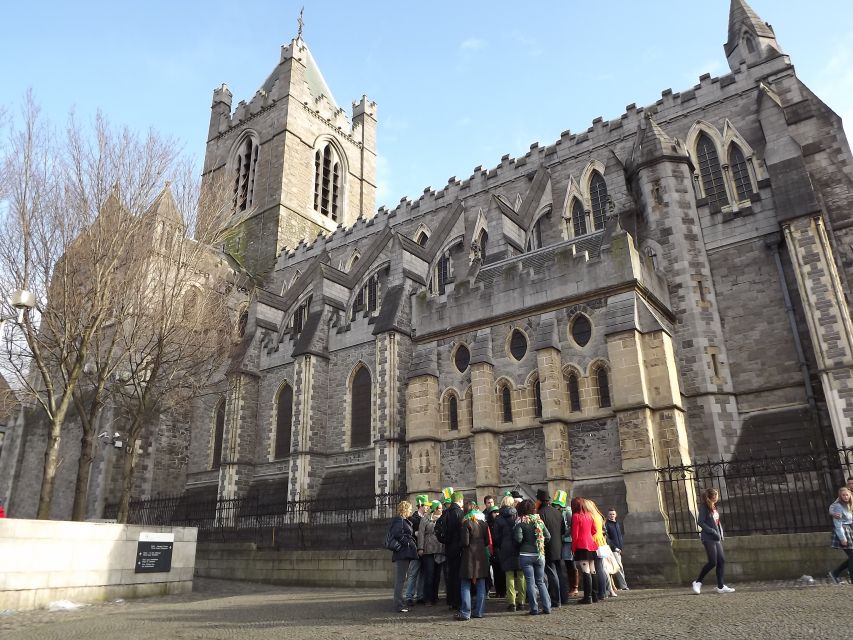
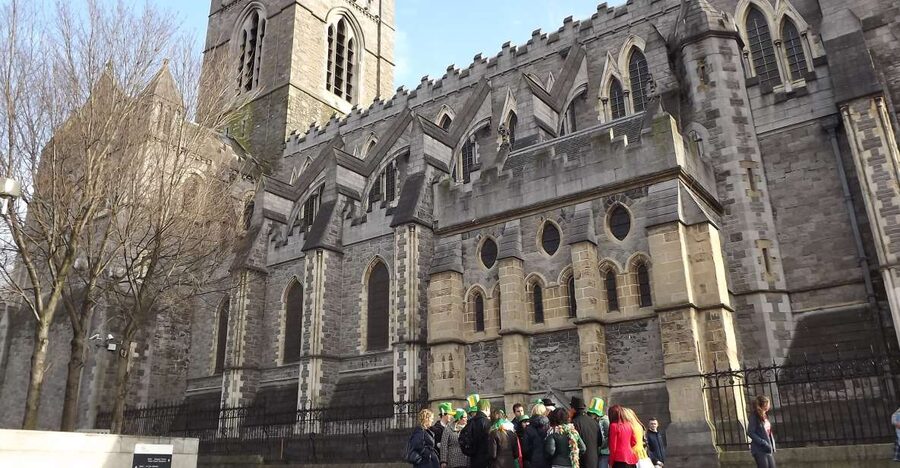
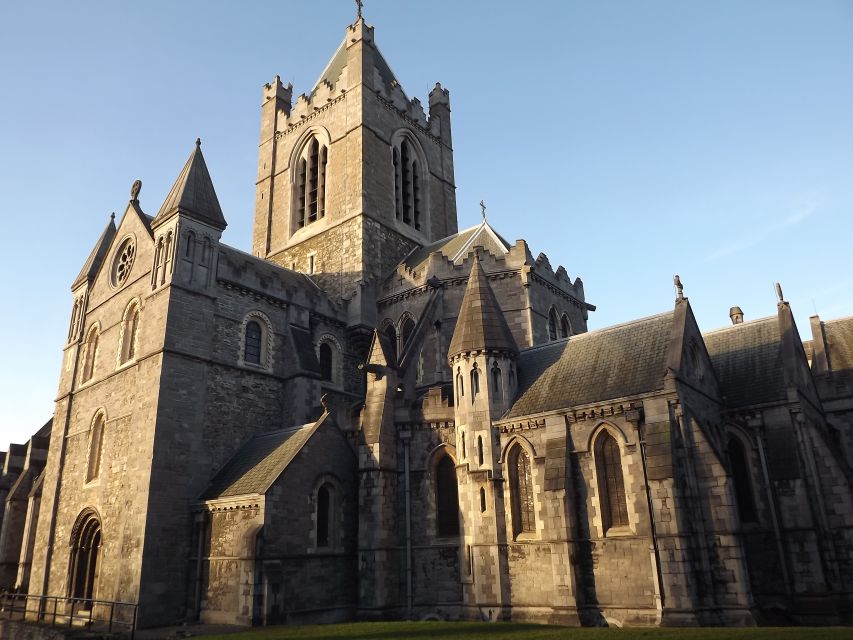
Christ Church Cathedral brings you into one of Dublin’s most recognizable historic areas. Again, the visit is external, but the cathedral’s position in the old quarter makes it an important visual anchor.
The tour then moves along Fishamble Street and Smock Alley. These streets help show how much of Dublin’s story is packed into short distances. The guide can shift from major institutions to theater, old streets, and the small clues that are easy to miss when you walk alone.
This is where the tour’s title earns its keep. You still see major landmarks, but the walk also asks you to notice unusual traces of the city’s past. The guide may point out Dublin’s first full-time cinema, now defunct, and a church that no longer functions as a church. These are modest sights, but they give you a stronger sense of how buildings change use as the city changes.
I like this part for another reason: it avoids turning Dublin into a list of grand monuments. A former theater or converted religious building can tell you as much about city life as a famous cathedral, especially when the guide explains what happened there and why the building still matters.
Temple Bar away from the usual pub picture
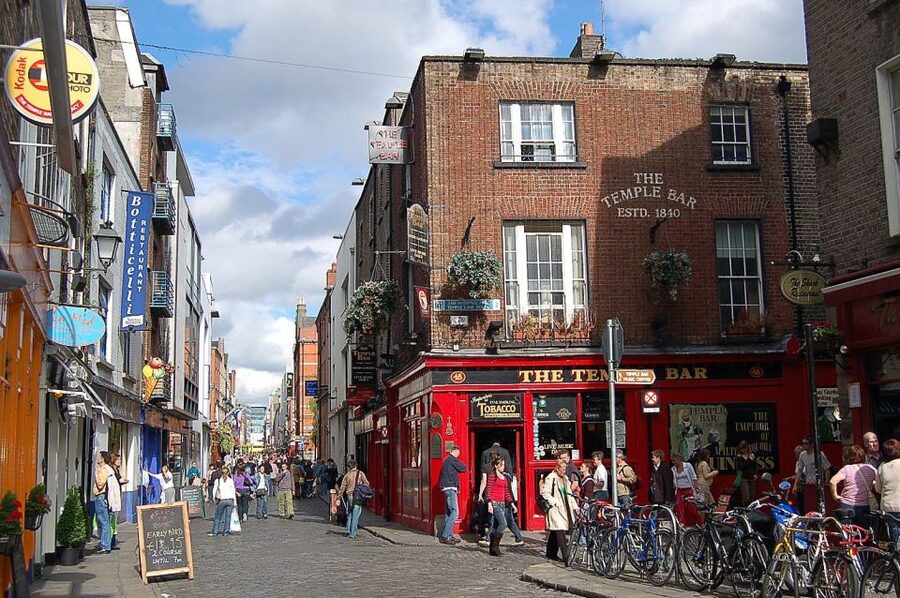
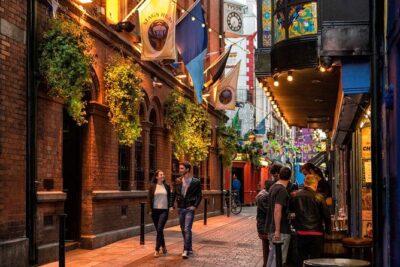
Meeting House Square and Temple Bar are next. Temple Bar is one of Dublin’s best-known districts, but it is easy to see only its pubs and evening crowds. This walking route provides a wider look at the area, including Meeting House Square and its place within the old quarter.
The guide’s job here is to give you context rather than simply lead you to a photo stop. You may hear stories about the district’s buildings, changing uses, and characters. The small group helps because you can usually stay close enough to hear without relying on a large tour flag or loudspeaker.
Temple Bar can be busy, so the pace may feel less relaxed at certain points. That connects with the one clear caution from the feedback: one person wanted a slower walk. If you prefer time to stop for photographs or examine every street corner, tell the guide early. The tour is designed to cover a lot of ground in 2.5 hours.
Something completely different for another day:
- Dublin to Cliffs of Moher, including Wild Atlantic Way and Galway
★ 5.0 · 23,331 reviews - From Dublin: Cliffs of Moher, Burren & Galway City Day Tour
★ 4.8 · 18,888 reviews - Dublin: Guinness Storehouse Entry Ticket
★ 4.6 · 16,863 reviews - Dublin to Cliffs of Moher, Burren, Wild Atlantic Way, Galway Tour
★ 5.0 · 12,924 reviews
Crossing the Millennium Bridge and the River Liffey
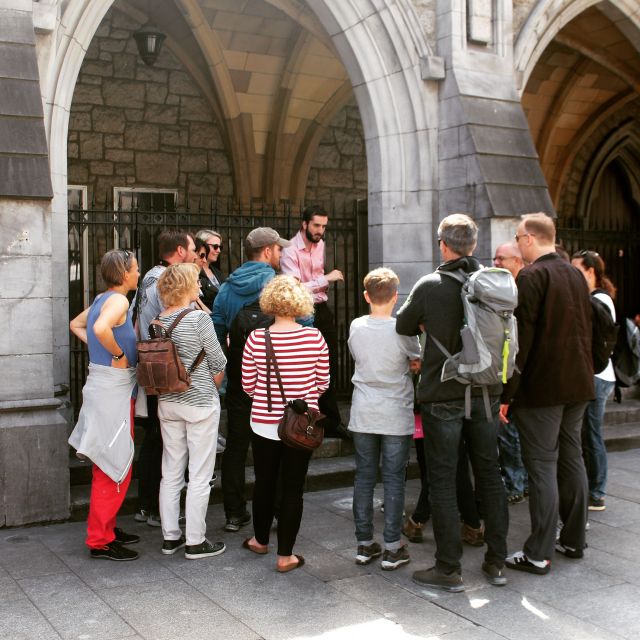
The Millennium Bridge takes the group across the River Liffey and onto Dublin’s north side. This is a simple crossing, but it gives the tour a clear change of rhythm and viewpoint.
The walk is designed to show both sides of central Dublin, rather than focusing only on the south side around the castle and Temple Bar. That makes the route more useful for first-time visitors who want to understand how the city’s main areas fit together.
The bridge itself has a playful detail: you may be invited to feel its bounce. It is a small experience, but it shows the kind of detail this tour favors. You are not being asked to admire only grand architecture. You are being encouraged to notice how the city feels under your feet.
The river crossing also sets up the next section, which focuses on the north side and O’Connell Street. By this stage, you have seen old Dublin, cultural districts, and the river that divides and connects the city.
The Italian Quarter and a former Lisbon tram
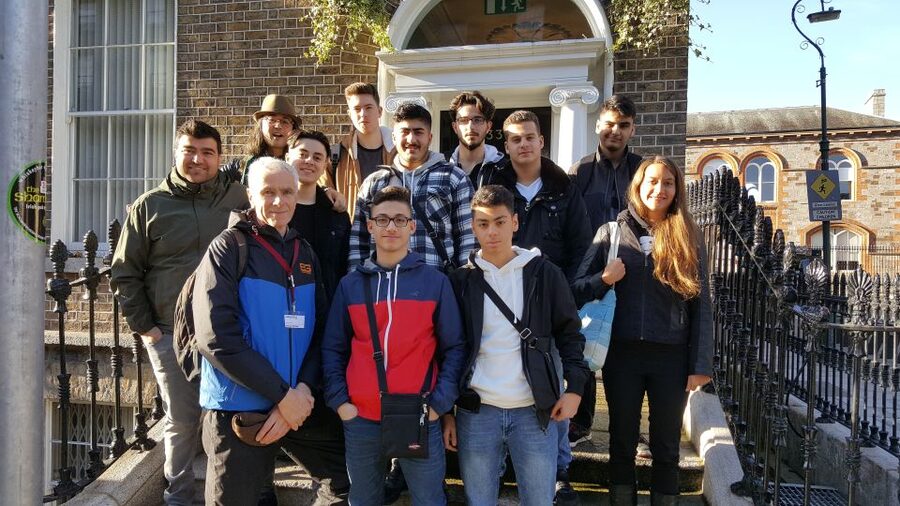
The Italian Quarter is one of the more unusual stops. It gives the guide room to talk about Dublin’s international connections and the way a city’s identity is shaped by more than its oldest monuments.
One of the tour’s memorable curiosities is a former Lisbon tram now serving as a café. That is exactly the sort of detail you might walk past without knowing its story. It also gives the route a welcome change from churches, government buildings, and memorials.
St. Mary’s Church follows, though the building is now a famous café and bar. This is another example of the tour’s interest in changing buildings. You see how an old structure can acquire a new purpose without losing its visual connection to the past.
These stops are valuable because they show Dublin as a living city. The walk is not only about what happened centuries ago. It also shows how old spaces are reused, adapted, and folded into modern daily life.
Henry Street, Moore Street, and the north side
Henry Street and Moore Street bring you into one of the city’s main shopping and market areas. The atmosphere here differs from the quieter old lanes and formal civic spaces earlier in the route.
The guide uses these streets to connect commerce and ordinary city life with larger historical events. Moore Street, in particular, is tied to the story of Dublin’s working streets and the events around the 1916 Rising. The value of a guided walk is that you can hear those connections while standing in the places themselves.
I would not expect a long shopping break here. This is a walking tour, not a retail tour, and the group continues toward O’Connell Street. Still, the route gives you a chance to note places you might return to later for food, browsing, or a closer look.
The walking distance is described as manageable by one person, who felt the length was just right. Another person wanted a slower pace, so your own comfort will depend on how much ground you like to cover in a short time.
O’Connell Street and the story of 1916
O’Connell Street is one of the tour’s most important stretches. The guide points out the General Post Office, which served as headquarters for the rebels during the 1916 Rising. The building and much of the surrounding street were badly damaged during the fighting and later rebuilt.
This stop gives the tour a clear political center. The guide can explain the Rising through the building, street, and people connected with it rather than treating the event as a distant chapter in a textbook.
The O’Connell Monument adds another layer to the boulevard’s story. The street itself is broad and imposing, and its monuments help explain how Ireland chose to remember political leaders and national events.
A particularly good small detail involves a post box that represents Ireland’s change to independence. It is easy to miss because it is not a grand memorial. That is why having a local guide is useful here. You learn to look for signs of political change in ordinary street furniture as well as in famous buildings.
Trinity College and the former Parliament House
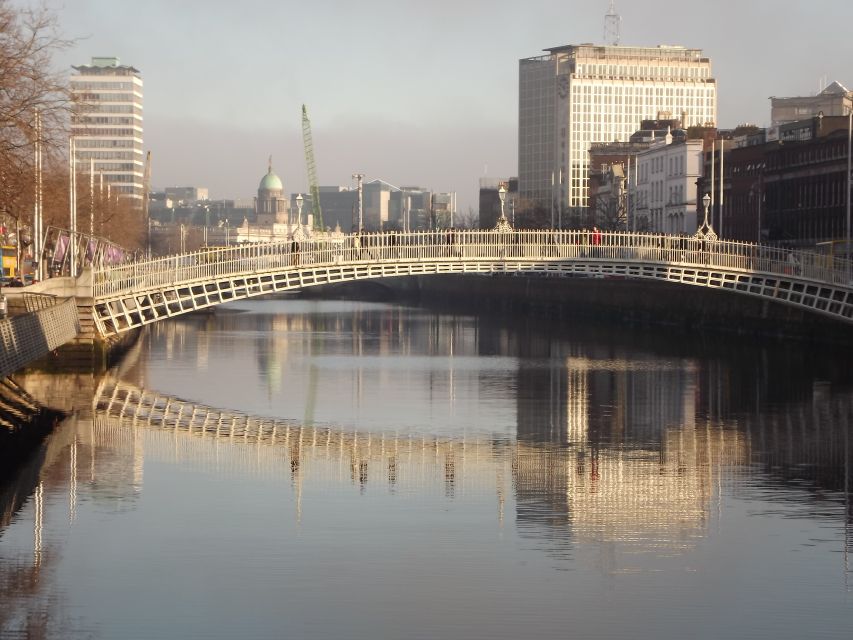
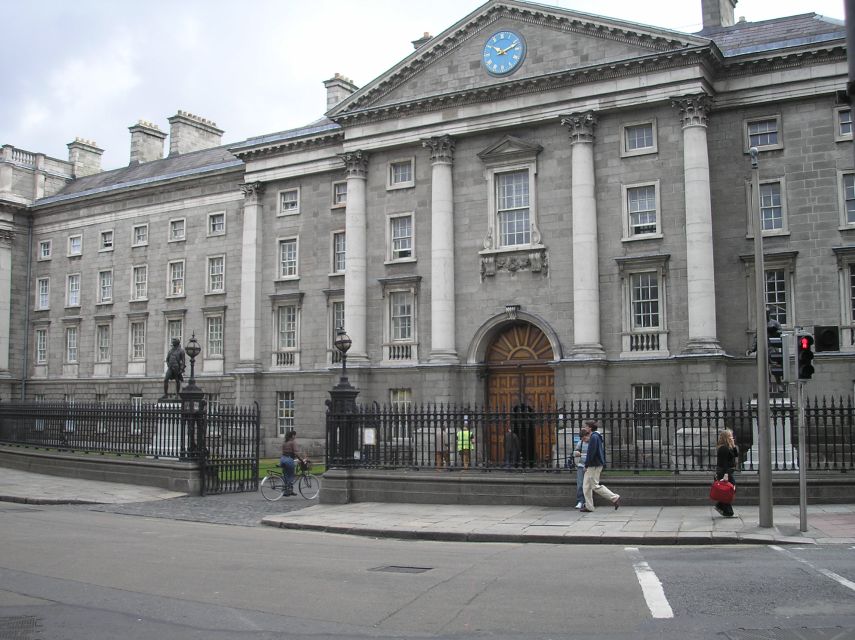
The walk ends in the area around Trinity College, with the famed Book of Kells as the final reference point. The tour does not include an interior visit, so you should plan separately if seeing the manuscript and Long Room is high on your list.
Ending near Trinity works well. You finish close to one of Dublin’s most famous institutions, and the guide can explain its place in the city’s intellectual and political life. The former Parliament House, now the Bank of Ireland, is nearby and adds an important architectural stop.
The supplied meeting information creates a small point to check before you go: it names the Tree of Gold as the start and says the activity ends back at the meeting point, while the route description says the walk finishes outside Trinity College. Since those locations are not identical, confirm the final meeting arrangement when booking or at the start.
Another amusing detail appears near the end: a stark-naked representation of a famous 18th-century composer. It is the sort of odd visual surprise that helps the tour finish on a lighter note after the heavier political material.
What the guides add to the walk
The strongest part of this experience is the guiding. The route itself is well chosen, but the stories determine whether the walk feels like a useful introduction or just a fast parade of buildings.
Joe Brennan is praised for clear delivery and a comfortable walking pace. John O’Flynn brings charm to architectural and political subjects. Jacob is noted for his command of Dublin stories and facts, his patience with questions, and his willingness to help with directions after the tour.
Katie is described as both well informed and funny, with practical suggestions that can improve the rest of your time in Dublin. Dave is praised for making sure the group enjoyed itself while still learning a lot.
You will not necessarily get the same guide on every departure, but these examples show the qualities to look for: clear speech, a good sense of humor, patience, and a connection to the city. The tour provider is Pat Liddy’s Walking Tours of Dublin, and the group size limit helps preserve the conversation.
Is $31 a fair price?
At $31 per person, the tour offers 2.5 hours of guided sightseeing across a large part of central Dublin. You visit both sides of the Liffey and cover civic buildings, churches, old streets, cultural quarters, shopping streets, political landmarks, and Trinity College.
I consider that fair value for a first visit. You are paying for structure and local interpretation, not entry tickets. Since all visits are external, the price stays focused on the walking experience and the guide’s stories.
The value is strongest if you want to understand how the city fits together. It is less suitable if your main goal is to spend a long time inside Dublin Castle, Christ Church Cathedral, or the Book of Kells. Those visits are not included.
A gratuity is not included, so budget separately if you want to thank the guide. Free cancellation is available up to 24 hours before the tour for a full refund, and you can reserve now and pay later, which is useful when your schedule is still changing.
Who should book this Dublin walk?
I would recommend it to first-time visitors, history fans, curious walkers, and anyone who wants a broad introduction before exploring Dublin alone. It is also a good fit if you enjoy stories about odd objects and reused buildings as much as famous landmarks.
The tour suits solo visitors and couples particularly well because the small group makes it easier to listen and ask questions. Families may also like the bridge that bounces and the unusual visual details, though the 2.5-hour length and steady pace should suit your group.
You might choose another option if you want a slow photography walk, extensive interior visits, or a tour centered on food and drink. The route covers a lot, and one person specifically wanted a slower pace. Wear comfortable shoes and be ready to keep moving between stops.
Should you book it?
Book this tour if you want Dublin explained through both its headline sights and its easy-to-miss details. The strongest reasons are the small group, the wide central-city route, and guides who bring humor and human stories to buildings that could otherwise blur together.
I would book it early in a Dublin stay, then use the final Trinity College area as a springboard for your own plans. Just confirm where the walk ends, and remember that the major interiors are not included. At $31, it is a sensible choice for getting your bearings and finding the stories that make Dublin more than a collection of postcard views.
FAQ
Where does the Dublin walking tour start?
It starts at the Tree of Gold Statue, also called Crann an Óir, at Central Plaza on Dame Street in Dublin 2, near the corner of Dame Street and Fownes Street Upper.
How long does the tour last?
The walk lasts 2.5 hours. Starting times vary, so check availability when choosing a date.
What language is the tour conducted in?
The live tour guide speaks English, and English is the listed tour language.
How large is the group?
The maximum group size is 16 people, and groups are often smaller. Additional guides may be provided when required.
Are Dublin Castle and the other sights visited inside?
No. Visits are external during the tour, though opportunities may be available for visits after the walk.
Is the tour wheelchair accessible?
Yes, the activity is listed as wheelchair accessible.
Can I cancel or pay later?
You can cancel up to 24 hours in advance for a full refund. You can also reserve your place and pay later.
Newest in Dublin
- Wicklow Mountains Private Day Tour including Glendalough★ 5.0 · 7 reviews
- Wicklow: Private Day Tour from Dublin★ 5.0 · 5 reviews
- From Dublin: Powerscourt House, Guinness Lake & Glendalough★ 5.0 · 2 reviews
- Ultimate Dublin Food Tour★ 4.5 · 2 reviews
- Women Of Ireland: Trailblazers & Pioneers★ 5.0 · 4 reviews
- Wicklow tour of Glendalough★ 4.5 · 8 reviews
- Wicklow Mountains & Glendalough Luxury Private Day Tour★ 5.0 · 23 reviews
- Whiskey Tasting Tour of Dublin★ 5.0 · 117 reviews
Walking Tours, compared.
Dublin Highlights and Hidden Gems Guided Walking Tour
Read our review →
90 Minute Dublin Walking tour and Sightseeing tips
Read our review →

Historical 2-Hour Guided Walking Tour of Dublin
Read our review →
Dublin Traditional Irish 3 Course Meal Walking Tour with Local
Read our review →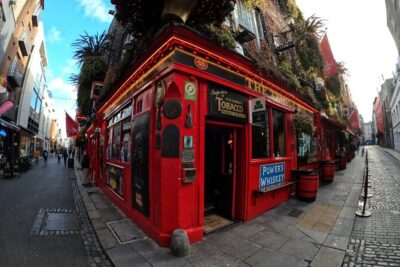
Browse the lists this tour appears in