
Reviewed · WALKING TOURS
Dublin Walking Tour: Explore Top Sights & Hidden Gems
Dublin reveals itself on foot. This two-hour guided walk links major sights with the stories that give the city its character, starting at the Spire and ending back near the central meeting point. You get an efficient first look at Dublin without spending half your day on a bus.
I like the small maximum group of 15, which should make it easier to hear the guide and ask questions. I also like the route’s mix of famous landmarks and everyday city scenes, from the River Liffey to Temple Bar’s pubs. The main consideration is pace: two hours is enough for an overview, but not enough for long visits inside every historic building.
In This Review
- Key Points to Know Before You Book
- Why This Two-Hour Walk Works Well in Dublin
- The Spire: A Sharp Start on O’Connell Street
- Ha’penny Bridge: Dublin’s Most Useful Photo Stop
- Temple Bar: More Than Pubs and Music
- Christ Church Cathedral: The Walk’s Medieval Centerpiece
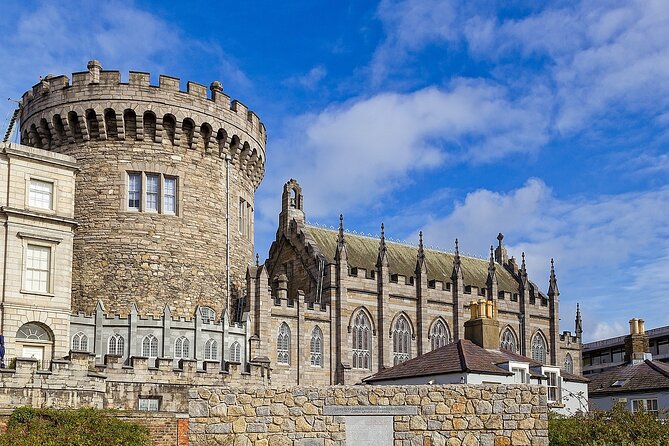
- Dublin Castle: A Final Look at Power and Government
- What the Guide Adds to the Experience
- Is $34 a Fair Price?
- Who Should Book This Dublin Walk?
- Should You Book It?
- FAQ
- How long is the Dublin walking tour?
- What language is the tour offered in?
- How much does the tour cost?
- Where does the tour start?
- Where does the tour end?
- What sights are included on the stated route?
- Is admission included?
- How many people can join the tour?
- Can I cancel for a full refund?
Key Points to Know Before You Book
- The Spire begins the tour in central Dublin, making this a useful orientation walk near O’Connell Street.
- The Ha’penny Bridge provides one of the city’s best quick photo stops, with a direct view over the River Liffey.
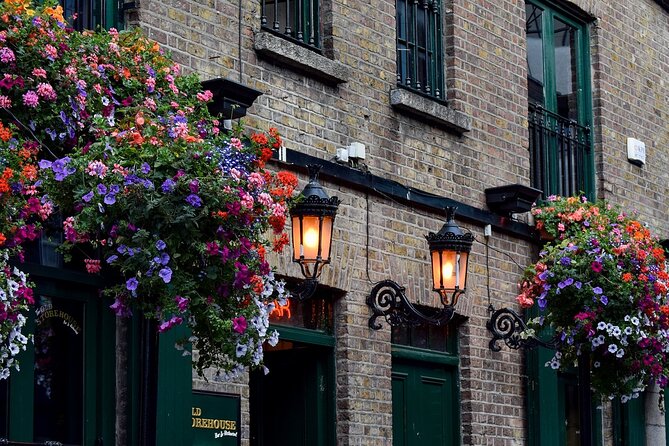
- Temple Bar brings Dublin’s social side into the route, with pubs, street performances, galleries, and plenty of color.
- Christ Church Cathedral gives the walk its strongest medieval setting, with crypts and a reputed connection to Strongbow.
- Dublin Castle adds political and royal history near the end of the route.
- The $34 price is fair for a guided introduction, especially if this is your first day in Dublin and you want local context fast.
Why This Two-Hour Walk Works Well in Dublin
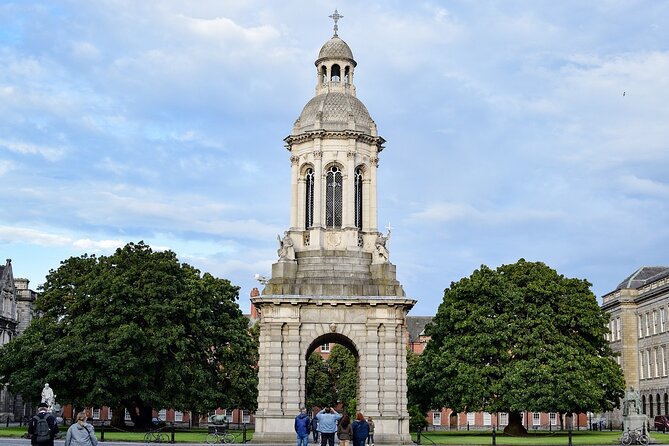
Dublin’s center is compact, but its sights do not always explain themselves. A monument may look modern, a bridge may seem ordinary, and a pub district may appear to be only a place for a drink. A good guide connects those pieces.
That is the real value here. You are not simply ticking off five addresses. You are walking from modern Dublin to medieval Dublin, passing through the city’s literary, social, and political center along the way.
The tour is conducted in English and includes a professional guide. The group limit of 15 is worth noting. A small group will not make narrow streets empty, but it should feel more personal than a large gathering clustered around a flag or microphone.
The walk starts at PostmobileGPO on O’Connell Street in Dublin 1. That central location is practical if you are staying near the city center or arriving by public transportation. The activity finishes back at the meeting point, so you do not need to figure out a new part of town at the end.
More Walking Tours in Dublin
- Dublin Highlights and Hidden Gems Guided Walking Tour
★ 5.0 · 6,020 reviews - Dublin: Highlights and Hidden Gems Walking Tour
★ 4.9 · 2,140 reviews - 1916 Rebellion Walking Tour
★ 5.0 · 1,605 reviews
The Spire: A Sharp Start on O’Connell Street
The first stop is the Spire, a 120-meter stainless steel monument completed in 2003. It rises from O’Connell Street like a giant needle, and its clean modern shape is a clear break from the older buildings around it.
I like starting here because the Spire gives you an immediate sense of Dublin’s changing identity. This is not a medieval relic or a Georgian townhouse. It represents the city’s modern transformation and provides an easy landmark for getting your bearings.
The stop lasts about 20 minutes and costs nothing beyond the tour. Expect time to admire the monument, hear its background, and take photographs. You will not be climbing it, and there is no paid attraction visit included.
Look around as the guide speaks. The Spire is not an isolated sculpture in a quiet square. It sits in the middle of a busy central street, so the surrounding city activity is part of the experience. This first stop also helps you understand Dublin as a working capital, not just a collection of old buildings.
Ha’penny Bridge: Dublin’s Most Useful Photo Stop
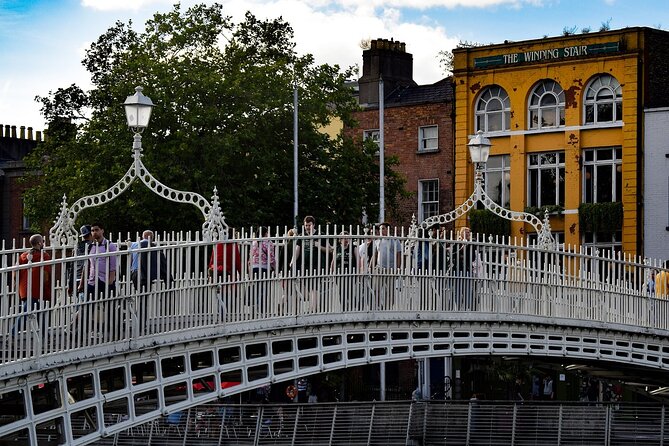
From the Spire, the walk continues toward the River Liffey and the Ha’penny Bridge. Built in 1816, this cast-iron footbridge takes its name from the half-penny toll once charged to cross it.
The bridge is one of those Dublin sights that works on two levels. It is attractive and instantly recognizable, but its story is also wonderfully practical. For generations, people paid a small fee to cross the river, and the bridge became part of daily city life.
You can expect roughly 20 minutes here. That gives you time to cross, take photographs, and look along the Liffey. The river views are a pleasant change after the broad city street around the Spire.
This is a good place to listen closely to the guide’s local stories. The bridge itself is small, so the visit is not about spending a long time at an attraction. It is about seeing a familiar Dublin image in context.
If you want a quiet photograph, your best chance may depend on the time of day. The bridge is a public crossing, not a controlled monument. The walk does not promise an empty bridge or a long photography session, so keep your camera ready and stay aware of people crossing.
Temple Bar: More Than Pubs and Music
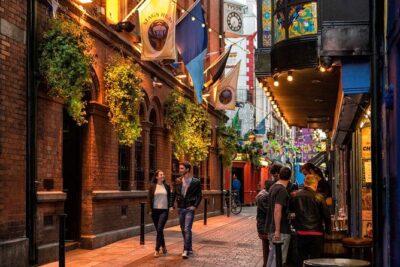
Temple Bar is likely to be the liveliest part of the walk. The district has been associated with culture, pubs, galleries, and entertainment since the 17th century. Today, you can expect colorful streets, street performances, music, and a strong concentration of places to eat and drink.
I like having Temple Bar on a guided route because it is easy to misunderstand. Some people see only the pub signs and crowds. Others treat it as the complete picture of Dublin. The useful approach is somewhere in the middle: enjoy the atmosphere, but also listen to how the guide explains the area’s place in the city.
The scheduled stop lasts about 20 minutes. That is enough to walk through the quarter and hear stories about Irish culture and local nightlife, but not enough for a full pub crawl or gallery visit.
You might find Temple Bar especially appealing if you want a lively introduction to Dublin. It is also the stop most likely to feel busy and noisy. If you prefer quiet lanes and empty historic interiors, this section may be less appealing than Christ Church or Dublin Castle.
Still, it is a valuable stop. Dublin’s identity is not found only in churches and government buildings. Its social life matters too, and Temple Bar puts that side of the city directly in front of you.
Something completely different for another day:
- Dublin to Cliffs of Moher, including Wild Atlantic Way and Galway
★ 5.0 · 23,331 reviews - From Dublin: Cliffs of Moher, Burren & Galway City Day Tour
★ 4.8 · 18,888 reviews - Dublin: Guinness Storehouse Entry Ticket
★ 4.6 · 16,863 reviews - Dublin to Cliffs of Moher, Burren, Wild Atlantic Way, Galway Tour
★ 5.0 · 12,924 reviews
Christ Church Cathedral: The Walk’s Medieval Centerpiece
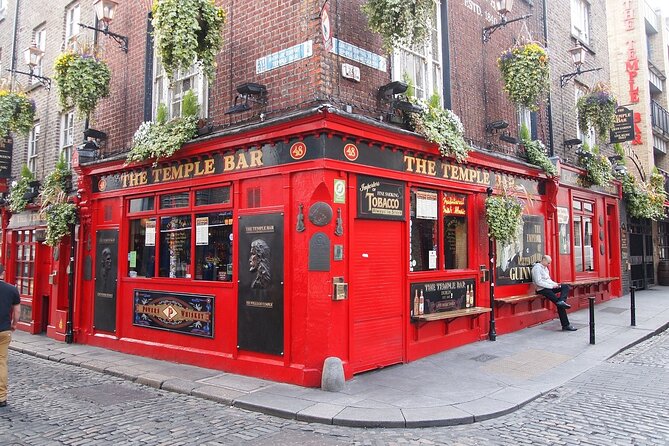
Christ Church Cathedral receives about 30 minutes, making it the longest named stop on the route. The cathedral dates to the 11th century and is associated with medieval crypts and the reputed tomb of Strongbow, the Anglo-Norman figure linked with the conquest of Ireland.
This is where the walk shifts from street-level sightseeing to older Dublin. The cathedral gives you a strong sense of the city’s age, and the crypts add a physical connection to the past that a simple exterior viewing cannot provide.
The attraction is listed as admission-ticket free within the tour, but the information does not clearly state whether the guided visit always includes entry inside the cathedral or only an exterior explanation. Some descriptions of the outing also refer to St. Patrick’s Cathedral, while the stated route names Christ Church Cathedral. If entering a particular cathedral matters to you, confirm the exact stop and admission arrangements before booking.
That small uncertainty is important. A 30-minute cathedral stop can mean a guided interior visit, a look at the outside, or a short visit depending on opening conditions and the guide’s plan. Do not assume you will have time to inspect every chapel, monument, or crypt in detail.
Even with that caveat, this is probably the tour’s most rewarding historic stop. The guide’s clear explanations and anecdotes are especially useful here, since medieval Dublin can otherwise feel like a jumble of names and dates.
Dublin Castle: A Final Look at Power and Government
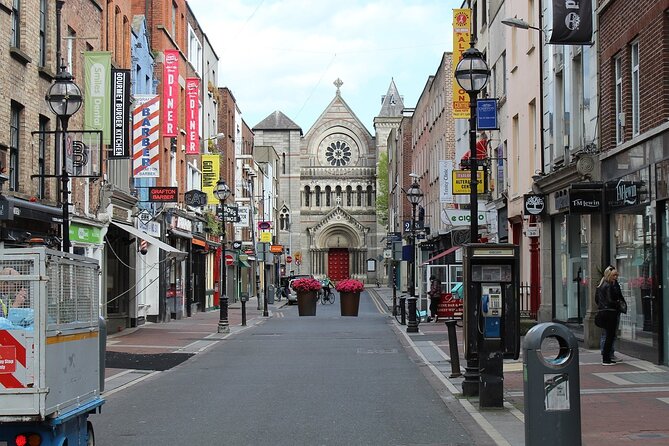
The route continues to Dublin Castle, with about 30 minutes set aside for the visit. This brings the walk into the political story of the city.
Dublin Castle is useful because it helps explain how Dublin functioned as a center of power. Its setting and buildings are more formal than Temple Bar, and the change in mood is noticeable. You move from public entertainment and river crossings to a place connected with administration and authority.
The description does not specify which rooms or interiors are included, so treat this as a guided castle-area visit rather than a guaranteed full palace tour. The guide may focus on the exterior, courtyard, or selected areas available during the visit.
That said, 30 minutes is a sensible amount of time for a first introduction. You can hear the key stories, understand why the site matters, and return later if you want a more detailed visit.
The tour then ends back at the original meeting point. This return is convenient, especially if you want to continue exploring on your own. It also gives you a clear finish rather than leaving you across town with no directions.
What the Guide Adds to the Experience
The guide is central to the value of this tour. The strongest descriptions emphasize a friendly manner, clear explanations, entertaining stories, and anecdotes that make each stop feel connected to Dublin’s culture.
That matters because many of these sights are easy to photograph without understanding. The Spire needs context. The Ha’penny Bridge needs its toll story. Temple Bar needs a little explanation beyond its pubs. Christ Church and Dublin Castle need more than a quick date and a name.
The walk is offered in English only, so you should be comfortable following spoken English for two hours. Because the route includes public streets and popular districts, staying close to the guide will help you catch the commentary, particularly around Temple Bar.
The maximum group size of 15 is a welcome detail. It is not a private tour, but it is small enough to make questions more realistic. Gratuities are not included, though they are optional.
Is $34 a Fair Price?
At $34 per person, this tour is priced as a paid introduction rather than a bargain basement walk. The price includes two hours with a professional guide, but it does not include food, drinks, or any separately charged attraction admission.
I think the value is strongest for a first visit, a short stay, or your first morning in Dublin. You receive a route, a guide, and a quick explanation of several major sights. That can save you time and help you decide which places deserve a longer return visit.
The value is weaker if you already know central Dublin well or prefer to wander alone. You can walk past the Spire, cross the Ha’penny Bridge, and see Temple Bar without paying for a tour. What you cannot easily duplicate is the steady thread of local stories connecting those places.
The 51-day average advance booking figure suggests that you should not wait until the last minute if your dates are fixed. Availability may be particularly important for a small-group experience.
Who Should Book This Dublin Walk?
I would recommend it most strongly to first-time visitors, people with only a short time in Dublin, and anyone who prefers learning through stories rather than reading signs. It also suits solo visitors who want a structured way to see the center without committing to a full-day activity.
The tour can work for friends or couples who want a shared orientation before exploring independently. The friendly guide style described for this experience should keep the walk approachable rather than overly academic.
You should think twice if you want extensive interior visits, a slow photography tour, or a route focused mainly on St. Patrick’s Cathedral, Trinity College, or the Book of Kells. Those places appear in some descriptions associated with the outing, but they are not part of the clearly stated five-stop itinerary. Confirm the final route before paying if those sights are essential to you.
Most people can participate, and service animals are allowed. The tour is near public transportation, but the information does not provide a detailed accessibility assessment. Since this is a walking activity through central streets, ask the provider directly about any mobility concerns.
Cancellation is flexible if you plan ahead. You can receive a full refund by canceling at least 24 hours before the local start time. Cancellations or changes made within 24 hours are not accepted for a refund.
Should You Book It?
Book this tour if you want a friendly, compact introduction to Dublin with a small group and a useful mix of modern, medieval, social, and political sights. The Ha’penny Bridge and Temple Bar should provide the most immediate atmosphere, while Christ Church Cathedral and Dublin Castle give the walk its historical weight.
Skip it if you want a detailed interior tour or already have a firm plan for central Dublin. Before booking, confirm whether the route includes entry to Christ Church Cathedral and whether any references to St. Patrick’s Cathedral or Trinity College apply to your chosen departure.
For most first-time visitors, $34 is a reasonable price for getting oriented quickly. Use the walk as your foundation, then return to the places that catch your interest.
FAQ
How long is the Dublin walking tour?
The tour lasts approximately two hours.
What language is the tour offered in?
The tour is offered in English.
How much does the tour cost?
The listed price is $34 per person.
Where does the tour start?
It starts at PostmobileGPO, O’Connell Street, Dublin 1, North City, Dublin 1, D01 F5P2, Ireland.
Where does the tour end?
The activity ends back at the original meeting point.
What sights are included on the stated route?
The named stops are the Spire, Ha’penny Bridge, Temple Bar, Christ Church Cathedral, and Dublin Castle. There are also additional surprise stops along the way.
Is admission included?
The tour includes the guided walking experience, and the listed stops show no admission ticket charge. The information does not specify whether every interior visit is guaranteed, so confirm entry details before booking.
How many people can join the tour?
The maximum group size is 15 people.
Can I cancel for a full refund?
Yes. You must cancel at least 24 hours before the experience start time for a full refund. Cancellations or changes made less than 24 hours before the start time are not accepted for a refund.
Newest in Dublin
- Wicklow Mountains Private Day Tour including Glendalough★ 5.0 · 7 reviews
- Wicklow: Private Day Tour from Dublin★ 5.0 · 5 reviews
- From Dublin: Powerscourt House, Guinness Lake & Glendalough★ 5.0 · 2 reviews
- Ultimate Dublin Food Tour★ 4.5 · 2 reviews
- Women Of Ireland: Trailblazers & Pioneers★ 5.0 · 4 reviews
- Wicklow tour of Glendalough★ 4.5 · 8 reviews
- Wicklow Mountains & Glendalough Luxury Private Day Tour★ 5.0 · 23 reviews
- Whiskey Tasting Tour of Dublin★ 5.0 · 117 reviews
Walking Tours, compared.
Dublin Highlights and Hidden Gems Guided Walking Tour
Read our review →
90 Minute Dublin Walking tour and Sightseeing tips
Read our review →

Historical 2-Hour Guided Walking Tour of Dublin
Read our review →
Dublin Traditional Irish 3 Course Meal Walking Tour with Local
Read our review →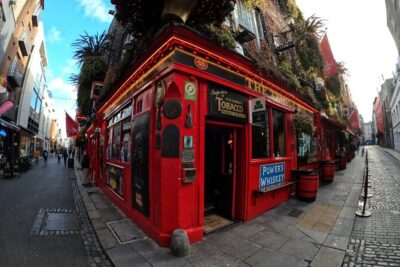
Browse the lists this tour appears in