
Reviewed · WALKING TOURS
Irish Republican Army, Civil War Dublin Private Walking Tour
Dublin’s streets still carry the gunfire. This private walk connects the Easter Rising, the War of Independence, and the Irish Republican Army to real city landmarks, from the GPO to the Custom House. I like the private format, which gives your group room to ask questions, and I like the route’s mix of famous sights and quieter memorials.
The two-hour option keeps the focus on outdoor places, while the three-hour version adds skip-the-line GPO Museum tickets and an audio guide. The main drawback is price: at $191.99 per person, this is a serious spend for a two to three-hour walk, especially if the museum feels too small for your interests.
In This Review
- Key points to know before booking
- What this Dublin IRA walking tour is really about
- Meeting Molly Malone outside St. Andrew’s Church
- St. Andrew’s Church and the revolutionary city center
- Crossing the Liffey toward the Custom House
- The Famine Memorial and James Connolly
- The GPO Museum and the three-hour option
- Two hours or three hours?
- Price, private attention, and real value
- Who will enjoy this walk most?
- Practical details that affect your day
- Should you book the Irish Republican Army tour?
- FAQ
- Where does the tour begin?
- Where does the tour end?
- How long does the tour last?
- Is the GPO Museum included in every option?
- Does the guide enter the GPO Museum?
- What languages are available for the GPO audio guide?
- Is hotel pickup available?
- Is this a private tour?
- What is the cancellation policy?
Key points to know before booking

- The walk begins at the Molly Malone Statue: Meet outside St. Andrew’s Church on Suffolk Street, a central spot that is easy to reach by public transport.
- You see the Custom House from the Liffey area: The building was occupied and burned by the IRA in 1921, giving the political story a very physical setting.
- James Connolly’s memorial adds a human focus: Connolly was executed after the 1916 Easter Rising, and his memorial helps connect national events to one individual.
- The three-hour option includes the GPO Museum: You get a reserved entry time, skip the ticket-office queue, and an official audio guide in five languages.
- This is a private activity, but larger groups need care: Only your party takes part, though groups above 25 people require more than one guide.
- Pickup has a narrow range: Hotel pickup is offered only within 1.5 kilometers of the Molly Malone meeting point.
What this Dublin IRA walking tour is really about
This is not a general Dublin sightseeing walk with a few political facts added at the end. The route is built around Ireland’s struggle for independence, with attention to the men and places tied to the Easter Rising of 1916 and the War of Independence that followed.
You will hear about figures such as Tom Clarke, Michael Collins, and James Connolly. The tour also places the Irish Republican Army within the larger conflict between Irish nationalists and British rule. That matters because the story is not a simple heroes-and-villains tale. The Easter Rising, the War of Independence, and the later Civil War all belong to different stages of the struggle, and a good guide needs to explain those changes clearly.
I like the fact that the route uses the city itself as the classroom. You are not only hearing dates and names in a room. You are walking past the GPO, crossing the Liffey, looking toward the Custom House, and pausing at memorials linked to hunger, rebellion, and execution.
The format suits you if you want a focused political history walk rather than a broad introduction to Dublin. It may be less appealing if you prefer architecture, literary history, or light sightseeing. The subject is serious, and much of the value depends on how well your guide explains the political divisions.
More Walking Tours in Dublin
- Dublin Highlights and Hidden Gems Guided Walking Tour
★ 5.0 · 6,020 reviews - Dublin: Highlights and Hidden Gems Walking Tour
★ 4.9 · 2,140 reviews - 1916 Rebellion Walking Tour
★ 5.0 · 1,605 reviews
Meeting Molly Malone outside St. Andrew’s Church
The tour starts beside the Molly Malone Statue on Suffolk Street, outside St. Andrew’s Church. This is a practical meeting place in central Dublin, close to public transportation and familiar enough that you should not have trouble finding it.
The statue is mainly a rendezvous point, not the main historical stop. Allow a few extra minutes to locate the guide and settle in, especially if you are arriving from a hotel. The official meeting time is important because the group may be moving soon after introductions.
Pickup is available from accommodation in Dublin city center, but the limit is specific. Your hotel must be within 1.5 kilometers of the statue. If you are farther away, you need to make your own way to Suffolk Street. The tour ends back at the meeting point, so you can plan the rest of your day from there.
Because this is a private tour, your group alone takes part. That gives the outing a more personal feel than a standard public walk. The stated limit is 25 people per guide, and a group larger than that costs more because an additional guide is needed.
St. Andrew’s Church and the revolutionary city center
The first substantial section lasts about an hour. Your guide leads you through the historic center, pointing out locations connected with the Irish Republic and its revolutionary figures.
St. Andrew’s Church is part of the opening setting, but the point is the wider city around it. You pass Trinity College and continue toward the Liffey. The route lets your guide show how political events unfolded in a working city rather than on a distant battlefield.
This is where the private format should pay off most. You can stop to ask how Tom Clarke differed from Michael Collins, why James Connolly became such a central figure, or how the Easter Rising changed public opinion. The supplied information promises expert commentary, but the exact depth will depend on your guide and your questions. I would arrive with two or three points you want clarified.
The tour focuses on Irish Republican Army activity and the fight for independence. It does not present itself as a full survey of every period of Irish history. If you want the best use of your time, keep your questions tied to the political conflict, the 1916 rebellion, and the events leading to the War of Independence.
The walk toward the Talbot Memorial Bridge brings you into contact with the River Liffey. This section is more than a transfer from one sight to another. Bridges, quays, and civic buildings help show how Dublin’s political life was tied to the city’s commercial center.
Crossing the Liffey toward the Custom House
The route continues across the River Liffey, with about 20 minutes devoted to the Custom House. In 1921, the building was occupied and then burned by the Irish Republican Army. That single event gives the building a strong place in the story of the War of Independence.
The Custom House is especially useful because it makes the conflict feel concrete. You are looking at a major public building connected to an armed action, not simply hearing that resistance took place somewhere in Ireland. Your guide can explain the building’s role and why the attack mattered within the wider campaign.
Do not expect a long indoor visit here. The itinerary describes the Custom House as an outdoor point on the walk. Its value comes from the explanation and the view, so listen closely and ask questions rather than expecting a museum-style stop.
This part may be less satisfying on a wet or windy day, since the activity is outdoors and Dublin weather can change quickly. The walk is still manageable for most people, but comfortable shoes and a waterproof layer are sensible choices.
Something completely different for another day:
- Dublin to Cliffs of Moher, including Wild Atlantic Way and Galway
★ 5.0 · 23,331 reviews - From Dublin: Cliffs of Moher, Burren & Galway City Day Tour
★ 4.8 · 18,888 reviews - Dublin: Guinness Storehouse Entry Ticket
★ 4.6 · 16,863 reviews - Dublin to Cliffs of Moher, Burren, Wild Atlantic Way, Galway Tour
★ 5.0 · 12,924 reviews
The Famine Memorial and James Connolly
Near the Docklands, you stop at the Famine Memorial for about 30 minutes. The memorial recalls the suffering and hardship of the Great Famine, giving the political story a wider national setting.
This is a useful pause because Ireland’s push for self-government did not emerge from one isolated event. The Famine Memorial reminds you that memory, poverty, displacement, and resentment all shaped the way later generations viewed British rule. The guide’s commentary is important here, since the memorial itself does not tell the full political story of the tour.
You also see the James Connolly Memorial. Connolly was an Irish republican and one of the leaders associated with the Easter Rising. He was executed for his role in the 1916 rebellion.
I consider this one of the more meaningful stops. Connolly was not just a name in a timeline. His memorial gives the tour a personal center, and the guide can explain how his political beliefs fitted into the larger independence movement.
The 30-minute timing allows room for explanation without making the stop feel rushed. Still, this is another outdoor visit. If you are hoping to enter a major historic building, choose the three-hour option with the GPO Museum.
The GPO Museum and the three-hour option
The longer tour adds skip-the-line tickets to the GPO Museum, with a reserved entry time. You avoid the ticket-office queue, but the guide does not accompany you inside. Instead, you use the official audio guide.
The audio guide is available in English, French, German, Italian, and Spanish. That makes this option useful if you want to absorb the exhibits at your own pace or if members of your group prefer different languages.
Inside, you can see the original copy of the Proclamation. The displays also tell the story of the Easter Rising through videos, audiovisual booths, sound, and memorabilia. The museum presents events through the eyes of bystanders as well as the leaders, which can add a civilian perspective to the political account you have heard outside.
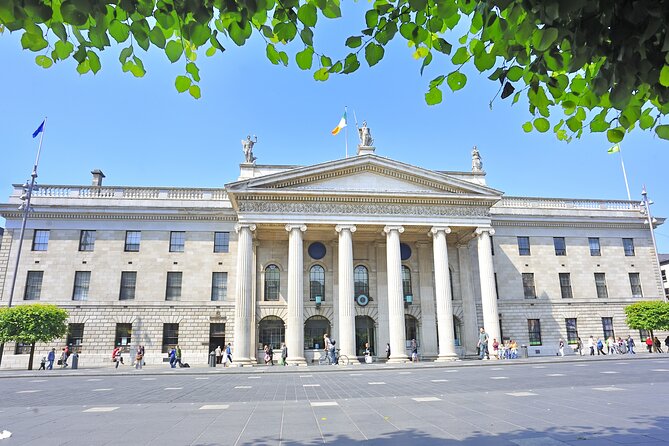
The GPO is one of the most important locations in the 1916 story, so visiting the museum gives the tour a clear indoor finish. It also lets you examine material that is hard to convey during a street walk.
Still, I would keep your expectations measured. The museum is described as a relatively small attraction, and one booking found it less worthwhile than the walking tour. At the price of the three-hour package, that matters. If you are mainly interested in the guide’s storytelling and the outdoor landmarks, the two-hour option may be the better buy. If you want the original Proclamation and a structured presentation of the rising, the museum adds useful context.
Two hours or three hours?
The two-hour option includes the private IRA walk, the outdoor landmarks, and the guide’s commentary. You see the James Connolly Memorial, the Custom House, and the GPO from outside, along with city-center sites tied to the Easter Rising and War of Independence.
Choose it if you want a compact introduction or if you already plan to visit the GPO on your own. Remember that GPO Museum entry is not included in this option.
The three-hour choice adds the museum and its audio guide. The extra hour is not a longer guided walk. It includes the museum visit after the outdoor portion, with your reserved entry time and self-guided audio commentary.
I would choose the longer version if this is your first serious look at the Easter Rising and you want both street context and museum exhibits. I would choose the shorter version if you prefer conversation with a guide, have limited time, or are cautious about paying extra for a small museum.
Price, private attention, and real value
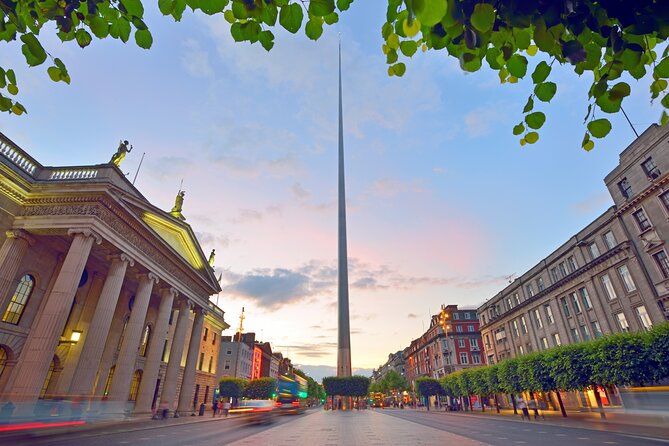
At $191.99 per person, this tour is expensive for a two to three-hour walking experience. Two people pay about $384 before any other costs, which explains why a pair might come close to a $400 total.
The price is easier to defend when your group values private guiding. You are not sharing the experience with a large public crowd, and you can shape the discussion around your own interests. A history-focused guide can also save you from piecing together the story from separate plaques and websites.
The value is weaker if you only want a short introduction to central Dublin. You can see several outdoor landmarks without paying for a private activity, though you would not get the same organized explanation or personal questions and answers.
Group discounts are offered, but the exact amount is not provided. A larger family or friend group may find the per-person cost more reasonable, provided the group remains within the 25-person limit for one guide.
One previous booking praised Ruth for being warm, well prepared, and able to personalize the route. If Ruth is available when you book, her ability to adjust the discussion could make a real difference. The experience depends heavily on the guide, so tell the provider your interests in advance.
Who will enjoy this walk most?
I would recommend it to you if you have a strong interest in Irish independence, the Easter Rising, or the figures associated with the IRA. It also suits families and private groups who want to ask questions without holding up a large public tour.
The route can work well for adults and older children who already know a little about 1916. The subject includes armed conflict, political violence, and executions, so it may not suit very young children or anyone looking for a light sightseeing outing.
History students, first-time Dublin visitors with limited time, and people who want an English-language political walk are likely to get the most from it. The guide can explain how the places connect, which is more useful than simply checking them off a list.
You should think twice if your main goal is indoor sightseeing. Most of the tour takes place outside, and the GPO is the only included interior attraction in the longer option.
Practical details that affect your day
The tour lasts about two to three hours, depending on the option you select. Most travelers can participate, and the route stays near public transportation.
Wear shoes suitable for city walking. You will move between central Dublin landmarks, cross the Liffey, and continue toward the Docklands. The supplied details do not specify a distance or a fully step-free route, so ask the provider if you have mobility concerns.
You receive booking confirmation at the time of purchase. Check your email the day before, since important meeting information may be sent then. For the museum option, pay attention to the reserved entry time.
Free cancellation is available if you cancel at least 24 hours before the start time. Inside that window, you receive no refund, and changes are not accepted. The cutoff follows Dublin local time.
Should you book the Irish Republican Army tour?
Book this tour if you want a focused, private explanation of Dublin’s revolutionary past and value the chance to question a guide. The Custom House, James Connolly Memorial, Famine Memorial, and GPO create a coherent route, and the city setting gives the story more weight than a purely indoor talk.
Choose the two-hour version if price matters or if the museum does not appeal to you. Choose three hours if you want to see the original Proclamation and use the audio displays to review the Easter Rising at your own speed.
I would not book it as a casual city highlights tour. At $191.99 per person, the subject needs to be a genuine interest. For the right group, especially one that wants a private guide and serious historical context, it can be a worthwhile way to understand why modern Dublin looks and feels the way it does.
FAQ
Where does the tour begin?
The tour begins at the Molly Malone Statue outside St. Andrew’s Church on Suffolk Street, Dublin 2.
Where does the tour end?
The activity ends back at the Molly Malone meeting point.
How long does the tour last?
The shorter option lasts about two hours. The option with the GPO Museum lasts about three hours.
Is the GPO Museum included in every option?
No. GPO Museum entry is included only with the three-hour option.
Does the guide enter the GPO Museum?
No. The three-hour option includes skip-the-line entry and an official audio guide, but the tour guide does not accompany you inside.
What languages are available for the GPO audio guide?
The audio guide is available in English, French, German, Italian, and Spanish.
Is hotel pickup available?
Pickup is available only from accommodation in Dublin city center within 1.5 kilometers of the Molly Malone Statue meeting point.
Is this a private tour?
Yes. Only your group participates in the activity. The stated limit is 25 people per guide, and groups above that size require more than one guide.
What is the cancellation policy?
You can cancel at least 24 hours before the start time for a full refund. Cancellations or changes made within 24 hours are not accepted and are not refunded.
Newest in Dublin
- Wicklow Mountains Private Day Tour including Glendalough★ 5.0 · 7 reviews
- Wicklow: Private Day Tour from Dublin★ 5.0 · 5 reviews
- From Dublin: Powerscourt House, Guinness Lake & Glendalough★ 5.0 · 2 reviews
- Ultimate Dublin Food Tour★ 4.5 · 2 reviews
- Women Of Ireland: Trailblazers & Pioneers★ 5.0 · 4 reviews
- Wicklow tour of Glendalough★ 4.5 · 8 reviews
- Wicklow Mountains & Glendalough Luxury Private Day Tour★ 5.0 · 23 reviews
- Whiskey Tasting Tour of Dublin★ 5.0 · 117 reviews
Walking Tours, compared.
Dublin Highlights and Hidden Gems Guided Walking Tour
Read our review →
90 Minute Dublin Walking tour and Sightseeing tips
Read our review →

Historical 2-Hour Guided Walking Tour of Dublin
Read our review →
Dublin Traditional Irish 3 Course Meal Walking Tour with Local
Read our review →
Browse the lists this tour appears in