
Reviewed · WALKING TOURS
Small Group Bucket List Sights Walking Tour with a Local Guide
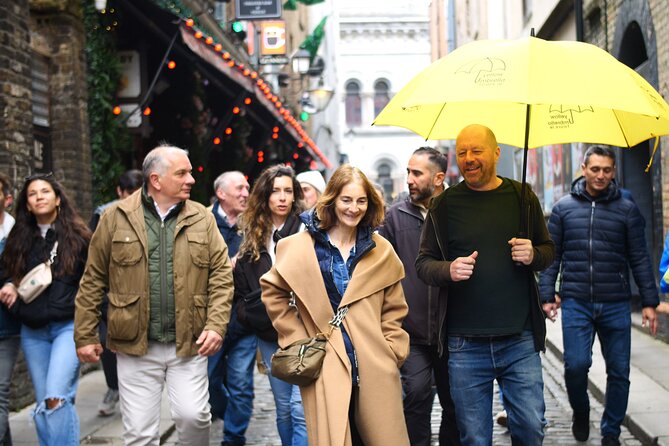
Dublin’s story fits neatly into two hours. This walking tour links the city’s major historic sights with useful context, local stories, and a few quiet corners that are easy to miss when you explore alone. I especially like the central route and the way guides such as Peter, Patrick, Rob, and Martin turn a brisk sightseeing walk into a friendly conversation. You also get practical suggestions for museums, walks, and later stops in the city.
The price is a strong point. At about $20.52 per person, you get a guided introduction to Dublin without paying admission fees for attractions you may not yet wish to enter. The main drawback is clear: most stops last only about 10 minutes, and the tour does not include entry to Christ Church Cathedral, St. Patrick’s Cathedral, Dublin Castle, or the Book of Kells exhibition.
In This Review
- Key points to know before booking
- Why this is a smart first look at Dublin
- Starting at Christ Church Cathedral
- St. Patrick’s Cathedral and the city’s patron saint
- A quiet pause at Dubh Linn Gardens
- Dublin Castle and the long shadow of government
- Temple Bar beyond the nightlife
- Crossing the Liffey on Millennium Bridge
- Ha’penny Bridge and Dublin’s everyday character
- Merchant’s Arch and a city of contrasts
- College Green and Molly Malone
- Finishing outside Trinity College
- What the $20.52 price really buys you
- Pace, group size, and practical details
- Who will get the most from this walk
- Should you book the Dublin walking tour?
- FAQ
- How long does the walking tour last?
- What time does the tour start?
- Where does the tour begin?
- Where does the tour end?
- Are admission tickets included?
- How large can the group be?
- Can I cancel for a full refund?
Key points to know before booking
- Twelve central sights in two hours: The route covers cathedrals, castles, bridges, civic buildings, Temple Bar, and Trinity College.
- A useful first-day orientation: The walk helps you understand Dublin’s center before setting off on your own.
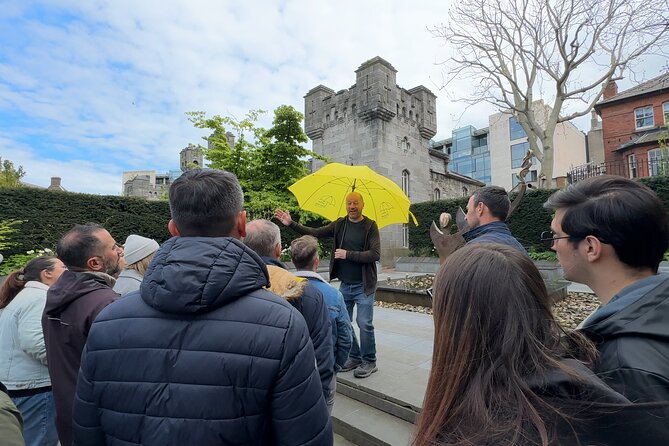
- Strong guide-led storytelling: Peter receives repeated praise for his friendly manner, historical explanations, and practical recommendations. Patrick, Rob, and Martin have also led highly praised outings.
- Mostly an exterior tour: You see important buildings from the outside, but admission tickets are not included for the major attractions.
- Maximum group size of 25: The tour is called small group, though 25 people is large enough that you may not get constant one-to-one time with the guide.
- Easy central finish: The walk begins near Wood Quay at 10:00 a.m. and ends outside Trinity College on College Green.
Why this is a smart first look at Dublin
Dublin rewards walking. Its historic center is compact, but the story changes quickly from Viking settlement to Norman cathedral, British government, Georgian finance, literary fame, and modern technology. A guide helps connect those pieces instead of leaving you with a string of impressive buildings and no clear idea how they fit together.
This tour is designed as an overview rather than a full visit to any single attraction. You move through the core of the city, stop often, and hear the background behind each place. That makes it especially useful at the start of a short break, when you want to get your bearings fast and decide where to return later.
The route is also practical. It begins south of the River Liffey, crosses to the north side, then returns south before finishing at Trinity College. You are not simply being marched from one famous photo spot to another. The bridges and streets help you understand how Dublin developed around the river.
Guide quality matters greatly here. Peter is repeatedly praised for his clear explanations, warm personality, and willingness to answer questions. He also gives suggestions for things to do after the walk. On some dates, Patrick, Rob, or Martin may lead the group, and the available feedback describes each as engaging and helpful.
More Walking Tours in Dublin
- Dublin Highlights and Hidden Gems Guided Walking Tour
★ 5.0 · 6,020 reviews - Dublin: Highlights and Hidden Gems Walking Tour
★ 4.9 · 2,140 reviews - 1916 Rebellion Walking Tour
★ 5.0 · 1,605 reviews
Starting at Christ Church Cathedral
The walk begins at 121 R137 in the Wood Quay area at 10:00 a.m. The first major sight is Christ Church Cathedral, one of Dublin’s most important religious buildings.
The cathedral began as a wooden Viking church before the Normans rebuilt it in stone. That single fact gives the opening stop real weight: Dublin’s earliest Christian and Viking chapters are tied to the same site. The building was later renovated with money associated with the whiskey trade in the 19th century, another reminder that Dublin’s monuments were shaped by changing fortunes.
You spend about 10 minutes here, and admission is not included. That is enough time for an exterior explanation and photographs, but not enough for a proper interior visit. If you want to see the cathedral inside, treat this stop as a preview and return later with a separate ticket.
St. Patrick’s Cathedral and the city’s patron saint
Next comes St. Patrick’s Cathedral, named for Ireland’s best-known patron saint. The familiar story says Patrick drove the snakes from Ireland, though the tour’s broader value is in explaining how the cathedral fits into Dublin’s religious and civic story.
The building received major renovation in the 1860s from the Guinness family, specifically Sir Benjamin Lee Guinness. That detail connects a famous Dublin name with the preservation of one of the city’s landmark buildings.
Again, the stop lasts around 10 minutes and does not include admission. You will learn why the cathedral matters, but you will not have time to explore the interior during the walk. If you plan to visit both cathedrals, check their separate opening hours and ticket arrangements before making a tightly packed day plan.
A quiet pause at Dubh Linn Gardens
Dubh Linn Gardens provides a welcome change of pace. The garden is home to the Chester Beatty Library and is described as the place where Vikings moored their longboats when they arrived in Dublin in the 9th century.
The tour allows about 10 minutes here, with free admission to the garden. This is one of the route’s more restful stops, especially after the grand stone facades of the cathedrals. It also gives the guide room to explain the name Dublin, which comes from the Irish Dubh Linn, meaning black pool.
The garden is useful for more than photographs. It helps you picture Dublin as a settlement shaped by water, trade, and movement. You may also want to note the Chester Beatty Library for a later visit, since this walk only introduces the setting rather than taking you through the collection.
Something completely different for another day:
- Dublin to Cliffs of Moher, including Wild Atlantic Way and Galway
★ 5.0 · 23,331 reviews - From Dublin: Cliffs of Moher, Burren & Galway City Day Tour
★ 4.8 · 18,888 reviews - Dublin: Guinness Storehouse Entry Ticket
★ 4.6 · 16,863 reviews - Dublin to Cliffs of Moher, Burren, Wild Atlantic Way, Galway Tour
★ 5.0 · 12,924 reviews
Dublin Castle and the long shadow of government
Dublin Castle was the center of British government in Ireland for 700 years. Today, its buildings show several architectural periods at once, including medieval, Georgian, Gothic, and modern elements.
That mixture makes the castle more interesting than a single grand facade. You can look at it as a record of political power changing over time. The guide explains the site from the outside during the approximately 10-minute stop, while admission is not included.
The nearby City Hall adds another layer. Beside City Hall and outside the castle gate, the guide discusses the meaning of the national flag and its connection with peace between Catholic and Protestant communities, and between north and south. This is a short stop, but the subject is not small. It gives political context to the buildings around you and helps explain why Dublin’s public spaces carry so much historical weight.
Temple Bar beyond the nightlife
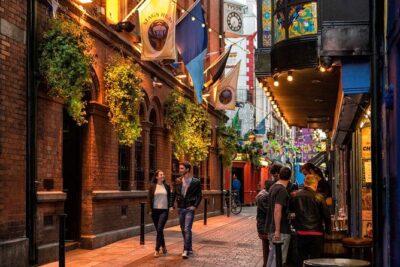
Temple Bar is now associated with pubs, music, and nightlife, but the tour places it in an older setting. It is one of Dublin’s oldest areas, and the guide explains how the streets were laid out during the Tudor conquest of Ireland.
This is a valuable correction to the usual Temple Bar snapshot. You see more than a popular drinking district. The lanes belong to a much longer story of Dublin’s growth, and the guide helps you look past the signs and crowds.
The stop is free and lasts about 10 minutes. The main limitation is timing. Temple Bar is a place you may want to explore at a slower pace, especially if you enjoy photography, food, or live music. The walking tour gives you orientation, not a full evening there.
Crossing the Liffey on Millennium Bridge
The Millennium Bridge takes the group across the River Liffey from south to north. From the bridge, the guide points out the city from east to west, linking the area where the Celts settled roughly 2,100 years ago with the modern Silicon Docks, inspired in part by American business and technology.
This is one of the tour’s best chances to see Dublin as a living city rather than a museum. The river separates, but it also connects, the historic core with newer parts of the city. A bridge stop gives you a visual sense of that change.
The time here is again about 10 minutes. There is no attraction ticket involved, but you should expect regular foot traffic and a short stop rather than a long riverside pause.
Ha’penny Bridge and Dublin’s everyday character
The route returns south across the Ha’penny Bridge, one of Dublin’s most recognizable structures. The bridge was originally named for the Duke of Wellington, and the guide also explains how Harland & Wolff work helped stop it from shaking as people crossed.
This is a small but memorable piece of engineering history. It also shows how Dublin’s character often comes through in ordinary details: a bridge toll, a popular nickname, and the practical problem of a structure moving underfoot.
The bridge itself is the attraction, so there is no included admission. Expect a brief crossing and a chance to take in the river views. If you dislike crowded walkways, stay close to the group and listen for the guide’s instructions.
Merchant’s Arch and a city of contrasts
At Merchant’s Arch, the tour turns toward one of Dublin’s sharper contrasts. Crown Alley places the arch at one end and Sam Stephenson’s brutalist Stephenson Tower at the other.
The stop shows how Dublin’s buildings do not always agree with one another, and that is part of the city’s appeal. Historic commercial streets sit beside modern concrete structures, with different eras sharing the same view.
The tour does not enter Merchant’s Arch, and admission is not included. Still, this is a useful photo and orientation point near Temple Bar. It also breaks up the sequence of cathedrals, government buildings, and college architecture with something more urban and unexpected.
College Green and Molly Malone
College Green brings you back to the south side and into one of the city’s most impressive civic spaces. The surrounding banks and former parliament buildings reflect a period when Dublin saw itself as the second city of the British Empire.
The guide uses the square to explain government, finance, and Ireland’s changing political position. You get about 10 minutes here, with free access to the outdoor area.
The Molly Malone statue follows, providing a lighter moment. No visit to central Dublin feels complete without greeting this famous fictional fish seller, immortalized in song. The stop is quick, and admission is not included, but it adds the bit of folklore and local humor that keeps the tour from feeling like a formal lecture.
Finishing outside Trinity College
The walk ends on College Green outside the front gate of Trinity College Dublin. This is a sensible finish. Trinity is one of Dublin’s most important institutions, and it is also the home of the famous Book of Kells exhibition.
The tour introduces the college from outside, but admission to the exhibition is not included. That arrangement works well if you prefer to decide later how much time and money to spend inside. It also lets you finish near several central attractions and continue exploring on your own.
The end point is Fox House, 37 College Green, Dublin 2. Pay attention to this detail because the meeting point and end point are different. The guide’s suggestions can be useful here, especially if you still have a free afternoon.
What the $20.52 price really buys you
At $20.52 per person, this is inexpensive for a two-hour guided walk through Dublin’s historic center. You are paying mainly for the guide’s interpretation, route planning, and ability to connect the sights. You are not paying for cathedral, castle, library, or Book of Kells admission.
That can be good value if you want a quick introduction and prefer to choose your own paid attractions later. It is less suitable if you expect a guided interior tour of each major building.
The strongest value comes from the historical links. A short explanation at Christ Church, Dublin Castle, or College Green can shape how you understand the rest of your visit. Several people who took the walk found that it made independent exploring easier afterward, which is exactly what a good orientation tour should do.
Pace, group size, and practical details
The advertised duration is approximately two hours, with about 10 minutes allocated to each of the 12 stops. The route is therefore brisk, but the available feedback describes it as well paced rather than rushed.
The maximum group size is 25. That is manageable for a city walk, though it is not an intimate private tour. Smaller groups may allow more questions and conversation. On one occasion, a very small booking still went ahead rather than being canceled, and the guide provided a personal experience.
The tour is offered in English and uses a mobile ticket. It begins at 10:00 a.m., is near public transportation, and allows service animals. Most people can participate, but you should be ready to walk and remain with the group for two hours.
Free cancellation is available up to 24 hours before the start time for a full refund. Changes or cancellations made less than 24 hours before the local start time are not accepted for a refund.
Who will get the most from this walk
I would choose this tour for a first morning in Dublin, especially if you have only a short stay. It is also a good match if you want historical context before deciding which buildings deserve an entrance fee.
You are likely to enjoy it most if you:
- Want to see the main center sights in one organized route
- Like history explained in plain language
- Prefer conversation and questions to a recorded audio guide
- Need practical suggestions for the rest of your visit
- Want a low-cost introduction before spending more on attractions
I would choose something else if your main goal is extended time inside Christ Church Cathedral, St. Patrick’s Cathedral, Dublin Castle, or Trinity College. This walk shows you where those places are and why they matter, but you will need separate visits for the interiors.
Should you book the Dublin walking tour?
Book it if you want a friendly, affordable orientation to central Dublin. The route covers an impressive number of major sights, and the best guides add useful historical links rather than simply naming buildings. Peter is especially praised for being personable, clear, and generous with suggestions, while Patrick, Rob, and Martin also bring strong energy to the walk.
The smart way to use this tour is to take it early in your stay, then return to the one or two places that caught your interest. At $20.52, it is a modest investment for a clear map of Dublin’s center and a better sense of what to see next.
FAQ
How long does the walking tour last?
The tour lasts approximately two hours.
What time does the tour start?
It starts at 10:00 a.m.
Where does the tour begin?
The meeting point is 121 R137, Wood Quay, Dublin, Ireland.
Where does the tour end?
The tour ends at Fox House, 37 College Green, Dublin 2, outside the front gate of Trinity College.
Are admission tickets included?
Admission is not included for Christ Church Cathedral, St. Patrick’s Cathedral, Dublin Castle, Millennium Bridge, Ha’penny Bridge, Merchant’s Arch, Molly Malone, or Trinity College. Dubh Linn Gardens, City Hall, Temple Bar, and College Green are listed as free stops.
How large can the group be?
The maximum group size is 25 people.
Can I cancel for a full refund?
Yes. You can cancel at least 24 hours before the experience start time for a full refund. Cancellations or changes made less than 24 hours before the local start time are not accepted for a refund.
Newest in Dublin
- Wicklow Mountains Private Day Tour including Glendalough★ 5.0 · 7 reviews
- Wicklow: Private Day Tour from Dublin★ 5.0 · 5 reviews
- From Dublin: Powerscourt House, Guinness Lake & Glendalough★ 5.0 · 2 reviews
- Ultimate Dublin Food Tour★ 4.5 · 2 reviews
- Women Of Ireland: Trailblazers & Pioneers★ 5.0 · 4 reviews
- Wicklow tour of Glendalough★ 4.5 · 8 reviews
- Wicklow Mountains & Glendalough Luxury Private Day Tour★ 5.0 · 23 reviews
- Whiskey Tasting Tour of Dublin★ 5.0 · 117 reviews
Walking Tours, compared.
Dublin Highlights and Hidden Gems Guided Walking Tour
Read our review →
90 Minute Dublin Walking tour and Sightseeing tips
Read our review →

Historical 2-Hour Guided Walking Tour of Dublin
Read our review →
Dublin Traditional Irish 3 Course Meal Walking Tour with Local
Read our review →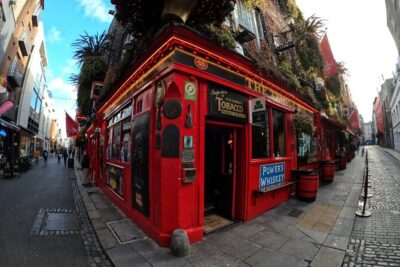
Browse the lists this tour appears in