
Reviewed · HISTORICAL TOURS
Dublin LGBTQ Pride Historical and Cultural Walking Tour
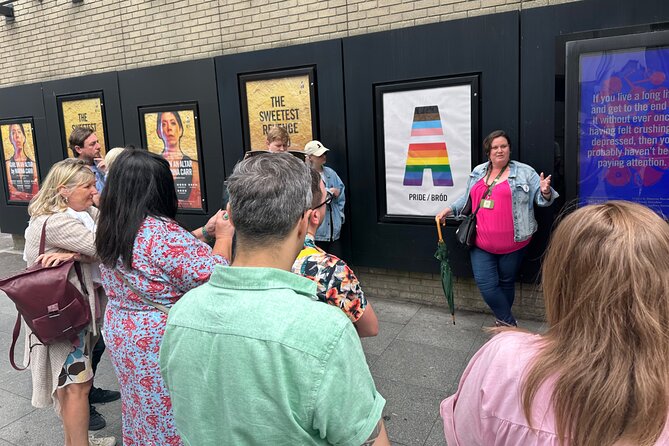
Dublin’s queer story is hiding in plain sight. This two-hour walking tour links Temple Bar, the GPO, the Abbey Theatre, Trinity College, the George Bar, and Dublin Castle while showing you how LGBTQ+ people shaped Ireland’s past and present. I especially like the way it combines famous Dublin sights with lesser-known personal stories. I also like that guides such as Helena and Deidre bring energy, warmth, and a clear sense of purpose to the walk.
The main thing to consider is the pace. You cover a good stretch of central Dublin in about two hours, with frequent stops and plenty of standing. The route is not a museum visit with long indoor breaks, and entry to Trinity College is not included. At about $29.02 per person, it offers strong value if you want context and storytelling rather than a simple list of landmarks.
In This Review
- Key things to know before you book
- Why this tour adds something different to Dublin
- Starting at Temple Bar and crossing the Liffey
- The GPO and LGBTQ+ figures of 1916
- The Abbey Theatre and public life
- Liberty Hall and the first Pride parade
- Trinity College and the people behind the old arch
- Meeting House Square and queer Dublin in the 1980s
- Temple Bar’s first LGBTQ+ headquarters
- The George Bar, Dublin’s enduring LGBTQ+ pub
- Finishing at Dublin Castle
- Guides, pace, and the overall feel
- Is $29.02 a fair price?
- Who should book this walk?
- Should you book the Dublin LGBTQ Pride Historical and Cultural Walking Tour?
- FAQ
- Where does the Dublin LGBTQ Pride Historical and Cultural Walking Tour start?
- Where does the tour finish?
- How long does the tour last?
- What language is the tour offered in?
- How much does the tour cost?
- Does the tour include admission to Trinity College?
- Is the tour suitable for people with limited mobility?
- Are service animals allowed?
- Can I cancel for a full refund?
Key things to know before you book
- The route connects queer history with major Dublin sights, including the GPO, Abbey Theatre, Trinity College, and Dublin Castle.
- The tour begins in Temple Bar and finishes at Dublin Castle, so you can easily continue sightseeing in central Dublin afterward.
- The focus goes beyond Pride celebrations, covering the 1916 Easter Rising, women’s rights, trans activism, gay venues, and social change.
- Helena and Deidre are praised for lively, well-informed guiding, with special care given to people who might otherwise be forgotten.
- You walk for roughly two hours, so wear comfortable shoes and expect a moderate level of physical activity.
- The tour is offered in English, with a mobile ticket and free cancellation up to 24 hours before the start time.
Why this tour adds something different to Dublin
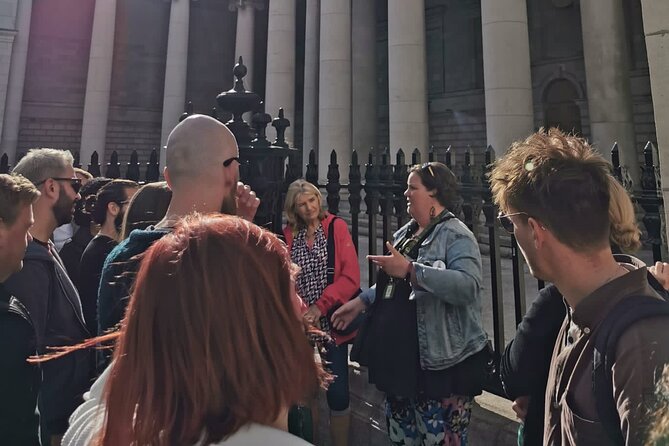
Many Dublin sightseeing walks follow the same familiar route: old streets, famous buildings, literary figures, and a few stories about rebellion. This tour uses those same streets but asks different questions. Who had a voice in public life? Who was pushed aside? Which people helped change Ireland, even when their sexuality or gender identity made public life dangerous?
That approach gives well-known places a new purpose. The GPO is no longer only the grand building linked with the Easter Rising. The Abbey Theatre becomes more than Ireland’s national stage. Trinity College becomes more than an impressive old college with a famous arch.
I like this kind of tour because it does not separate LGBTQ+ history from Irish history. The two stories overlap. You hear about gay figures connected with major national events, people who helped shape public life, and activists who fought for basic recognition and safety.
The route also gives you a useful first look at queer Dublin today. You pass the George Bar, learn about former LGBTQ+ meeting places, and hear where the city’s community life took shape in earlier decades. This is useful if you are visiting Dublin for the first time and want more than a quick photograph outside a pub.
More History Tours in Dublin
- Dublin Historical Centre Food Tour with 8 Food Tastings & Drinks
★ 5.0 · 1,718 reviews - 2-Hour Historical Walking Tour from Dublin
★ 5.0 · 875 reviews - Historical 2-Hour Guided Walking Tour of Dublin
★ 4.7 · 865 reviews
Starting at Temple Bar and crossing the Liffey
The walk begins at 3 Crown Alley in Temple Bar, right in the middle of one of Dublin’s most visited districts. Temple Bar can feel noisy and touristy, but it works well as a meeting point because it is central and easy to reach by public transport.
The opening section sets up the tour’s main idea: Dublin’s LGBTQ+ story is part of the city’s everyday history. You start among pubs, narrow lanes, and busy pedestrian streets, then cross one of Dublin’s most photographed bridges on the way toward the north side of the city.
The bridge crossing is brief, but it helps establish the shape of the walk. You are not being taken to one isolated memorial or one dedicated museum. Instead, you follow a trail through central Dublin, with ordinary streets revealing connections to national events and community life.
Your guide will need to keep the group together in this busy area. The advertised maximum is 100 people, although some departures have been described as feeling more intimate and small-group in style. If you prefer a quiet, highly personal conversation, it is worth understanding that group size can affect the experience.
The GPO and LGBTQ+ figures of 1916
The General Post Office is one of Dublin’s most important buildings. Its connection with the 1916 Easter Rising makes it a natural stop on any Irish history walk, but this tour adds a specific LGBTQ+ focus.
You spend about ten minutes outside the GPO, learning about gay figures connected with the events of that week and how their roles are remembered. The value here is not simply adding a queer fact to a famous building. It is seeing the Easter Rising through a broader human lens, one that recognizes people whose private lives and identities were often left out of traditional accounts.
This stop also gives the tour some historical weight early on. The story is not limited to bars, parades, and recent legal change. It reaches into the political and cultural events that helped define modern Ireland.
Because the stop is short and admission is not included, you should not expect a full visit to the GPO Museum. The guide’s presentation is the main event. If you want to explore the museum itself, plan a separate visit.
The Abbey Theatre and public life
The Abbey Theatre is Ireland’s national theatre and another place where the tour connects culture with LGBTQ+ history. Here, the focus turns toward a modern gay icon and the part that person played in shaping Ireland’s public life.
This is one of the route’s most appealing changes of pace. You move from political history at the GPO to the arts, where identity, censorship, public reputation, and social change often meet. The theatre provides a natural setting for discussing how writers, performers, and cultural leaders can influence a country’s view of itself.
The stop lasts about ten minutes, so the guide has to keep the story focused. That is a strength if you want a brisk city walk, but it also means you may leave with questions. I would treat this as an introduction rather than a full theatre history lesson.
More Walking Tours in Dublin
- Dublin Highlights and Hidden Gems Guided Walking Tour
★ 5.0 · 6,020 reviews - Dublin: Highlights and Hidden Gems Walking Tour
★ 4.9 · 2,140 reviews - 1916 Rebellion Walking Tour
★ 5.0 · 1,605 reviews - 90 Minute Dublin Walking tour and Sightseeing tips
★ 5.0 · 916 reviews
Liberty Hall and the first Pride parade
At Liberty Hall, the tour addresses the difficult circumstances surrounding Ireland’s first gay Pride parade. This is one of the most sobering parts of the route because it shows that public celebration did not arrive easily or safely.
The story also includes one of Ireland’s leading trans activists. That widens the tour’s subject beyond gay rights and gives attention to trans history, which is often missing from general city tours.
This section works best when you are ready for a serious discussion. The tour is upbeat in delivery, but the subject includes fear, ridicule, exclusion, and the long fight for civil rights. You are not getting only feel-good heritage. You are being asked to understand the cost of progress.
Liberty Hall is also a practical reminder that Dublin’s LGBTQ+ history is tied to wider labor, political, and civil rights movements. The walk repeatedly shows that community change did not happen in one isolated corner of the city.
Trinity College and the people behind the old arch
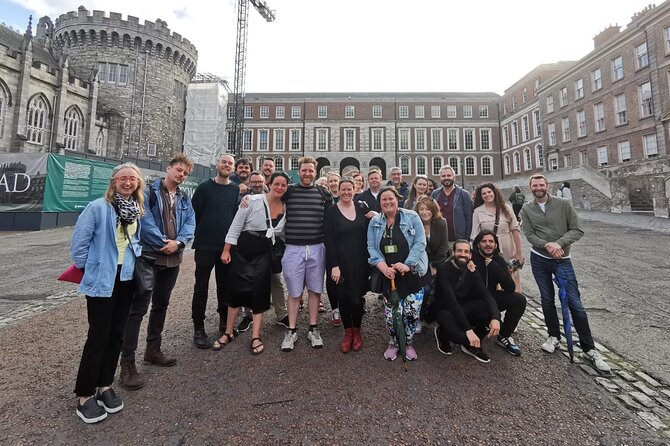
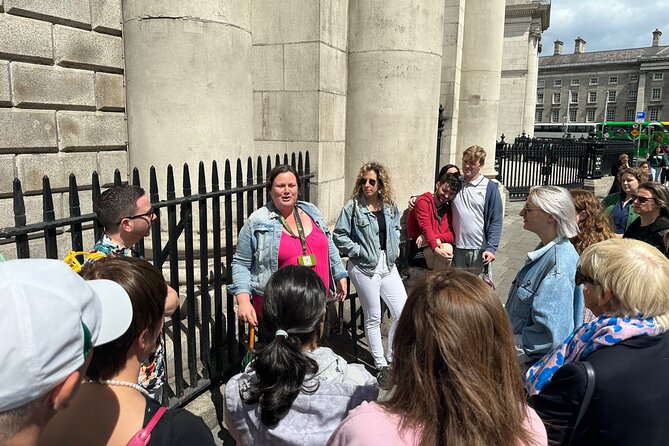
Trinity College Dublin brings another famous landmark into the route. You walk through the wider College Green area and hear about LGBTQI+ alumni who passed beneath the college’s old arch.
The appeal here is the contrast between the institution’s formal image and the varied lives of the people connected with it. The story encourages you to look at Trinity as a place shaped by individuals, not just architecture and academic tradition.
Admission is not included, so the tour does not promise entry to the Book of Kells or a full college visit. That keeps the walk focused and helps hold the price down, but anyone hoping to tour Trinity’s interiors will need a separate ticket.
The stop is also a reminder to watch the clock. Ten minutes at Trinity is enough for a strong overview, not a detailed campus tour. You will get more from it if you listen for the human stories rather than expecting a list of famous graduates.
Meeting House Square and queer Dublin in the 1980s
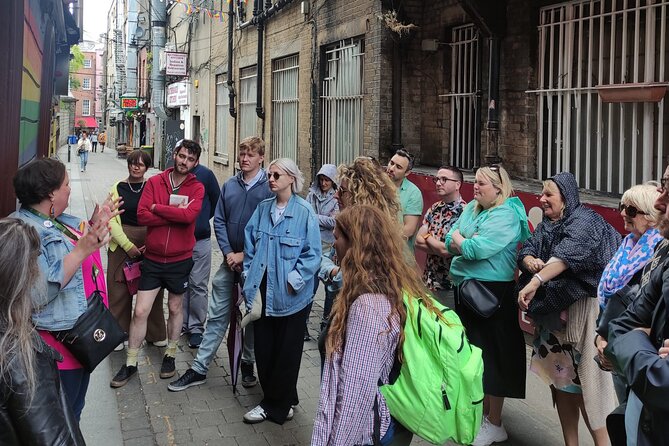
The route loops back through Temple Bar toward Meeting House Square. This section looks at the changing character of queer Dublin in the 1980s and the people who brought support and hope to the community during a difficult period.
I find this part especially useful because it moves away from the most famous national figures. The tour gives space to organizers, thinkers, and change makers who helped build community life. Their work may not appear on the standard Dublin sightseeing circuit, but it explains how social change becomes real at street level.
The path also crosses the River Liffey again, with the Anna Livia sculpture and the river itself forming part of the route. These short visual stops keep the walk connected to Dublin’s physical character. You are not simply standing outside buildings while listening. You are moving through the city’s old center and seeing how community spaces changed over time.
Temple Bar’s first LGBTQ+ headquarters
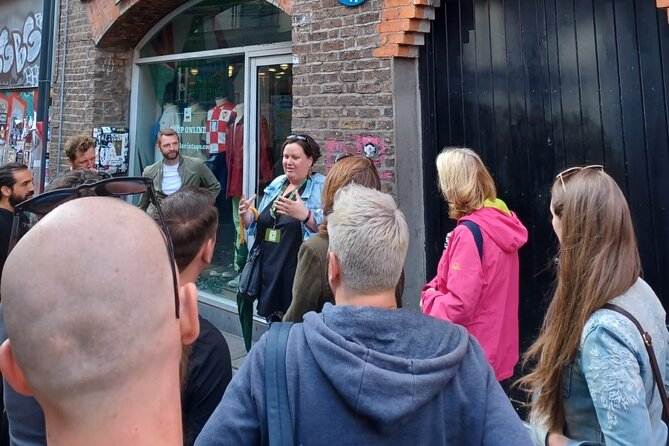
Back in Temple Bar, the tour reaches the site of Ireland’s first bona fide gay headquarters. This was more than a bar. It included a café, disco, cinema, and other facilities, making it an important community center.
That detail helps you understand why dedicated spaces mattered. A headquarters like this offered somewhere to meet, socialize, find information, and feel less alone. It also shows the practical side of LGBTQ+ organizing. Pride and legal change depend on everyday places where people can gather and support one another.
The location is easy to miss if you are walking through Temple Bar on your own. That is one of the tour’s best features: it gives you a reason to stop and think about what used to occupy these streets.
The George Bar, Dublin’s enduring LGBTQ+ pub
The George Bar is the route’s most direct connection with contemporary LGBTQ+ Dublin. It is described as Dublin’s oldest operating gay bar and remains a major cultural institution for the city’s community.
You do not need to enter for the stop to work. The guide explains the pub’s place in local life and points out the broader network of queer bars and venues around Dublin. This can be handy if you want to continue the evening after the walk.
The George also gives the tour a lighter, more social moment after the heavier stories at Liberty Hall and the 1980s section. Still, do not mistake the stop for a pub crawl. The experience is a historical and cultural walk, not a drinking tour, and admission or drinks are not part of the advertised price.
Finishing at Dublin Castle
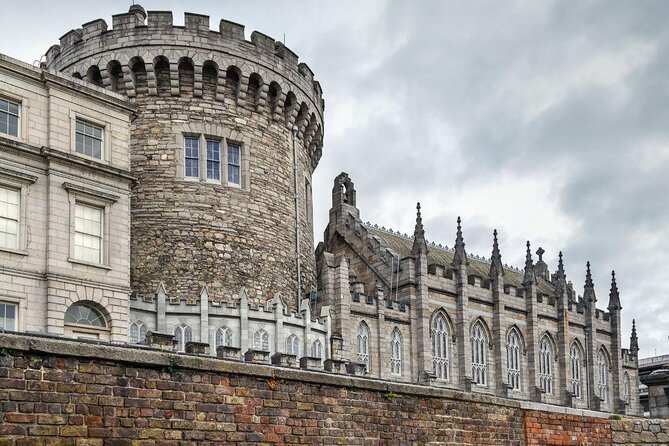
The final stop is Dublin Castle, where the walk ends in the upper courtyard. With roughly 1,200 years of history attached to the site and an 18th-century setting at its center, it makes a fitting closing point.
Ending here gives the tour a sense of scale. You have moved from Temple Bar lanes and community spaces to one of the city’s major symbols of power. The journey shows how LGBTQ+ lives intersect with institutions, politics, culture, and the public story of Ireland.
The end point is also convenient. You are still in central Dublin, close to more sightseeing, restaurants, pubs, and public transport. Make a note of the end location before you start, since the supplied address is presented as a map code rather than a simple street address. The clear practical detail is that the tour finishes in Dublin Castle’s upper courtyard.
Guides, pace, and the overall feel
The strongest part of this experience is the guiding. Helena is repeatedly described as energetic, passionate, engaging, and well informed. Deidre is also praised for connecting LGBTQ+ history with women’s rights and Irish history more generally.
That combination matters. A subject like this needs care, but it also needs a guide who can keep a walking group alert while moving between short stops. The best moments seem to come from the balance of facts, personal stories, and a clear sense that forgotten people deserve a place in Dublin’s public memory.
The walk suits you if you enjoy history told through people rather than dates alone. It is also a good choice if you have already seen the major city sights and want a fresh way to understand them.
You should have a moderate level of fitness. The route involves walking between several central locations and standing during each roughly ten-minute presentation. Wear comfortable shoes, and remember that the tour is offered in English.
Is $29.02 a fair price?
At about $29.02, the tour is fairly priced for a two-hour guided walk in central Dublin. You are paying for a specialist subject, a planned route, and stories that are unlikely to appear on a standard city tour.
The value is strongest if you want interpretation. If you only need directions or photographs, you can see most of these buildings for free. But the GPO, Abbey Theatre, Trinity College, Meeting House Square, the George Bar, and Dublin Castle mean something different after you understand the people and events connected with them.
The price does not include admission to Trinity College, and the tour does not present itself as a series of indoor museum visits. Think of it as a focused walking lesson with Dublin itself as the setting.
Who should book this walk?
I would recommend it to LGBTQ+ visitors, allies, history fans, and anyone who wants a more complete account of Ireland’s past. It is especially useful early in your Dublin stay because it introduces central landmarks while also pointing you toward queer venues and community spaces.
It suits solo visitors who want an easy way to meet a group, couples, and people who prefer a serious subject delivered with warmth. The tour also works for first-time Dublin visitors because the route covers several major sights without requiring a separate sightseeing circuit.
You may want to skip it if you dislike walking, want extensive interior visits, or prefer a general tour focused on architecture and ancient history. The pace is active, the stops are short, and some material is emotionally difficult.
Should you book the Dublin LGBTQ Pride Historical and Cultural Walking Tour?
Book it if you want to see central Dublin through a clear LGBTQ+ lens and hear about people often left out of standard national stories. The strongest reasons are the route, the focus on overlooked figures, and guides such as Helena and Deidre, who bring energy and care to the subject.
I would make it an early-trip activity, then use the final stop at Dublin Castle and the information about queer venues to plan the rest of your day. At $29.02, it is a good buy for thoughtful storytelling and a compact introduction to queer Dublin.
FAQ
Where does the Dublin LGBTQ Pride Historical and Cultural Walking Tour start?
The tour starts at 3 Crown Alley, Temple Bar, Dublin, D02 CX67, Ireland.
Where does the tour finish?
It ends in the upper courtyard of historic Dublin Castle.
How long does the tour last?
The tour lasts approximately two hours.
What language is the tour offered in?
The tour is offered in English.
How much does the tour cost?
The listed price is $29.02 per person.
Does the tour include admission to Trinity College?
No. Admission to Trinity College is not included.
Is the tour suitable for people with limited mobility?
Participants should have a moderate level of physical fitness. The tour involves walking between several central Dublin locations and standing at stops.
Are service animals allowed?
Yes, service animals are allowed.
Can I cancel for a full refund?
Yes. You can cancel at least 24 hours before the experience starts for a full refund. Changes or cancellations made less than 24 hours before the start time are not accepted for a refund.
Newest in Dublin
- Wicklow Mountains Private Day Tour including Glendalough★ 5.0 · 7 reviews
- Wicklow: Private Day Tour from Dublin★ 5.0 · 5 reviews
- From Dublin: Powerscourt House, Guinness Lake & Glendalough★ 5.0 · 2 reviews
- Ultimate Dublin Food Tour★ 4.5 · 2 reviews
- Women Of Ireland: Trailblazers & Pioneers★ 5.0 · 4 reviews
- Wicklow tour of Glendalough★ 4.5 · 8 reviews
- Wicklow Mountains & Glendalough Luxury Private Day Tour★ 5.0 · 23 reviews
- Whiskey Tasting Tour of Dublin★ 5.0 · 117 reviews
Historical Tours, compared.
Dublin Historical Centre Food Tour with 8 Food Tastings & Drinks
Read our review →

Historical 2-Hour Guided Walking Tour of Dublin
Read our review →
Dublin to Cork, Blarney Castle & Cóbh Heritage Centre by train
Read our review →
Jeanie Johnston Tall Ship Irish Famine History Tour
Read our review →

Deliciously Dublin: The Artisan Donut Walking & History Tour
Read our review →Browse the lists this tour appears in