
Reviewed · HISTORICAL TOURS
Dublin: Macabre History Walking Tour
Dublin has a darker side. This two-hour walk brings it out through tales of executions, grave robbing, medieval quarantine, mummified bodies, and man-eating rats. I like the way the tour uses lesser-known streets instead of sticking only to Dublin’s famous sights, and I like that guides such as Peter and Rob add humor and strong storytelling to the grim material. The $19 price is fair for a two-hour guided walk, though one small drawback is that the tour may feel more historically curious than truly bloody.
The route begins beside the Spire on O’Connell Street, crosses both sides of the River Liffey, and finishes back near the starting point. You should expect a steady stroll, outdoor storytelling, and plenty of pauses at places you might otherwise pass without a second thought. The tour is in English, wheelchair accessible, and not suitable for children under 18.
In This Review
- Key points at a glance
- Why Dublin’s macabre past works well on foot
- Meeting the yellow umbrella beside the Spire
- Cuchulainn’s death and the power of a good story
- Medieval quarantines, mummified bodies, and disease
- Grave robbing beside the city mortuary
- The legless serial killer and Dublin’s criminal past
- Public executions and the final brothel story
- What the guides add to the experience
- Is $19 a good price for two hours?
- Walking comfort, age limits, and planning tips
- Who should book this Dublin walk?
- Should you book the Macabre History Walking Tour?
- FAQ
- How much does the Dublin Macabre History Walking Tour cost?
- How long does the walking tour last?
- Where does the tour begin?
- Where does the tour finish?
- What language is the tour conducted in?
- Is the tour suitable for children?
- Is the tour wheelchair accessible?
Key points at a glance
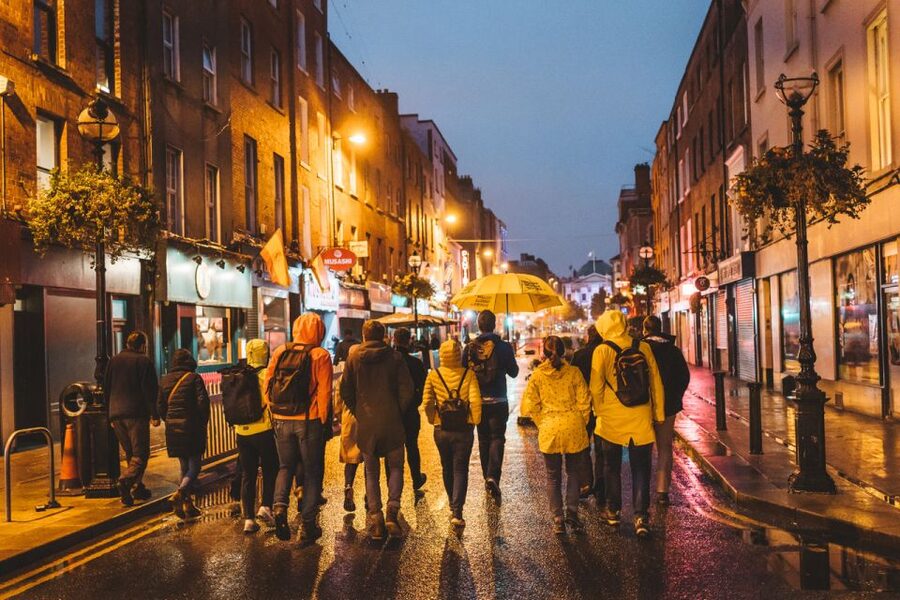
- A striking starting point: Meet beside the Spire, the big needle in the middle of O’Connell Street, and look for the yellow umbrella.
- Dublin’s darker stories: Hear about Cuchulainn’s death, public executions, medieval quarantines, grave robbing, mummified corpses, and a legless serial killer.
- A walk through both sides of the river: The route covers old city streets and riverside areas rather than one compact monument district.
- Strong personal guiding: Peter is praised for passionate storytelling, while Rob is noted for humor, warmth, and clear explanations.
- Good value for curious adults: At $19 for two hours, the tour offers a lively introduction to unusual Dublin history at a modest price.
- One tonal warning: The stories are macabre, but the experience also includes folklore, curious details, and humor, so it may not satisfy anyone seeking nonstop horror.
Why Dublin’s macabre past works well on foot
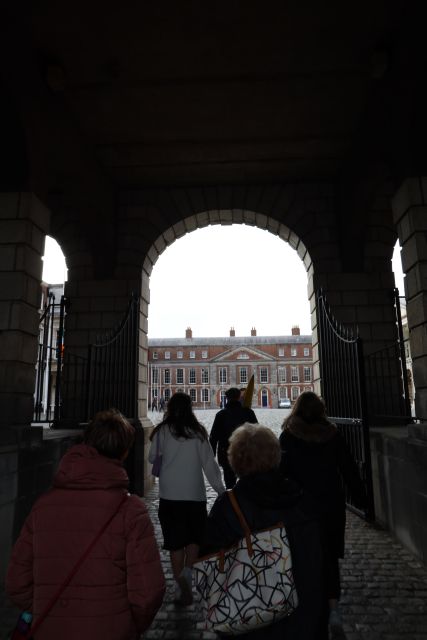
Dublin’s ordinary streets carry much of the appeal here. You are not simply shown a famous building and given a standard paragraph about its construction. Instead, the guide points out places connected with death, punishment, disease, crime, and burial practices.
That makes the walk useful even if you have already seen the main sights. A city center street can look modern and harmless until someone explains what happened there centuries ago. The tour’s real trick is changing your way of looking at Dublin. Afterward, old walls, churchyards, alleys, and riverside corners may seem less like background scenery and more like pieces of a long-running city drama.
I also like the mix of documented history and entertaining lore. Some stories are grim, some strange, and some are delivered with a raised eyebrow. Peter is especially praised for combining historical detail, humor, and theatrical storytelling. Rob also receives strong marks for being personable and making the stories easy to follow.
That tone matters. A tour built only around death can become tiring after two hours. Here, the humor gives you breathing room. One person felt the tour could have been darker and bloodier, which is useful to know. If you want graphic horror at every stop, this may feel restrained. If you prefer an unusual history lesson with macabre edges, the balance should suit you.
More History Tours in Dublin
- Dublin Historical Centre Food Tour with 8 Food Tastings & Drinks
★ 5.0 · 1,718 reviews - 2-Hour Historical Walking Tour from Dublin
★ 5.0 · 875 reviews - Historical 2-Hour Guided Walking Tour of Dublin
★ 4.7 · 865 reviews
Meeting the yellow umbrella beside the Spire
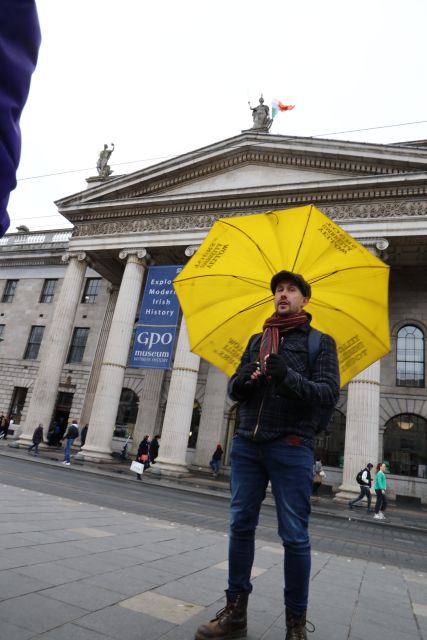
The meeting point is easy to identify in theory. The group gathers beside the Spire in the middle of O’Connell Street, and the guide carries a yellow umbrella.
Give yourself a few minutes to find the right person. One participant noted that there may be more than one yellow umbrella in the area, so do not rely on color alone if the street is busy. The Spire itself is the big needle-shaped monument, which gives you a clear landmark in central Dublin.
Starting here works nicely. O’Connell Street is one of Dublin’s best-known thoroughfares, but the tour quickly shifts your attention away from the usual city-center view. From this broad central avenue, you begin a walk through older parts of the city and along the river.
The activity ends back at the meeting point. That is handy if you have dinner, another booking, or a walk across town planned afterward. It also means you do not need to arrange a taxi or public transport from an unfamiliar final location.
Cuchulainn’s death and the power of a good story
One early highlight is the story of Cuchulainn, the mighty warrior from Irish legend. The details are striking: after his death, a raven on his shoulder pecks out his eyes.
This is a useful introduction to the tour because it shows that macabre does not always mean modern murder. Irish history and legend often overlap, and Cuchulainn’s story brings mythology into the walk. You get a sense of how violence, death, heroic reputation, and storytelling have long been linked in Irish culture.
The guide’s delivery is important here. Peter is repeatedly praised as an animated storyteller who acts out scenes and carries you from one period to another without making the material hard to follow. He also takes time to slow down and explain things when needed, which helps if English is not your first language.
Do not expect a museum-style lecture. The value is in hearing the story at street level, with a guide who can add context and answer questions. You are likely to remember an unusual tale such as Cuchulainn’s death more easily than a list of dates.
Medieval quarantines, mummified bodies, and disease
The route also explores medieval quarantines and the city’s long struggle with illness. These sections provide a wider view of Dublin’s past. Death was not limited to criminals, warriors, or unlucky individuals. Disease shaped daily life, public policy, and the way communities treated the sick and the dead.
The mention of mummified corpses near the old city walls adds another eerie layer. The point is not simply shock value. It reminds you that Dublin’s churches, walls, burial places, and older structures may preserve physical traces of the past in unexpected ways.
This is one reason I would not describe the walk as just a ghost tour. It deals with public health, burial, religion, crime, and urban life. The macabre material is a doorway into broader history.
You should be ready for some unsettling descriptions. The tour is intended for adults and specifically excludes children under 18. That restriction makes sense, given the subject matter. The information provided does not promise graphic reenactments or supernatural encounters, so approach it as a history walk with disturbing themes rather than a haunted attraction.
More Walking Tours in Dublin
- Dublin Highlights and Hidden Gems Guided Walking Tour
★ 5.0 · 6,020 reviews - Dublin: Highlights and Hidden Gems Walking Tour
★ 4.9 · 2,140 reviews - 1916 Rebellion Walking Tour
★ 5.0 · 1,605 reviews - 90 Minute Dublin Walking tour and Sightseeing tips
★ 5.0 · 916 reviews
Grave robbing beside the city mortuary
One of the most distinctive stories concerns the 19th-century business of grave robbing near Dublin’s city mortuary. This is the kind of detail that ordinary sightseeing often misses.
Grave robbing was tied to the demand for bodies in medical education and research. The tour uses the subject to show how death could become a business, especially when scientific institutions needed cadavers and poor families had limited power to protect graves.
For you, the stop offers more than a gruesome anecdote. It raises uncomfortable questions about medicine, poverty, burial customs, and the value placed on a person’s body after death. The subject is disturbing, but it also helps explain why cemeteries and mortuaries could become places of fear even after someone had been buried.
This is exactly the kind of material that makes the $19 fee feel reasonable. You are paying for interpretation, not just movement between landmarks. The guide connects a local story with larger questions about how cities functioned in the 19th century.
The legless serial killer and Dublin’s criminal past
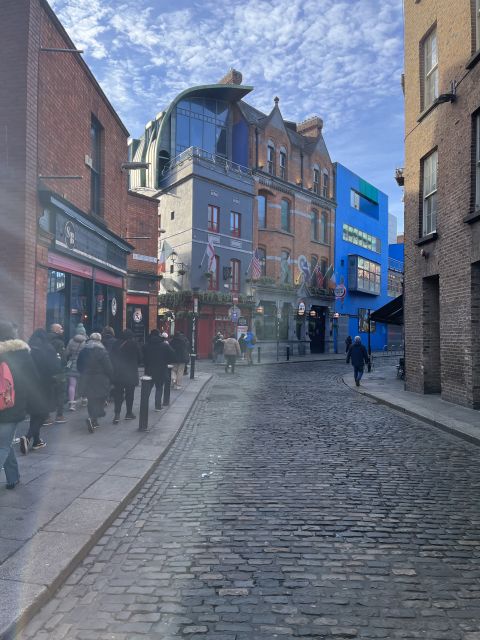
Near the old city walls, the tour turns toward stories of crime, including a legless serial killer. The unusual detail is memorable, but the appeal depends on how the guide tells it.
Peter is praised for making these stories vivid without losing the historical thread. He uses drama and humor, but he also welcomes questions about Irish history and local life. Rob receives similar praise for keeping the group engaged and moving at a good pace.
I appreciate that the tour does not seem to treat crime as a string of disconnected shocks. The stories sit within the old city, where walls, lanes, religious buildings, and crowded living conditions shaped how people moved and lived. You get the setting along with the incident.
Still, this is a point where expectations matter. The tour description uses strong phrases such as serial killer and man-eating rats, but the overall experience includes curious facts and storytelling as well as horror. One four-star assessment specifically suggested turning up the darkness. That is a fair caution for anyone choosing the tour because they want an especially intense scare.
Public executions and the final brothel story
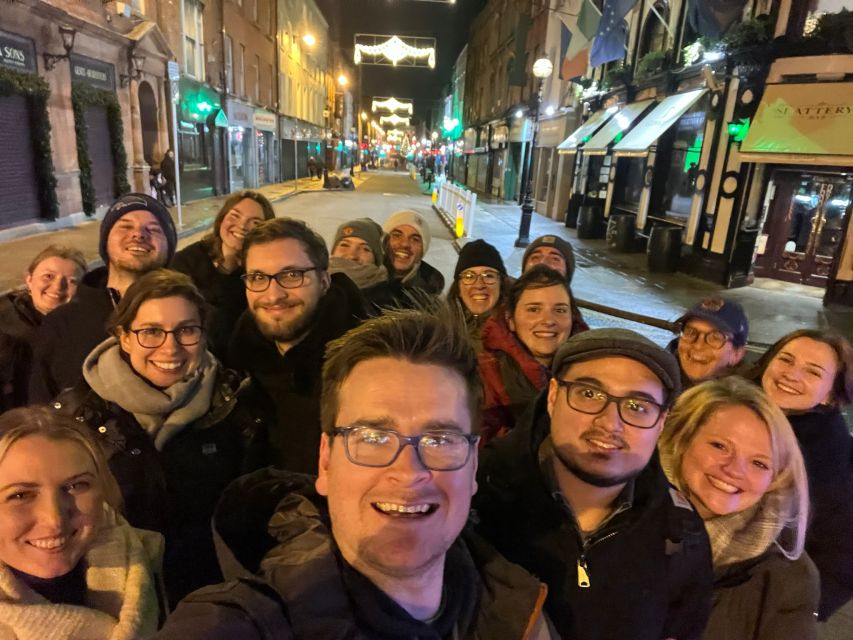
Public executions form another major part of the walk. These stories reveal how punishment once worked as public entertainment, warning, and social control.
A public execution was not hidden away from the community. It took place where people could gather and watch. Hearing about that practice while walking through the old city gives you a better sense of how different Dublin’s public life once was. The same streets that now carry shoppers and commuters once hosted rituals of punishment.
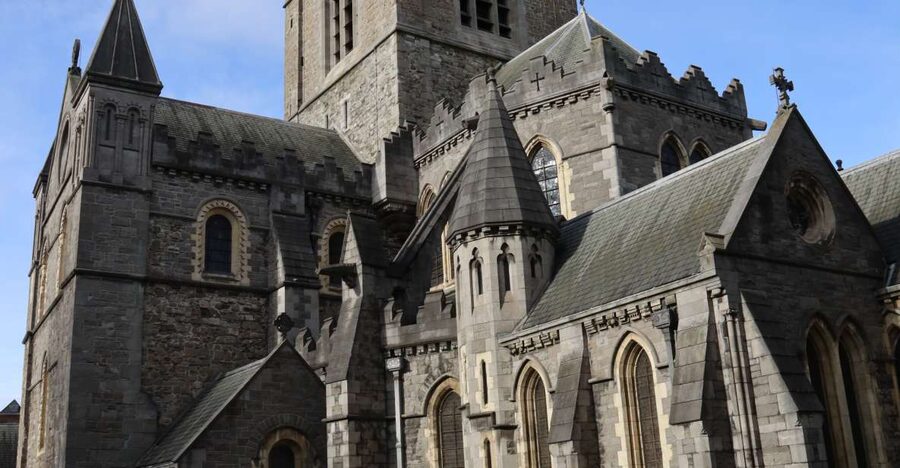
The walk finishes its storytelling near the cathedral with the account of Dublin’s most famous brothel keeper and her death by fire at the stake. The ending has a strong dramatic shape: you move from legendary violence to disease, grave robbing, crime, executions, and finally a notorious figure whose life ended brutally.
The tour then returns to the Spire meeting point. That return is practical, but it also gives the experience a satisfying loop through old Dublin and back into the modern center.
What the guides add to the experience
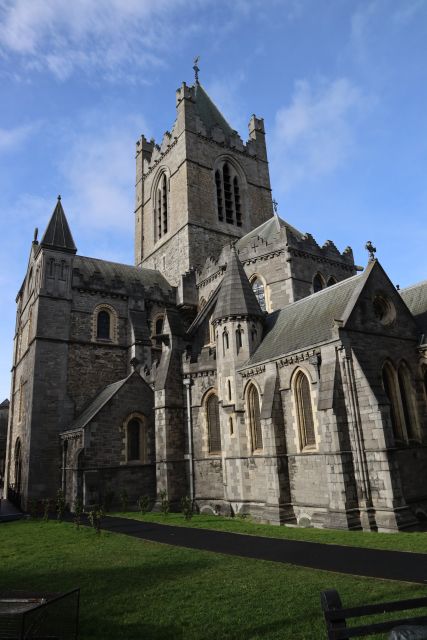
The guides are the biggest strength. Peter is praised again and again for passion, clarity, humor, and storytelling. He answers questions, adjusts his pace, and makes an effort to keep everyone included. Several people describe his tours as feeling personal, especially when only a few people attend.
Rob is also singled out for strong delivery and a friendly manner. He is described as entertaining, well prepared, and good at making the darker stories approachable.
Small groups are sometimes possible, including groups of three or even a private-feeling tour with only one booking party. That is not guaranteed, so you should not book expecting a private walk. Still, the possibility is worth noting. A small group can make it easier to ask questions and hear the guide clearly.
The tour is in English only. If you follow spoken English comfortably, the guides’ clear delivery should help. If you struggle with fast speech or unfamiliar historical names, you may need to ask the guide to repeat or slow down. The guides appear comfortable with questions, which is a real advantage.
Is $19 a good price for two hours?
At $19 per person, I consider this a solid-value activity in central Dublin. You receive a two-hour guided walking tour, and there is no added charge listed for transport between stops because the experience is on foot.
The fee is especially reasonable if you enjoy local history and would otherwise spend two hours wandering without context. The tour takes you to places you might overlook, and its unusual subject gives you a different angle on the city.
The value is lower if you want a large number of major landmarks, interior visits, or a formal museum experience. The tour does not include hotel pickup, drop-off, admission tickets, or a meal. You are paying for the guide and the stories.
Free cancellation up to 24 hours before the activity also gives you some flexibility, and you can reserve now and pay later. Those terms are useful if your Dublin plans are still shifting.
Walking comfort, age limits, and planning tips
The tour lasts two hours and covers old city streets, riverside areas, and both sides of the River Liffey. Wear comfortable shoes and expect to remain outdoors for the full experience.
The activity is listed as wheelchair accessible. If you use a wheelchair, it is still sensible to confirm the route conditions when booking, since old city streets can vary. The provided information does not give a detailed surface description, so I would not assume every stretch is perfectly smooth.
The tour is for adults aged 18 and over. The subject matter includes death, murder, executions, disease, grave robbing, and disturbing legends. Families with older teenagers should note the firm age restriction.
I would schedule this walk early in your Dublin visit. It can help you understand the old center before you explore it independently. You may also want to leave room afterward for a quieter activity, since two hours of grim stories can be a lot, even when delivered with humor.
Who should book this Dublin walk?
I would choose this tour if you enjoy:
- Unusual local history rather than only famous sights
- Folklore mixed with documented events
- Storytelling, humor, and a little theatrical drama
- Walking through streets that reveal more with explanation
- Adult-oriented activities with a darker theme
- Small-group interaction and the chance to ask questions
I would hesitate if you want a purely factual academic lecture, a ghost-hunting experience, or graphic horror from start to finish. The tour seems more interested in bringing Dublin’s past to life than in trying to frighten you at every stop.
Solo visitors should find the format comfortable. The guide keeps the group involved, and several small-group experiences felt relaxed rather than awkward. Couples, friends, and adults interested in Irish folklore should also find plenty to enjoy.
Should you book the Macabre History Walking Tour?
Book it if you want to see Dublin from an unusual angle. For $19, you get two hours of guided stories about Cuchulainn, quarantines, mummified corpses, grave robbing, executions, a legless serial killer, man-eating rats, and a notorious brothel keeper.
The strongest reason to go is the guiding. Peter and Rob are praised for being warm, funny, passionate, and clear. The only real caution is that the experience may be more curious and entertaining than truly terrifying.
Meet beside the Spire, find the yellow umbrella, wear good walking shoes, and bring an appetite for strange history. If those details appeal to you, this is a worthwhile addition to a Dublin itinerary.
FAQ
How much does the Dublin Macabre History Walking Tour cost?
The tour costs $19 per person.
How long does the walking tour last?
The activity lasts two hours. Starting times vary, so check availability when booking.
Where does the tour begin?
The group meets beside the Spire, the large needle-shaped monument in the middle of O’Connell Street. Look for the yellow umbrella.
Where does the tour finish?
The tour ends back at the meeting point.
What language is the tour conducted in?
The live tour guide speaks English, and English is the only language listed for the activity.
Is the tour suitable for children?
No. The tour is not suitable for children under 18.
Is the tour wheelchair accessible?
Yes, the activity is listed as wheelchair accessible.
Newest in Dublin
- Wicklow Mountains Private Day Tour including Glendalough★ 5.0 · 7 reviews
- Wicklow: Private Day Tour from Dublin★ 5.0 · 5 reviews
- From Dublin: Powerscourt House, Guinness Lake & Glendalough★ 5.0 · 2 reviews
- Ultimate Dublin Food Tour★ 4.5 · 2 reviews
- Women Of Ireland: Trailblazers & Pioneers★ 5.0 · 4 reviews
- Wicklow tour of Glendalough★ 4.5 · 8 reviews
- Wicklow Mountains & Glendalough Luxury Private Day Tour★ 5.0 · 23 reviews
- Whiskey Tasting Tour of Dublin★ 5.0 · 117 reviews
Historical Tours, compared.

Dublin Historical Centre Food Tour with 8 Food Tastings & Drinks
Read our review →

Historical 2-Hour Guided Walking Tour of Dublin
Read our review →
Dublin to Cork, Blarney Castle & Cóbh Heritage Centre by train
Read our review →
Jeanie Johnston Tall Ship Irish Famine History Tour
Read our review →

Deliciously Dublin: The Artisan Donut Walking & History Tour
Read our review →Browse the lists this tour appears in