
Reviewed · HISTORICAL TOURS
Historical Walking Tours in Valentia and the Skellig Region
Bray Head tells a long story. This three-hour walk links Neolithic stones, monastic huts, and a Napoleonic signal tower with sweeping views of the Skelligs, Atlantic, Portmagee, and Valentia Harbour. I like the way the route puts history directly under your boots, and I like that local historian Eion can adjust the experience around your schedule. The main catch is simple: some steep walking and changeable Irish weather require proper shoes and rain gear.
You start and finish at Bray Head Car Park, looking over Foilhomurrun Bay. The tour costs $57.84 per person, accepts mobile tickets, offers group discounts, and is private to your party. That price feels fair if you want a focused walk with interpretation rather than a quick photo stop, but it is less appealing if you prefer an easy stroll or a self-guided outing.
In This Review
- Key things to know before walking Bray Head
- Why Bray Head makes such a good history walk
- From Foilhomurrun Bay to the first old stones
- Crompeol village and the human side of the route
- Monastic huts and carvings on Bray Head
- The signal tower and the wide Kerry view
- What the private format changes
- Timing, weather, and practical effort
- Who will get the most from this walk
- Is $57.84 a fair price?
- Should you book the Bray Head history walk?
- FAQ
- How long does the Bray Head walking tour last?
- Where does the tour start?
- Where does the tour finish?
- What is the price?
- Is this a private tour?
- What historical sites are included?
- Will I see the Skelligs?
- Is the walk suitable for most people?
- What happens if the weather is poor?
Key things to know before walking Bray Head
- Foilhomurrun Bay began the story: The walk starts beside the place where the first transatlantic cable reached Valentia, near a Cromwellian fort from the 1650s.
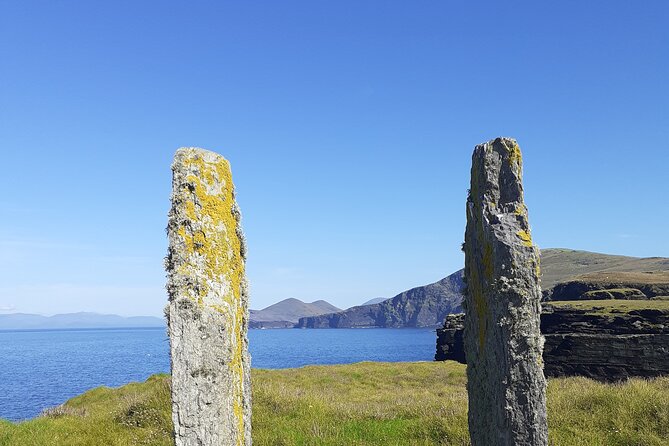
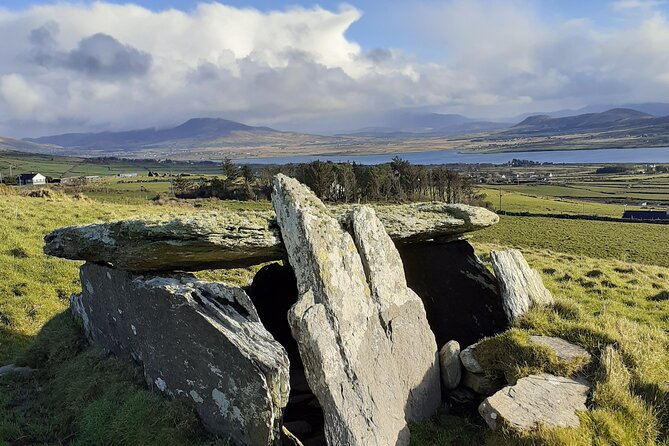
- The route covers thousands of years: Expect standing stones, old field enclosures, the ruined Gaelic village of Crompeol, monastic huts, carved stones, and a Napoleonic signal tower.
- The views are part of the history: From Bray Head, you look toward the Skelligs, the Atlantic, Portmagee, and the entrance to Valentia Harbour.
- This is a private walk: Only your group takes part, giving you more room to ask questions and set the pace within the route.
- Bring serious weather gear: The operator asks you to bring rain gear and good shoes or boots, and the experience depends on suitable weather.
- Book ahead in busy periods: It is booked an average of 16 days in advance, so a little planning makes sense.
Why Bray Head makes such a good history walk
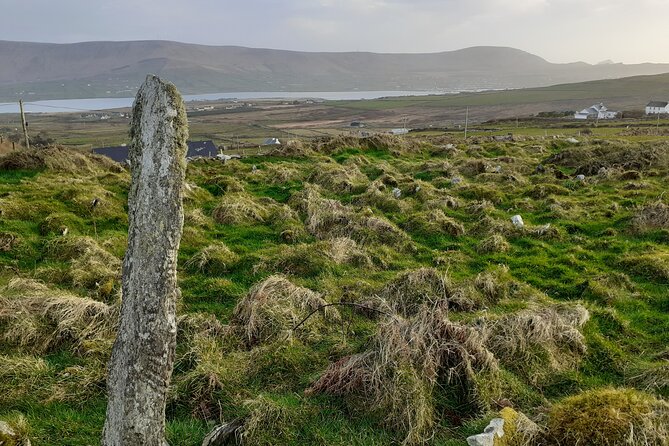
Many heritage walks ask you to imagine the past from a few plaques and a pile of stones. Bray Head gives you a more connected experience. As you climb, the physical remains appear in the same setting where people lived, worshipped, farmed, watched the sea, and communicated across great distances.
The route begins at the car park, with Foilhomurrun Bay spread out below. This opening view matters. It introduces the sea not just as scenery, but as a working route that tied Valentia to the wider world. The first transatlantic cable came ashore here, making the bay part of communications history as well as local history.
Nearby, you will also see the remains of a Cromwellian fort built in the 1650s. That gives the walk an early modern military note before the path turns toward older remains. I like this layering. You are not visiting one isolated monument, but moving through several periods in a single climb.
The guide’s role is important here. A local historian can explain how each site fits into the next, rather than leaving you with disconnected facts. Eion, the guide named in the tour information, is praised for being flexible with scheduling and well informed about the area. That combination is especially useful on a private walk, where your questions can shape the conversation.
More Walking Tours in Killarney
- Guided Killarney National Park Walking Tour
★ 5.0 · 377 reviews - Killarney: Gap of Dunloe Walking and Boat Tour
★ 4.4 · 72 reviews - Boat Only Ticket (Walk the Gap of Dunloe)
★ 4.5 · 57 reviews
From Foilhomurrun Bay to the first old stones
At the start, take a moment to look across the bay before setting off. The meeting point is Bray Head Car Park on an unnamed road in County Kerry, and the activity ends at the same place. There is no separate transfer between stops, so you should arrive ready to walk.
The early section takes you along the track toward Bray Head. The pace is not described as a strenuous mountain hike, but some steep walking is part of the experience. That means you should not treat this as a flat coastal ramble. Good footwear will make a real difference, especially if the ground is wet.
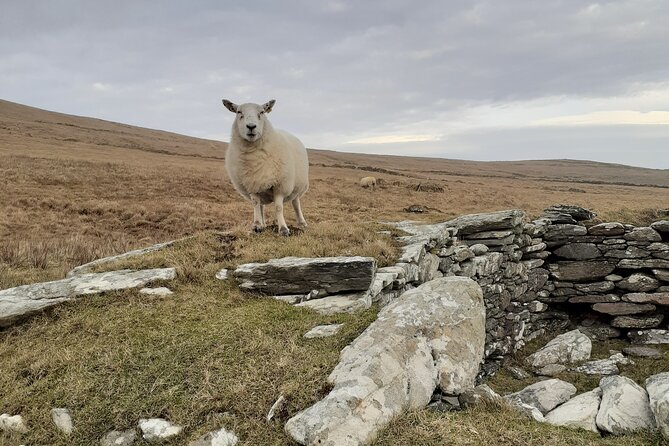
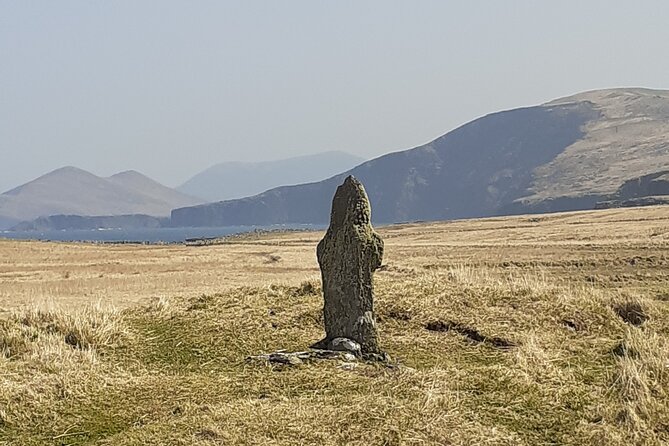
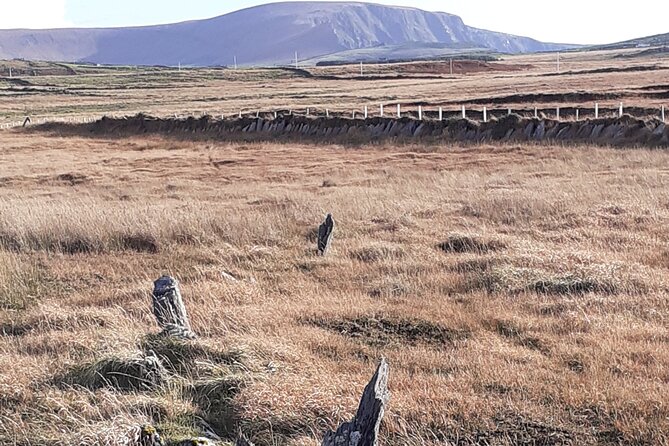
Standing stones and ancient field enclosures appear along the route. These are easy to overlook if you pass quickly, since they are not presented as a single polished monument. With a guide, their location and setting become the point. You can see how earlier communities marked space and worked the land long before modern roads or tourist signs shaped the area.
This is also where the tour earns its price. You are paying for access to a local person’s understanding of small features that could otherwise look like ordinary rocks or walls. The value depends on your interest. If you enjoy asking why a site matters and how it connects to local life, the guided format is useful. If you only want dramatic views, you may feel you are paying for more history than you need.
Crompeol village and the human side of the route
One of the most distinctive parts of the walk is the ruined Gaelic village of Crompeol. Ruins can be easy to reduce to a photograph, but a village gives you a stronger sense of people living in this place. The remains point to homes, work, and community rather than a single event or monument.
The information supplied for the walk does not promise a reconstruction or a large collection of buildings. You should expect ruins and interpretation, not a museum-style display. That is part of the appeal, but it also means you need to pay attention to the guide and the ground around you.
Crompeol helps the route shift from ancient markers to more recent local life. The walk is not only about famous sites. It gives space to a less polished chapter of Valentia’s past, one that you encounter in the stone remains of a Gaelic settlement.
For me, this is likely to be one of the most rewarding stops for anyone who wants a sense of place rather than a checklist of attractions. The village is tied to the terrain around it, and the route lets you see that connection directly. You will also want to keep your camera ready, though the uneven path and weather may make looking more important than photographing.
Monastic huts and carvings on Bray Head
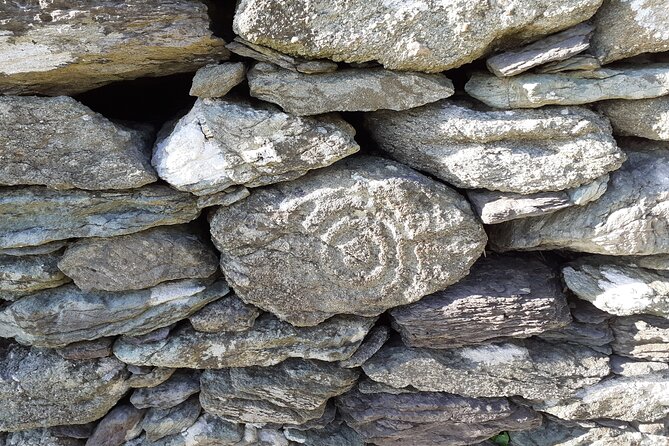
Further along, the walk reaches monastic huts with stone carvings. These structures add a spiritual and artistic layer to the route. The huts are part of the reason the experience feels broader than a standard coastal walk. You move from settlement and farming to religious life, then continue toward a later defensive structure.
The carvings are described as elaborate, so this is a point where a guide’s explanation can help you notice details you might miss. The supplied information does not specify the exact designs or guarantee how many carvings you will see. It is better to expect a chance to look closely at surviving stonework than a formal exhibition.
The setting also gives these remains their power. You are seeing them outdoors, among open Kerry scenery, with the Skelligs and Atlantic in view. That does not replace a full historical explanation, but it makes the connection between place and monument clear.
This section may suit you particularly well if you enjoy old religious sites but do not want to spend the day indoors. It is also a good reminder that the route asks for curiosity. You will get more from it if you stop, listen, and look carefully instead of rushing toward the highest point.
More Skellig trips:
- Ring of Kerry and Skellig Ring Private Tour
★ 5.0 · 83 reviews - The Classic Ring of Kerry & Skellig Ring Tour
★ 5.0 · 66 reviews - From Killarney: Ring of Kerry & Skellig Ring Full-Day Tour
★ 5.0 · 48 reviews - Ring of Kerry & Skellig Ring Private Day Tour
★ 5.0 · 34 reviews
The signal tower and the wide Kerry view
At the top of Bray Head, the Napoleonic period signal tower provides a later chapter. Its position gives the structure a clear practical purpose. From this high ground, the surrounding sea routes and coastline come into view, linking the tower to a period when coastal observation and communication mattered.
The final approach also brings the strongest views of the day. You can look toward the Skelligs, over the Atlantic, across to Portmagee, and toward the entrance to Valentia Harbour. These are not a bonus tacked onto the walk. The views help explain why this headland mattered for settlement, worship, defense, and communication.
Weather will shape this part of the experience. On a clear day, the sea and distant islands should give the walk a dramatic finish. In rain or low cloud, the view may be more limited, which is one reason the tour requires good weather. If poor conditions force a cancellation, you can choose another date or receive a full refund.
Do not assume the final viewpoint makes the climb easy. Some steep walking is necessary, and the return to the car park still requires care. Wear boots or sturdy shoes, and bring rain gear even if the morning looks promising. Irish coastal weather has little interest in your forecast app.
What the private format changes
This is a private activity, so only your group participates. That makes the experience different from a large coach excursion or a crowded scheduled walk. You can ask more questions, pause at a standing stone, or spend extra time examining the carvings without worrying about a bus full of people waiting.
The private format also gives Eion room to be flexible. The available comment about his guiding praises his flexibility with scheduling as well as his strong grasp of the area. You should not read that as a promise that every part of the route can be changed, but it does suggest a more personal approach than a fixed group program.
The benefit is greatest for couples, families, or small groups with a shared interest in local history. A private walk can also work well when different people in your party want different levels of detail. One person may care about the transatlantic cable, while another is more interested in the village ruins or the views.
The limitation is price. At $57.84 per person, the cost adds up for a larger party, even with group discounts available. Since the tour lasts about three hours and includes a local historian, I would judge the price against the value of personal attention, not against the cost of a free walk. You are paying for context and company on the trail.
Timing, weather, and practical effort
The stated operating hours are 10 a.m. to 5 p.m., Monday through Sunday, during the listed operating period from August 18, 2023, through June 17, 2026. The experience lasts about three hours, so you should allow extra time around it if you have other fixed plans in the Ring of Kerry.
The tour starts at Bray Head Car Park and returns there. The supplied information does not include transport to the car park, so you need to make your own way to the meeting point. A mobile ticket is accepted, which keeps arrival simple once you reach the start.
Most people can participate, and service animals are allowed. Still, the steep sections matter. If you have trouble with uphill walking or uneven ground, you should consider that before booking. The information does not give a maximum group size or describe the exact surface, so you should be ready for a natural track rather than a fully smooth path.
Weather is not a minor detail. Rain gear and good shoes or boots are specifically requested, and the experience requires good conditions. You can cancel for a full refund up to 24 hours before the start time. Inside that 24-hour window, cancellations and changes are not accepted for a refund, except when the operator cancels because of poor weather, in which case you are offered another date or a full refund.
The tour is often booked about 16 days ahead. That does not mean every date sells out, but it is a useful planning clue. I would reserve before finalizing the rest of your Ring of Kerry schedule, especially if you have only one day available around Valentia.
Who will get the most from this walk
I would choose this experience if you want a local view of Valentia that goes beyond the headline sights. It suits you if you enjoy walking at a steady pace, asking questions, and seeing several periods of history in one outdoor setting.
It is a particularly good match for:
- Couples and families who want a private activity
- People interested in archaeology, local communities, religion, defense, or communications
- Visitors who want views of the Skelligs without treating the area as only a photo stop
- Anyone who values a flexible local guide
- Hikers comfortable with some steep sections and changeable weather
I would think twice if you need a flat, short, highly accessible path. I would also skip it if your main goal is a fast scenic stop between other attractions. The three-hour length gives the historical sites room to breathe, but it requires a real block of your day.
Is $57.84 a fair price?
The answer depends on how you use the guide. A self-guided walk would cost less, but it would also leave you to identify the standing stones, understand the field enclosures, place Crompeol village in context, and interpret the monastic carvings on your own.
At $57.84 per person, the tour is not a bargain for a simple hike. It becomes better value when you count the private setting, the local historian, the range of sites, and the chance to ask questions as you go. Group discounts may improve the calculation for larger parties.
The strongest value is the route’s variety. In about three hours, you see ancient remains, a Gaelic village, religious structures, a military signal tower, a Cromwellian fort, and a site tied to the first transatlantic cable. You also get the Skellig and Atlantic views that make this corner of Kerry so memorable.
I would book it for the interpretation and the connections between sites. I would not book it simply because the price includes admission to a famous monument. The attraction is the walk itself and the way Eion brings separate pieces of Valentia’s past together.
Should you book the Bray Head history walk?
Yes, if you want a private, active introduction to Valentia and South Kerry. The combination of Foilhomurrun Bay, the cable landing site, Cromwell Fort, Crompeol village, monastic huts, carved stones, and the signal tower gives you a fuller picture than a single viewpoint can provide.
Book with realistic expectations. This is not an effortless stroll, and the weather may affect the views or the date. Bring boots, rain gear, and enough time to enjoy the route without hurrying.
I would give this tour priority if your ideal day includes local history, open-air ruins, and big sea views. If you prefer easy access or a tightly timed sightseeing stop, spend your $57.84 elsewhere. For the right walker, this is a thoughtful way to see Bray Head as a living record of Valentia’s past.
FAQ
How long does the Bray Head walking tour last?
The experience lasts approximately three hours.
Where does the tour start?
It starts at Bray Head Car Park on an unnamed road in County Kerry, overlooking Foilhomurrun Bay.
Where does the tour finish?
The walk ends back at the Bray Head Car Park meeting point.
What is the price?
The listed price is $57.84 per person. Group discounts are available.
Is this a private tour?
Yes. Only your group participates in the activity.
What historical sites are included?
The route includes standing stones, ancient field enclosures, the ruined Gaelic village of Crompeol, monastic huts with stone carvings, a Napoleonic signal tower, Foilhomurrun Bay, and Cromwell Fort.
Will I see the Skelligs?
Yes. The walk includes views toward the Skelligs, the Atlantic, Portmagee, and the entrance to Valentia Harbour.
Is the walk suitable for most people?
Most people can participate, but some steep walking is necessary. You should bring good shoes or boots and rain gear.
What happens if the weather is poor?
If poor weather causes the experience to be canceled, you will be offered a different date or a full refund. You can also cancel at least 24 hours before the start time for a full refund.
More Walking Tours in Ring of Kerry
- Dublin Highlights and Hidden Gems Guided Walking Tour
★ 5.0 · 6,020 reviews - Dublin: Highlights and Hidden Gems Walking Tour
★ 4.9 · 2,140 reviews - 1916 Rebellion Walking Tour
★ 5.0 · 1,605 reviews - 90 Minute Dublin Walking tour and Sightseeing tips
★ 5.0 · 916 reviews
More History Tours in Ring of Kerry
- Full-Day Private Historical Tour at Ring of Kerry
★ 5.0 · 15 reviews - Dublin Historical Centre Food Tour with 8 Food Tastings & Drinks
★ 5.0 · 1,718 reviews - 2-Hour Historical Walking Tour from Dublin
★ 5.0 · 875 reviews - Historical 2-Hour Guided Walking Tour of Dublin
★ 4.7 · 865 reviews
Newest in Ring of Kerry
- Private Tour: Ring of Kerry from Sneem and Parknasilla.★ 5.0 · 3 reviews
- Private Tour: Ring of Kerry from Kerry. Dingle, Tralee etc.★ 5.0 · 12 reviews
- Ring of Kerry Day Tour from Limerick: Including Killarney National Park★ 4.0 · 80 reviews
- Ring of Kerry Private Tour★ 5.0 · 29 reviews
- Ring of Kerry & Skellig Ring – Private Tour★ 5.0 · 8 reviews
- Ring of Kerry Private Day Tour from Killarney★ 5.0 · 66 reviews
- Ring of Kerry private Tour from Killarney, Car or minibus★ 5.0 · 10 reviews
- Private Ring of Kerry Tour in Ireland★ 5.0 · 3 reviews
Historical Tours, compared.

Dublin Historical Centre Food Tour with 8 Food Tastings & Drinks
Read our review →

Historical 2-Hour Guided Walking Tour of Dublin
Read our review →
Dublin to Cork, Blarney Castle & Cóbh Heritage Centre by train
Read our review →
Jeanie Johnston Tall Ship Irish Famine History Tour
Read our review →

Deliciously Dublin: The Artisan Donut Walking & History Tour
Read our review →Browse the lists this tour appears in